







 My blog
  Support me on Tipeee!






Thursday19October
Off we go to join the Southern Hemisphere, but the law of cheaper flights with stopovers is relentless, it is via Paris that our route stops before reaching Johannesburg...
Johannesburg
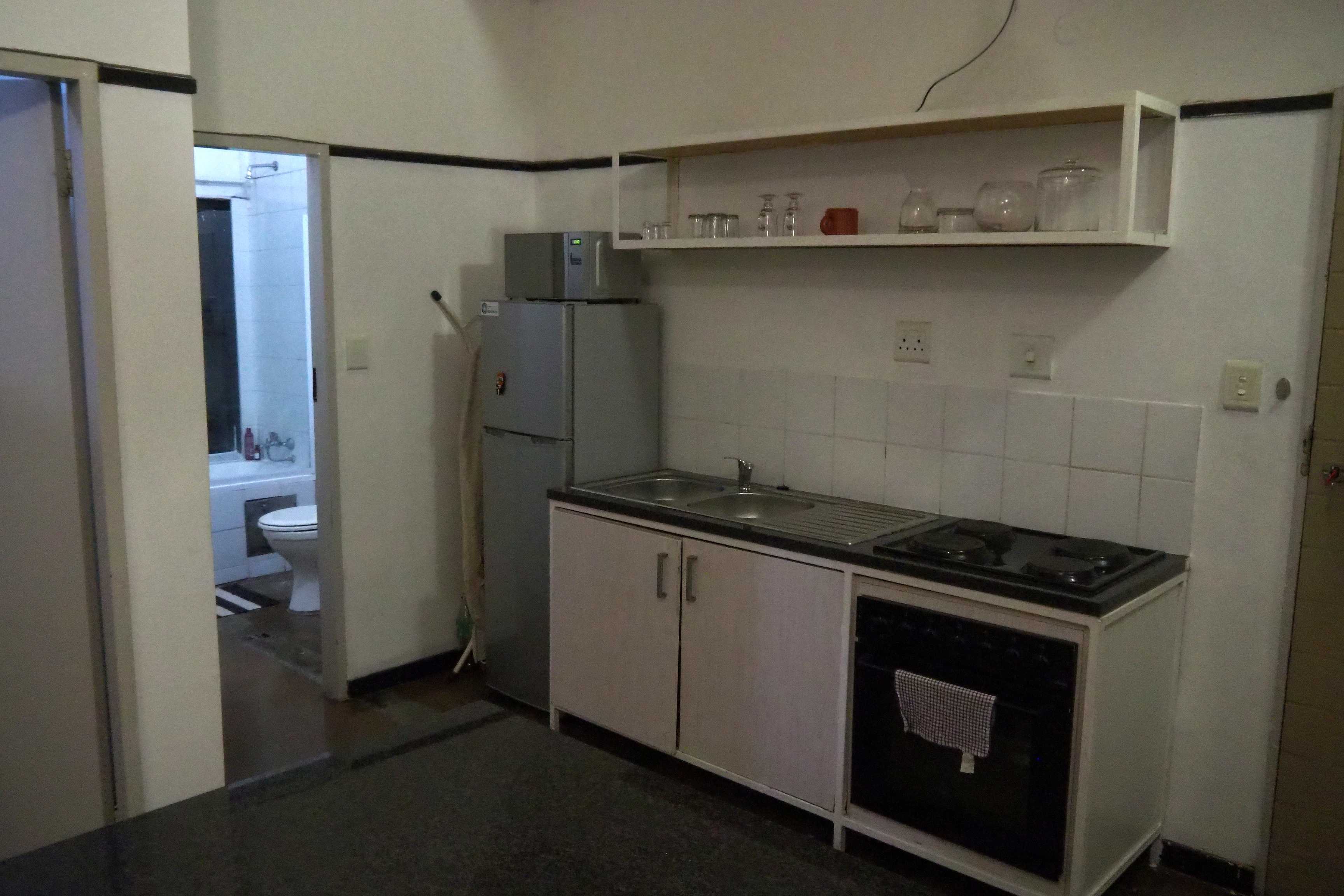
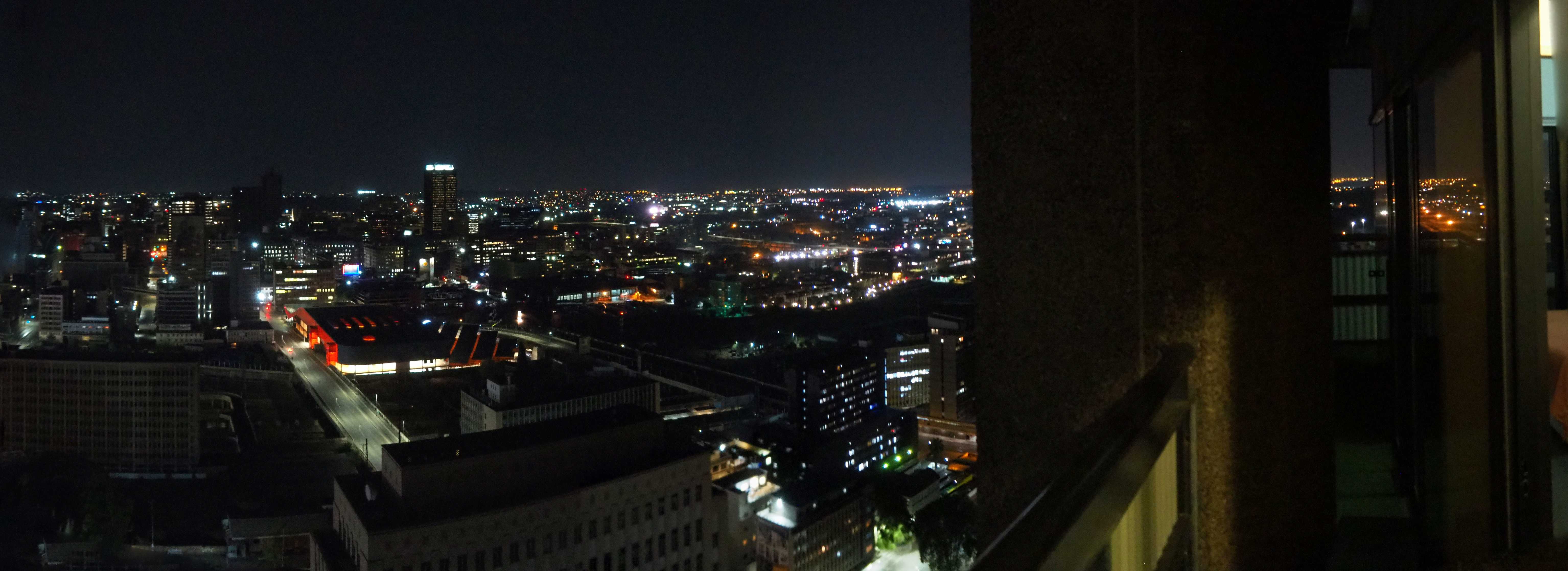
Almost 12 hours of flight to reach Johannesburg, but advantage of the country, we are at the same time as in France! At least for 10 days because we will have one more hour with the time change which is not applied in South Africa. For now, we reach our accommodation already booked a few days ago. We are on the 23rd floor of the Braamfontein Gate building.

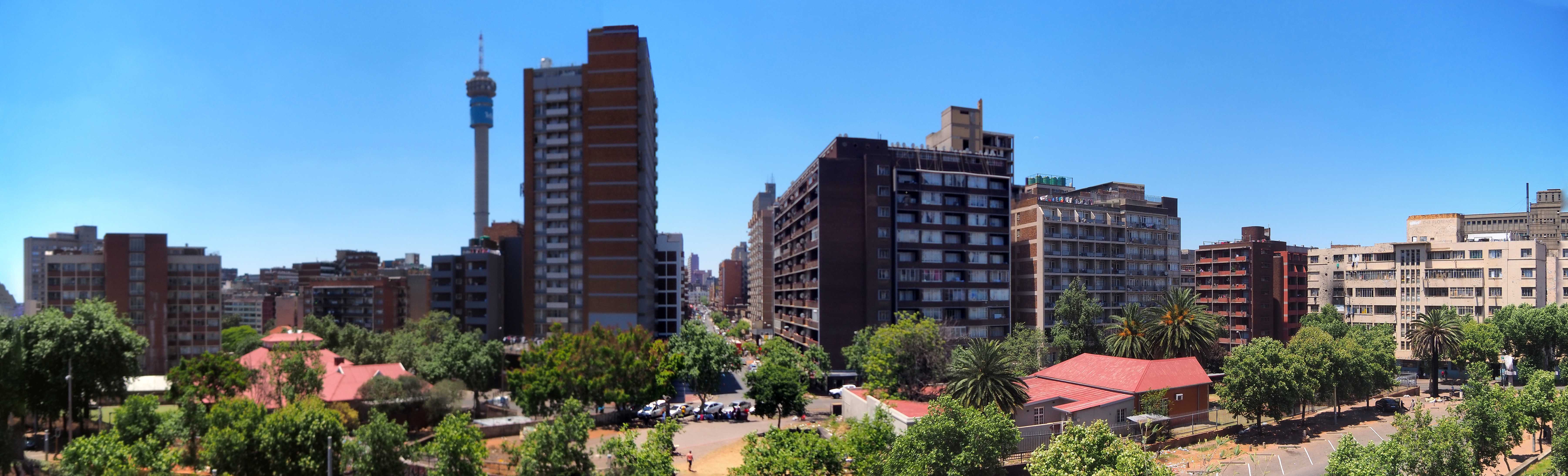
The panoramic view of the city is superb. Sleeping will be done in the fully glazed room! 


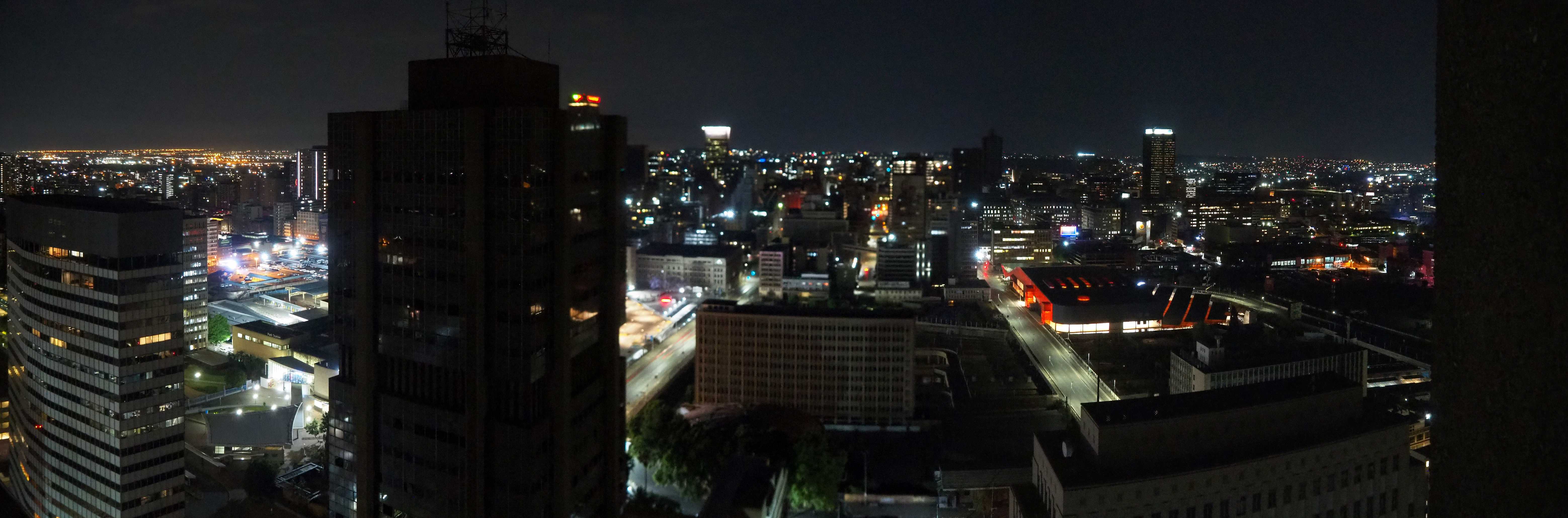
The view can also be enjoyed in the open air...

Friday20October
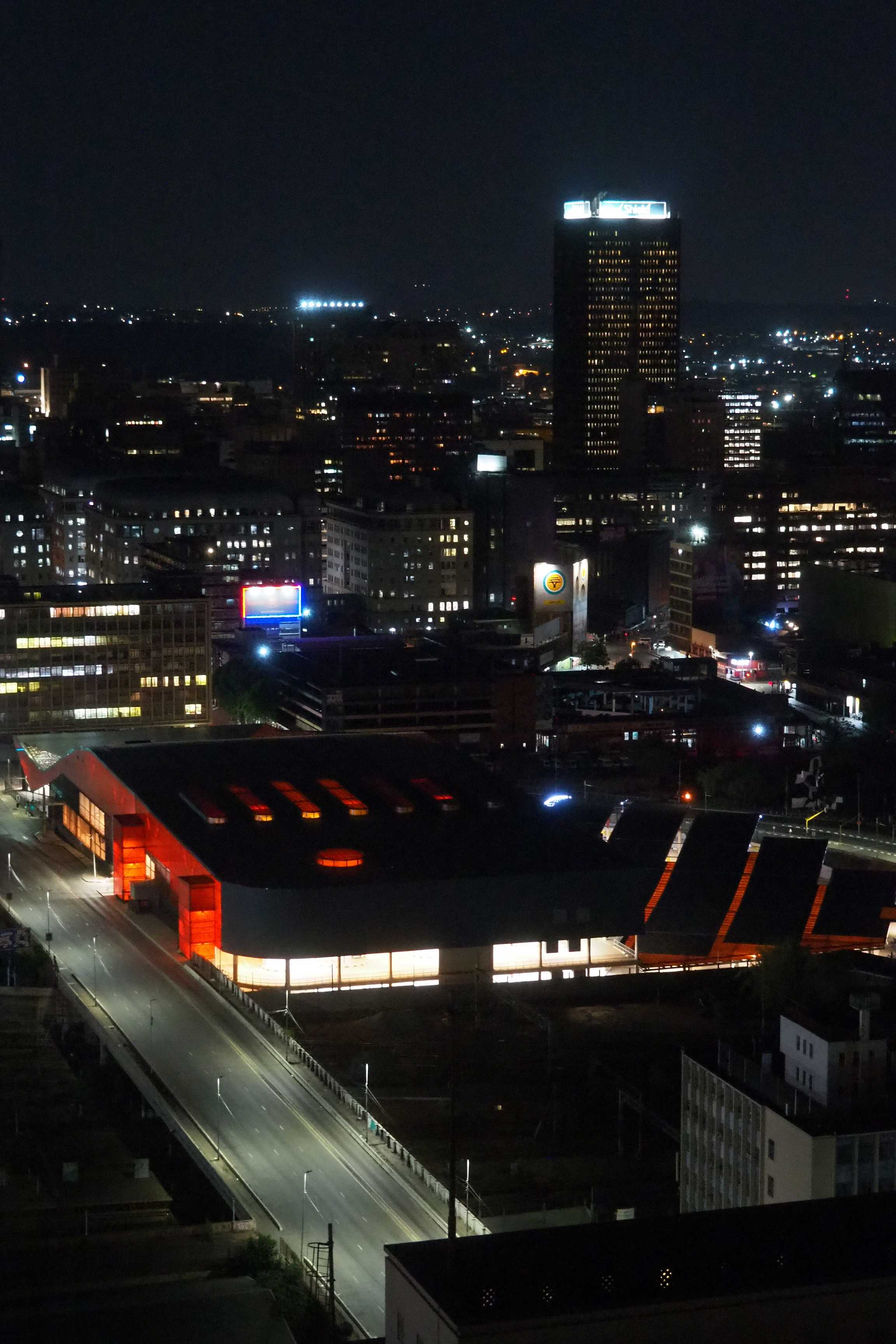
One night later, the Sun has arrived, extending the view of the day before to the city limits.

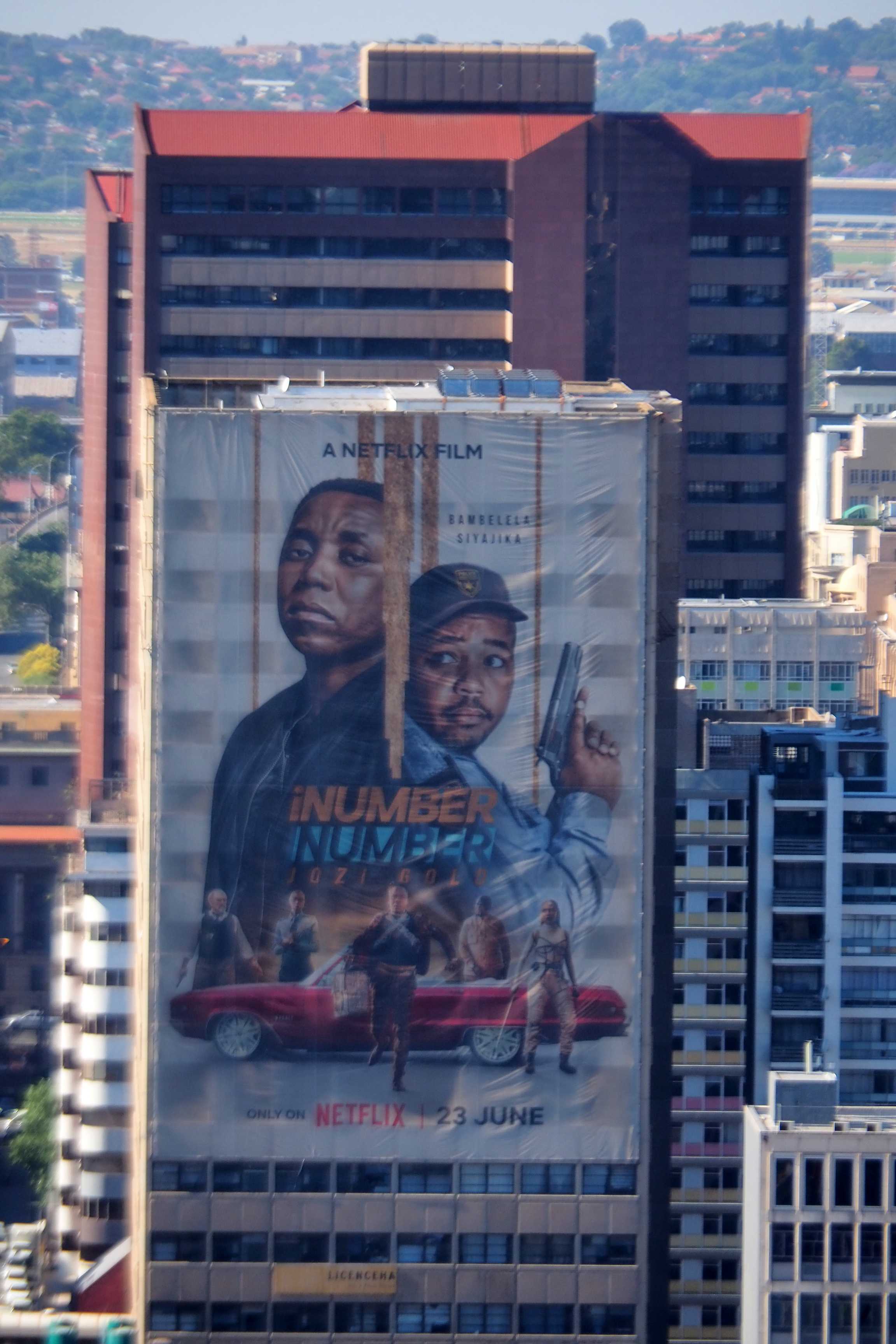
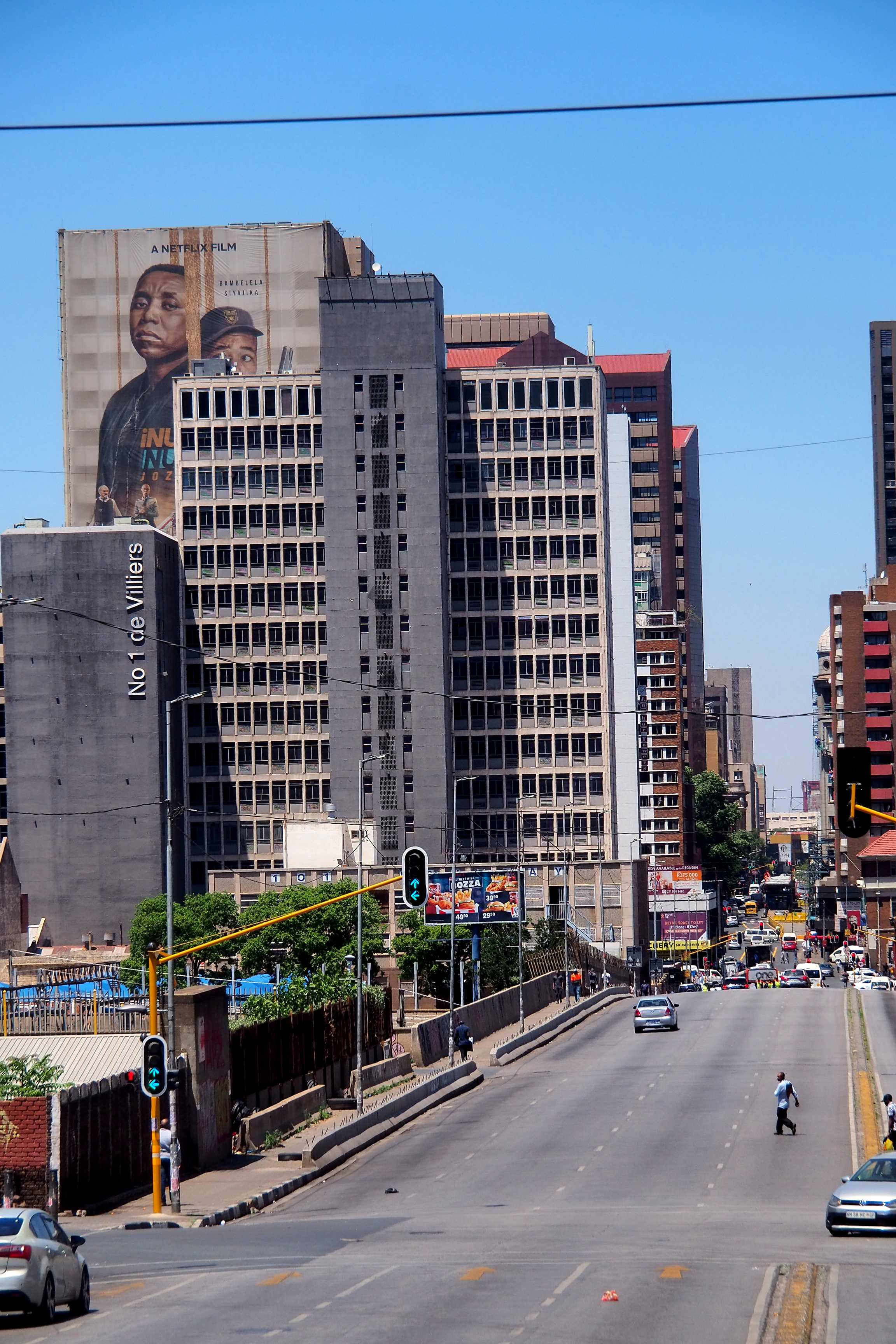
A poster of the next NETFLIX series covers the facade of a building. On the right, the 237 meters of the Sentech Tower communication tower.

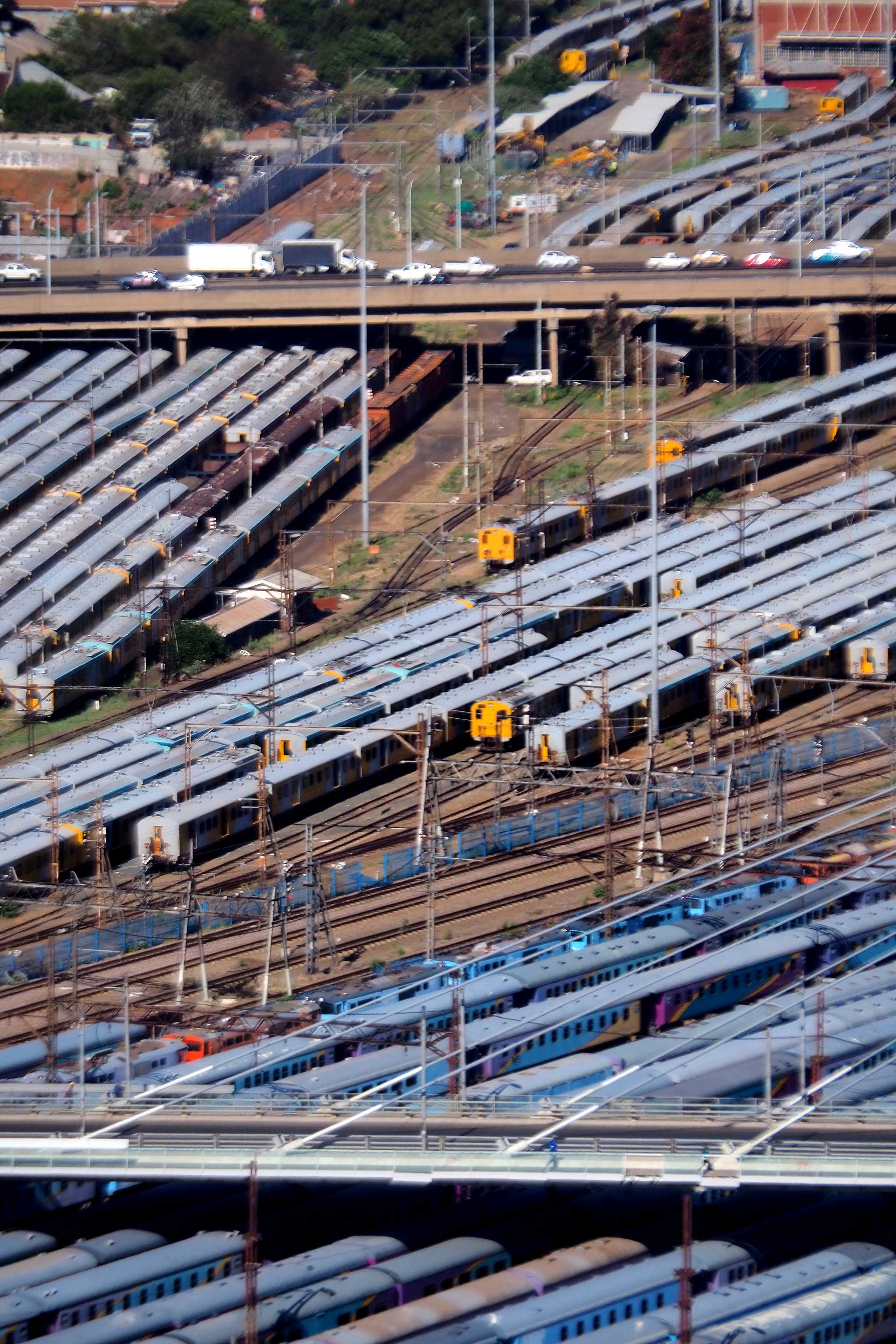
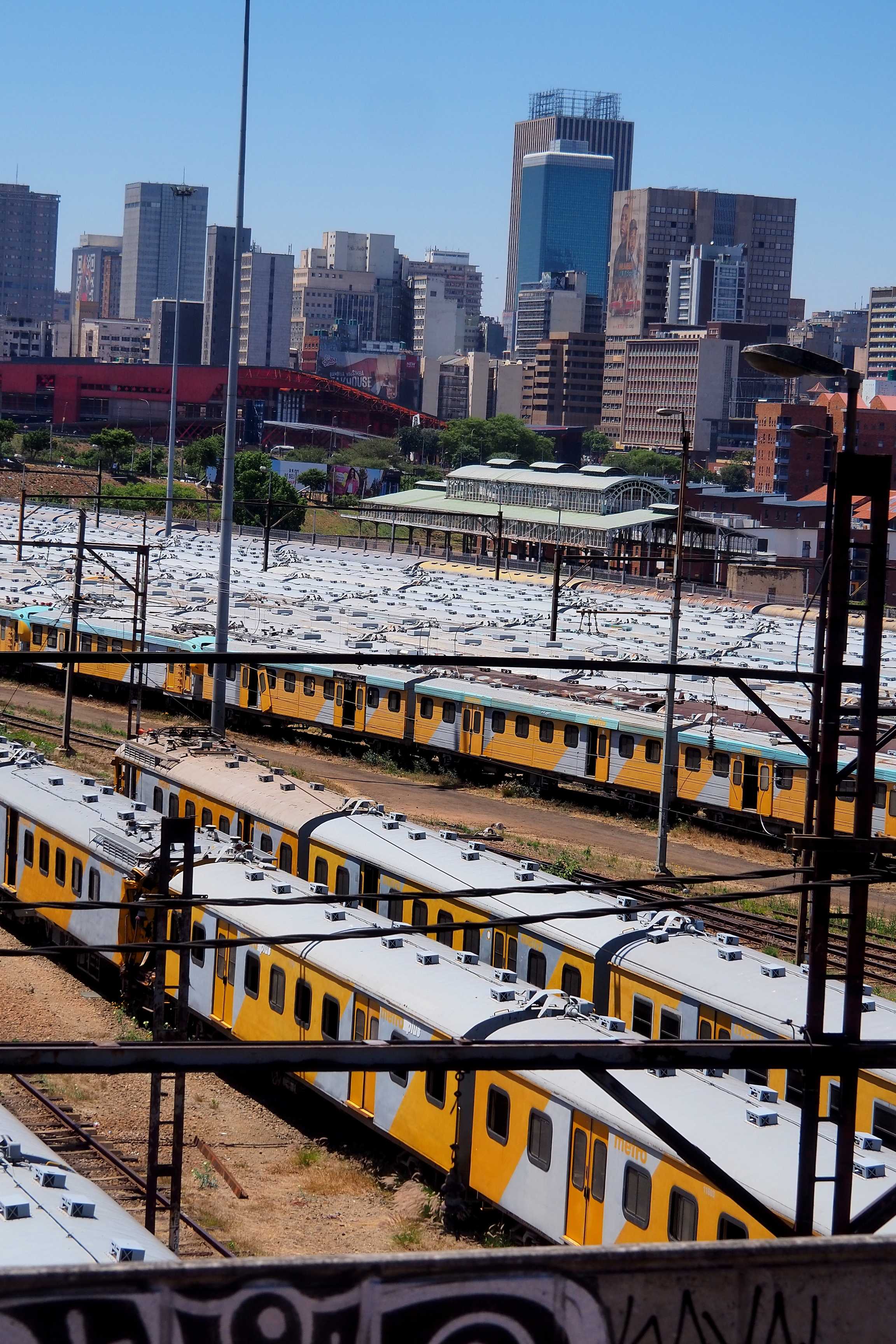
The station and its train warehouse.

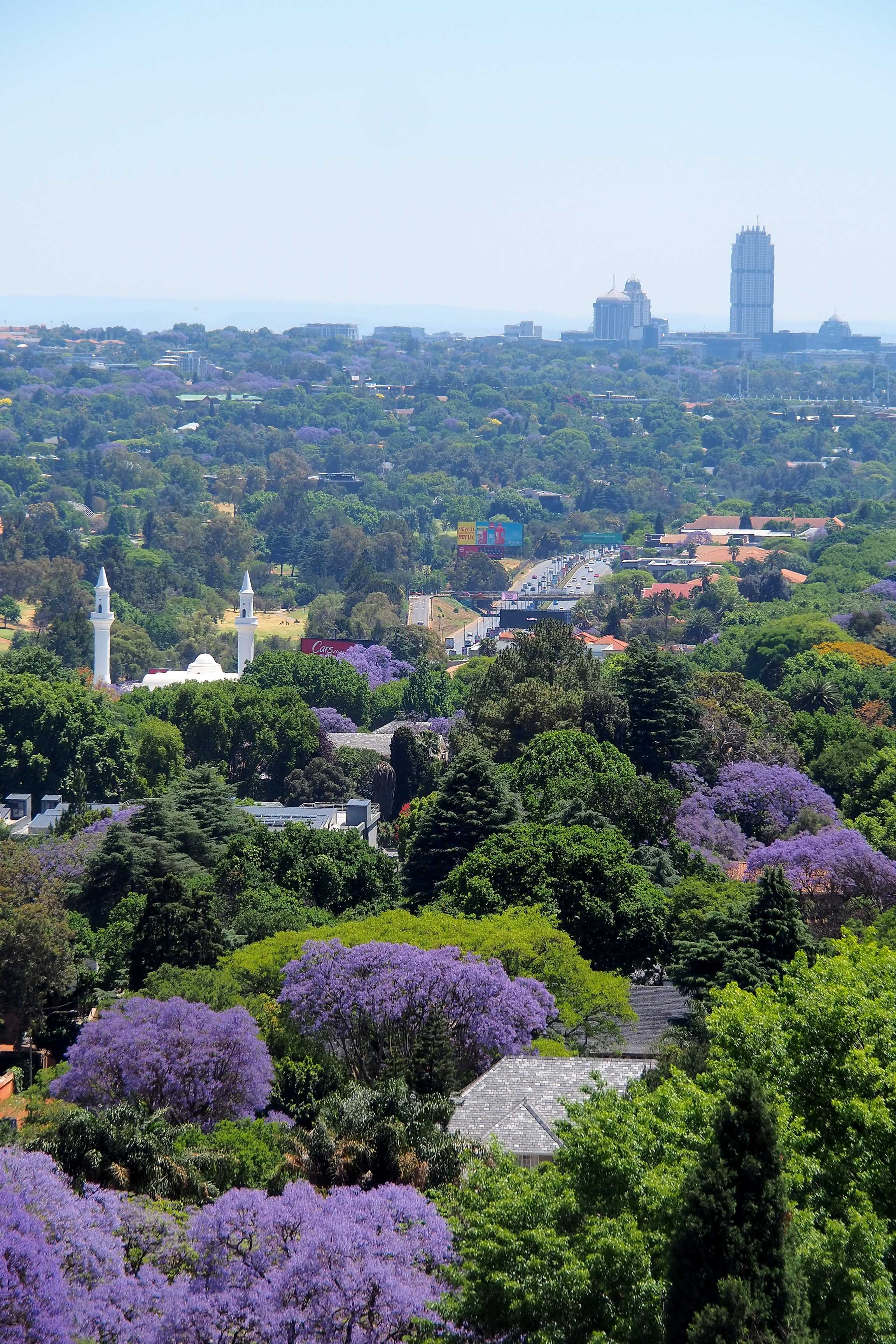
We are in the southern hemisphere and spring started a month ago already. The jacarandas are in bloom.
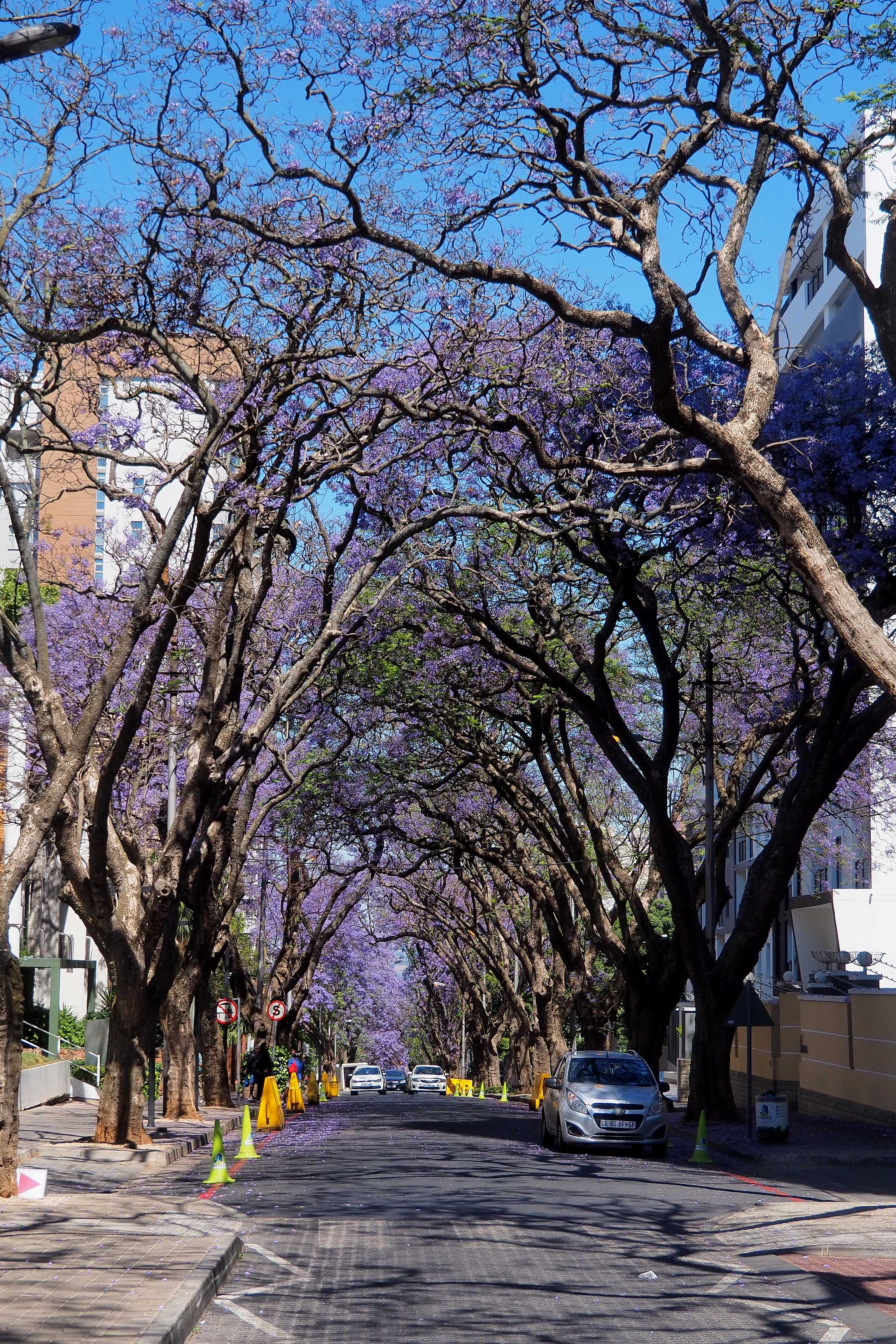

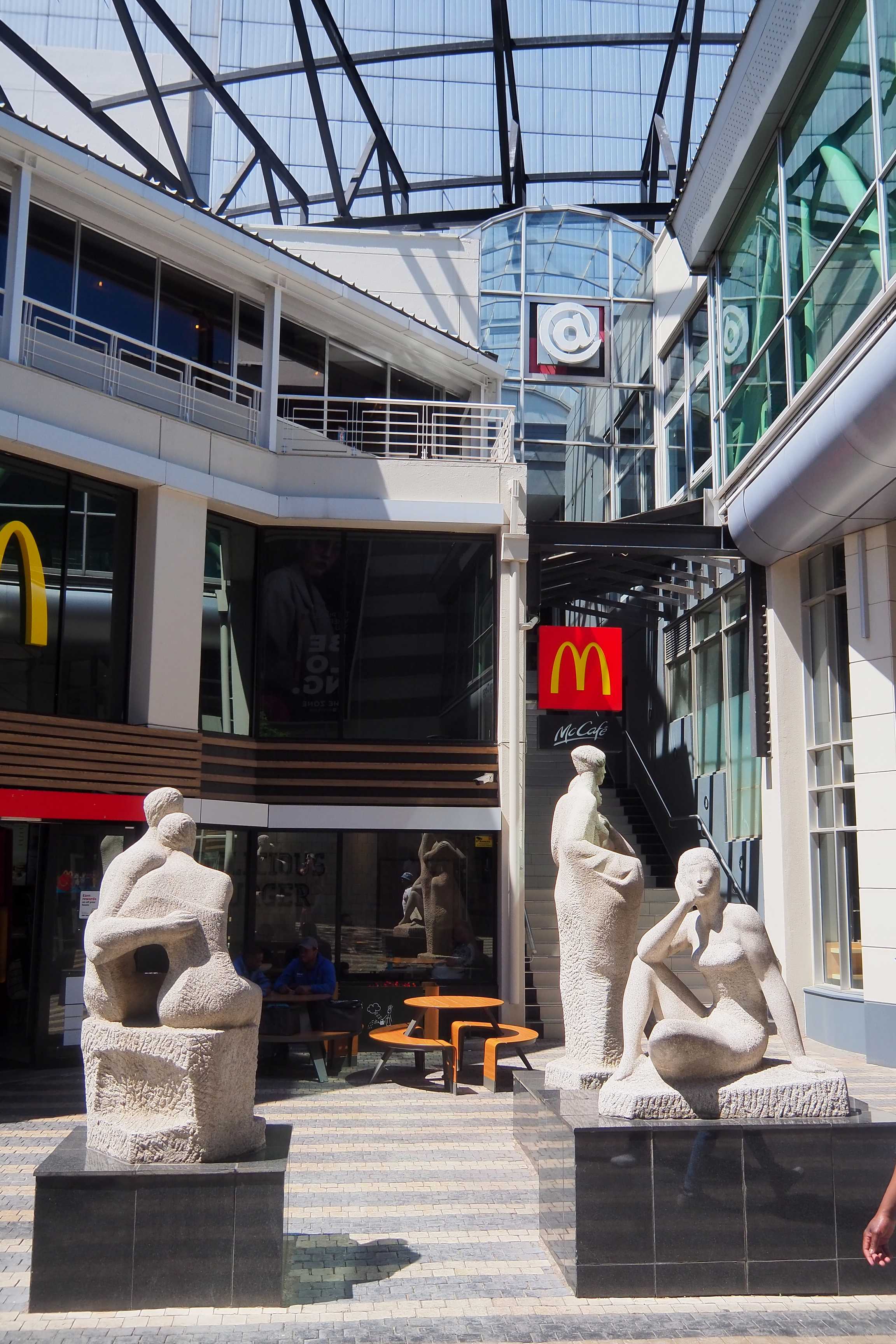
We only stay one day in the city and we only pick up the rental car tomorrow. To visit the city, we are going, for once, to try the City Tour experience in a double-decker bus...
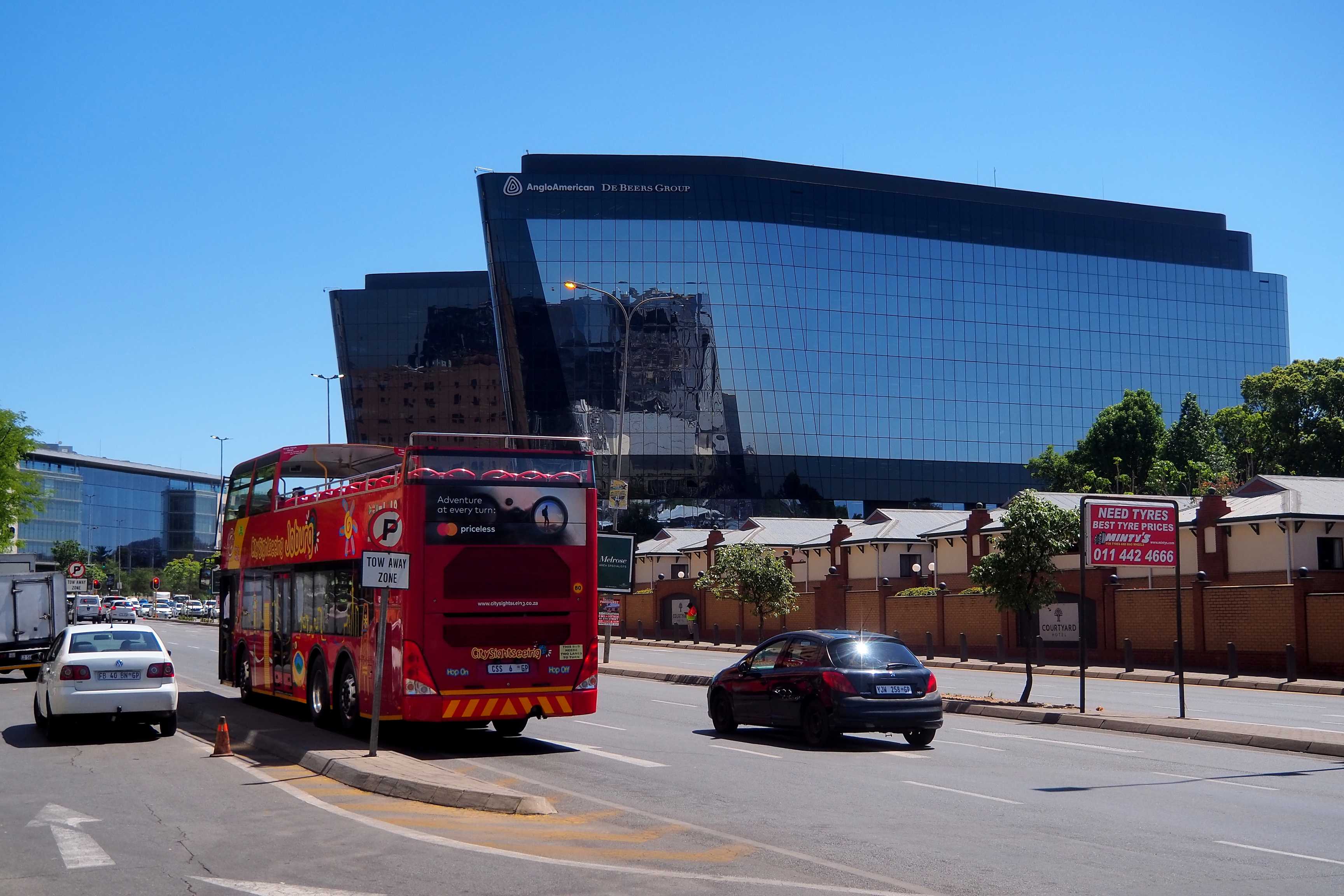
And here we go. Earphones in ears, the visit of Johannesburg begins at ultra-fast speed... 

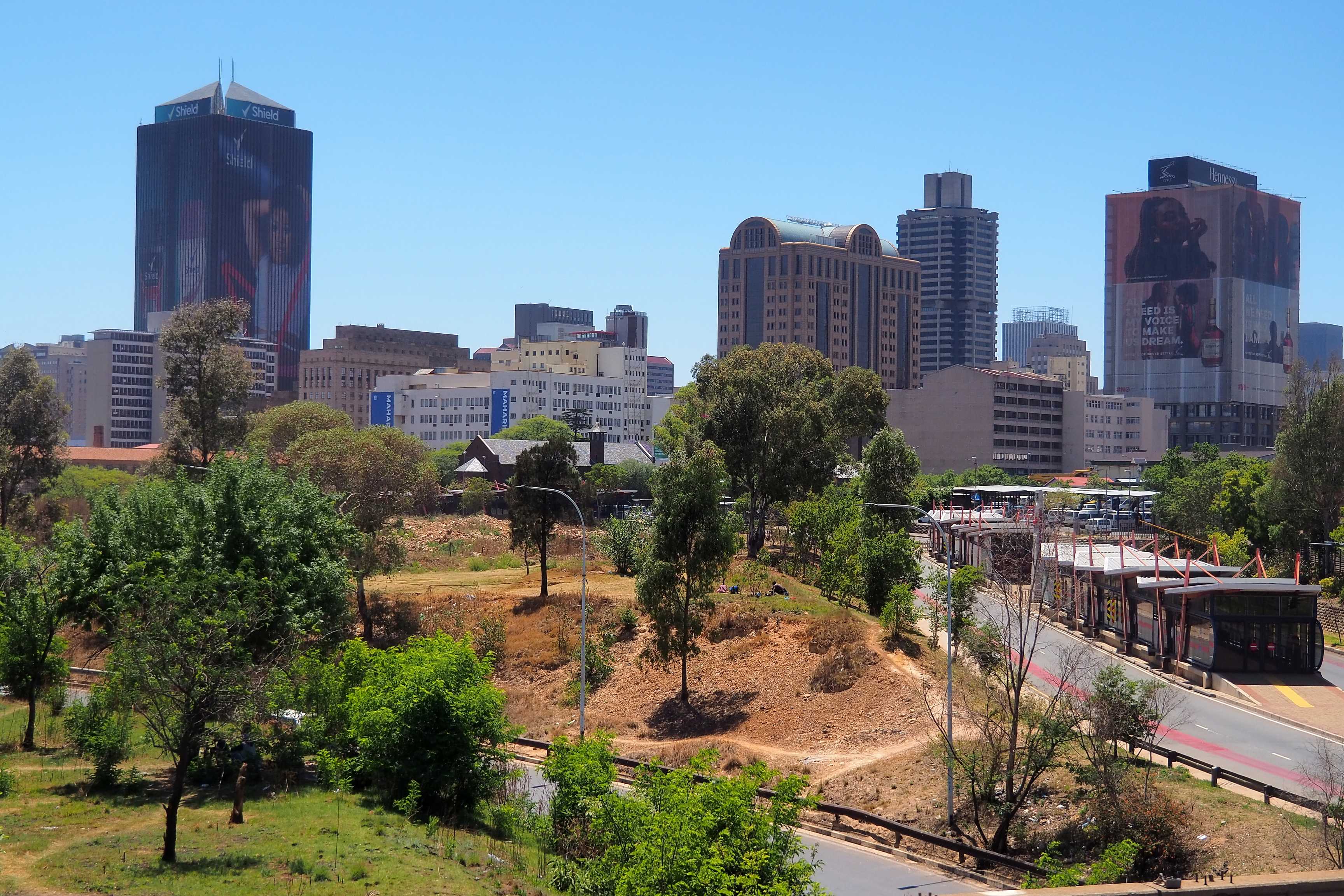
View of the jacarandas from the north of the city.
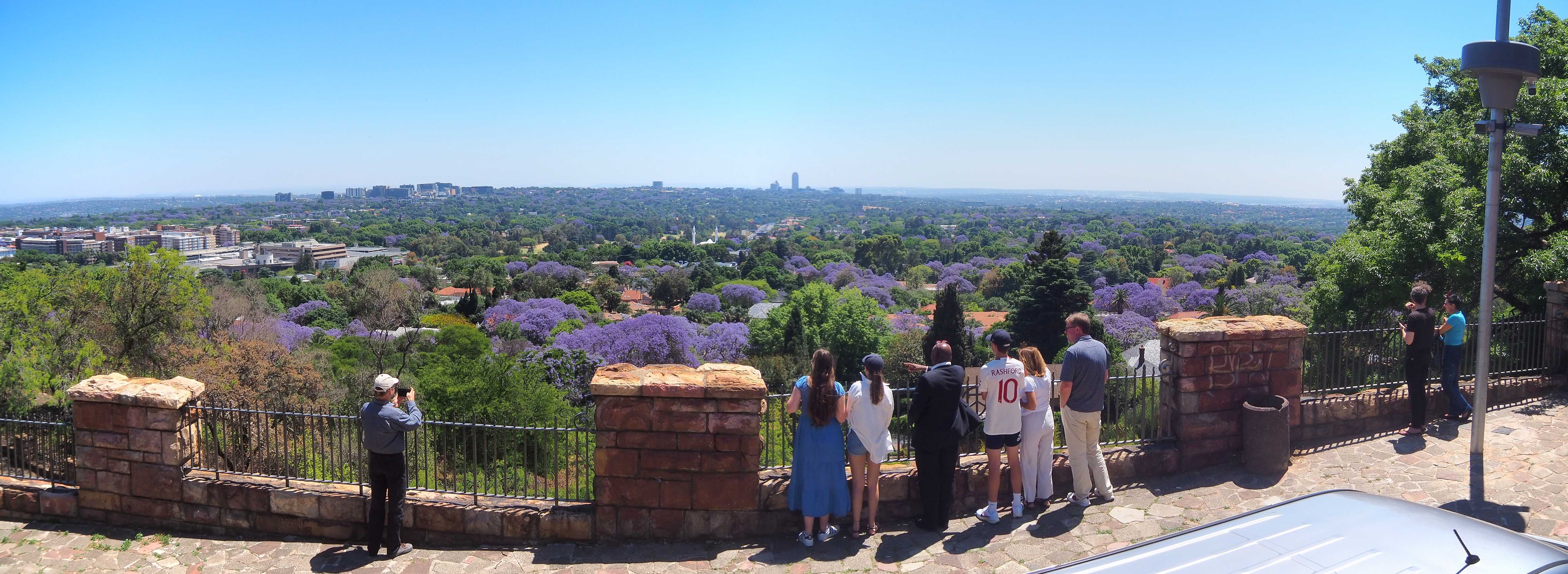

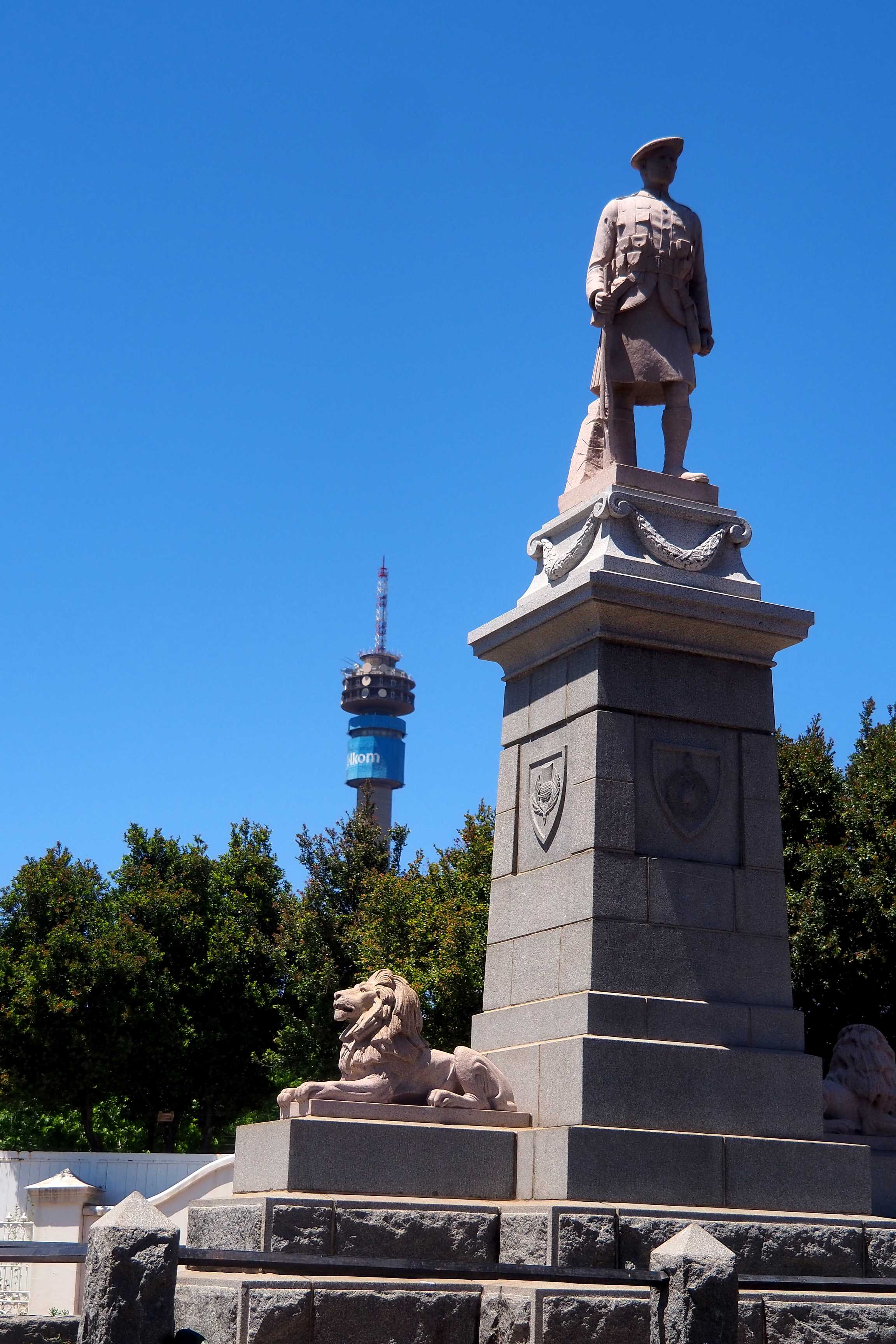
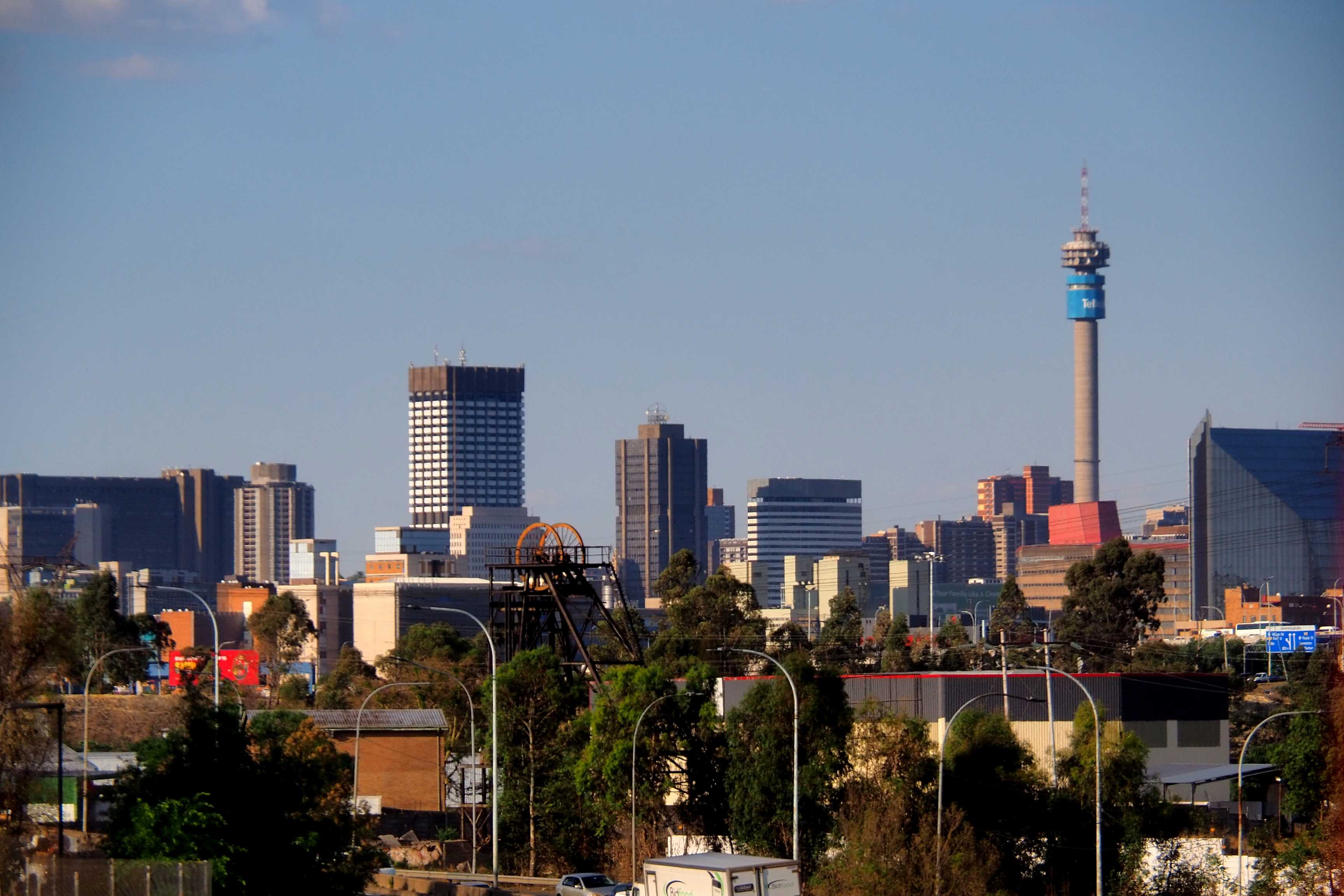
Transvaal Scottish War Memorial and Hillbrow Tower.

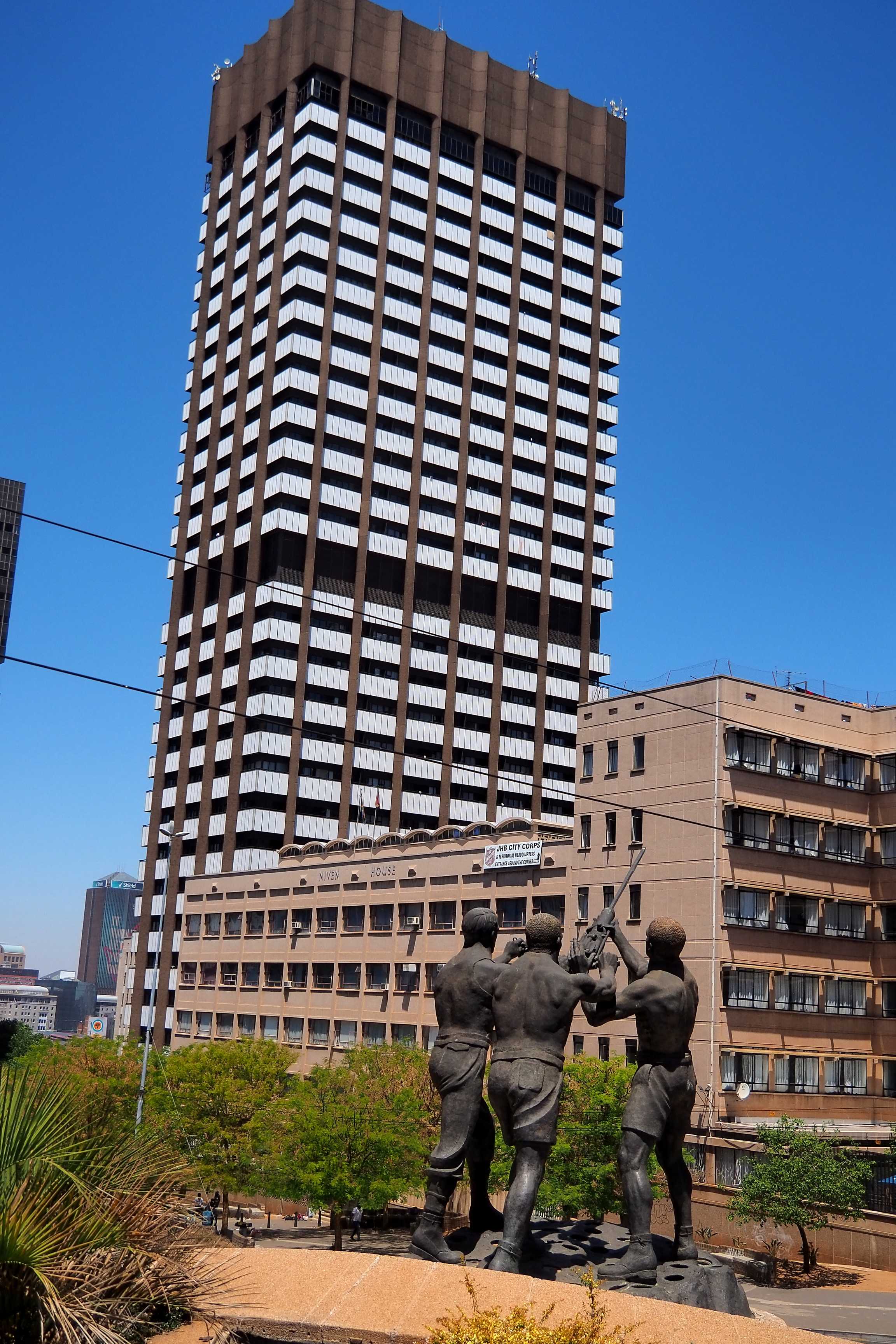
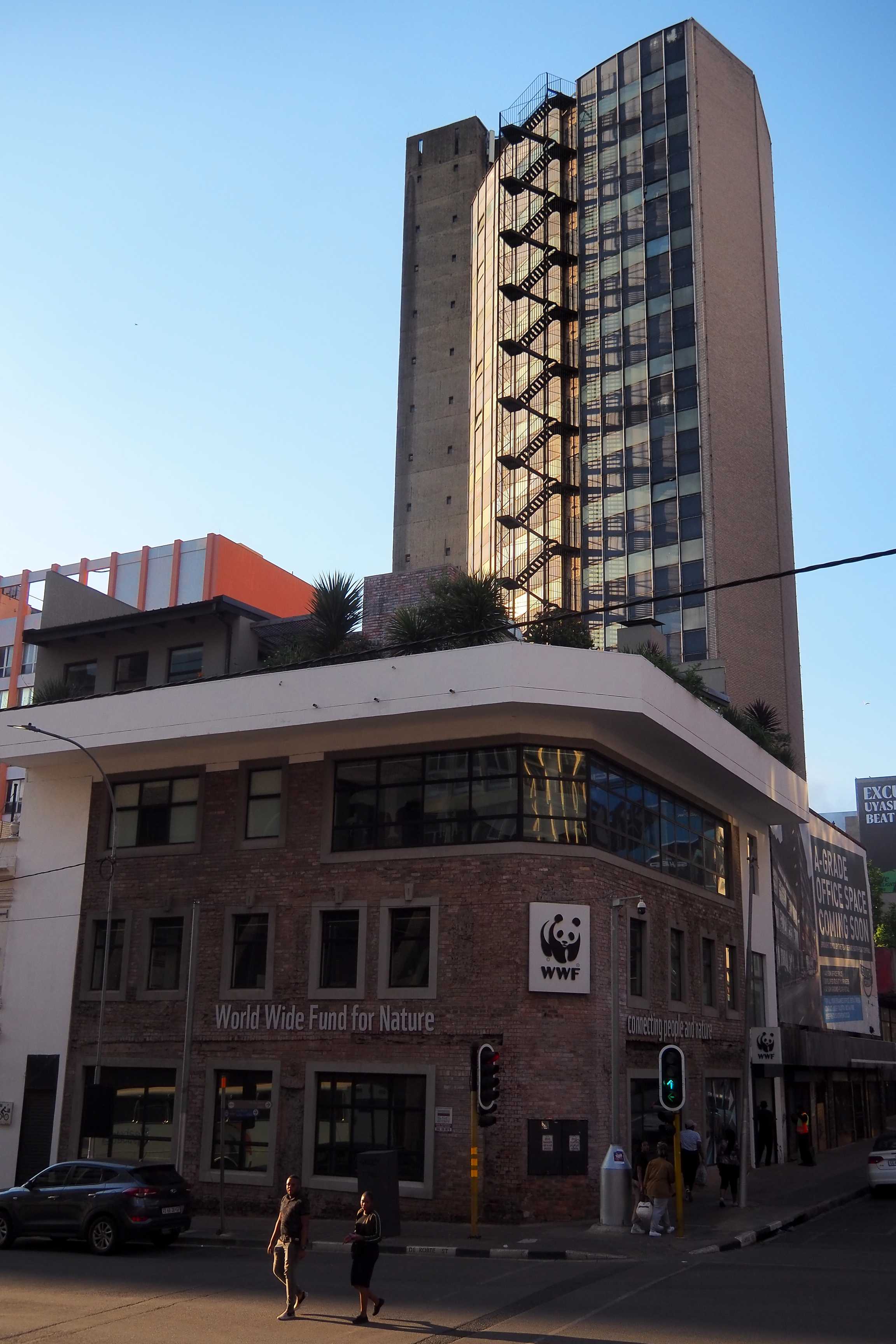
In the middle photo, the building in which we stay. On the 23rd floor out of the 30 that compose it.

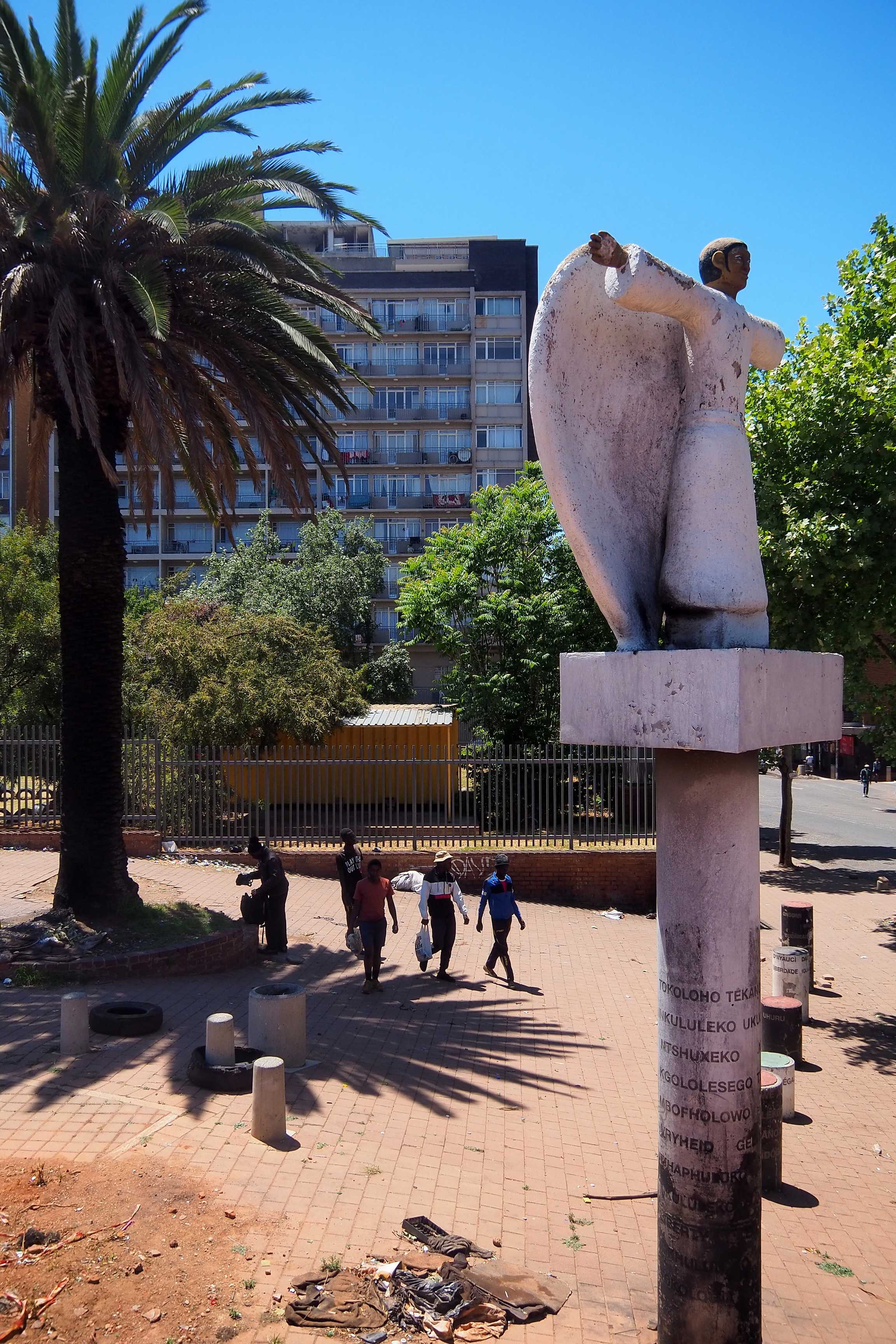
The Angel of the North statue by sculptor Winston Luthuli.

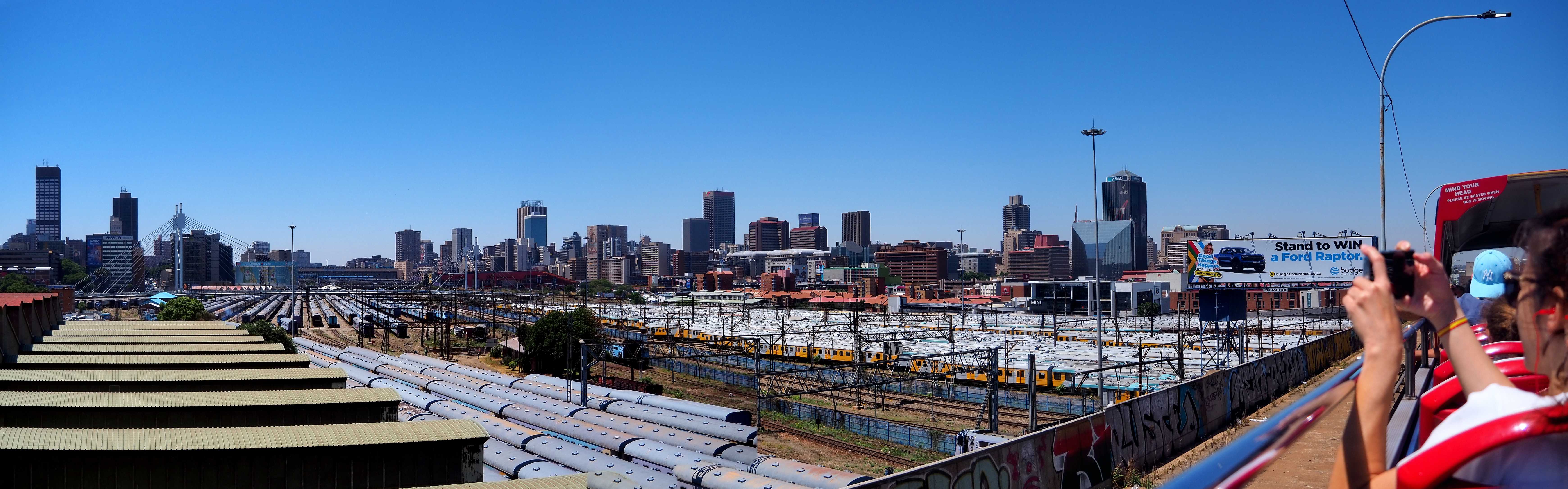

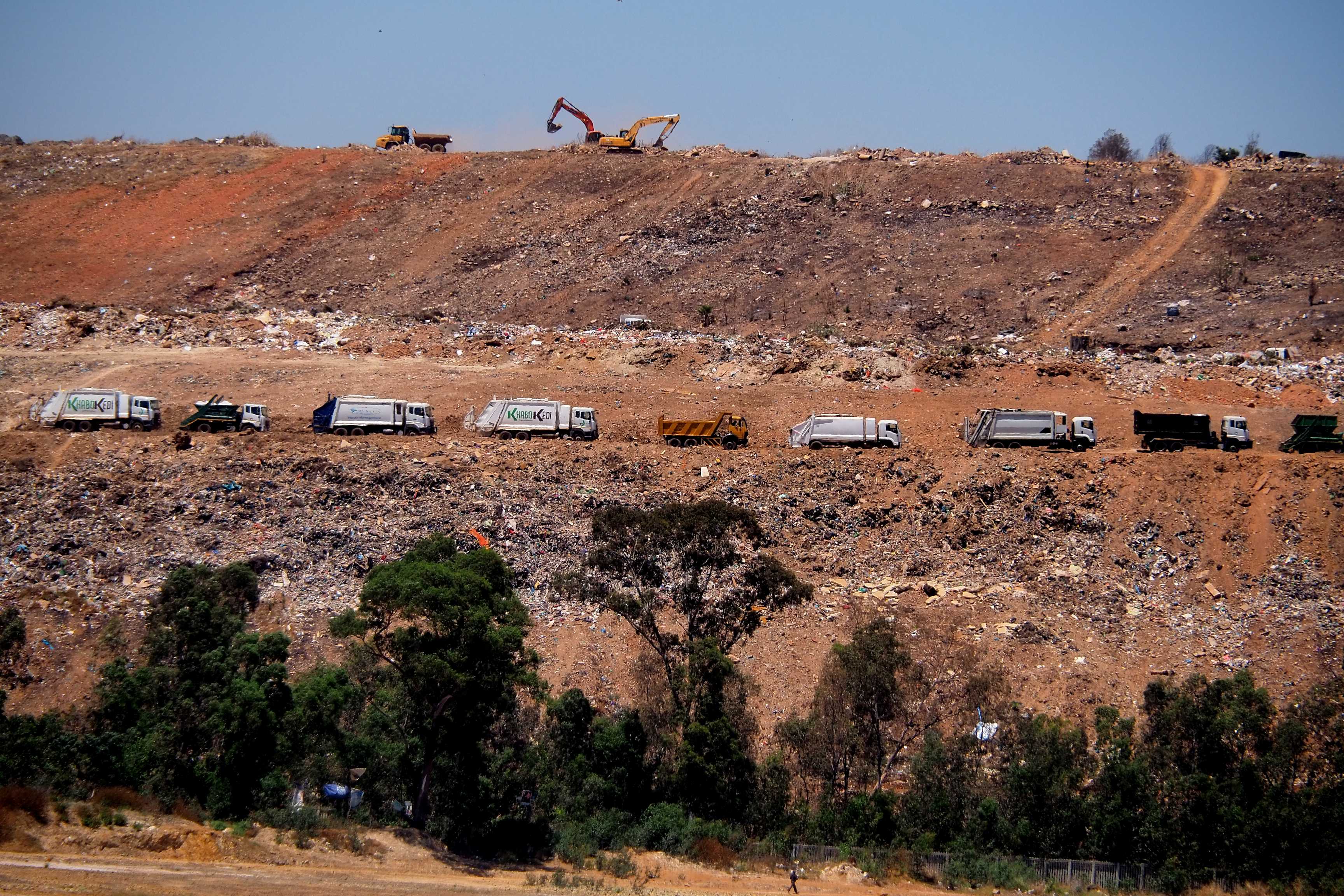
In the distance, the "Robinson Deep Mine", one of the deepest mines extracting gold.
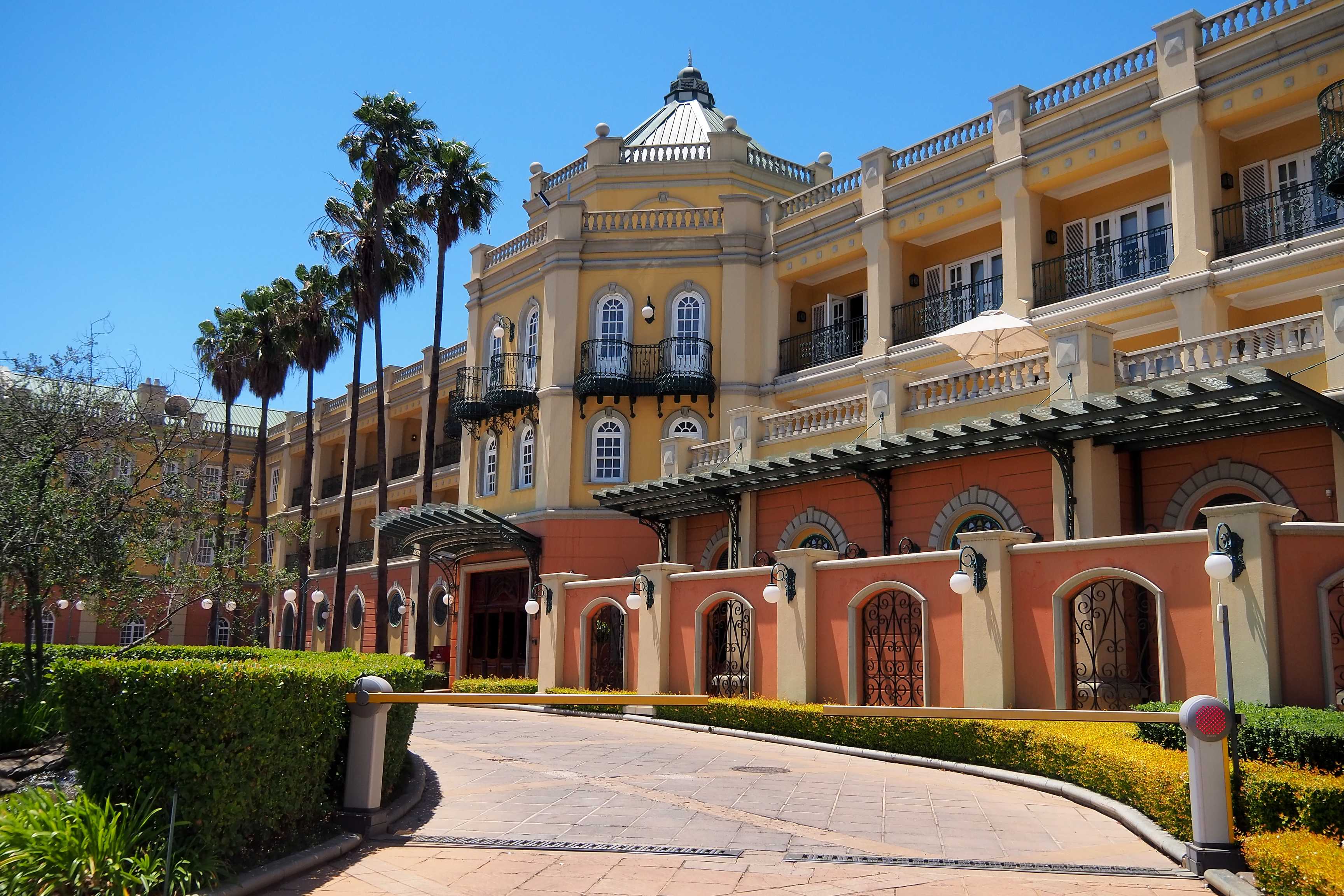
The Gold Reef City Casino
Stop at the Gold Reef City Casino to wait for a small bus that will take us to the Soweto district.
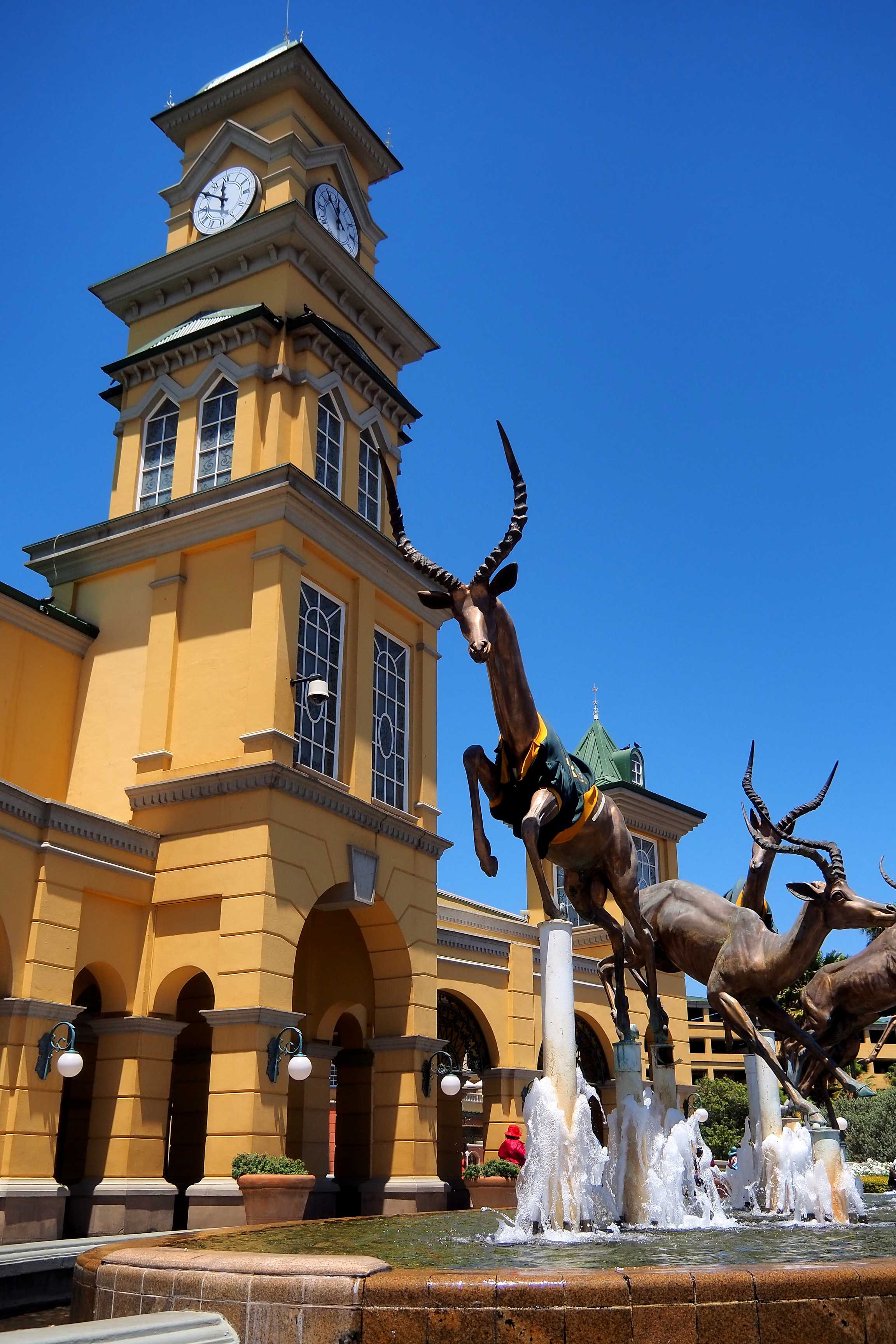
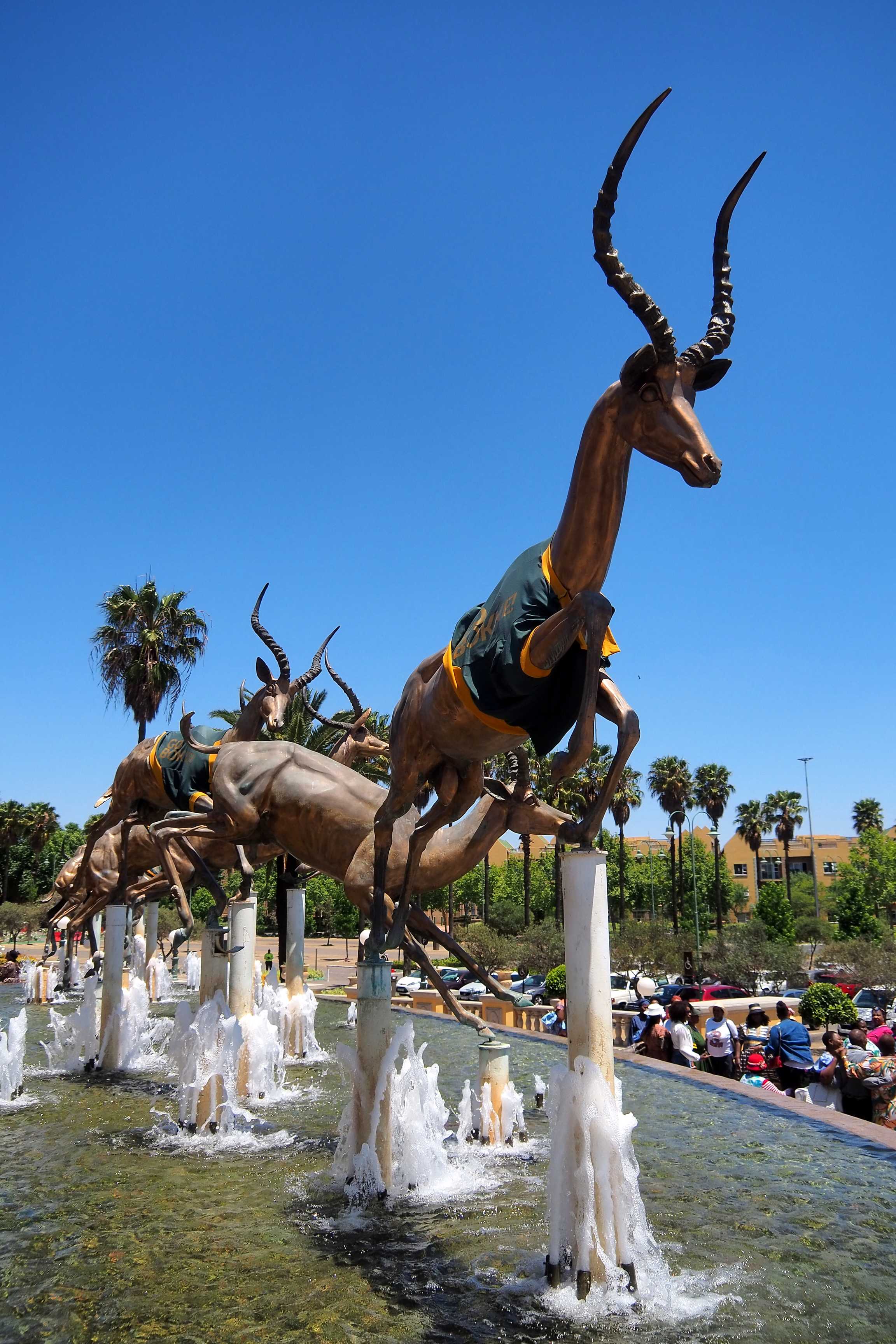
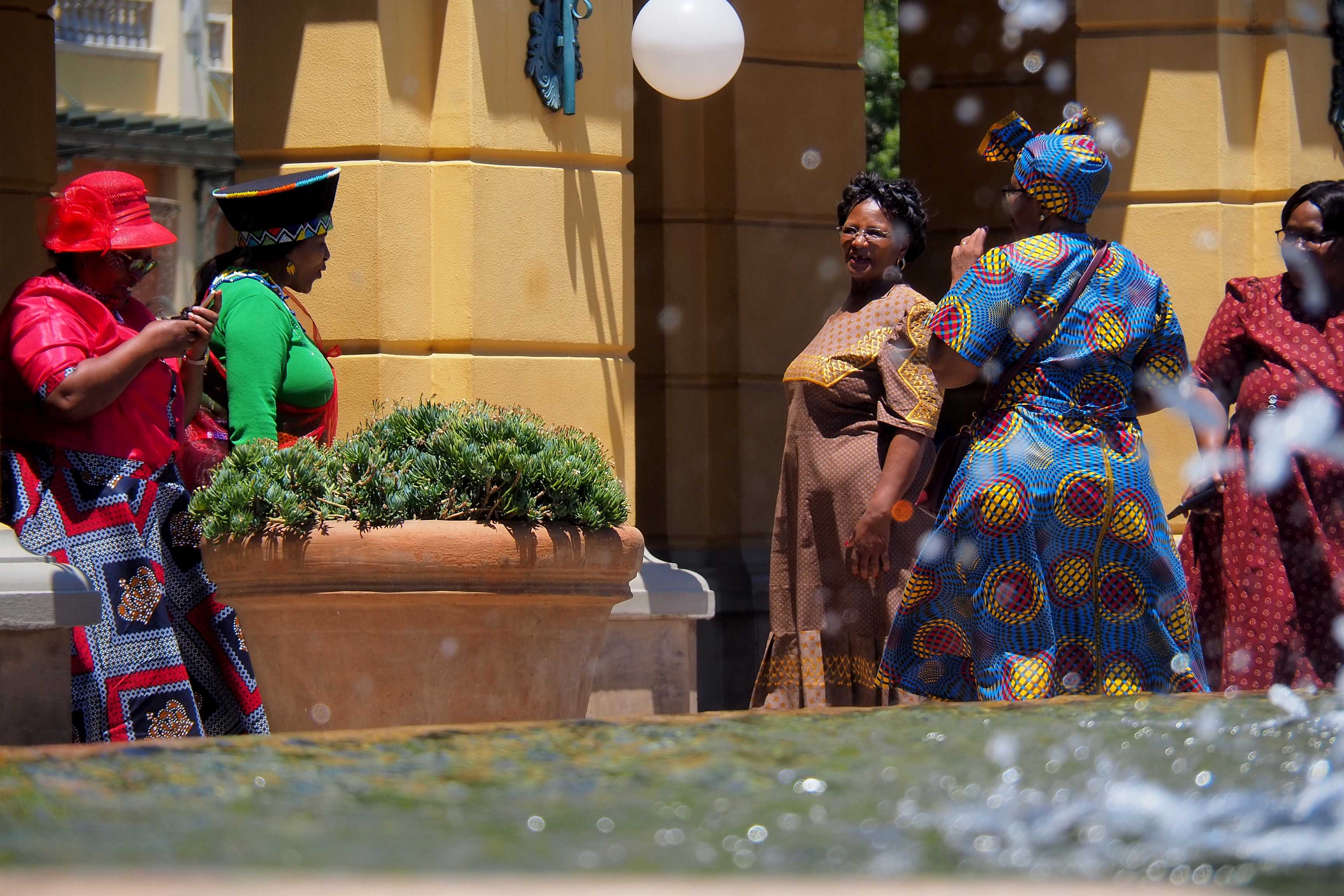
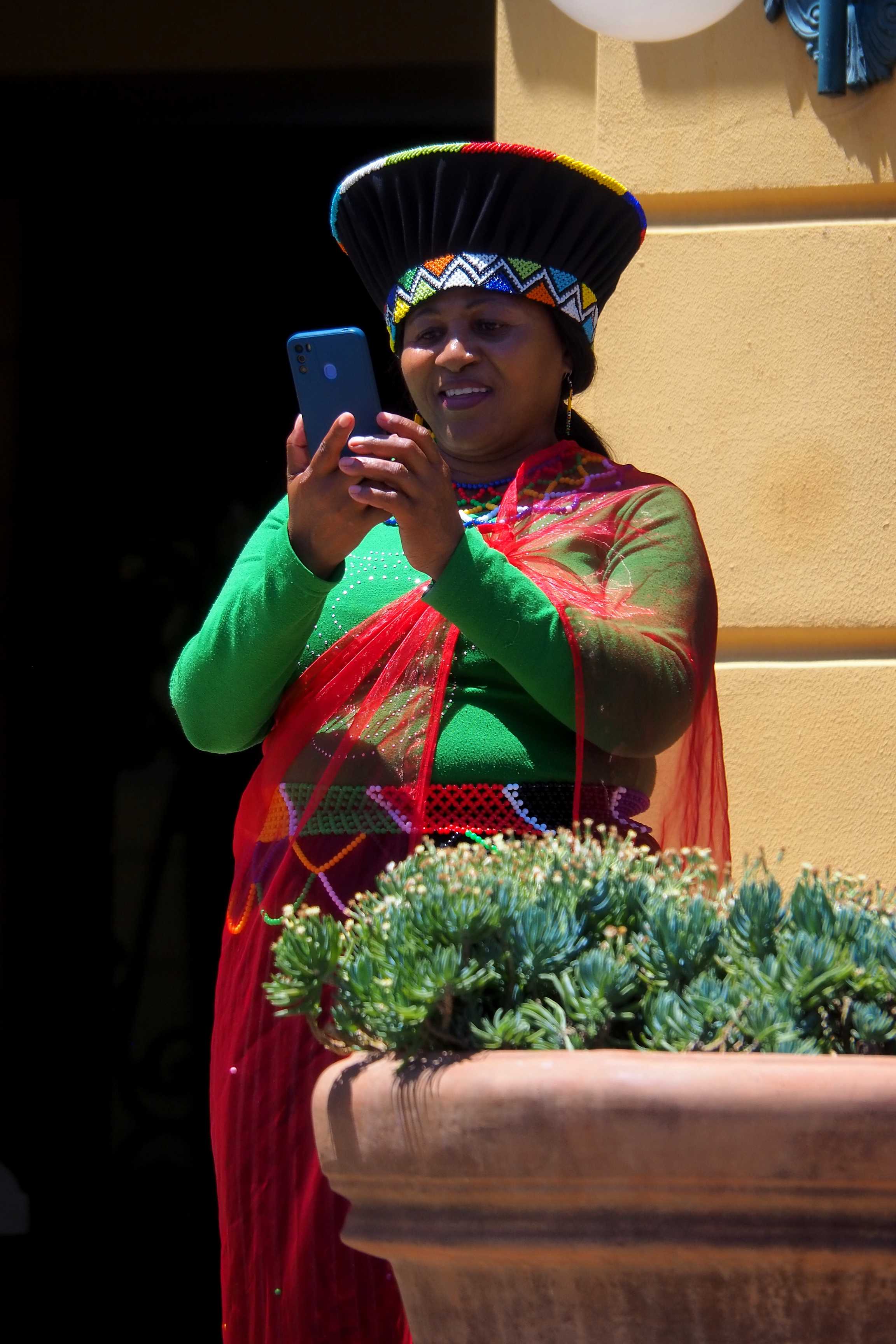
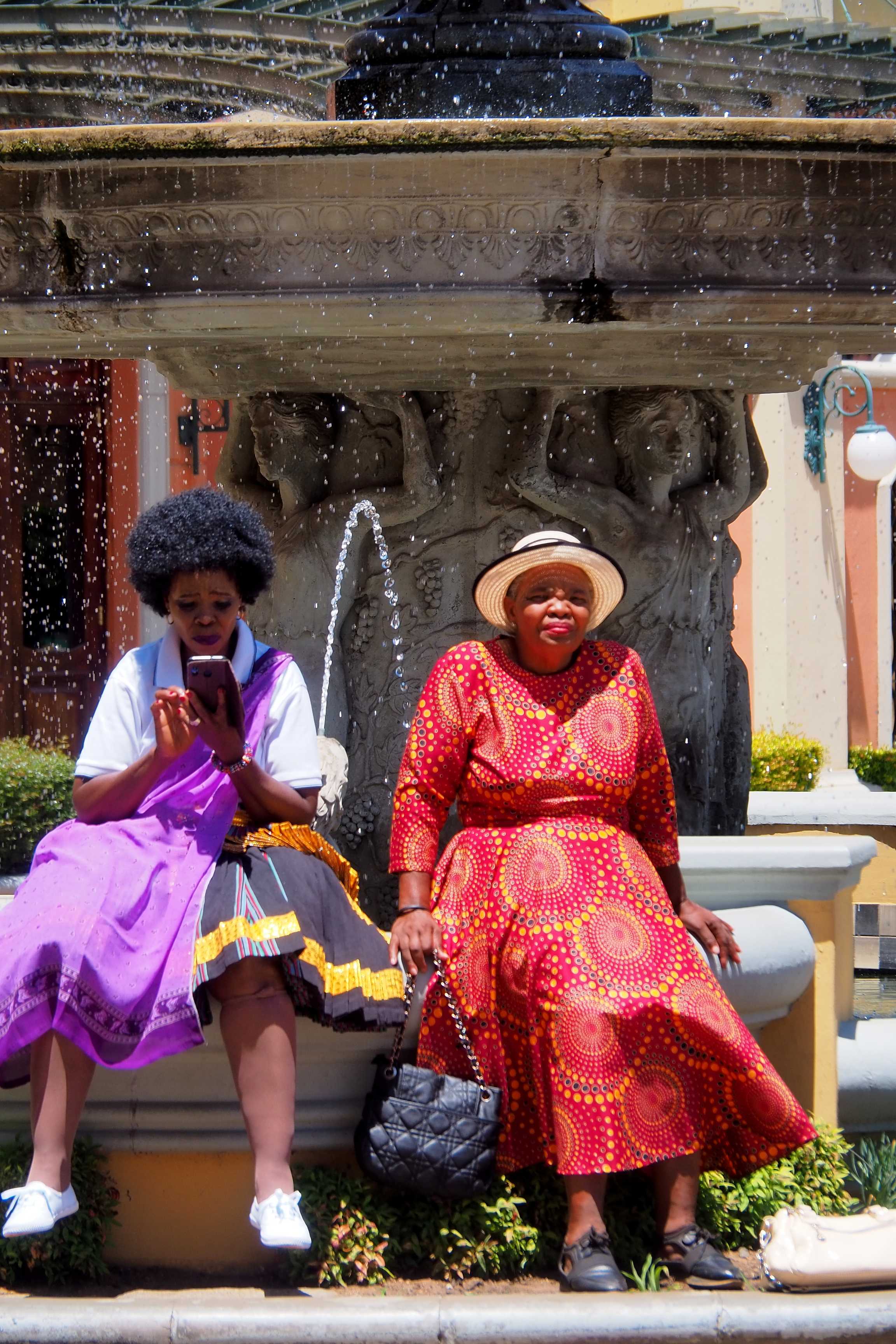
There are not only foreign tourists. Zulu women in traditional clothes also enjoy the place.

Soweto
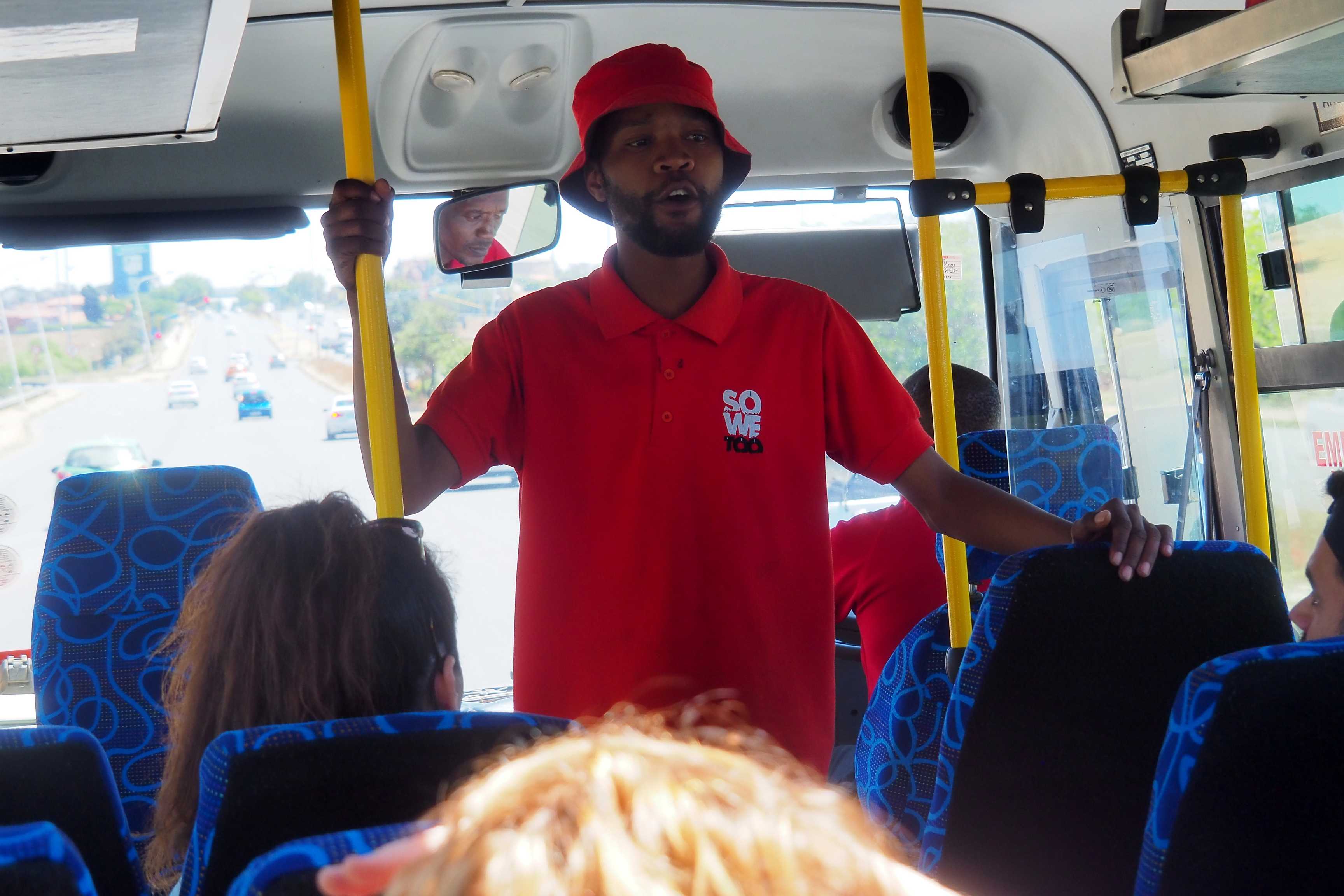
Change of bus to reach the Soweto district.
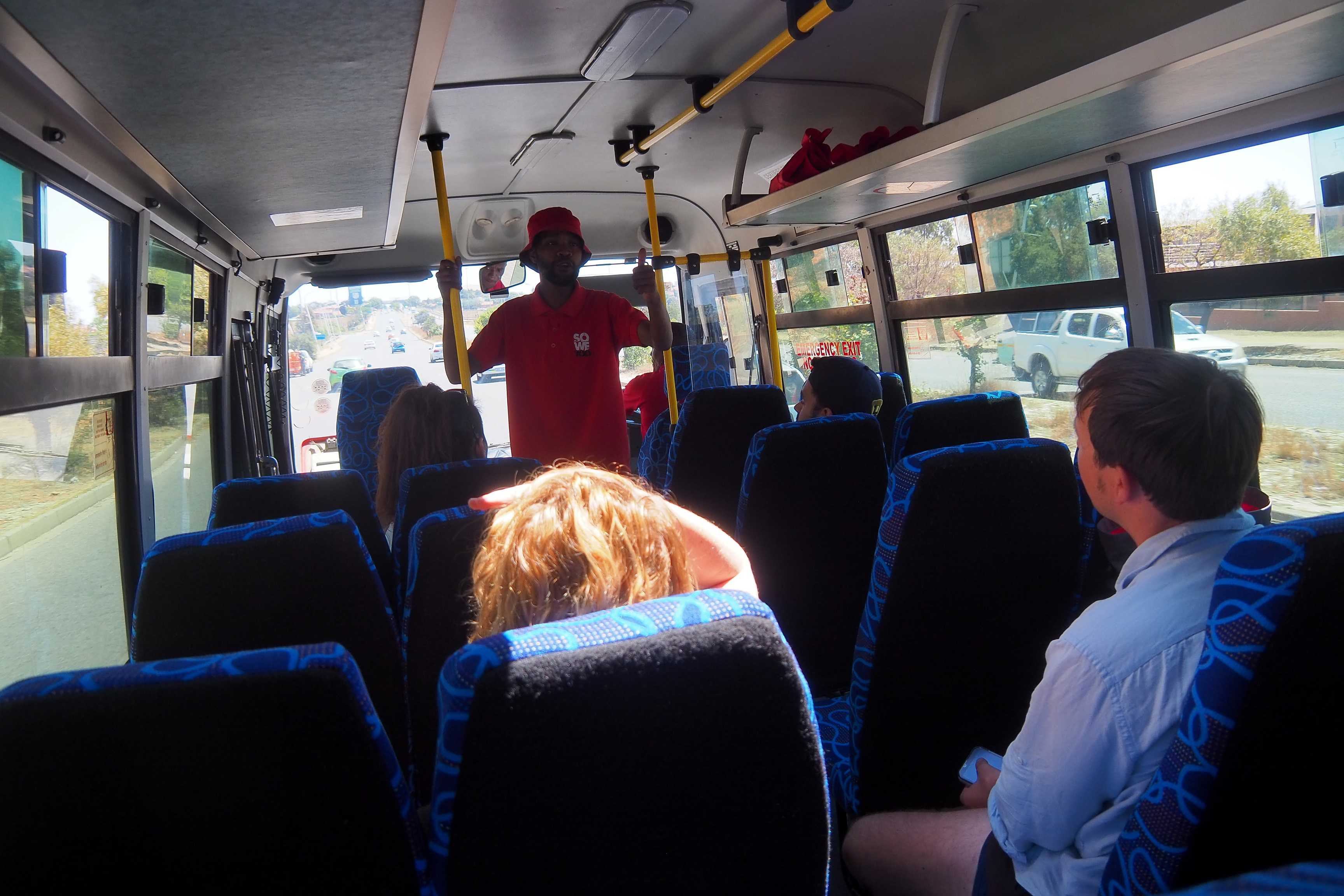
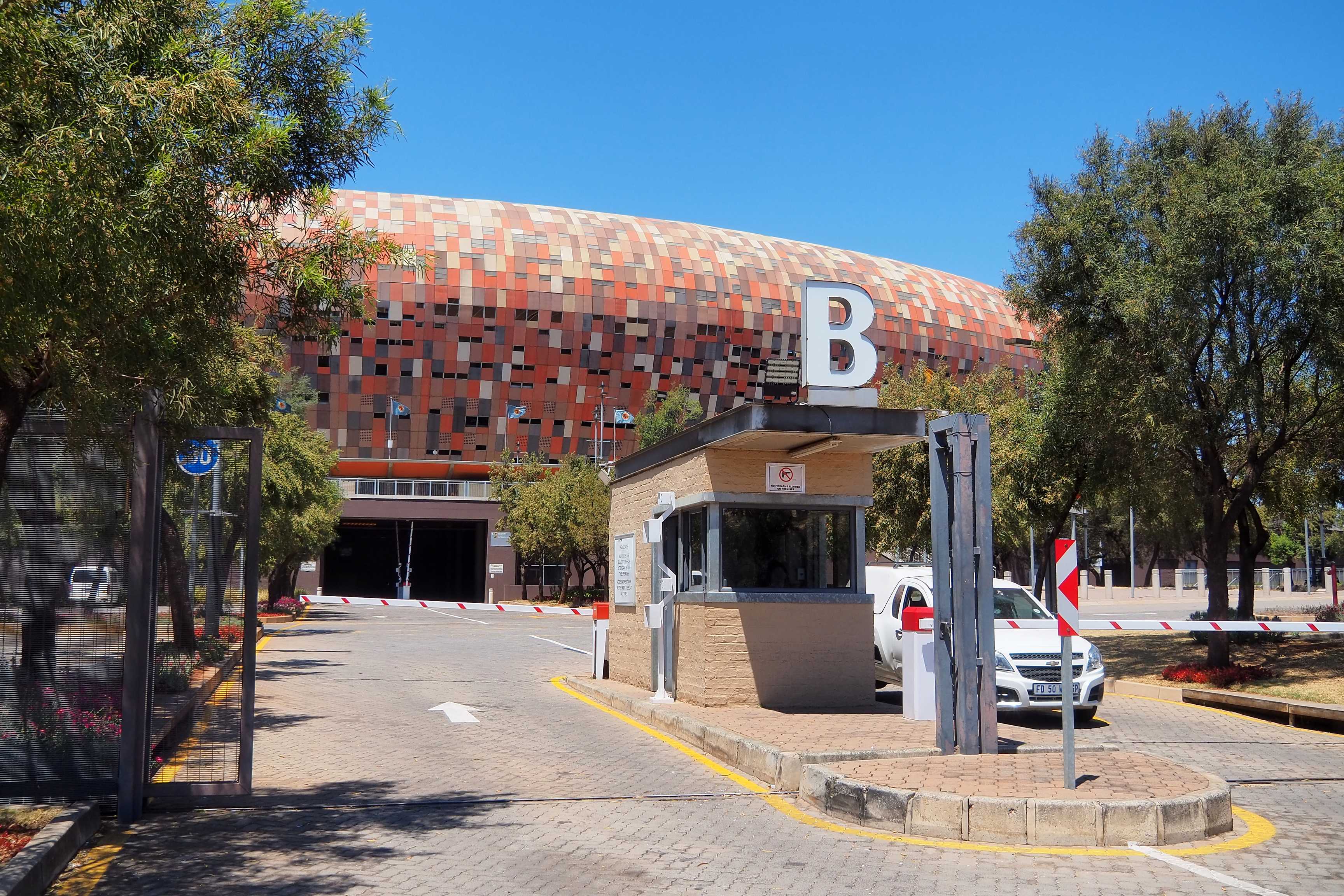
Passing by the FNB stadium, the largest of the stadiums that hosted the 2010 football world cup.

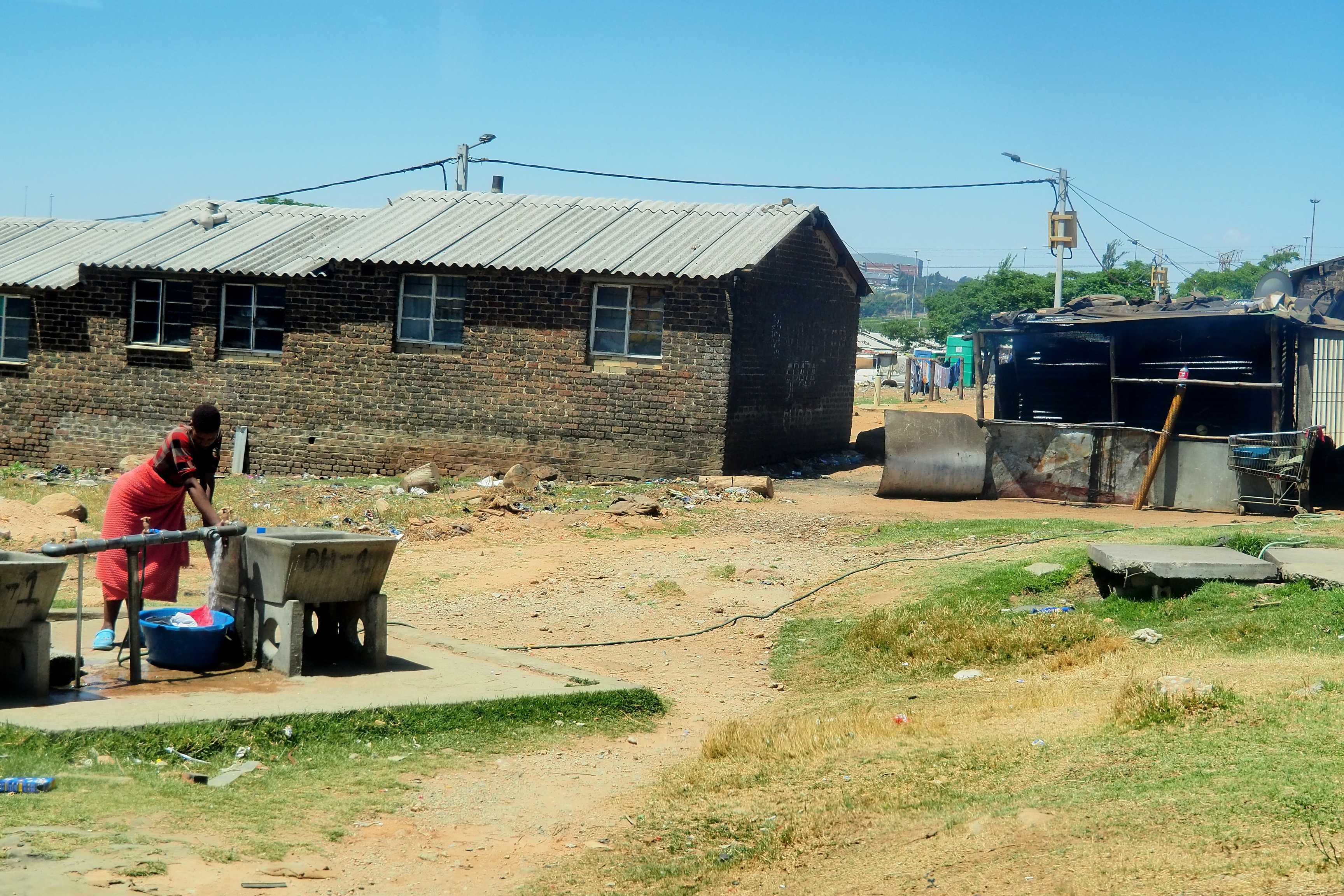
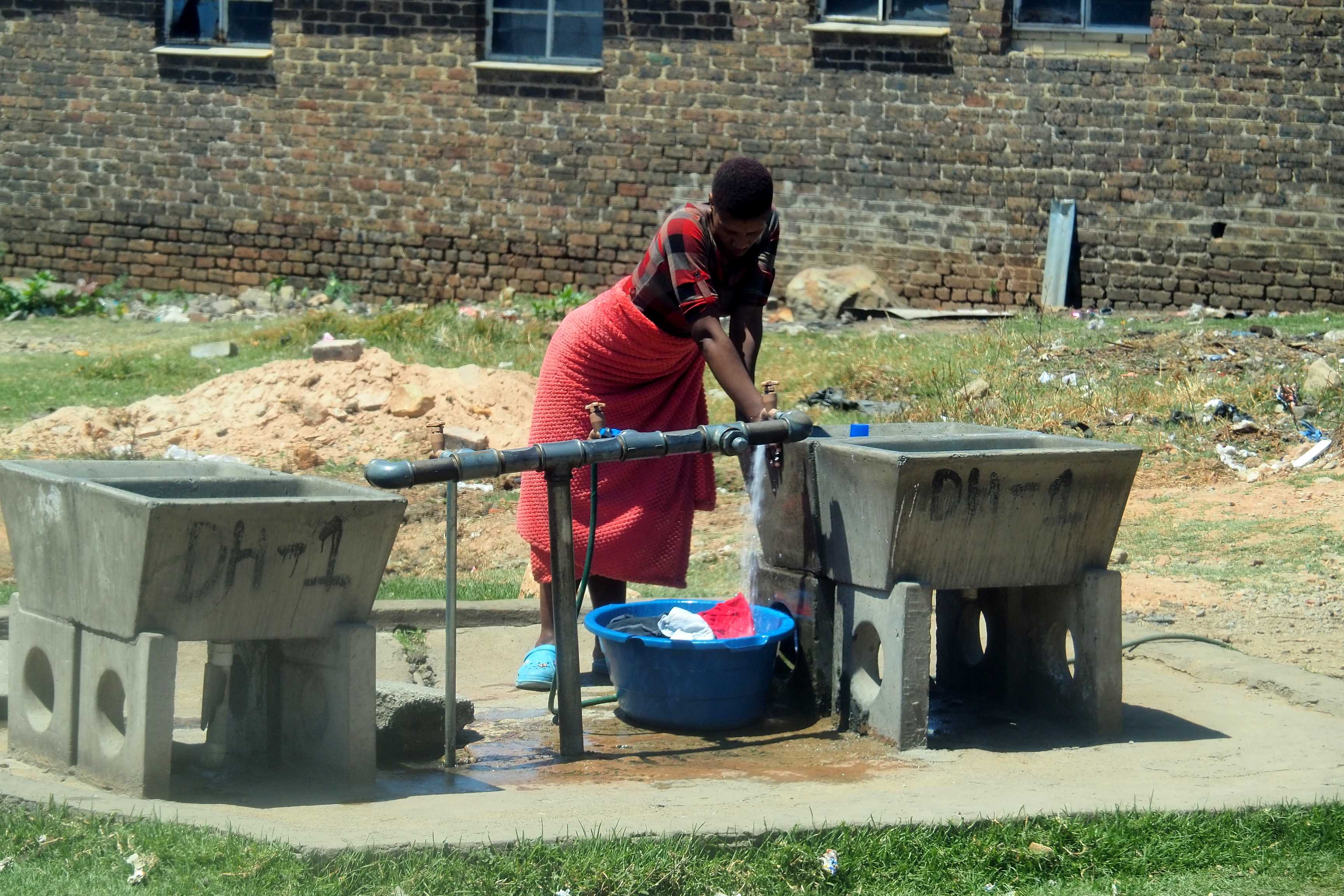
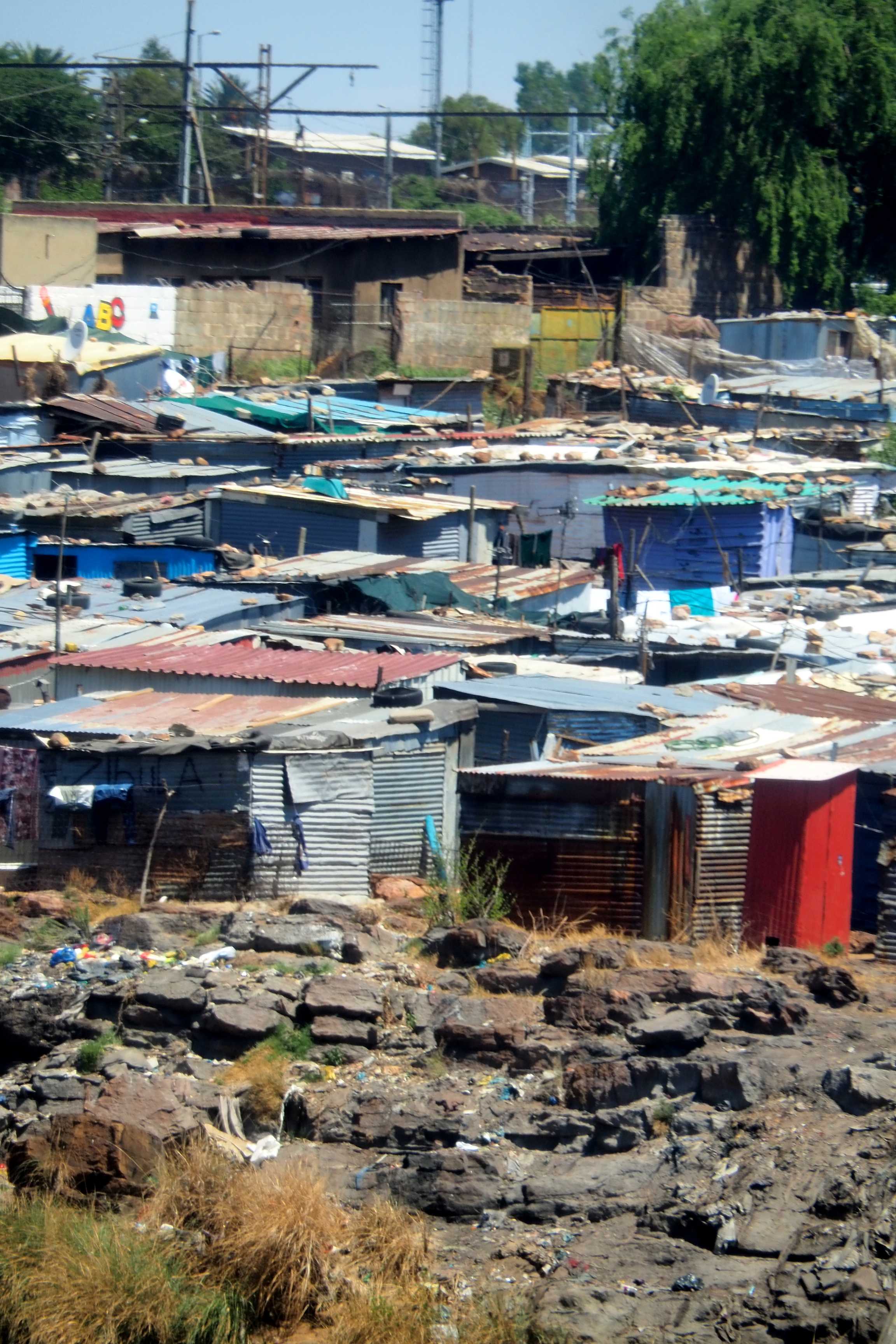
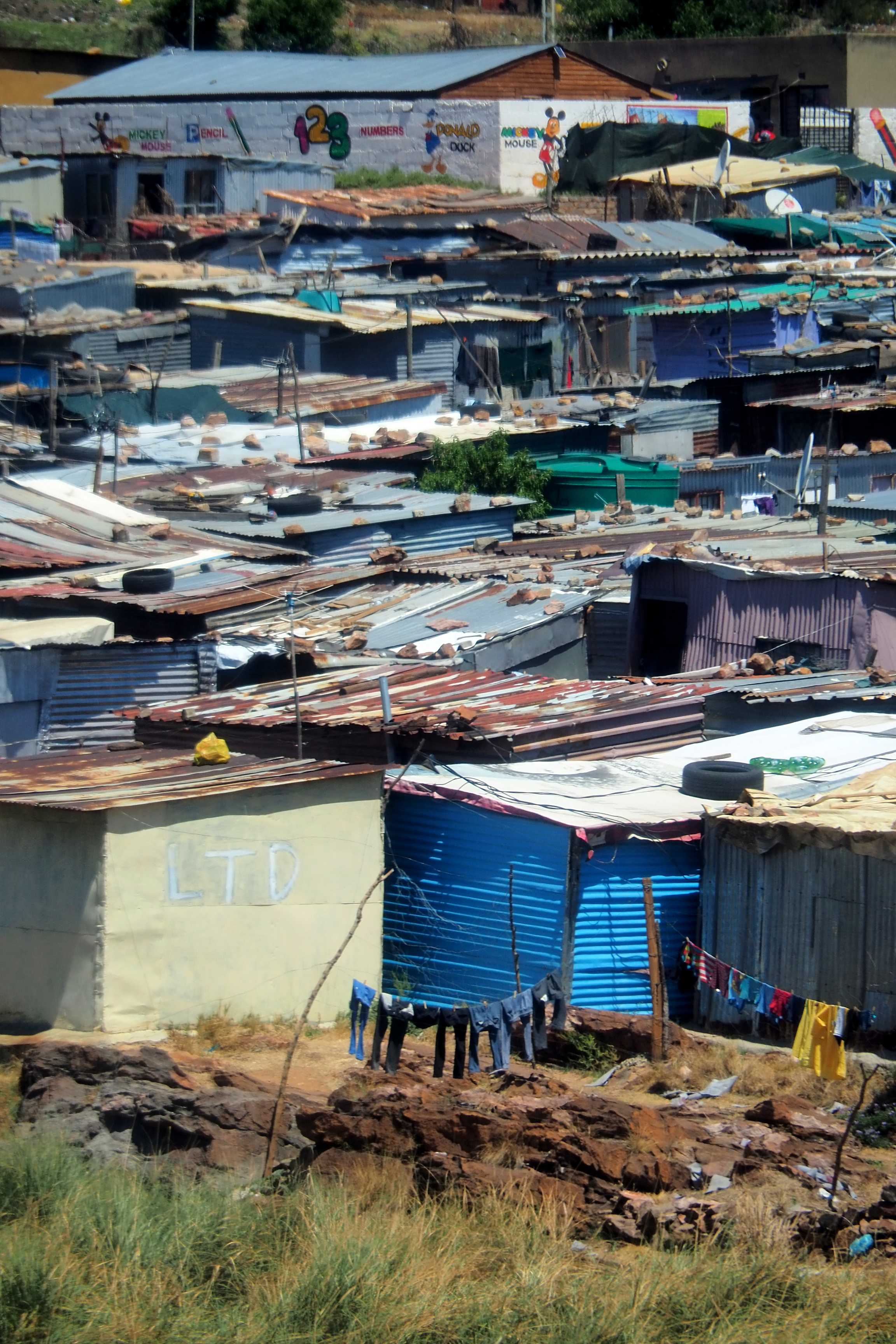
Here we are in the "township" of Soweto. "A township designates, in South Africa, a poor and underdeveloped district reserved for non-Whites. © Wikipedia
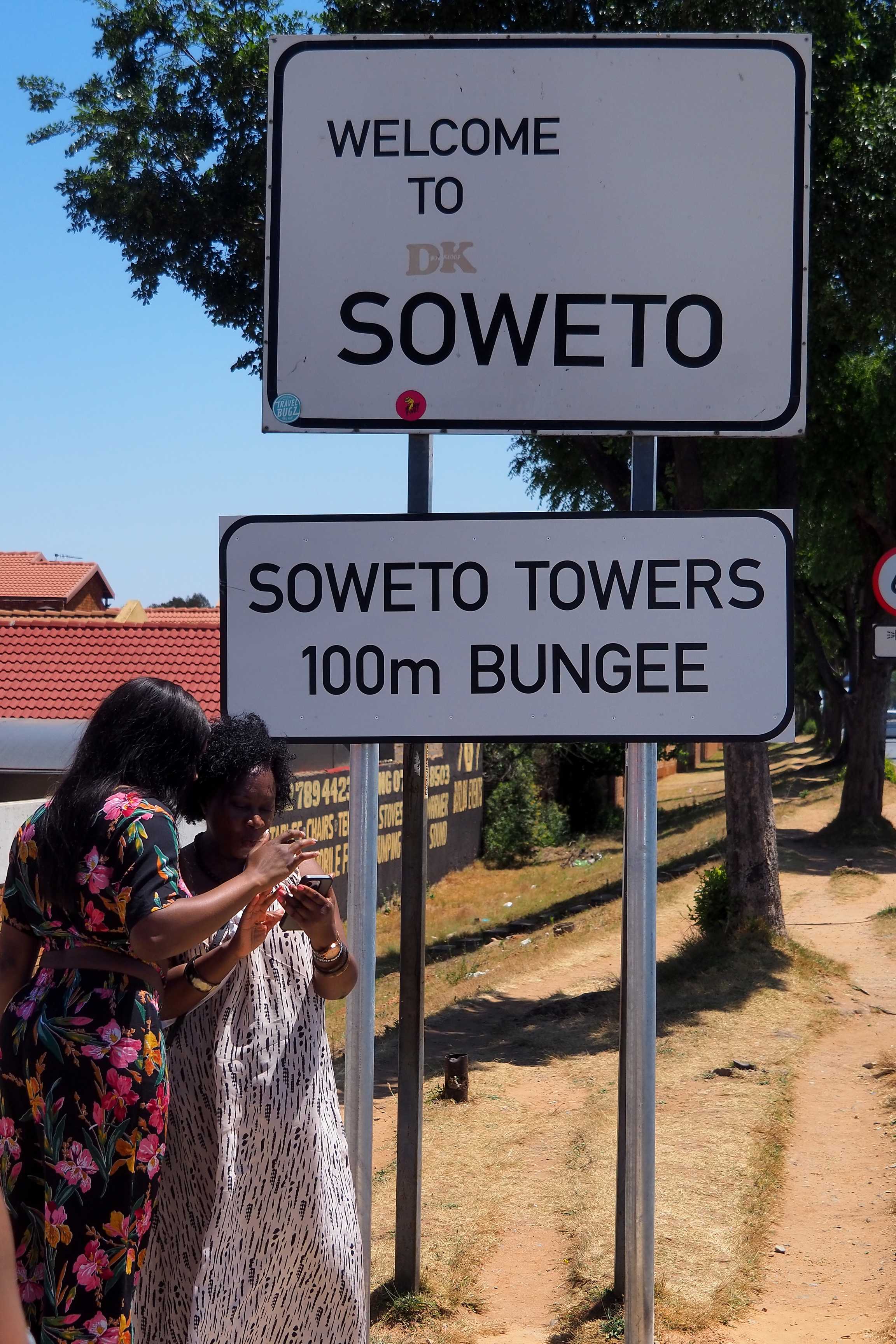
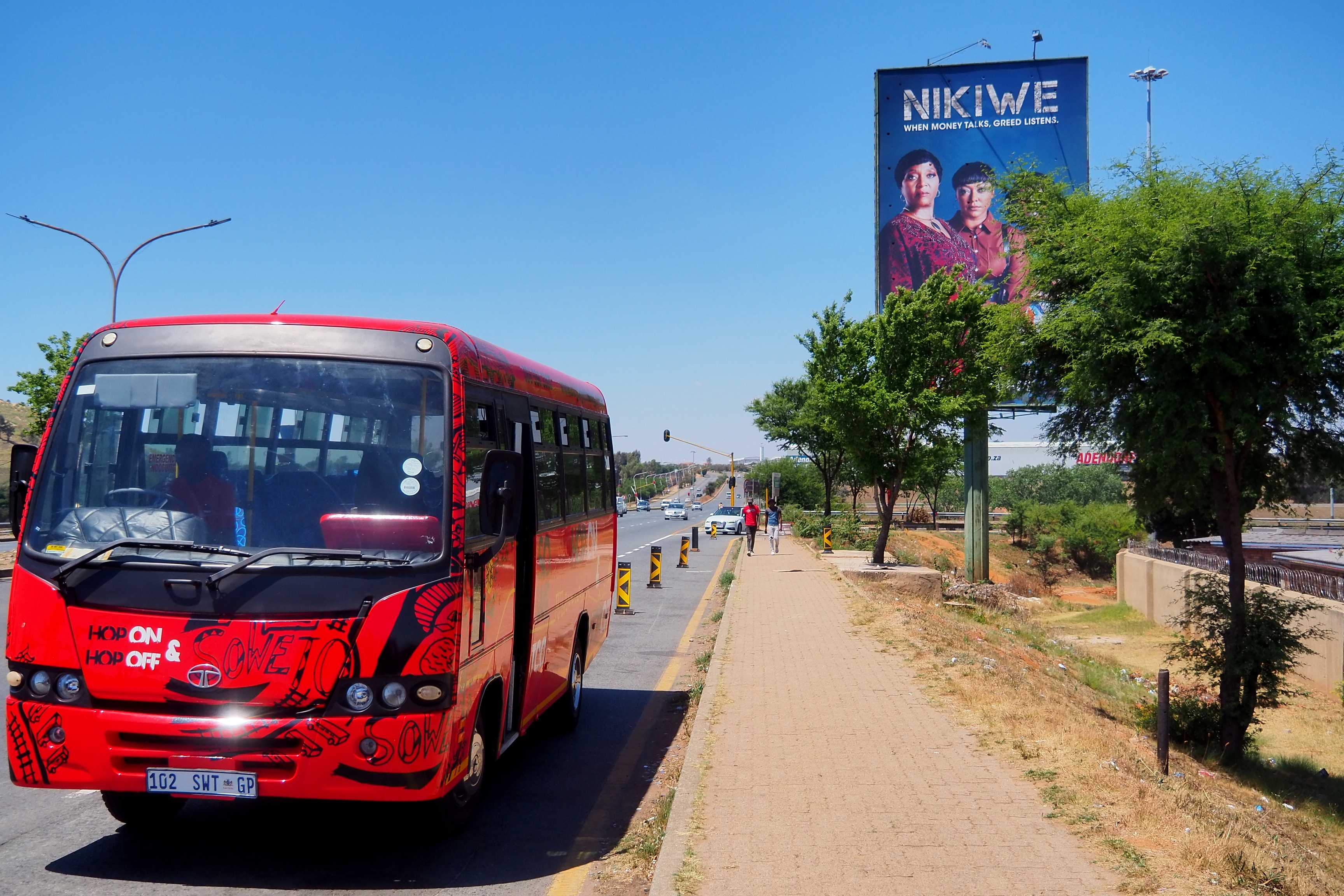
Soweto is the most populous township in South Africa.
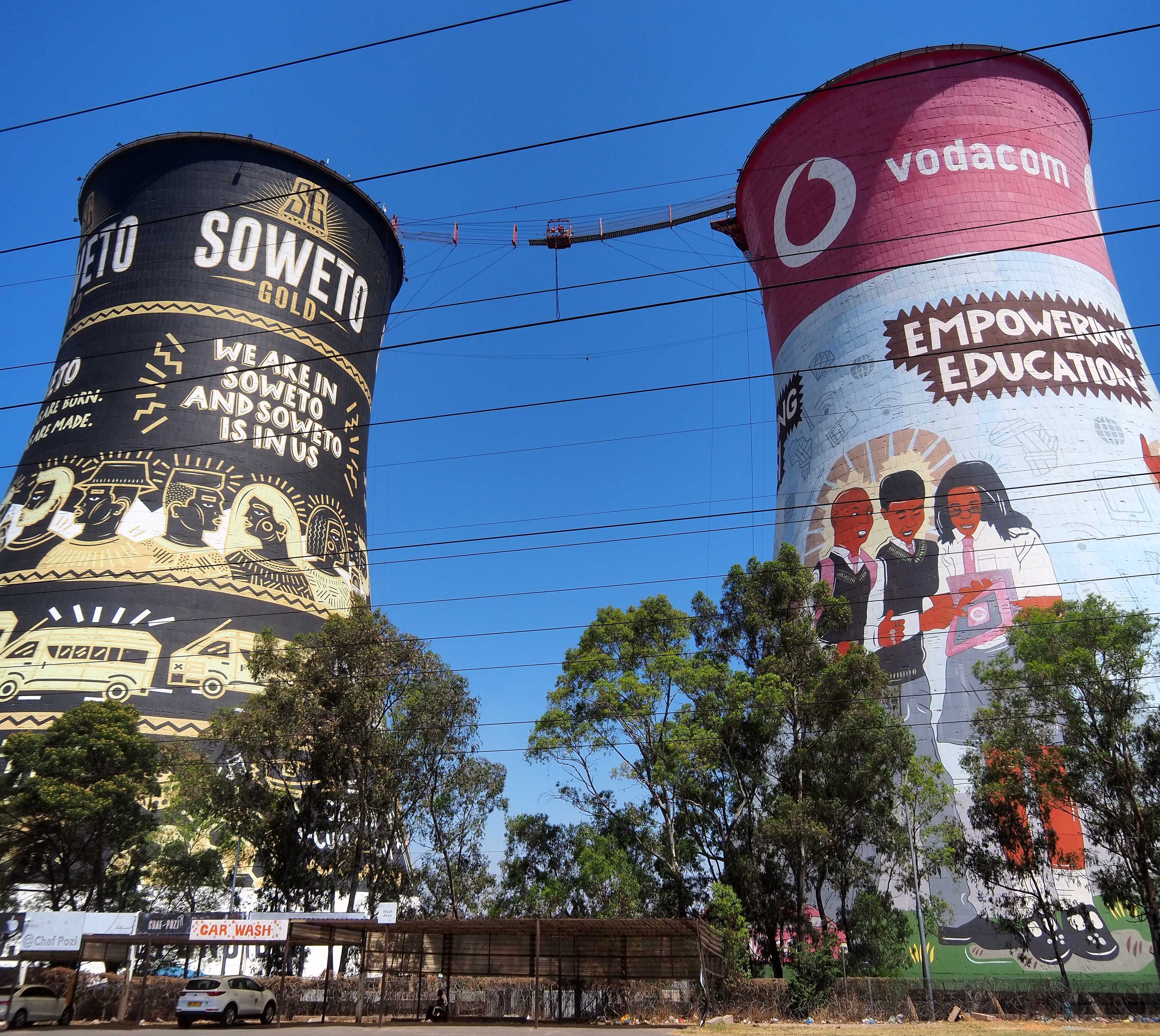
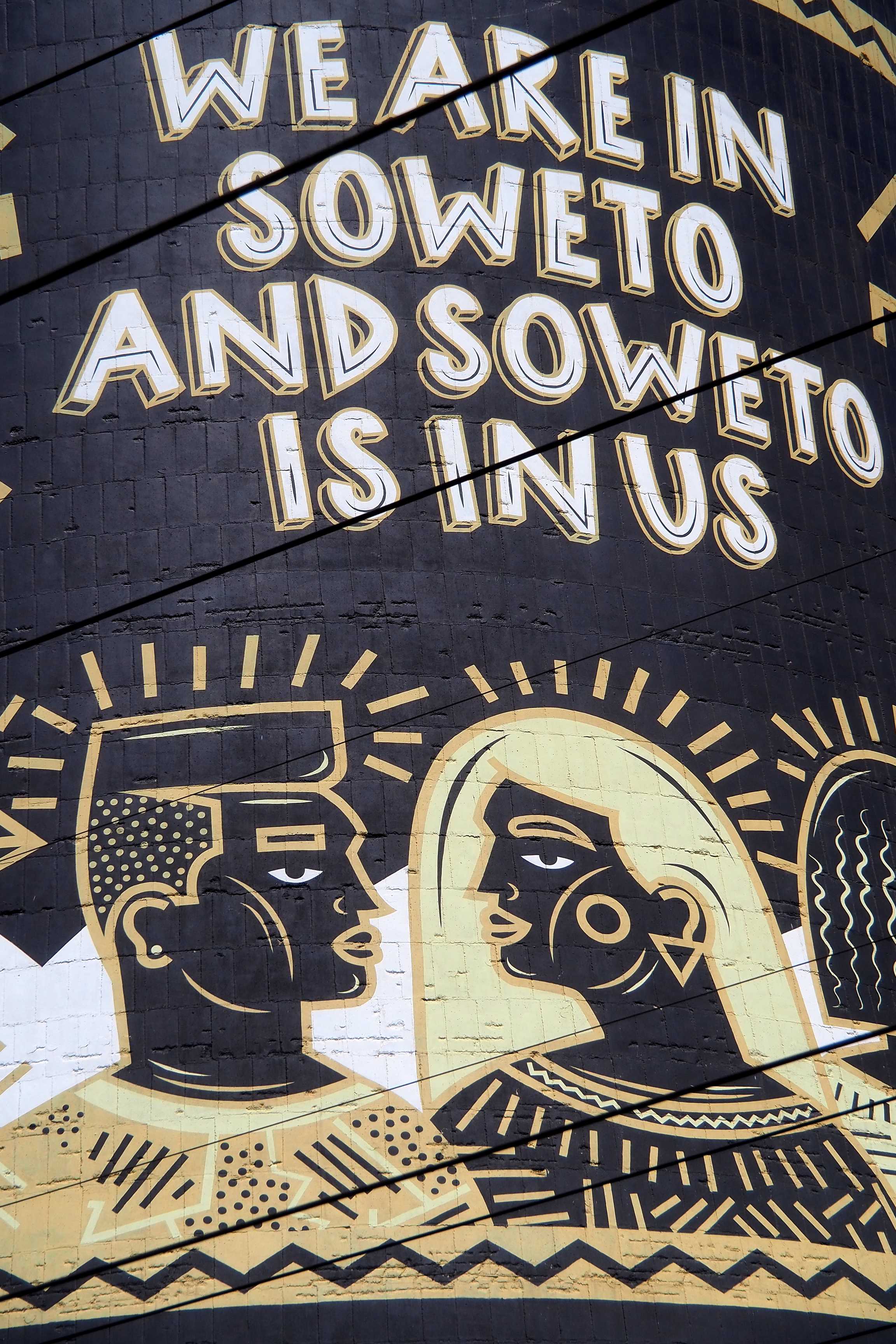
The Soweto Towers with its small platform for bungee jumping if you feel like it... The old cooling towers of the Orlando Power Station have been covered with Street Art paintings since the end of apartheid.


Township rhymes with slum. Alas, the end of apartheid did not mark the end of poverty for neighborhoods left behind after decades of white domination.

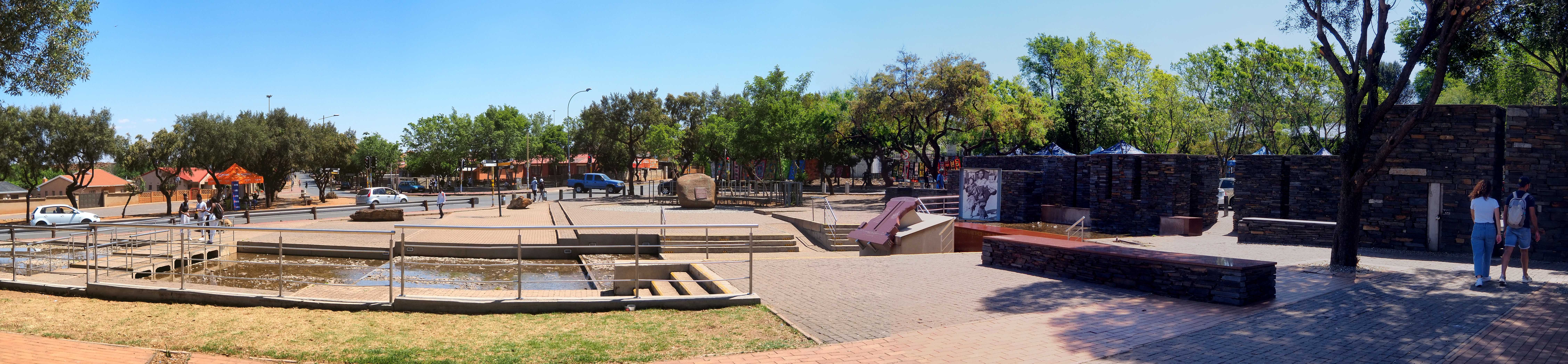
Hector Pieterson Memorial
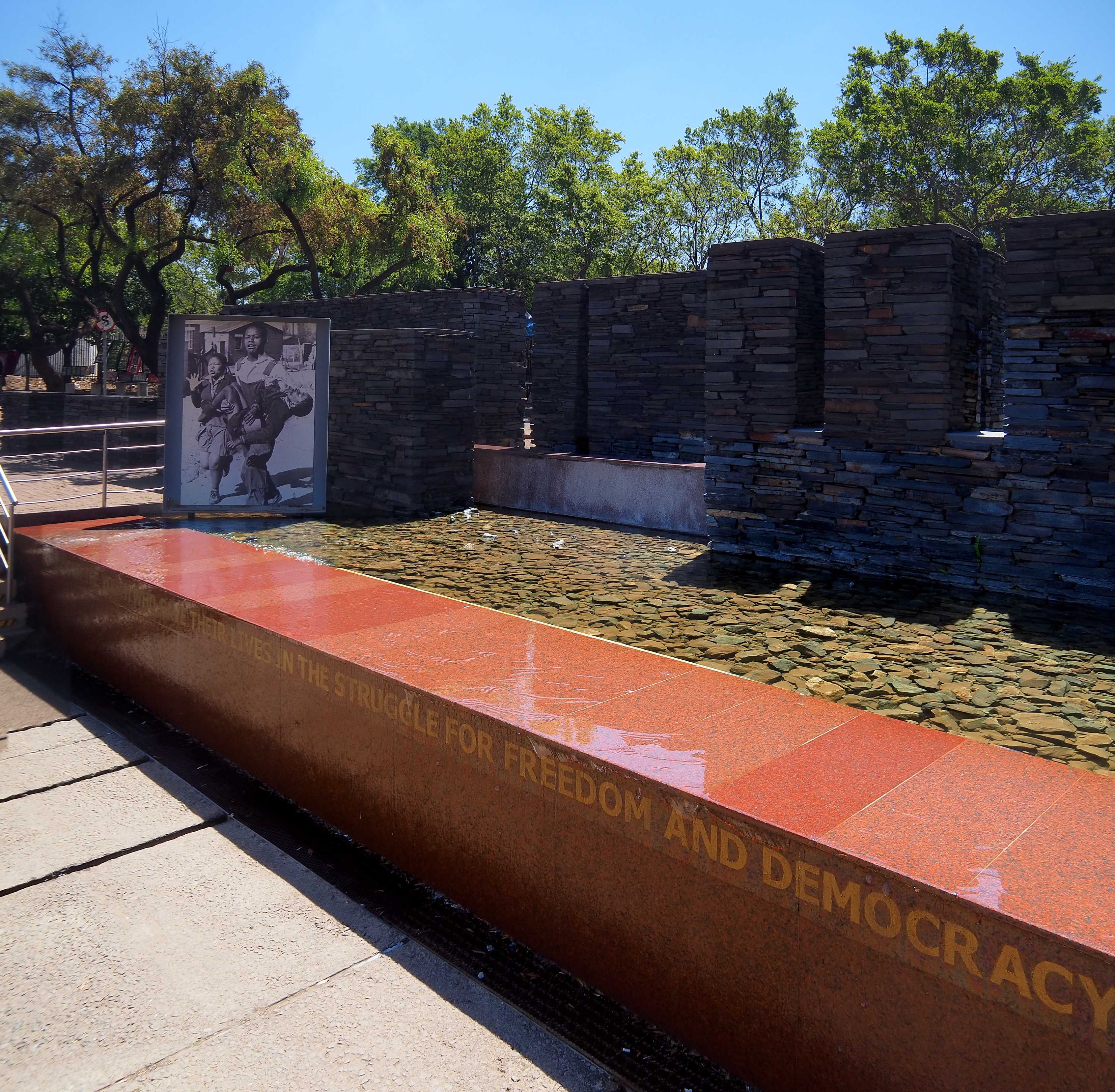
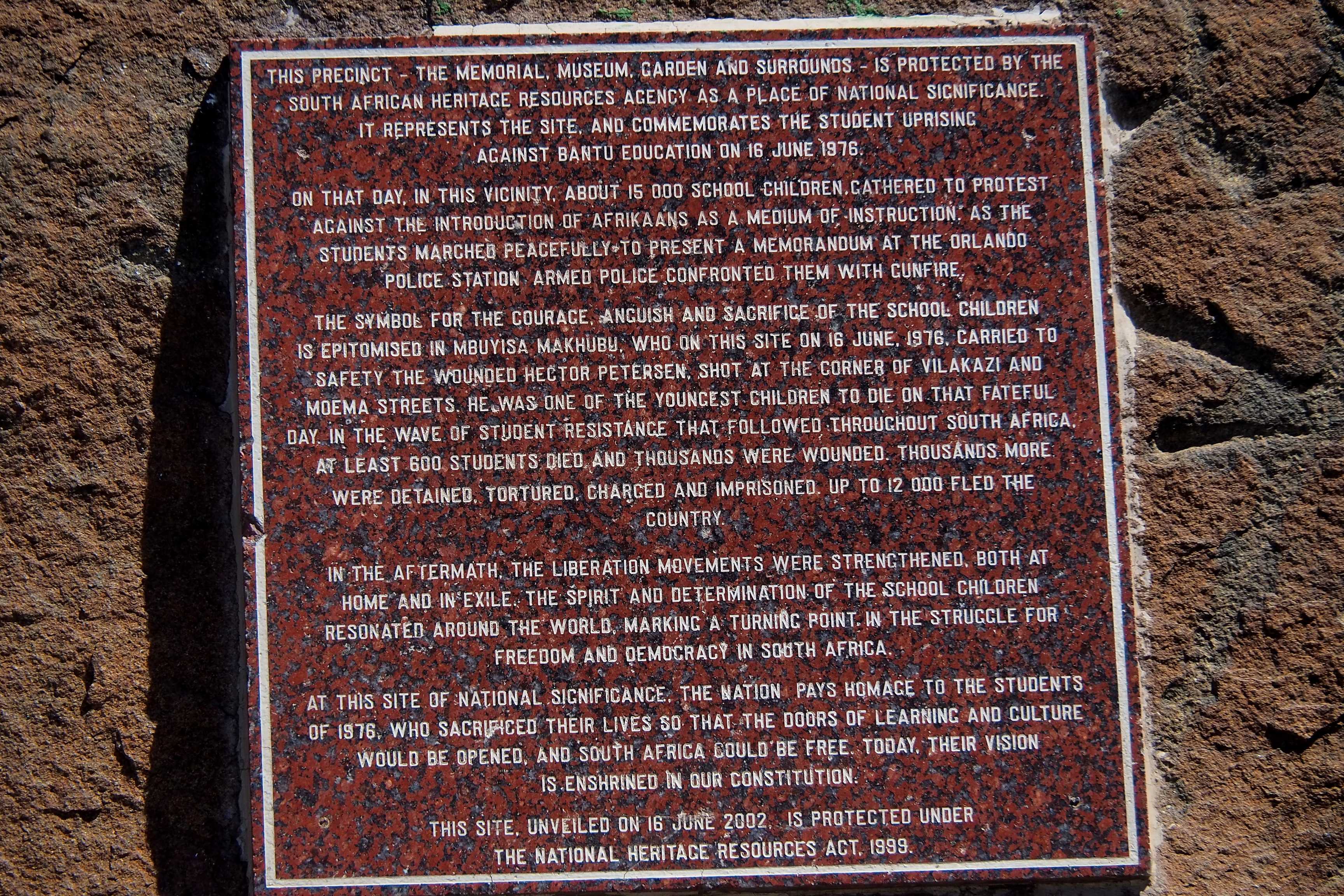
The memorial, inaugurated on June 16, 2002, commemorates the tragic events of June 16, 1976 where about 1500 schoolchildren demonstrated peacefully against the introduction of Afrikaans as a mandatory language of instruction. That day, Hector Pieterson, a 12-year-old boy, was one of the first victims when the South African police opened fire on the demonstrators.
The protest aimed to oppose this discriminatory law imposing Afrikaans as the language of instruction for black children, on an equal footing with English, while most students spoke indigenous languages like Zulu, Xhosa or Pedi.

The famous photo showing Hector Pieterson carried by Mbuyisa Makhubo with his sister Antoinette by their side, after law enforcement opened fire.

The photographer is Sam Nzima.

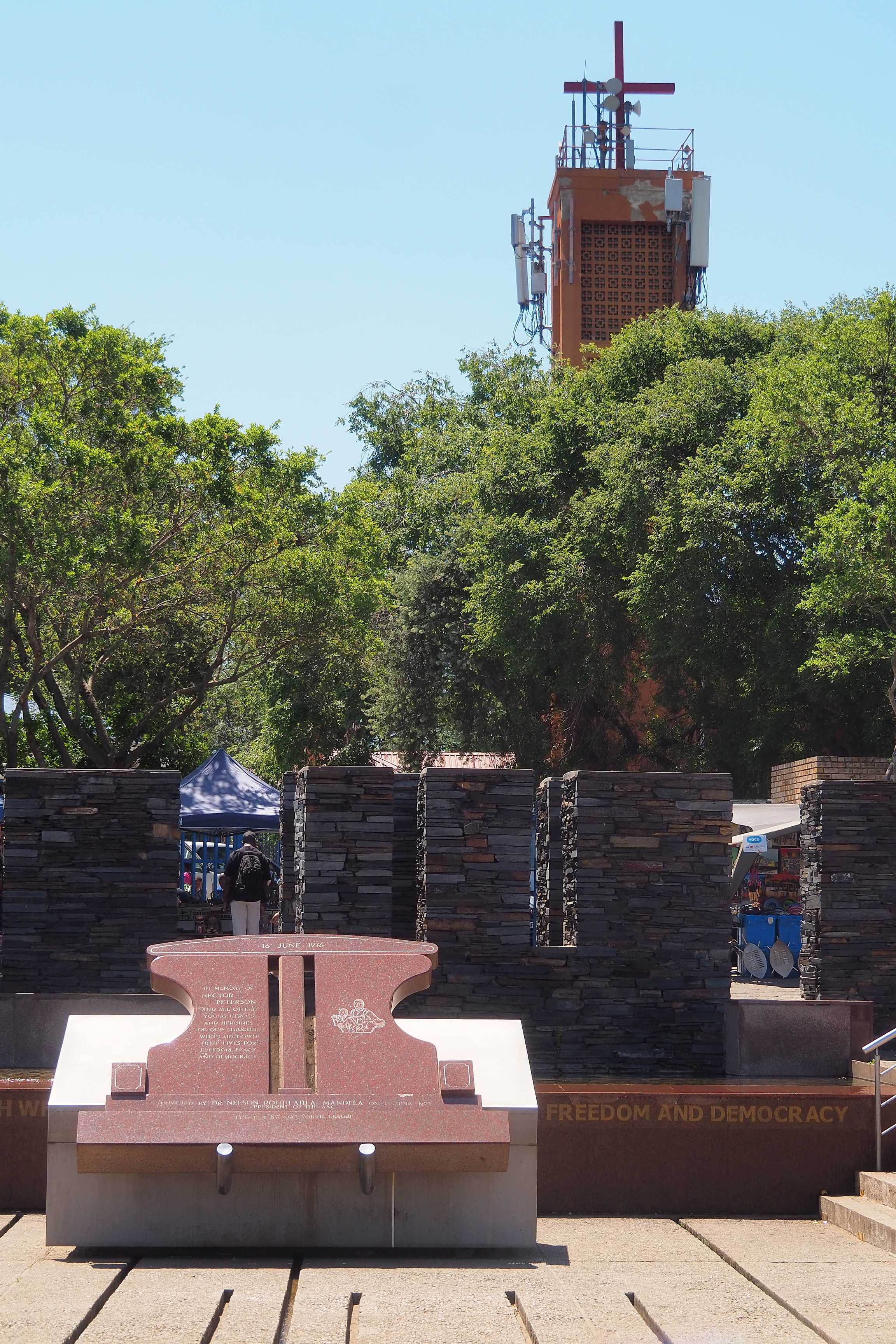
The Hector Pieterson Museum.
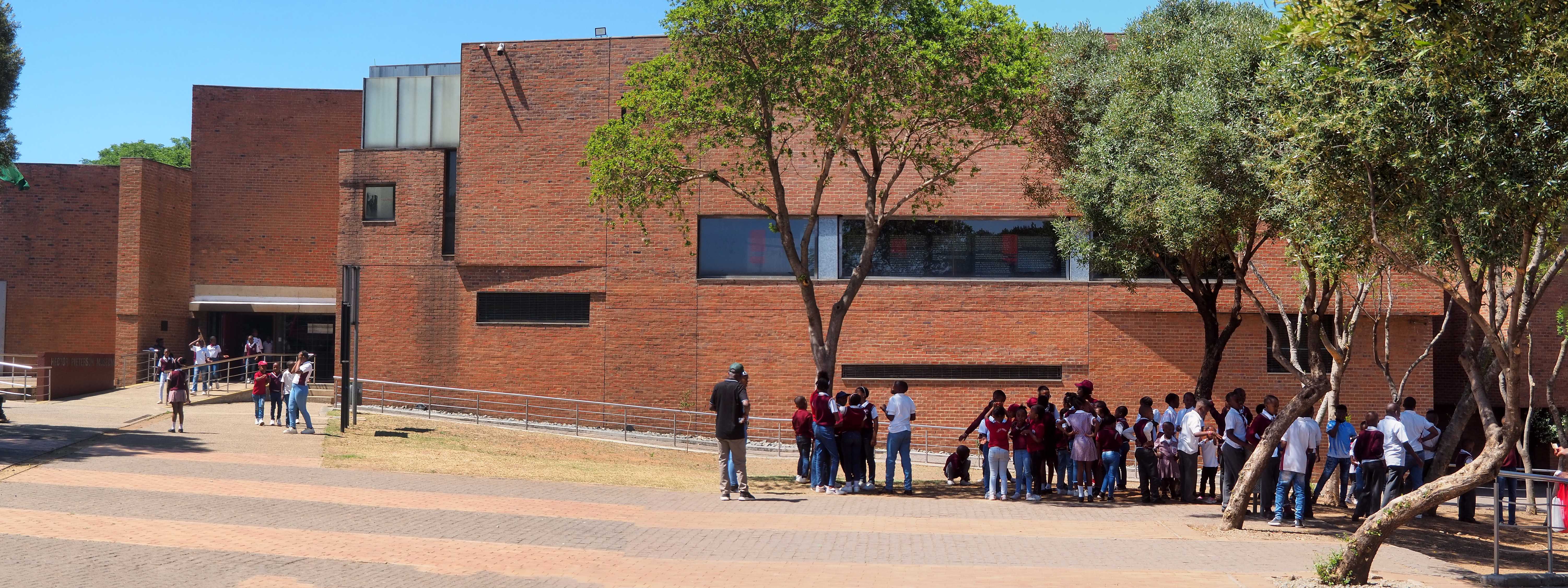
Nelson Mandela House
We continue the express tourist visit with Mandela's house. But no time to enter! 

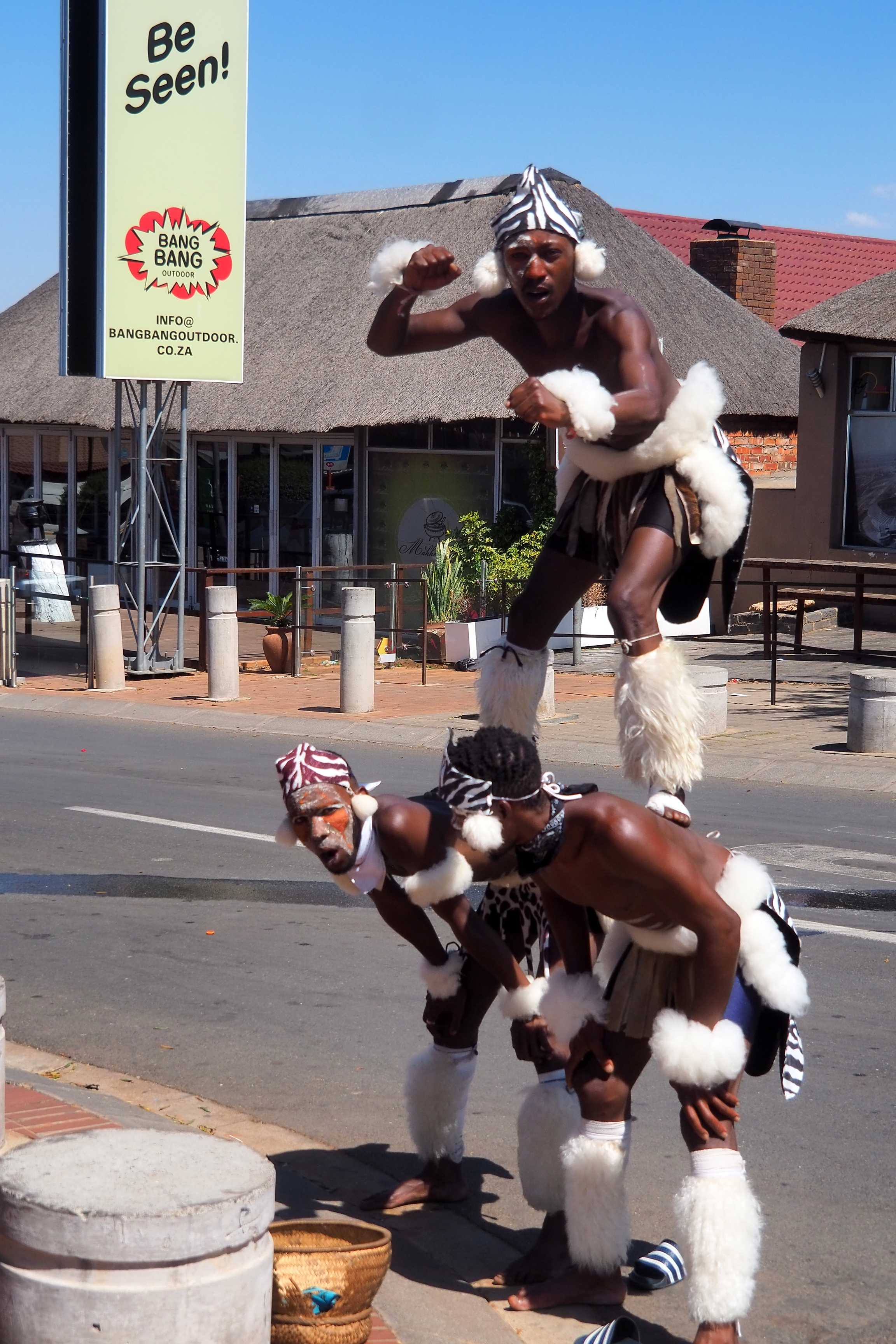
At the same place, Zulus in traditional clothes wait quietly for passing onlookers.
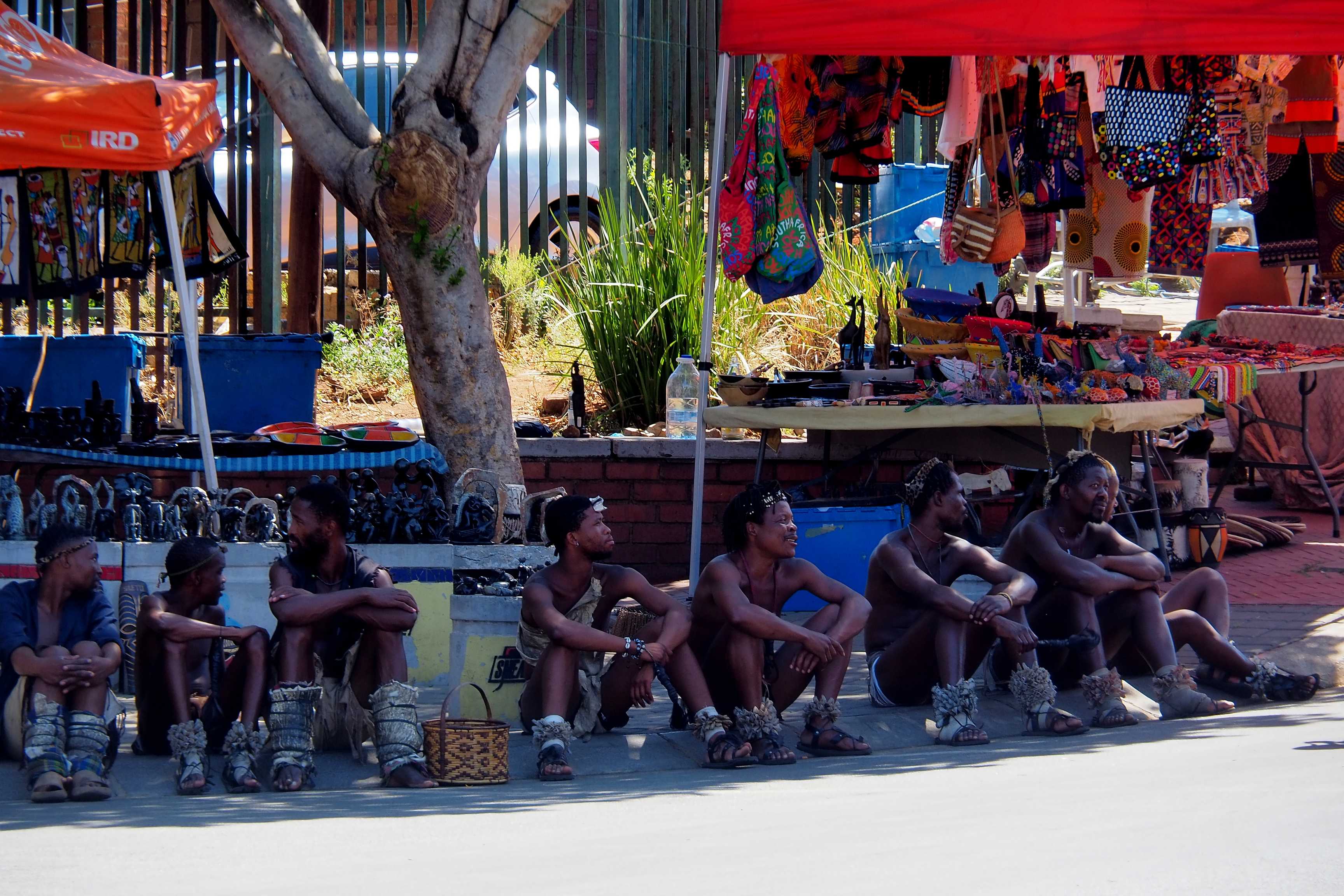

"The traditional clothing of the man is usually light: a two-part apron (similar to a loincloth) that covers the genitals and buttocks. The front piece is called umutsha, and is usually made of springbok or other animal skin twisted into strips that cover the genitals. The back part which is called ibheshu, is made of a single piece of springbok or bovine skin. Its length is usually an indicator of age and social position: the longest amabheshu (plural of ibheshu) are worn by older men. Married men also wear a headband, called the umqhele, which is also made of springbok skin or leopard skin for men of high social rank, like chiefs. Men also wear bracelets and anklets called imishokobezi during ceremonies, rituals, such as weddings and dances. © Wikipedia
Apartheid Museum
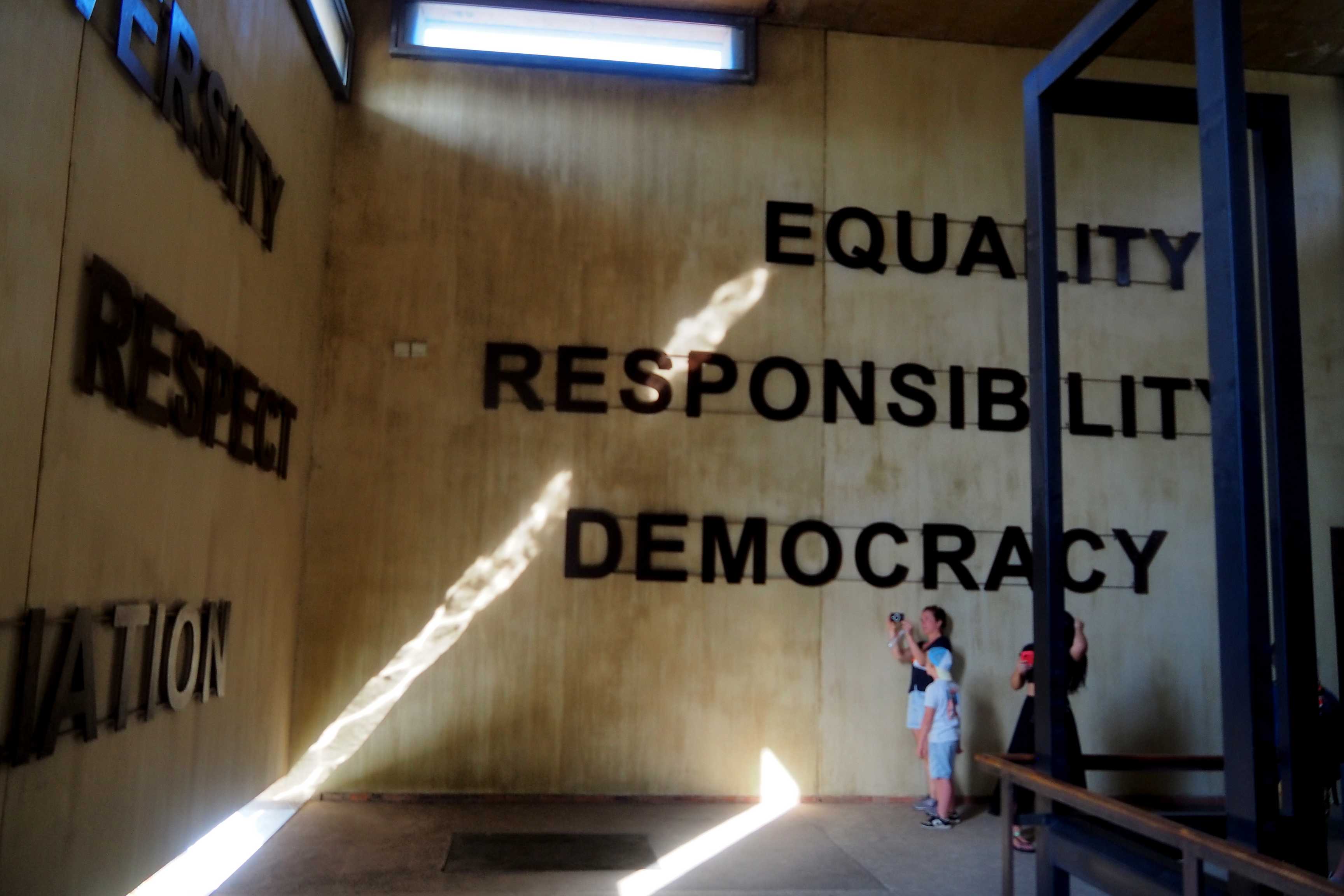
The minibus tour continues and we arrive at the Apartheid Museum. This time, no question of missing out. We will take the next bus and dive for 1.5 hours into the history of the country and the oppressive laws of apartheid. To enter the museum, you will have to pass through the door indicated on your entry ticket, either the one reserved for whites, or the one reserved for non-whites...
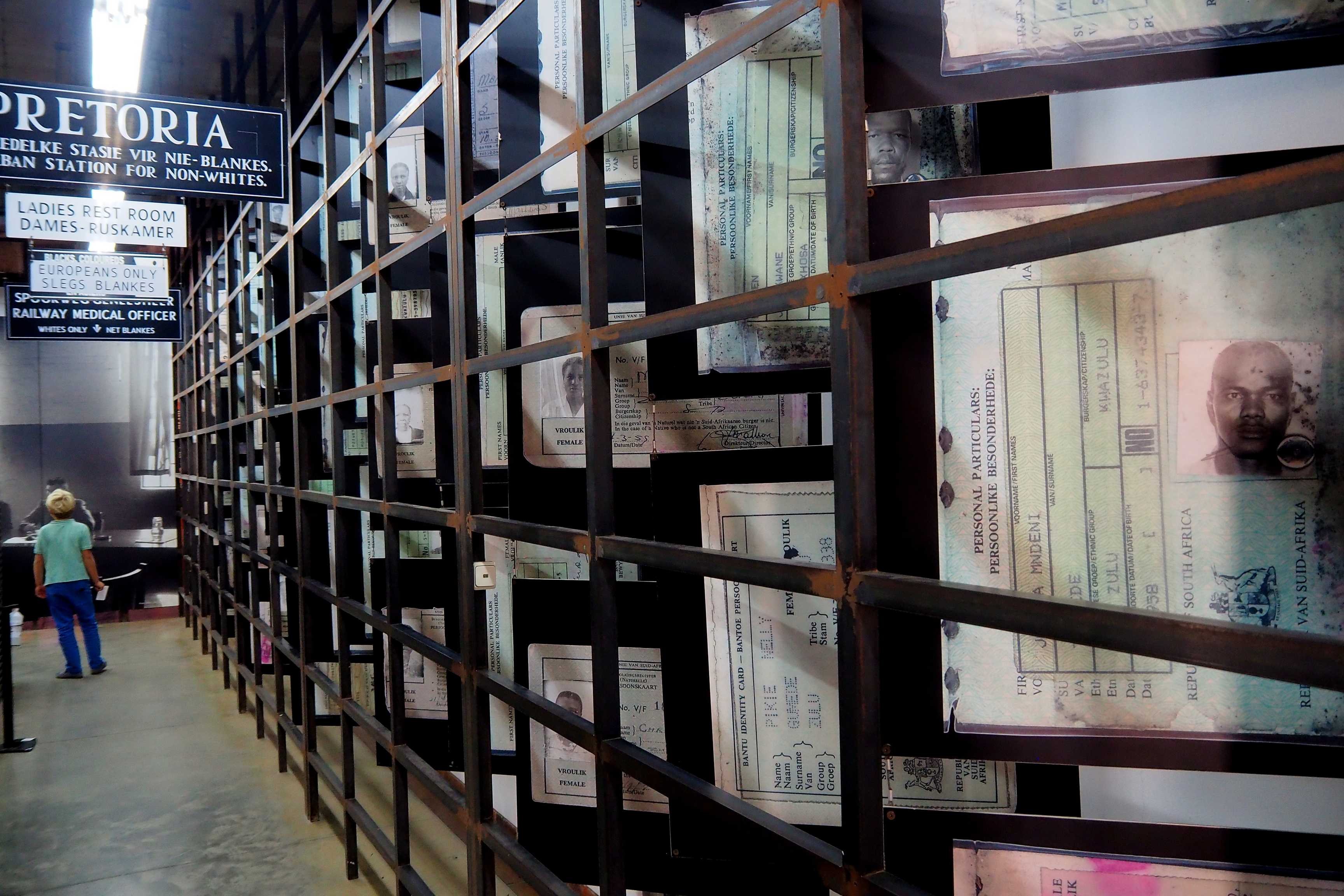
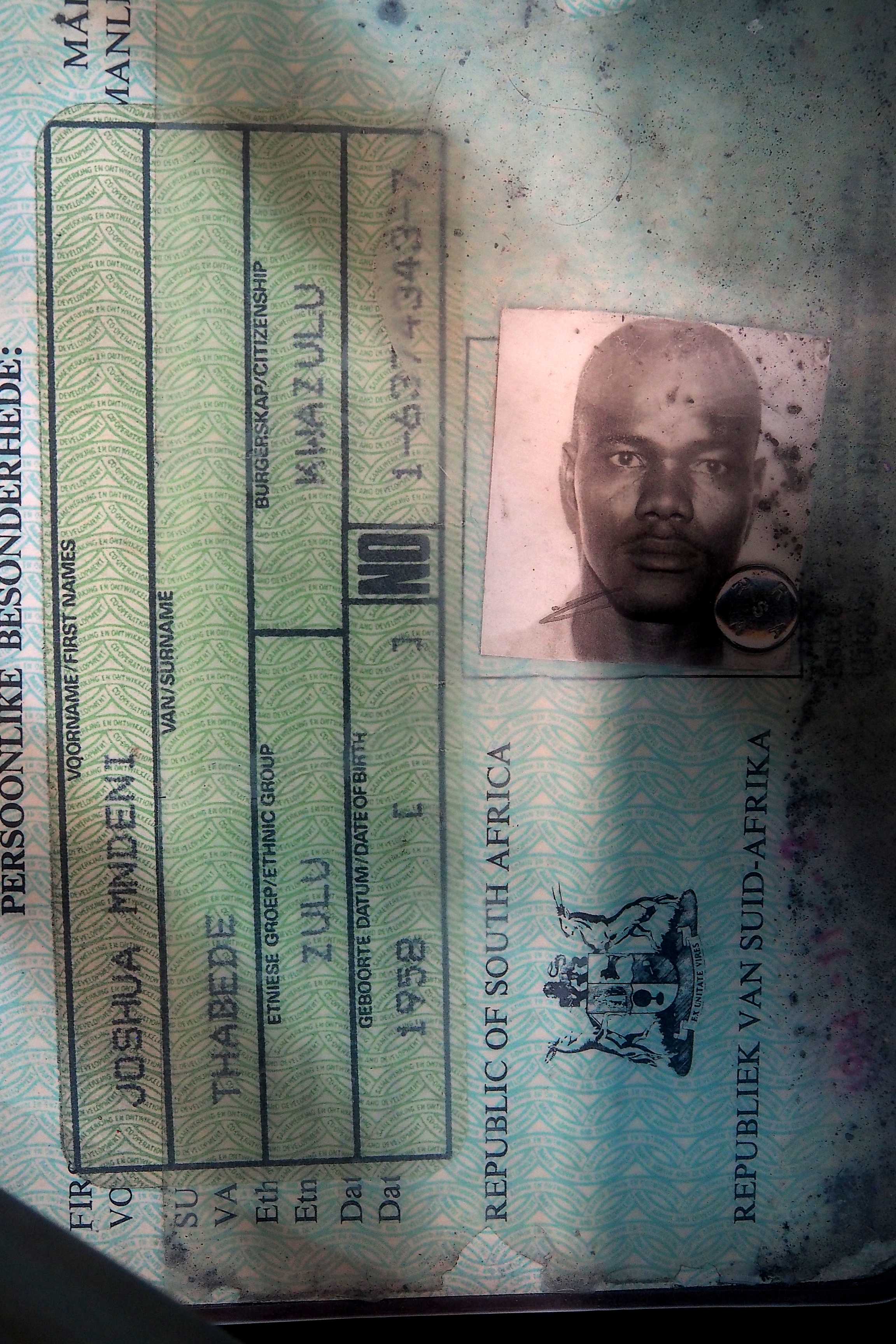
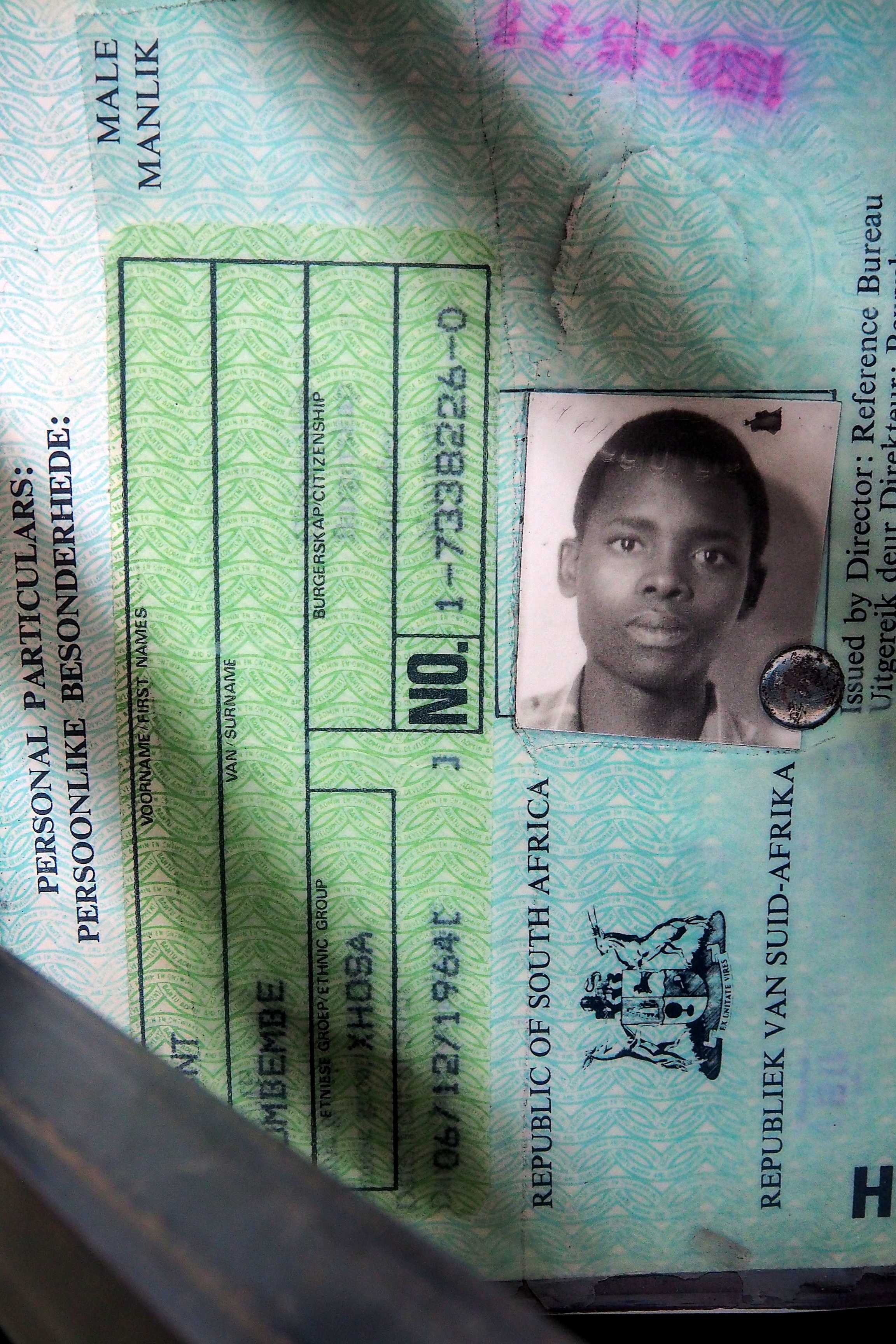
The first room shows identity cards where ethnic origin was mentioned.
Change of room from the outside where we follow the steps of walkers represented on mirrors.

"We are WALKERS"


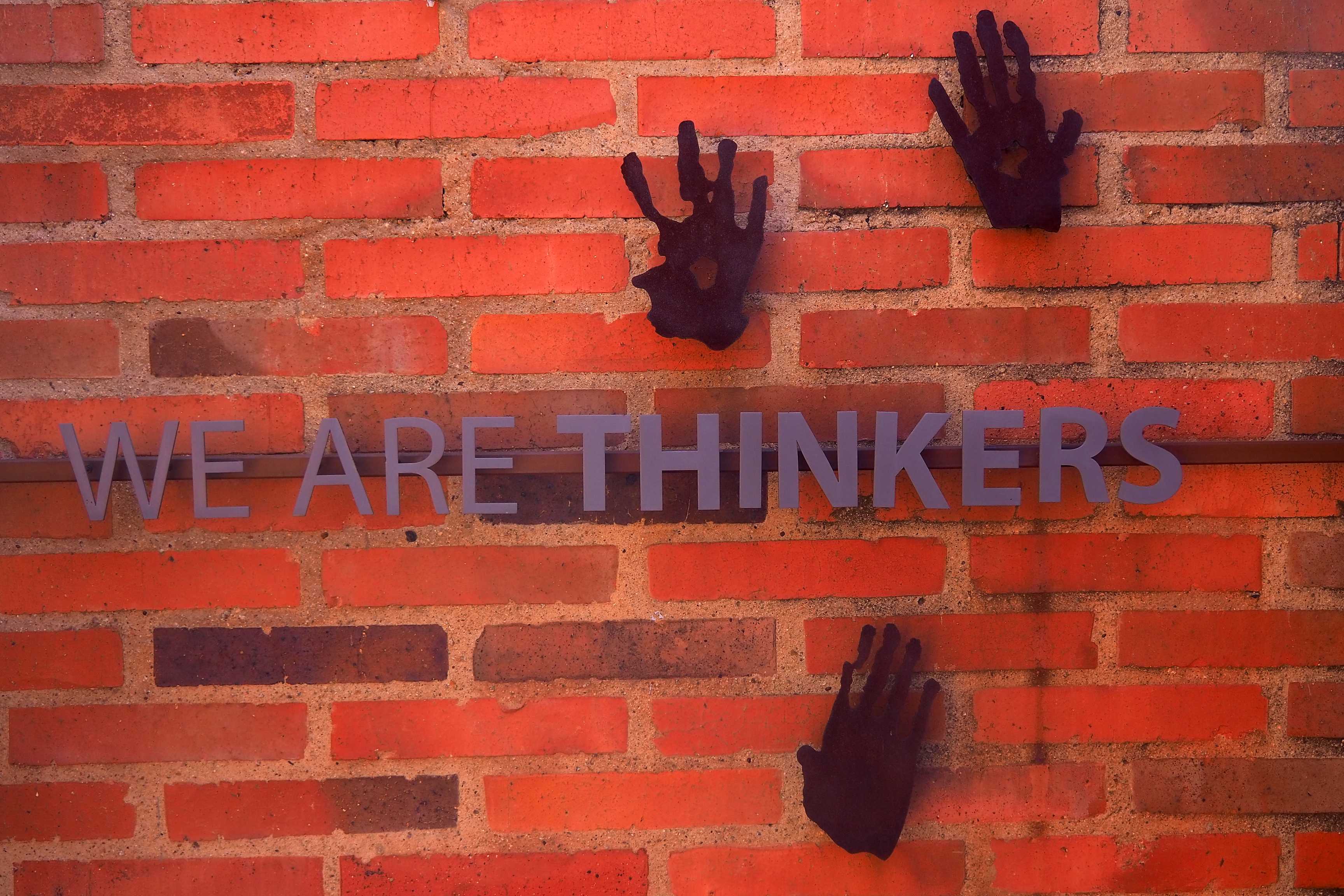
"We are THINKERS".
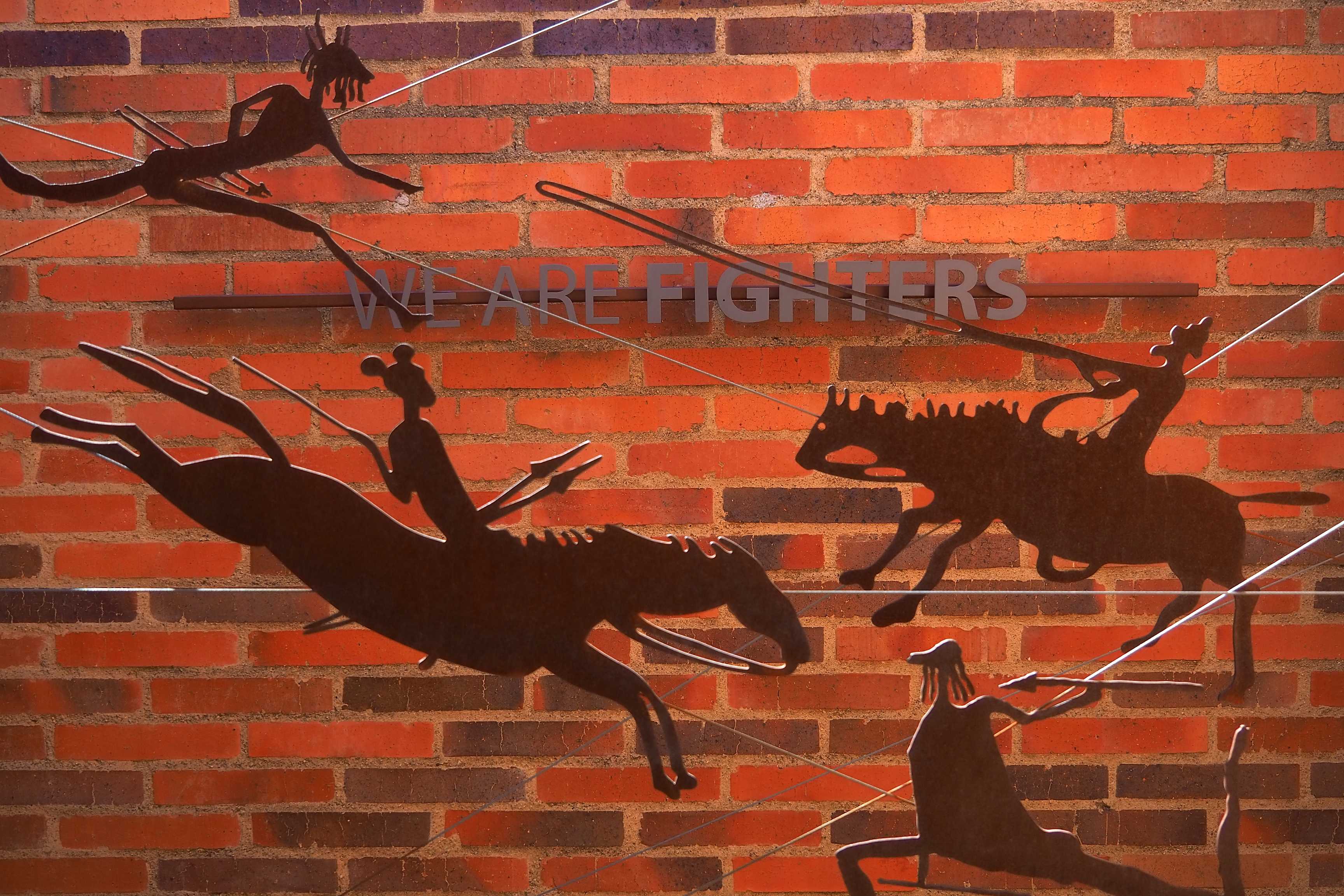
"We are FIGHTERS".
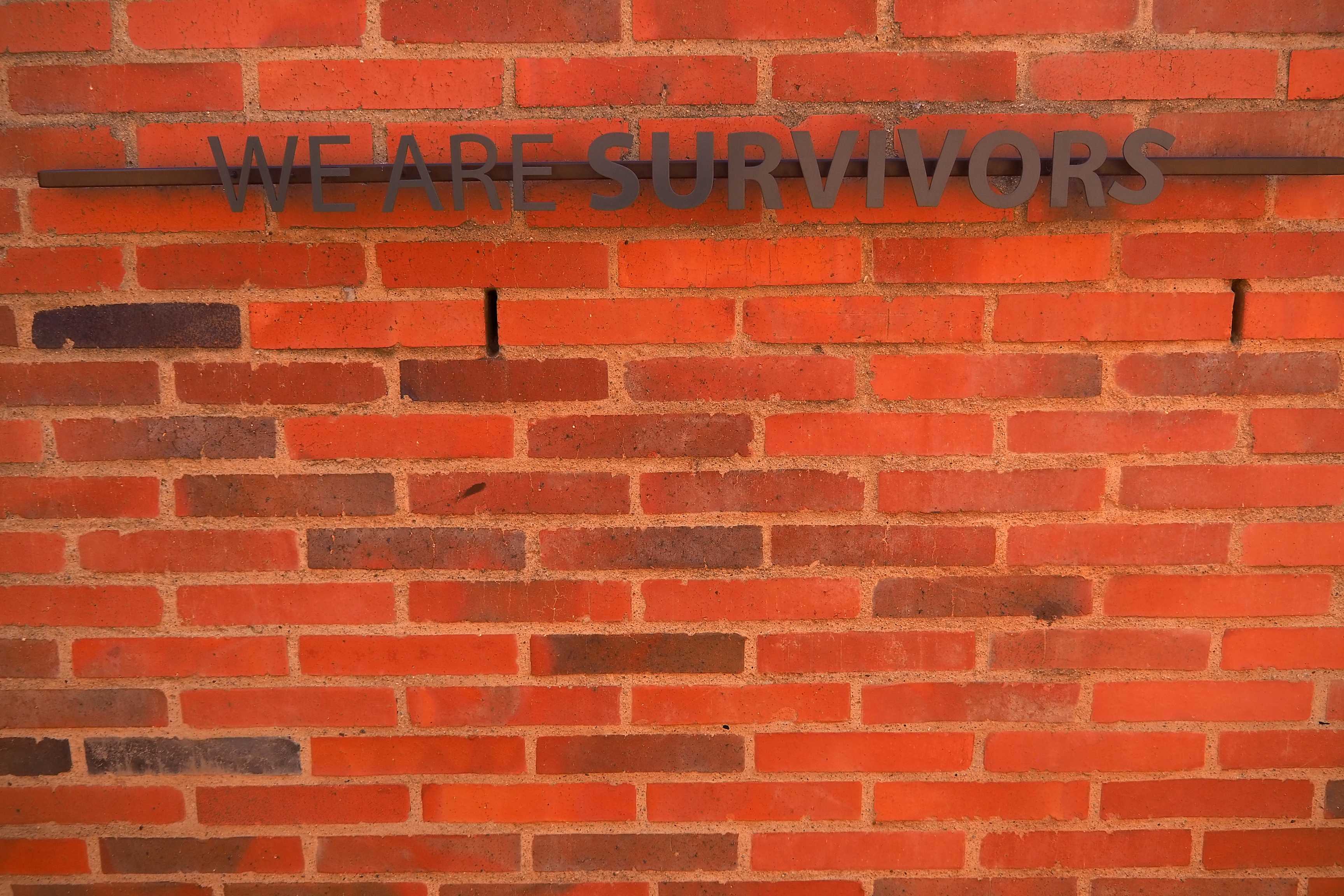
"We are SURVIVORS".
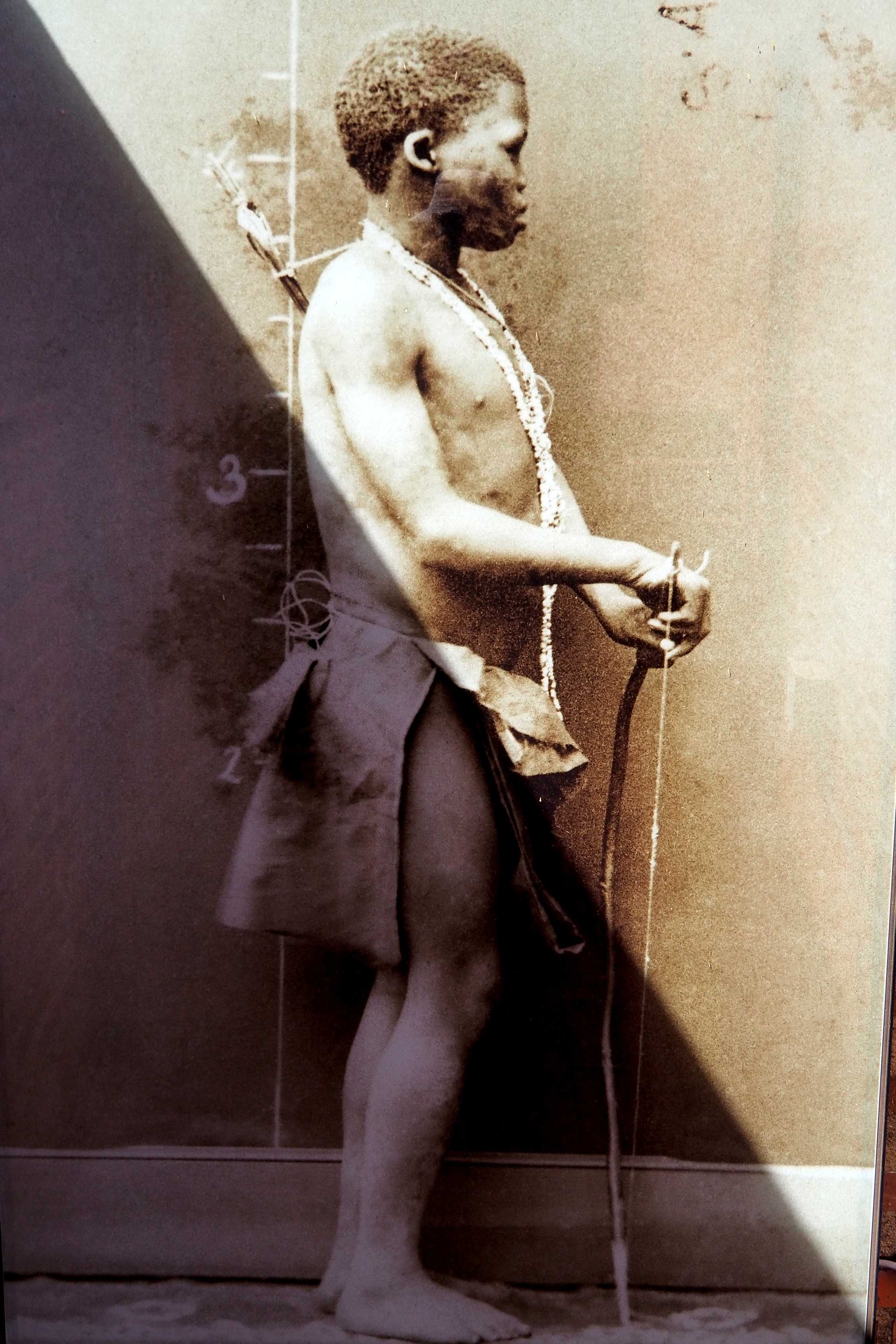
The photo of a bushman, victim of Dutch settlers in the 19th century.
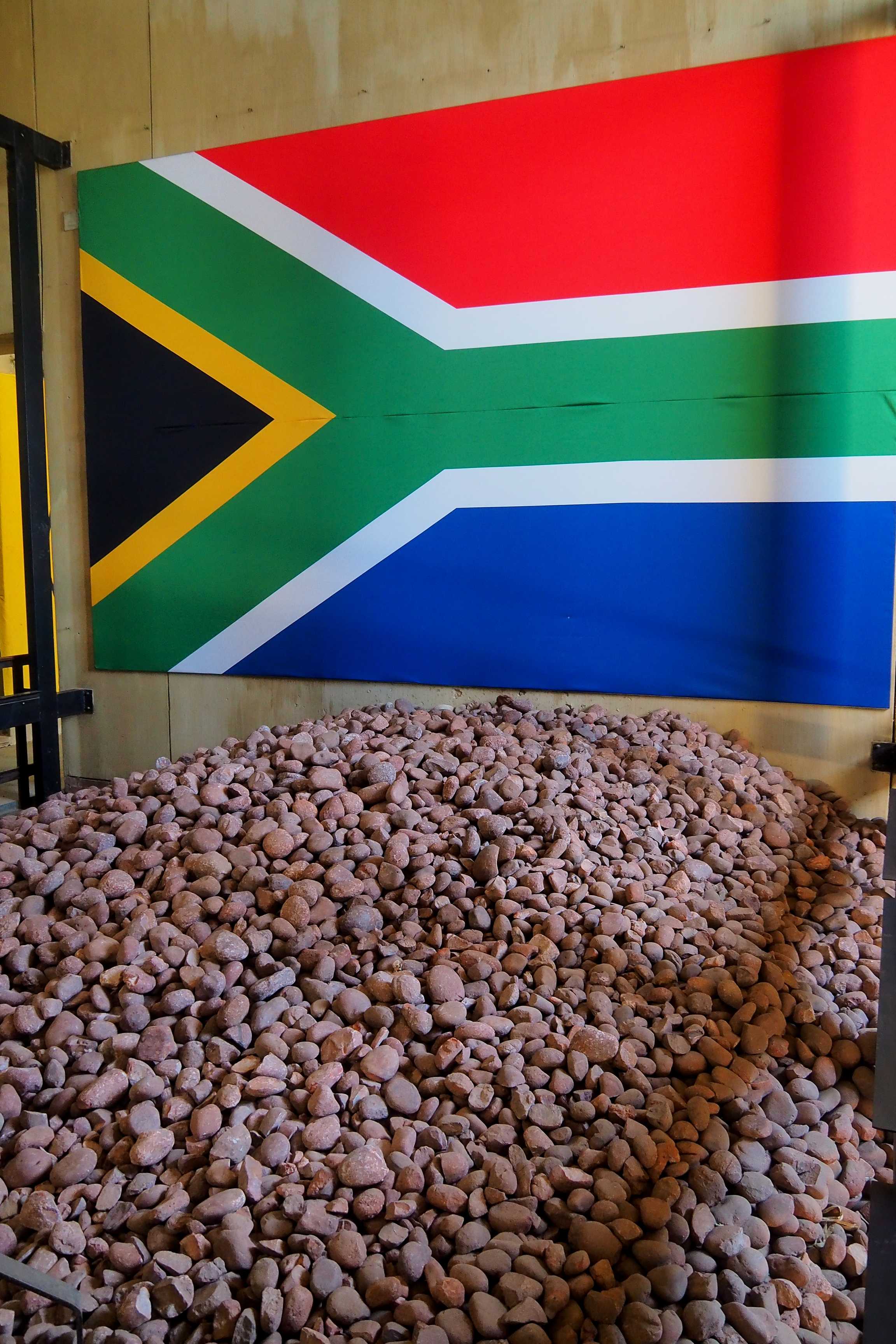
In the rest of the museum, photos are prohibited except in the last room where stones are piled under the South African flag.
We take the big double-decker bus again and join downtown Johannesburg.


Passage by the Unit Rig Mark 36 Haul Truck which served for 20 years at the Sishen iron mine. It is now a monument in its own right in Johannesburg.


Saturday21October
After a second night, wake up on the 23rd floor of Braamfontein Gate. And today, no more bus too fast, we pick up our rental car that we will keep for the next 23 days!

Constitution Hill
First stop of the day, the Constitution Hill site, a former fort completely transformed into a prison at the end of the 19th century. This prison counts among its famous prisoners, Mahatma Gandhi and Nelson Mandela.
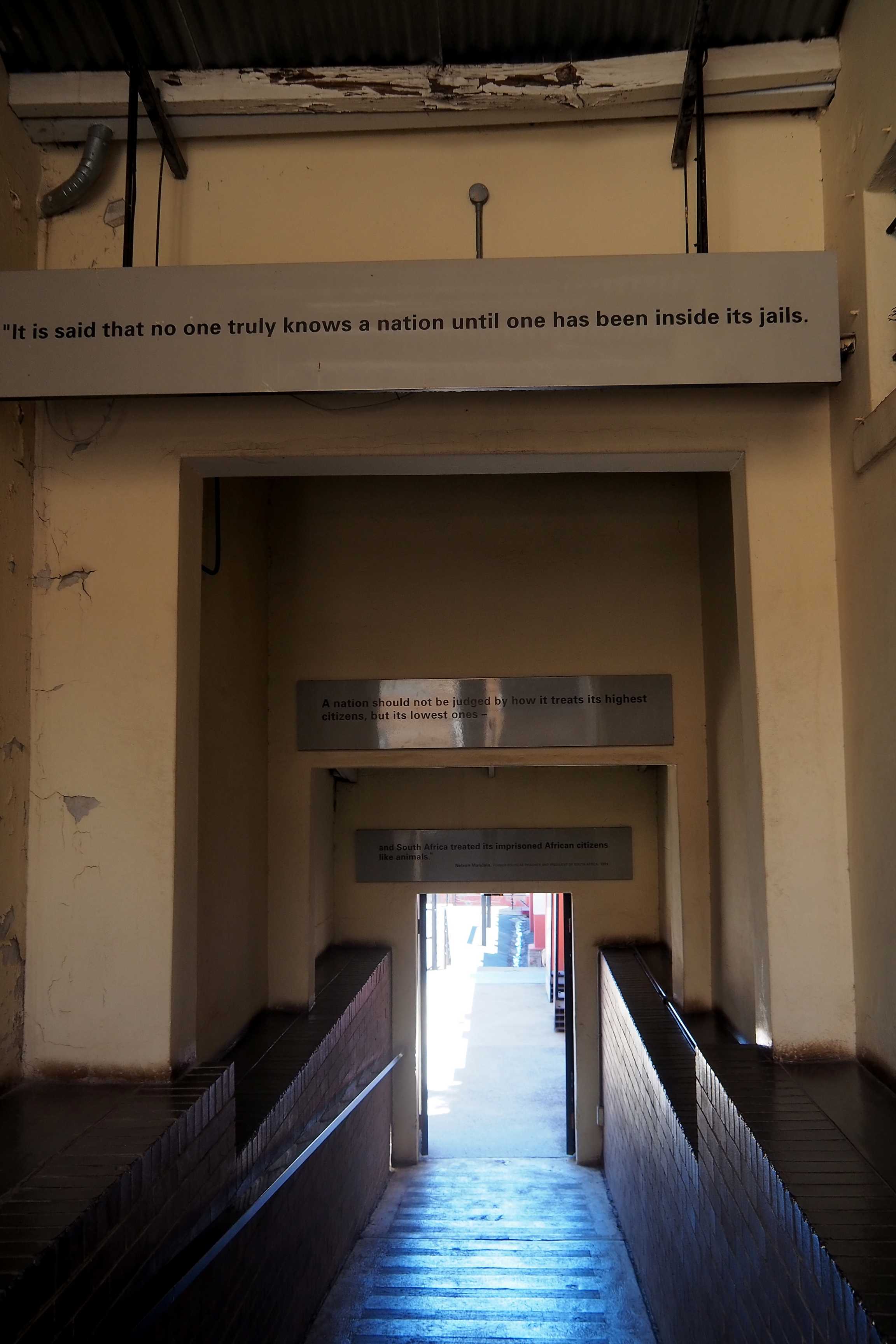
The text above the entrance: "It is said that no one truly knows a nation until one has been inside its jails".
The inner courtyard.
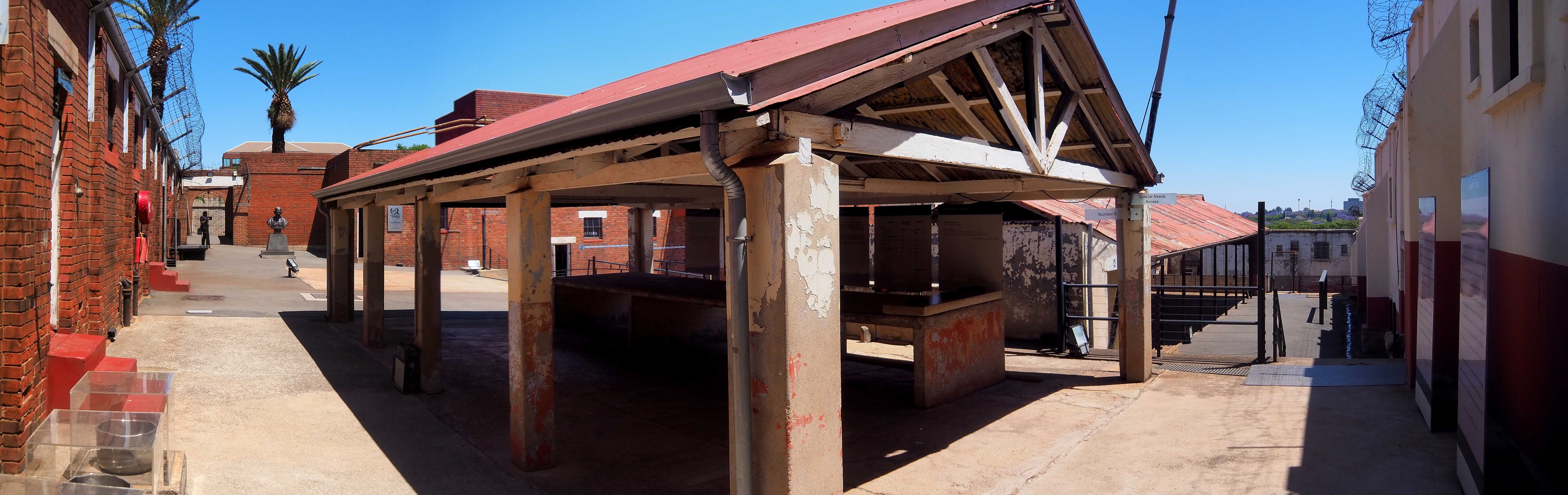
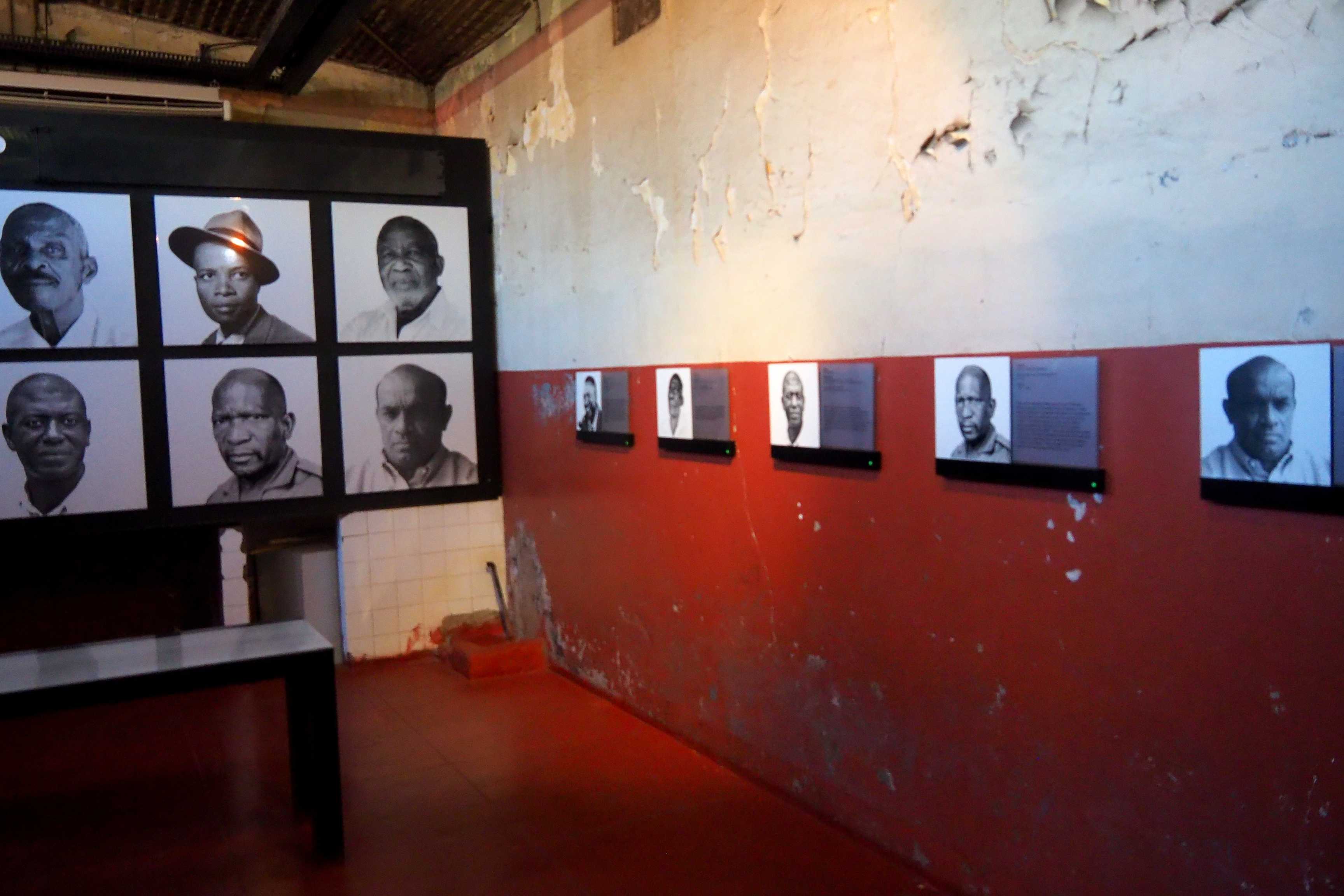
Some figures passed through this prison called Number Four. Martin 'Panyaza' Shabangu, prison guard from 1973 to 1980.
"We were guards from Tzaneen. When we arrived at number four, it was as if we were prisoners ourselves. We were in common rooms without any privacy, even to go to the toilet. The white guards were much better housed. We didn't have good relations with them. The salary of the guards was therefore very low. Some guards therefore began to behave like criminals, stealing from prisoners and accepting bribes. They also sold new arrivals to gang leaders for sex."

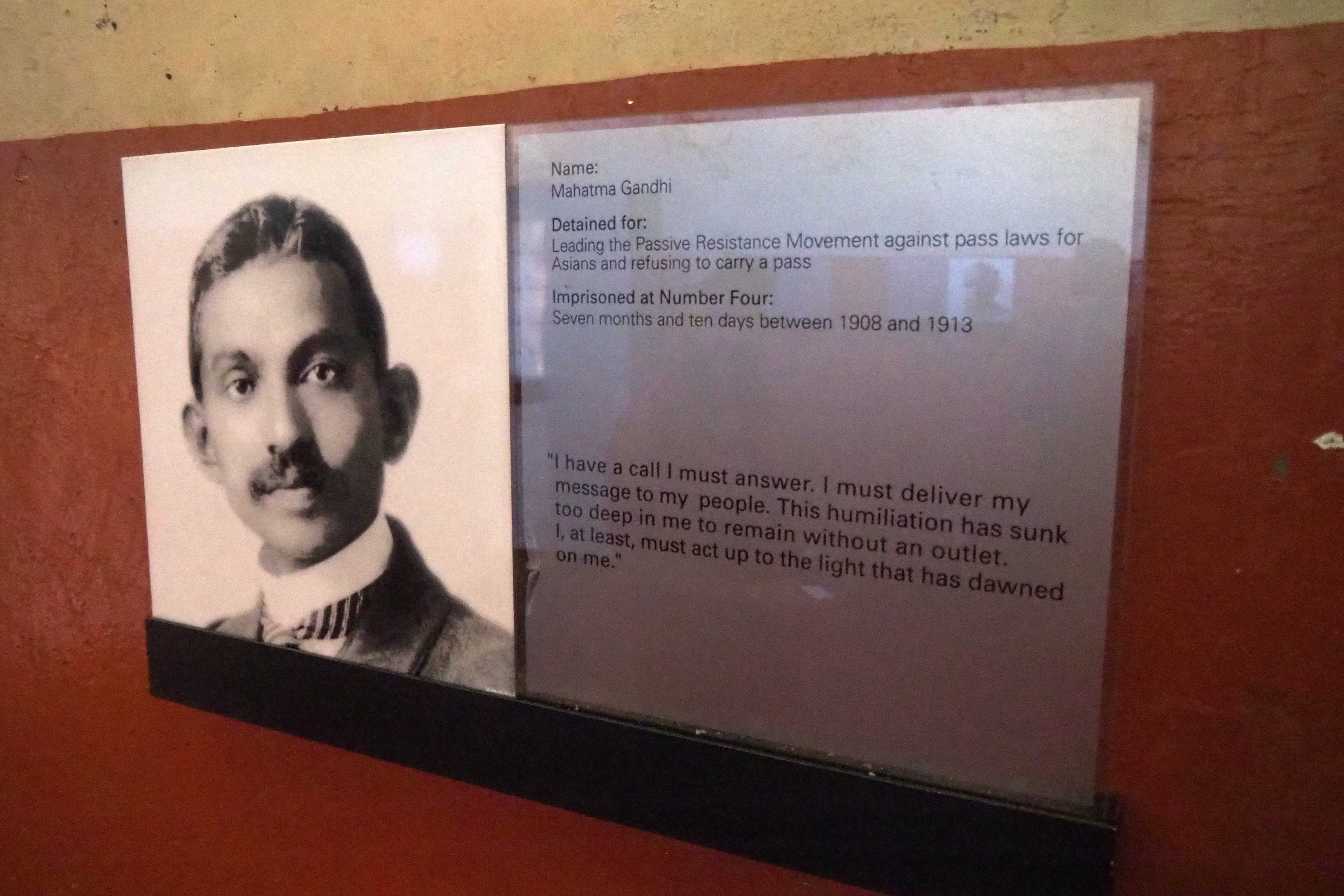
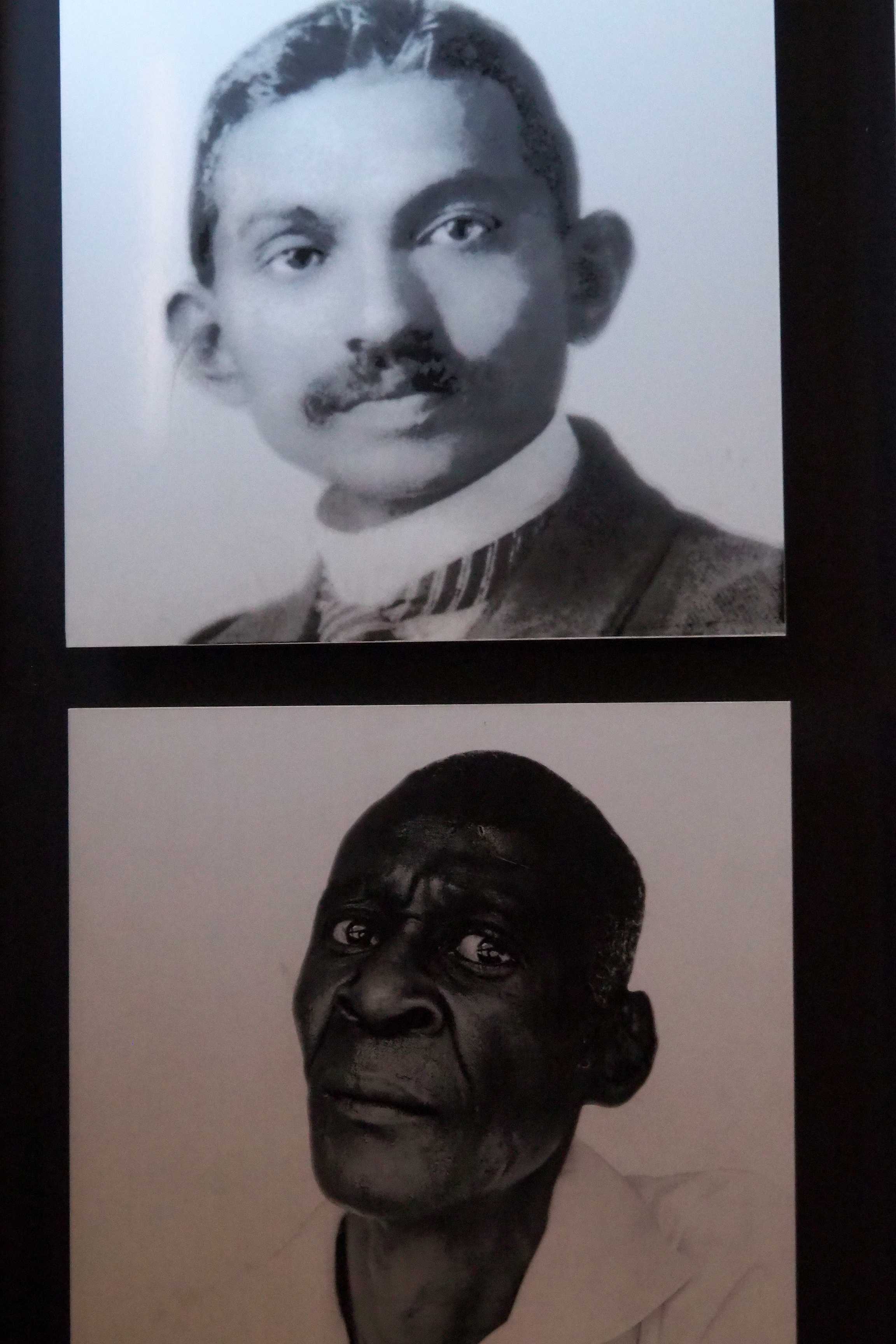
Mahatma Gandhi. Imprisoned at Number Four for seven months and ten days between 1908 and 1913.
"Detained for leading the passive resistance movement against pass laws for Asians and for refusing to carry a pass."
The cell reserved for political prisoners.
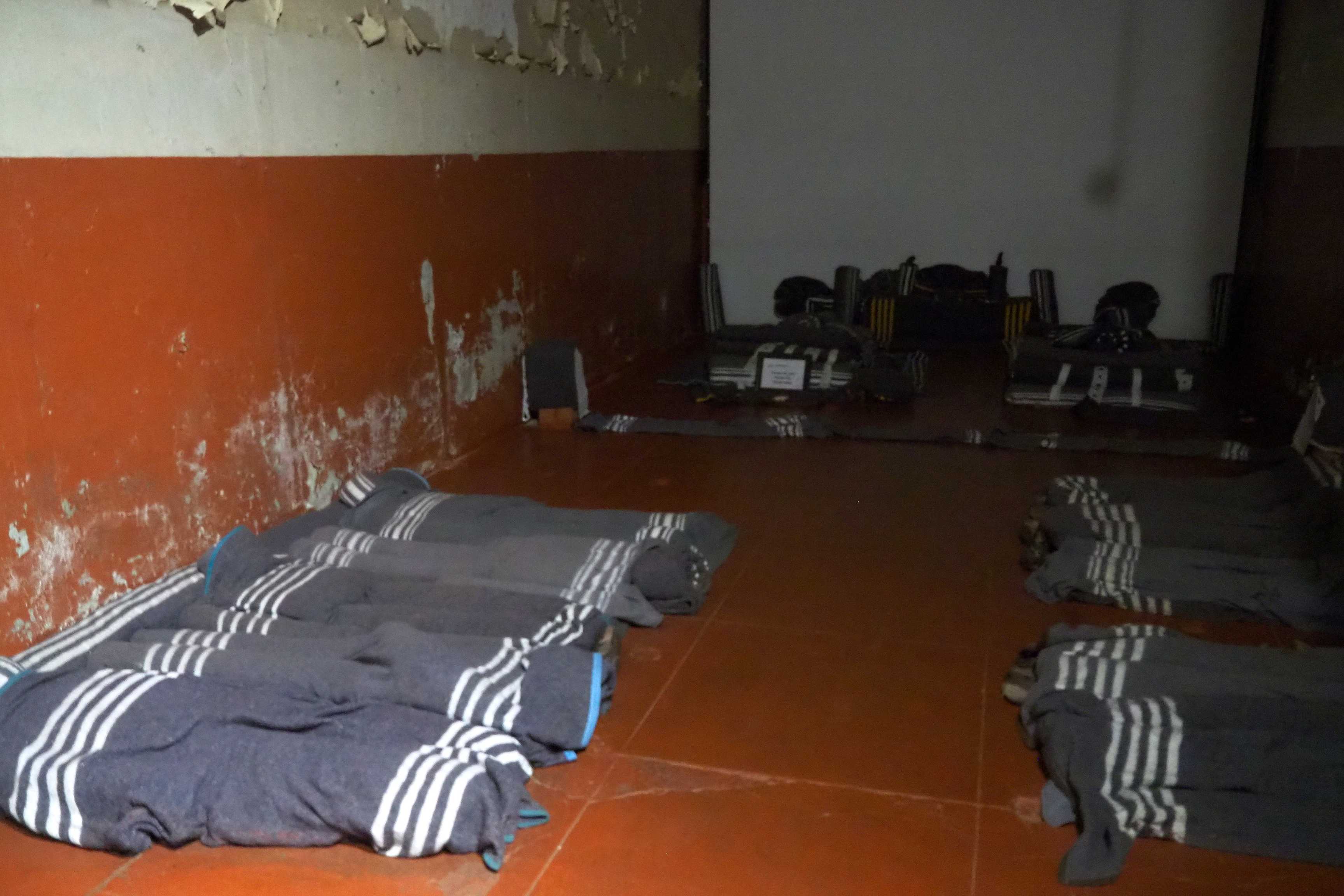

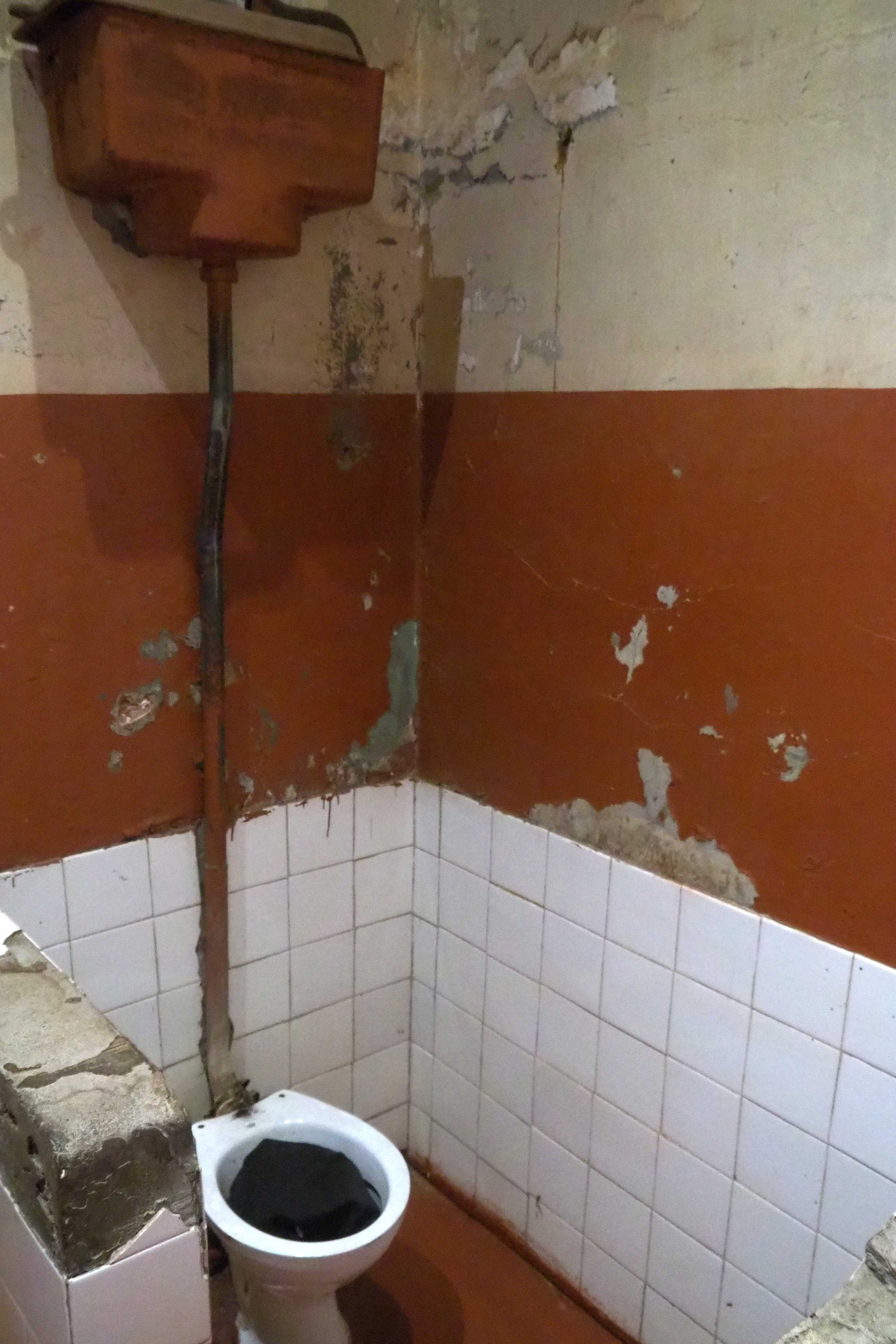
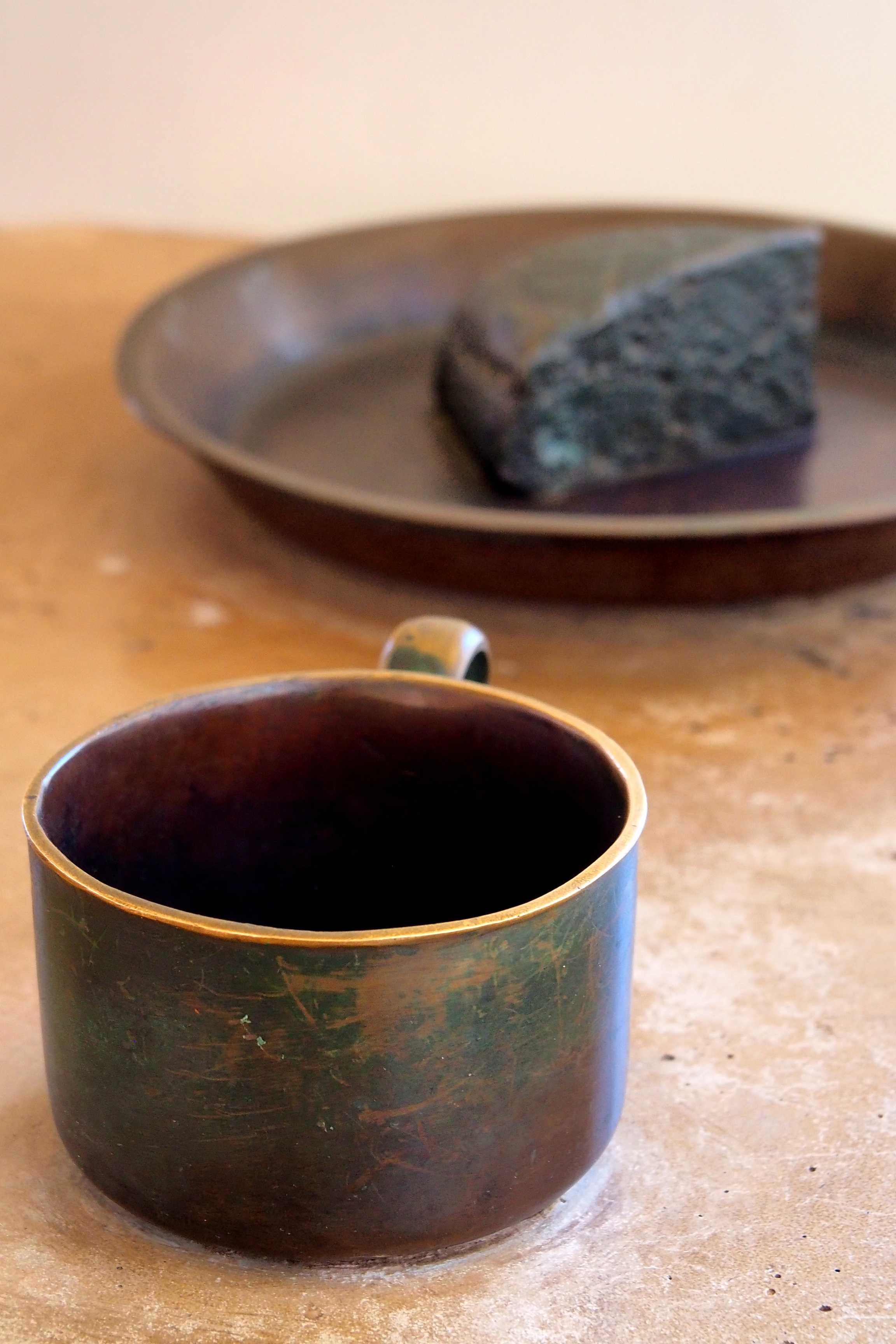
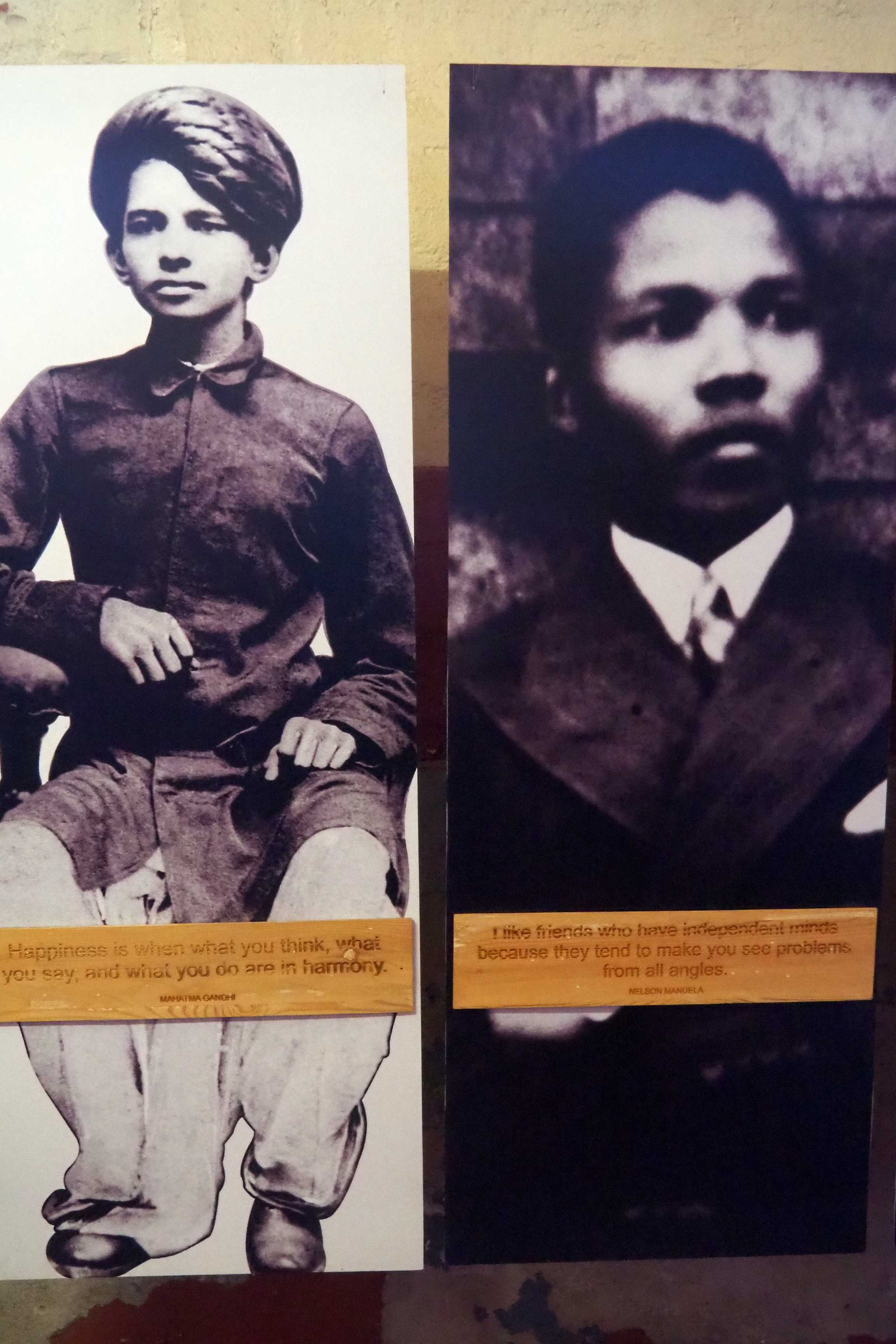
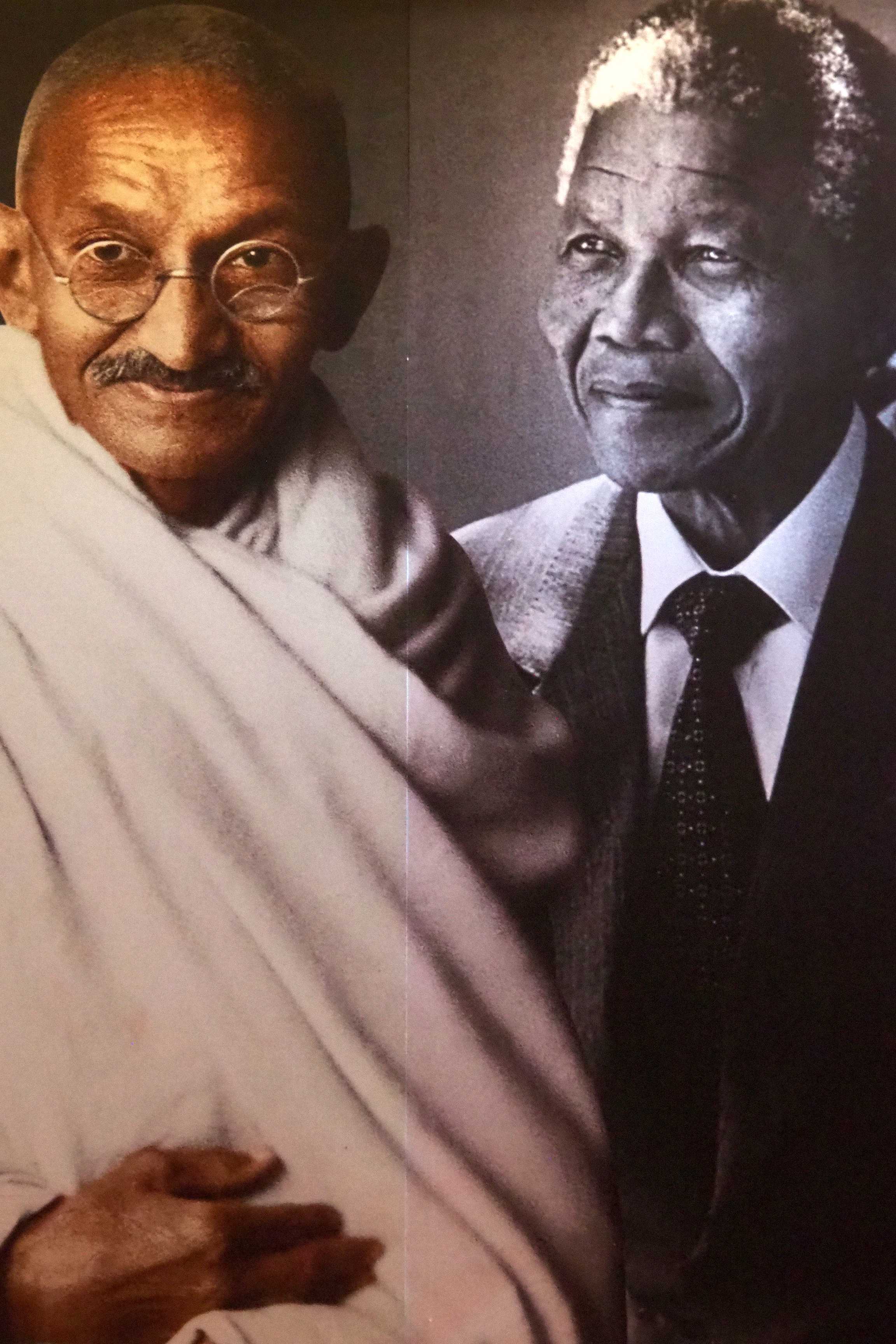
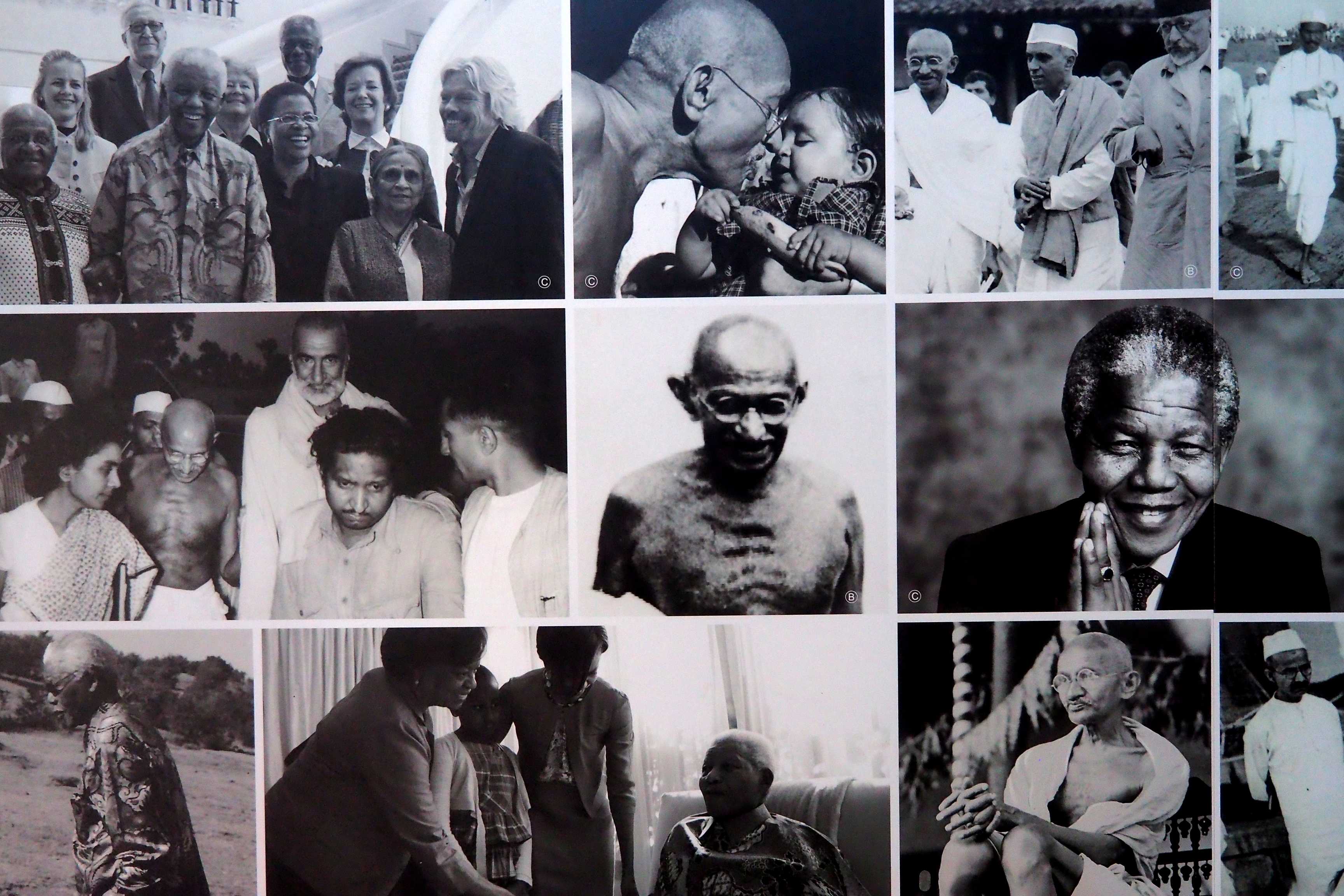
A part of the site is reserved for the common links between the two illustrious prisoners of the site, Gandhi and Mandela.
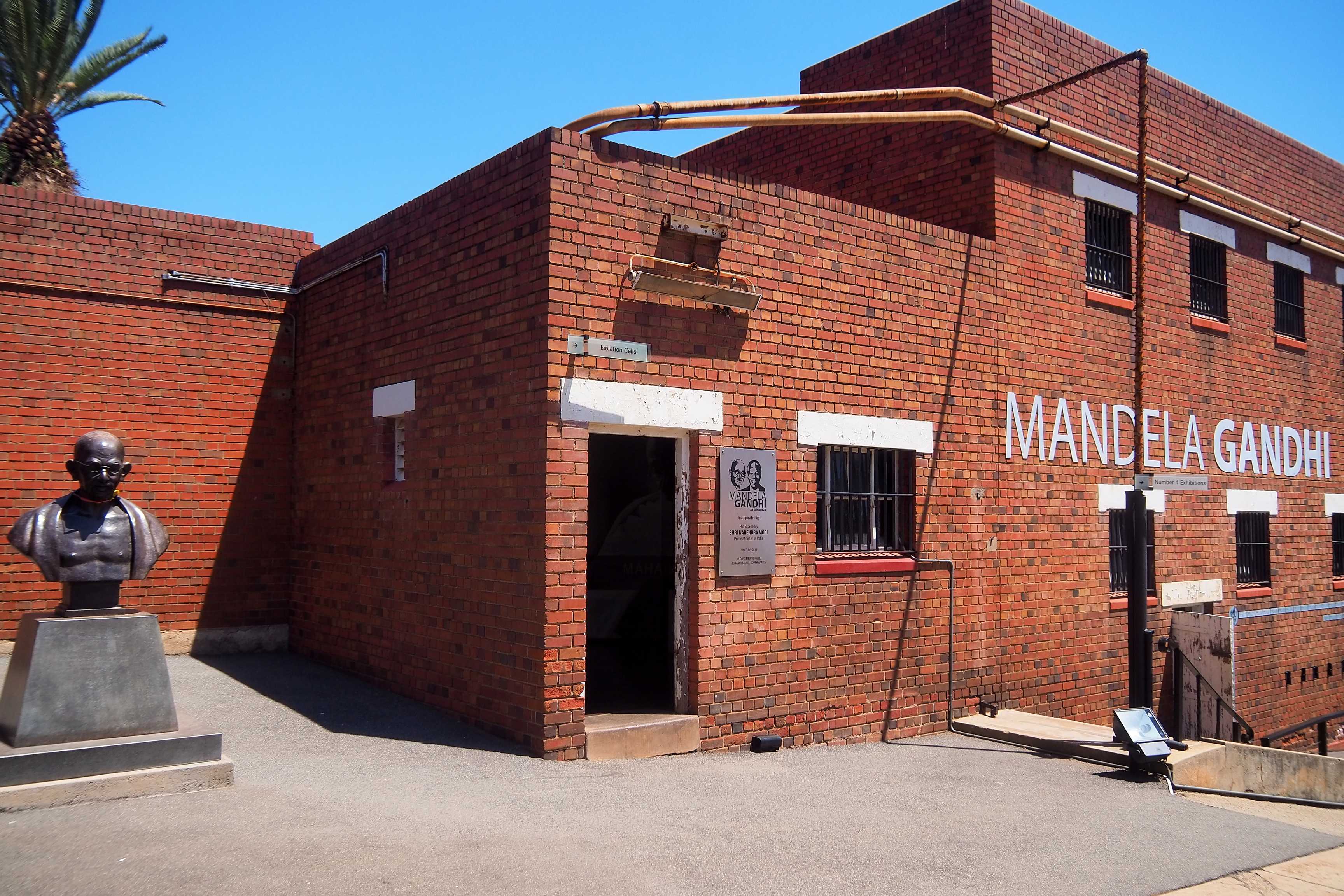
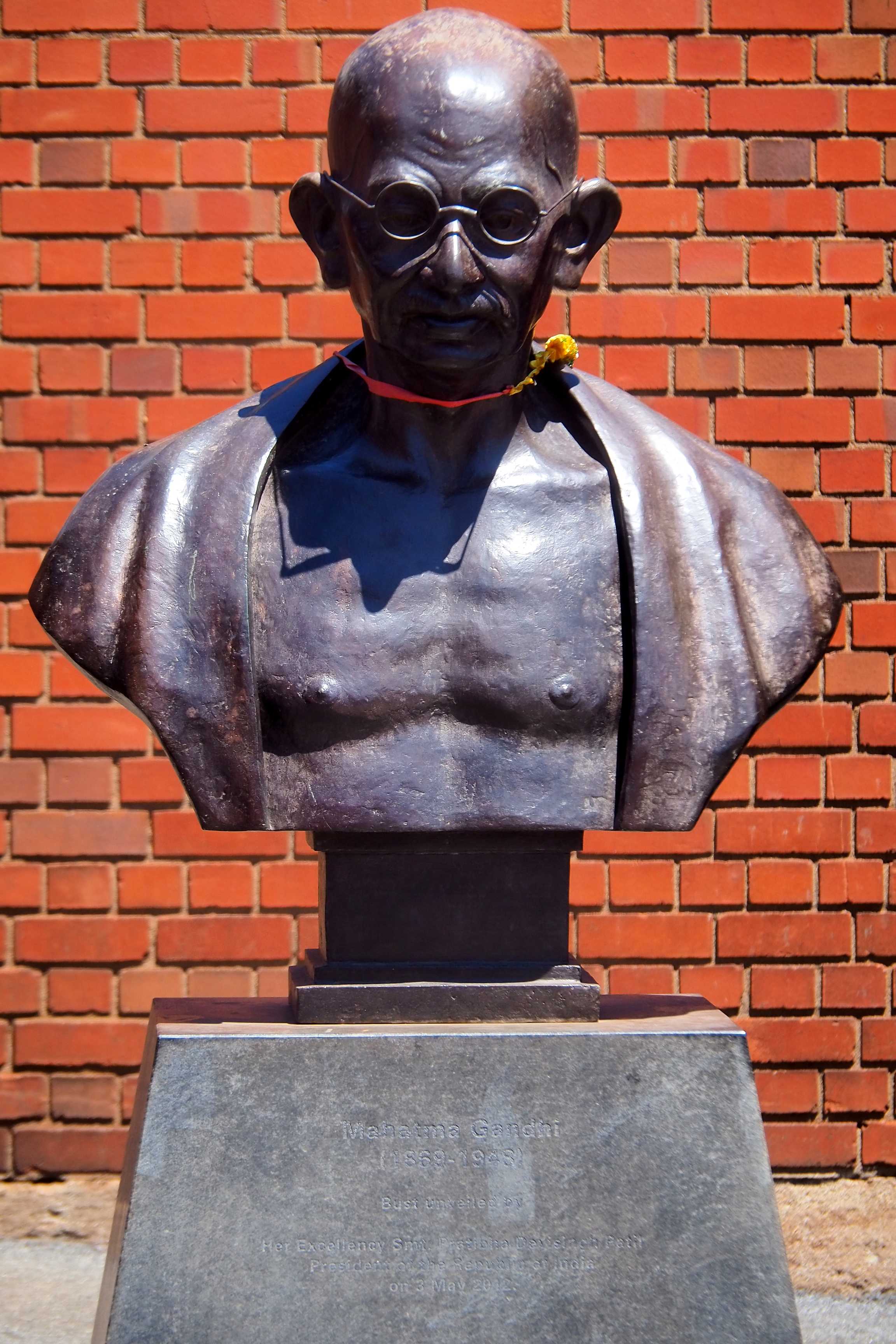
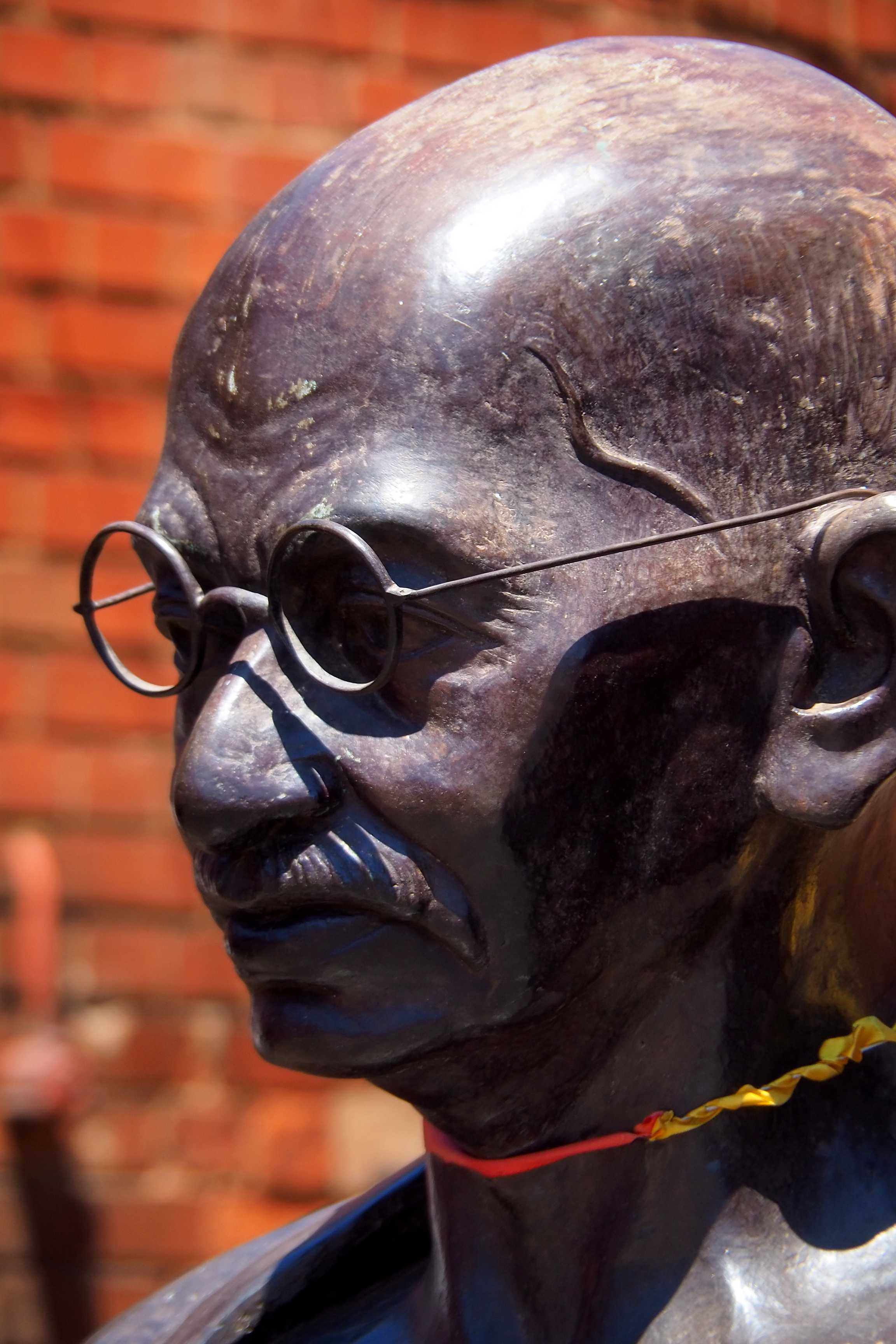
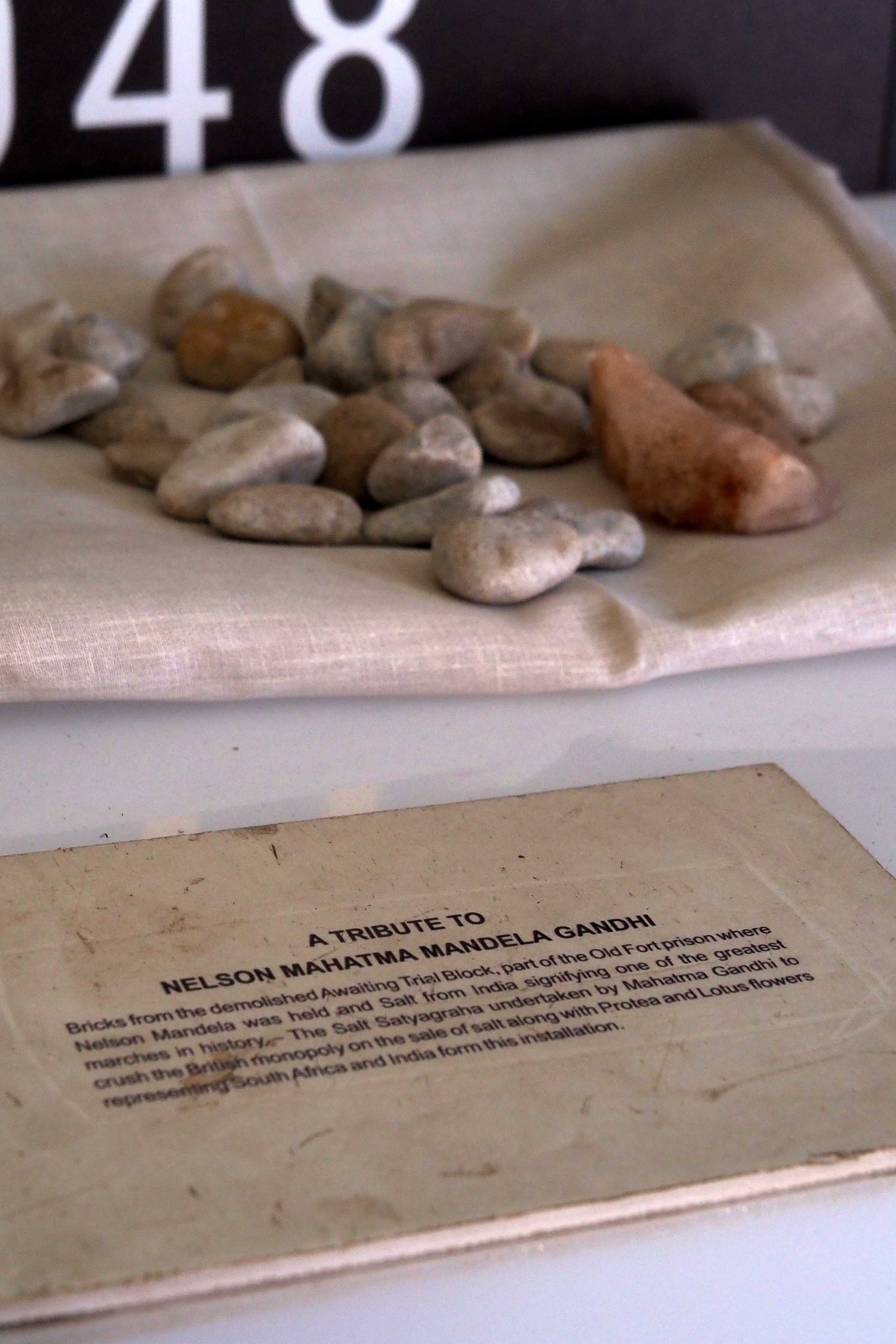
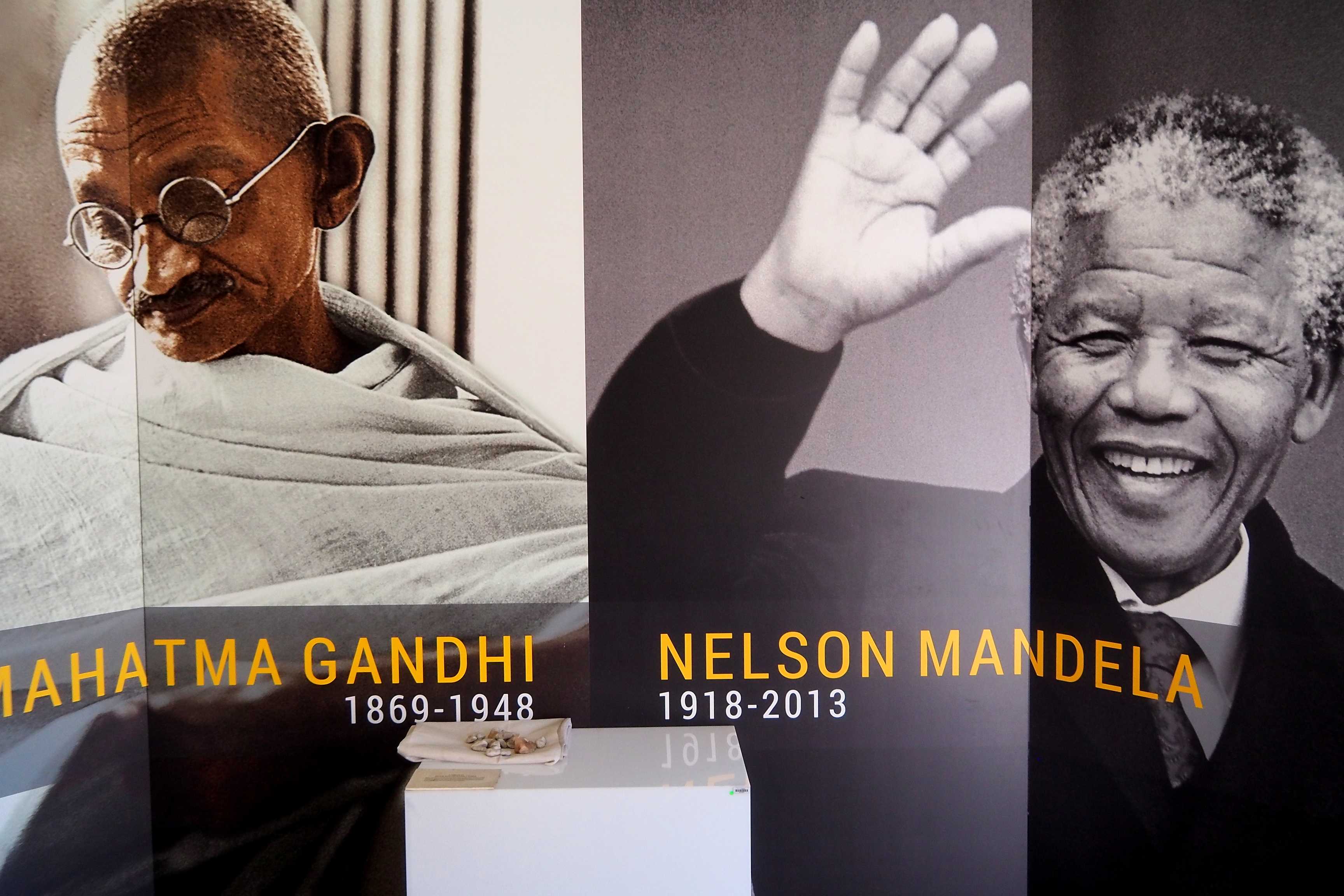
Photo montages of the two personalities at the same ages.



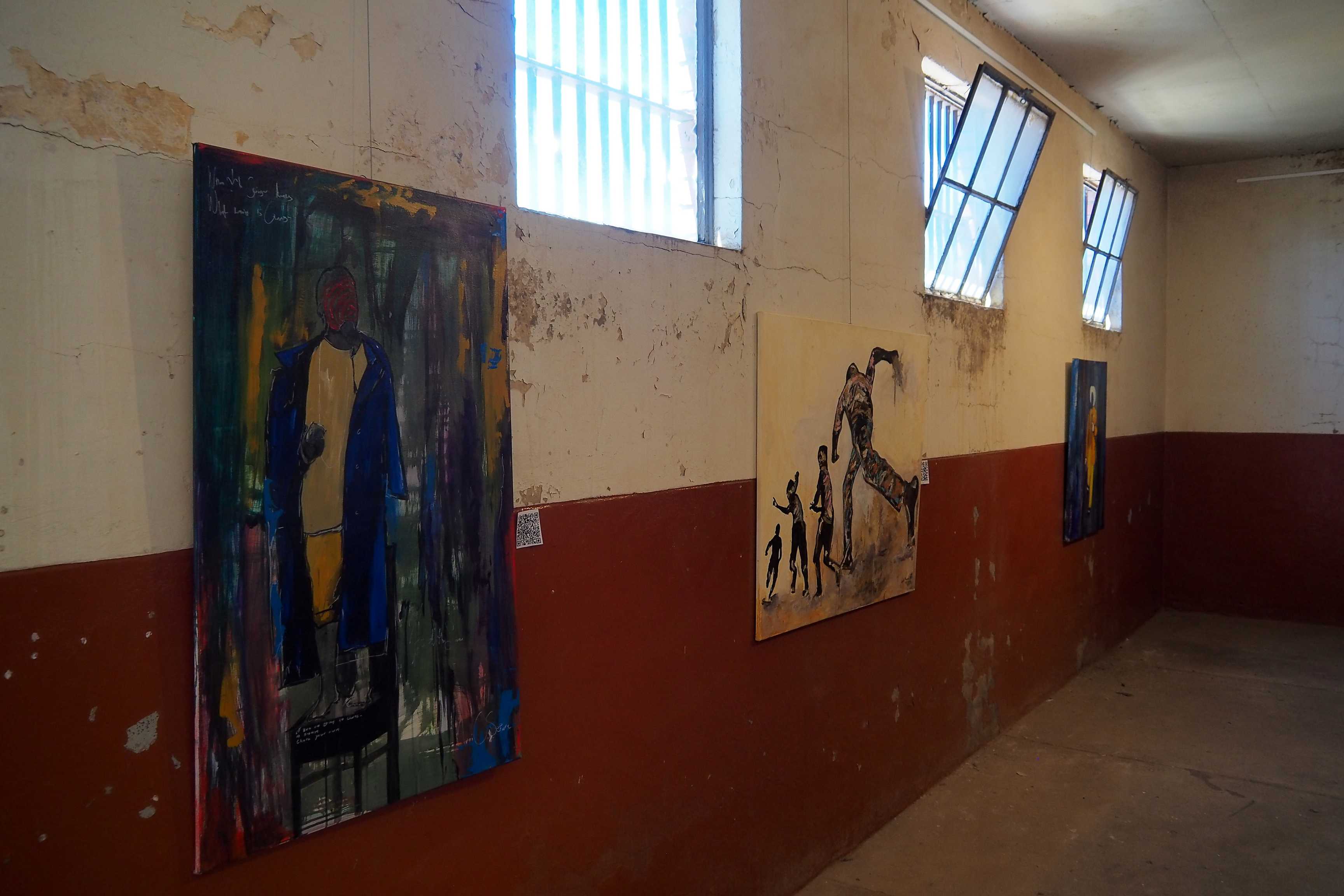
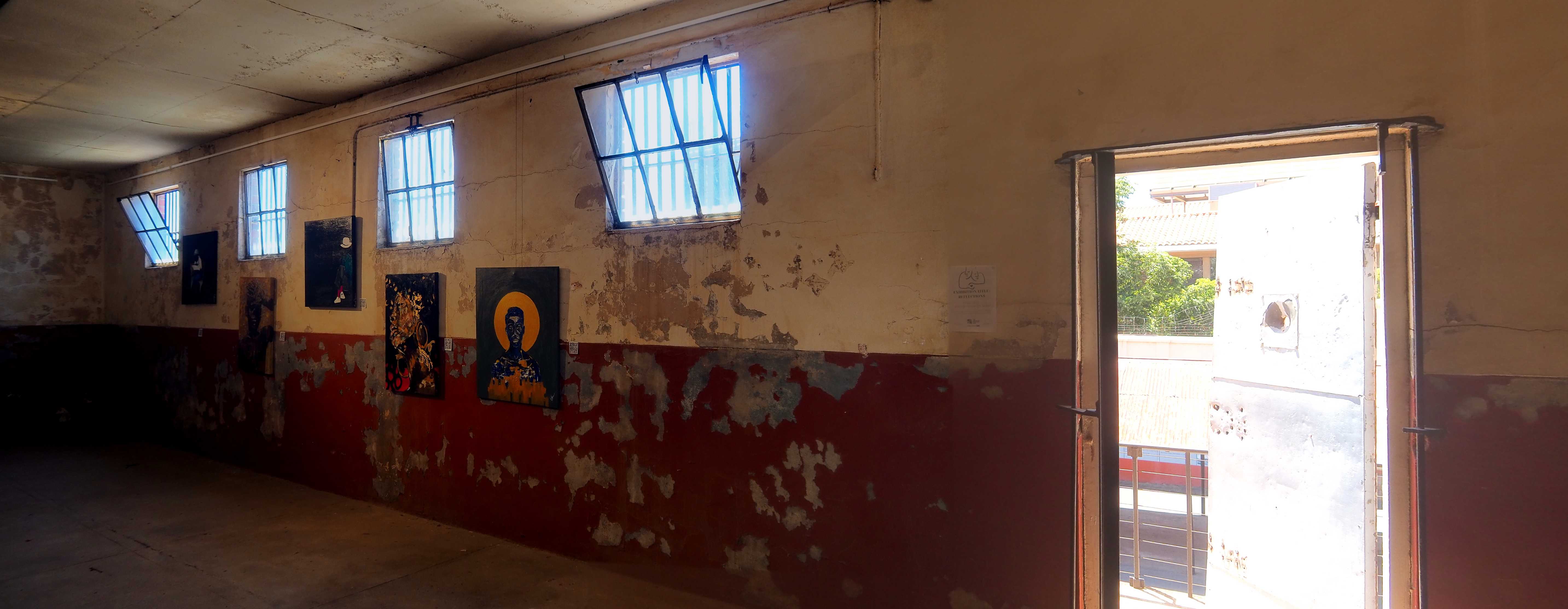
One of the rooms exhibits paintings by South African artists on the theme of human rights.



The view towards the North of the city.

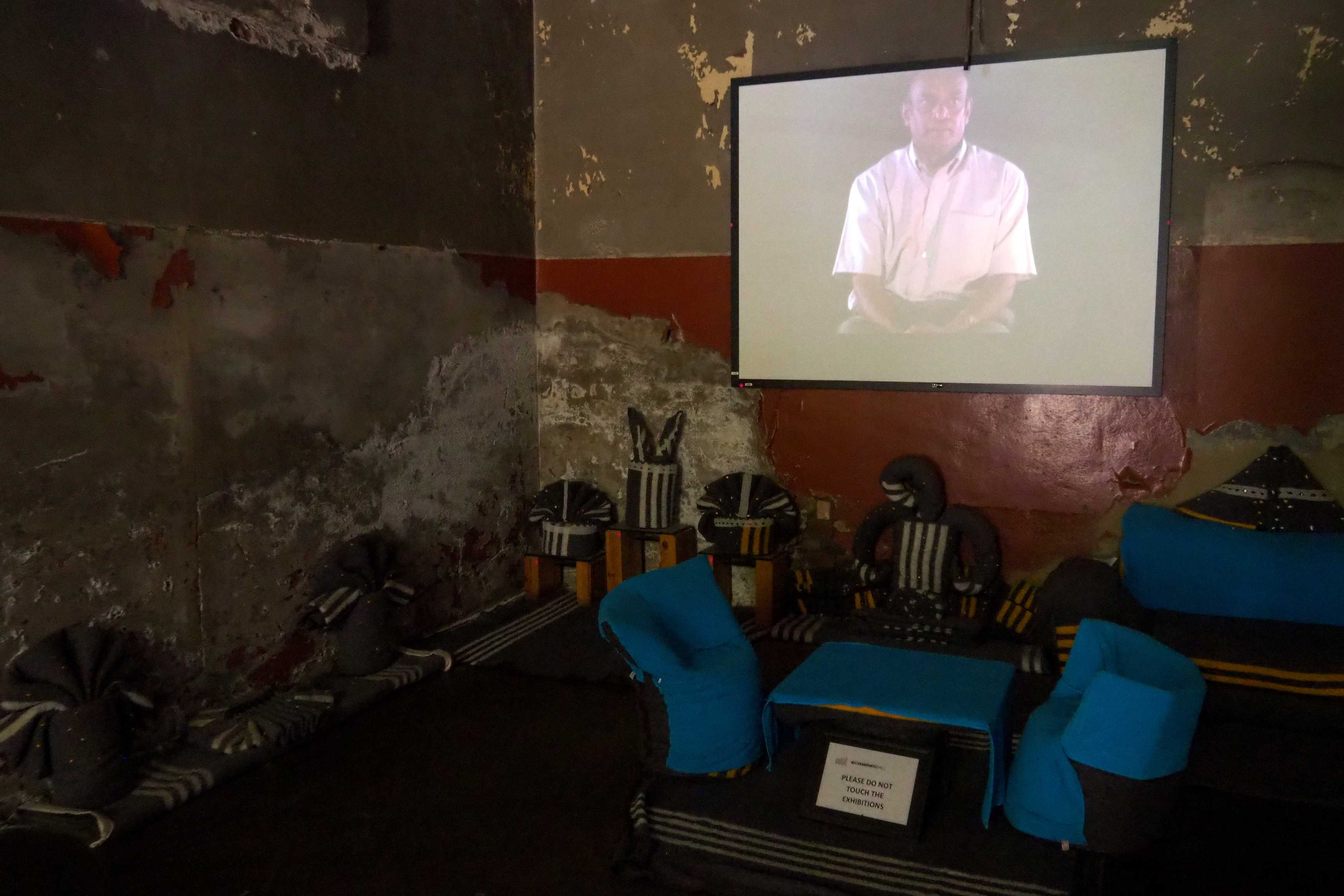
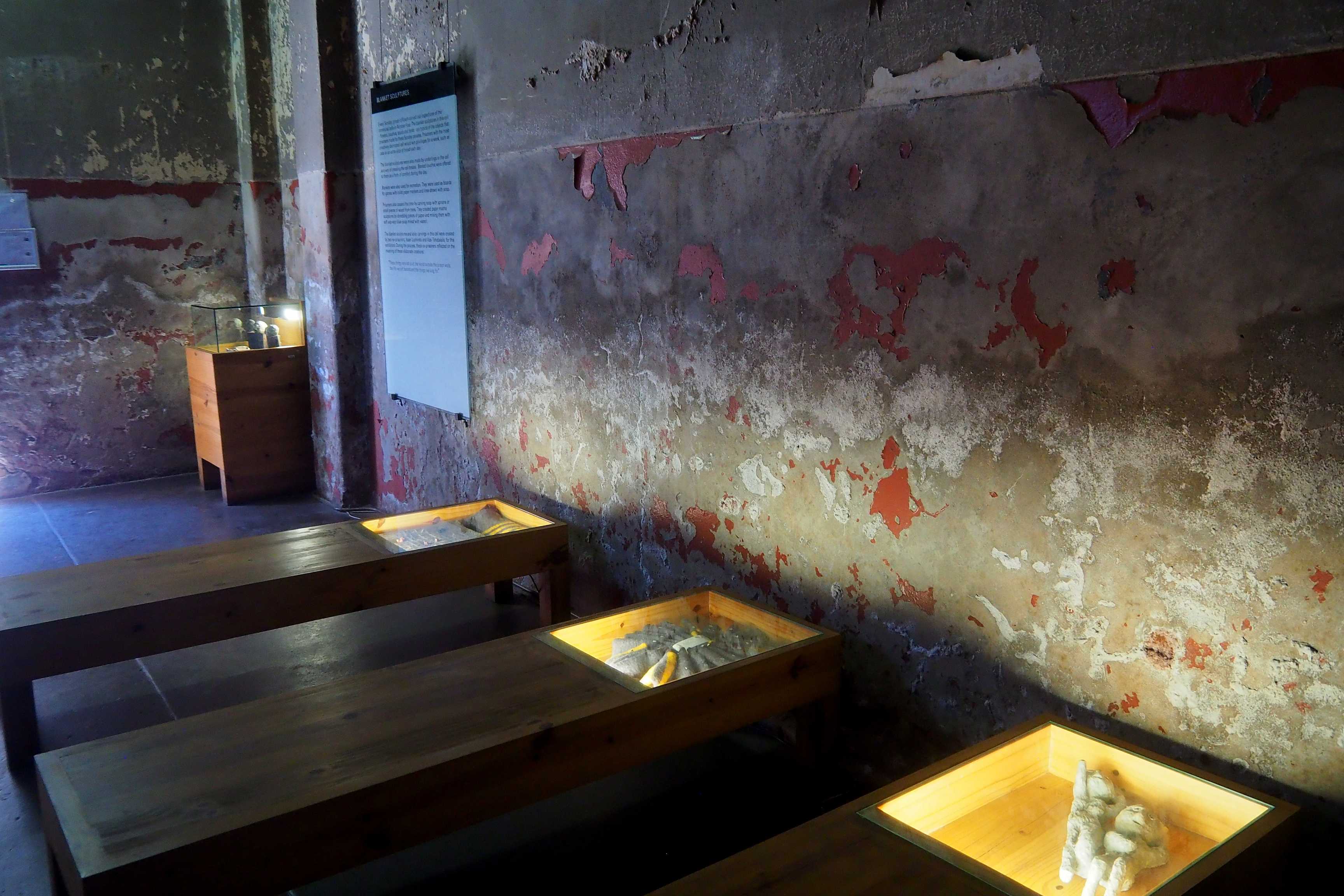
Blankets served as an escape for the inmates by "sculpting" them into everyday objects like here a tractor or chairs.

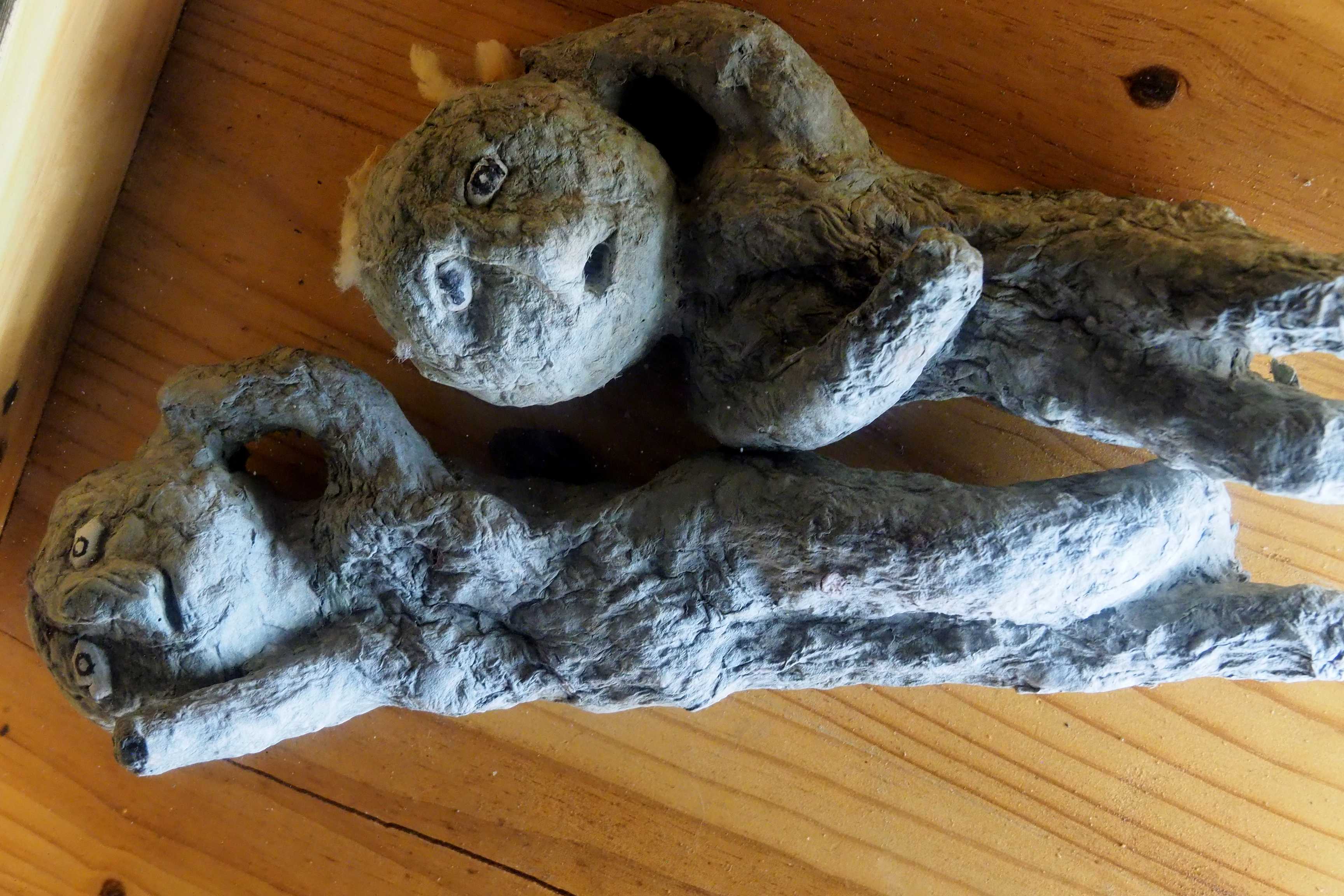
Papier-mâché figurines.
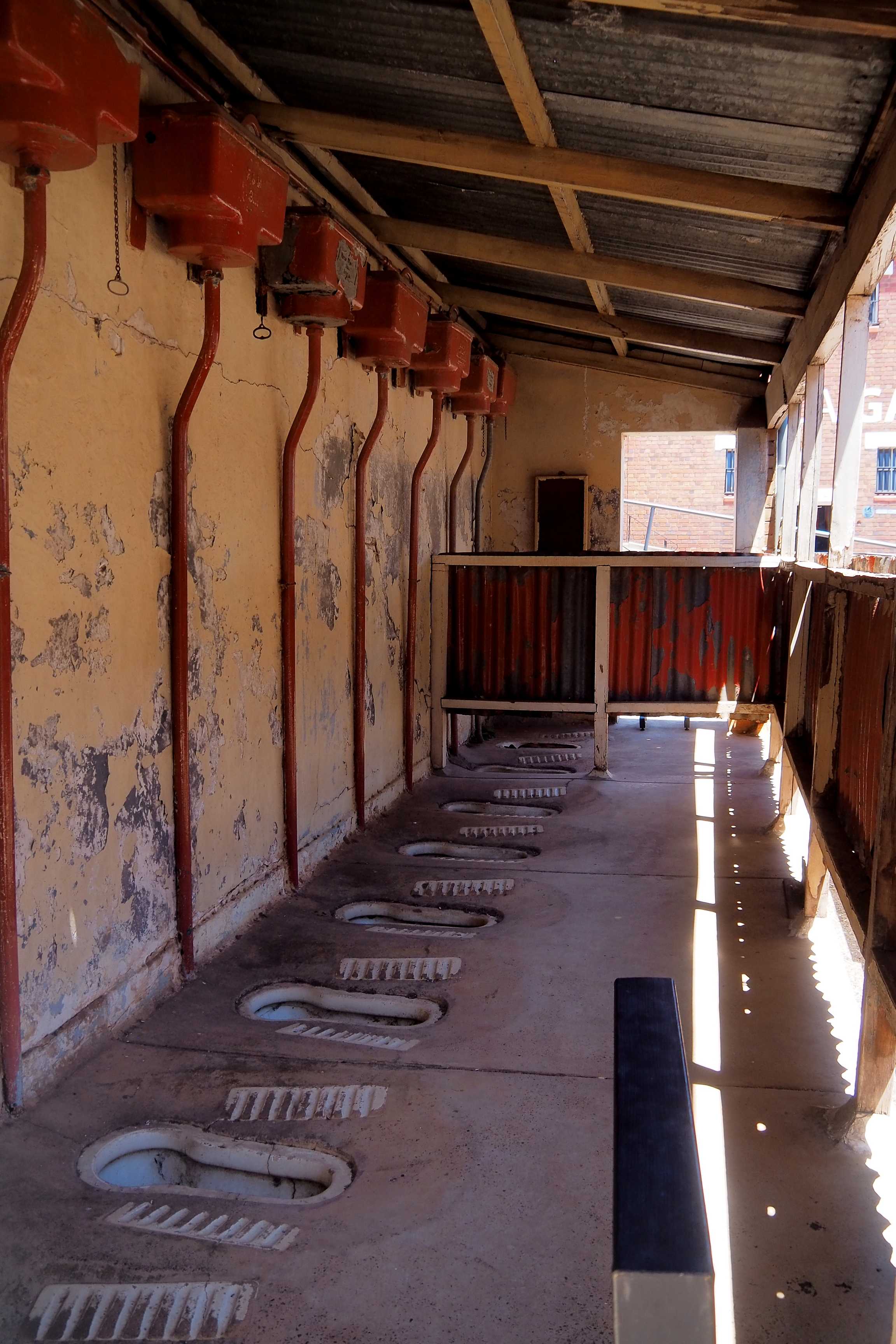
Emakhulukhuthu or "Deep Black Hole": "The most extreme form of punishment was placement in solitary confinement. Prisoners spent 23 hours a day there on a diet based on rice water. They could officially be detained here for a period of one month to more than a year.".

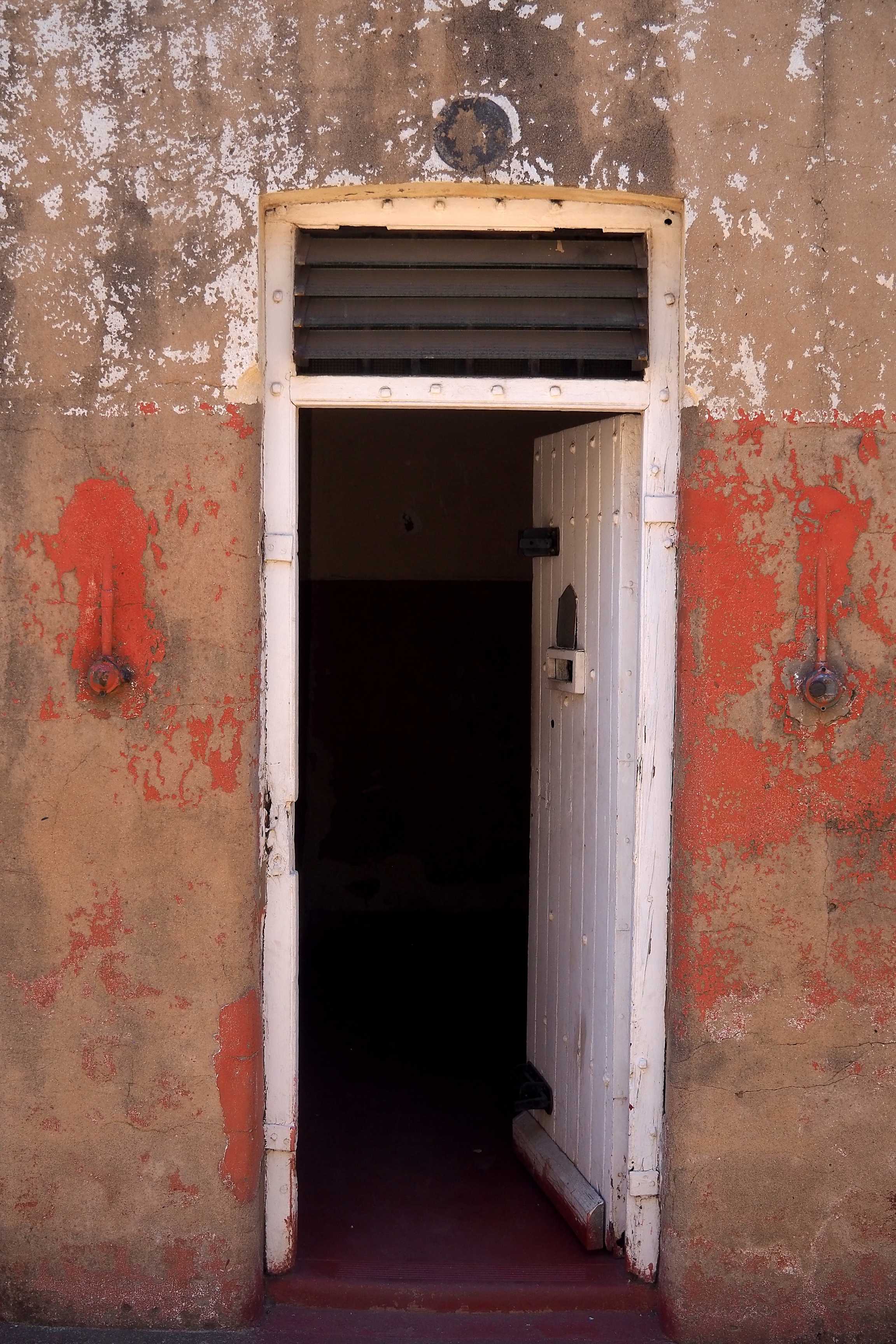


Another exhibition on Gandhi "Prisoner of Conscience" with here his typewriter, model 50 of the Imperial brand.

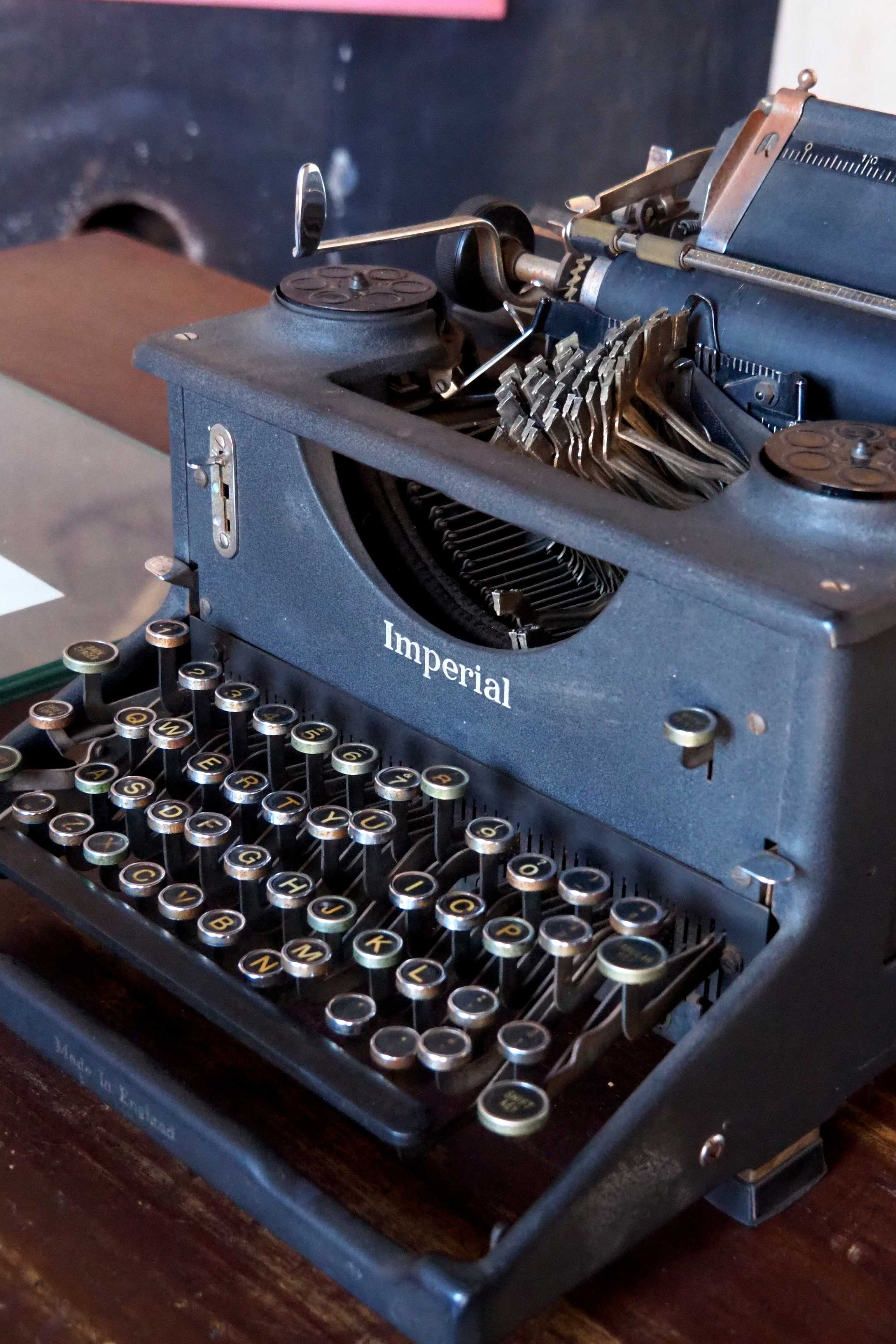
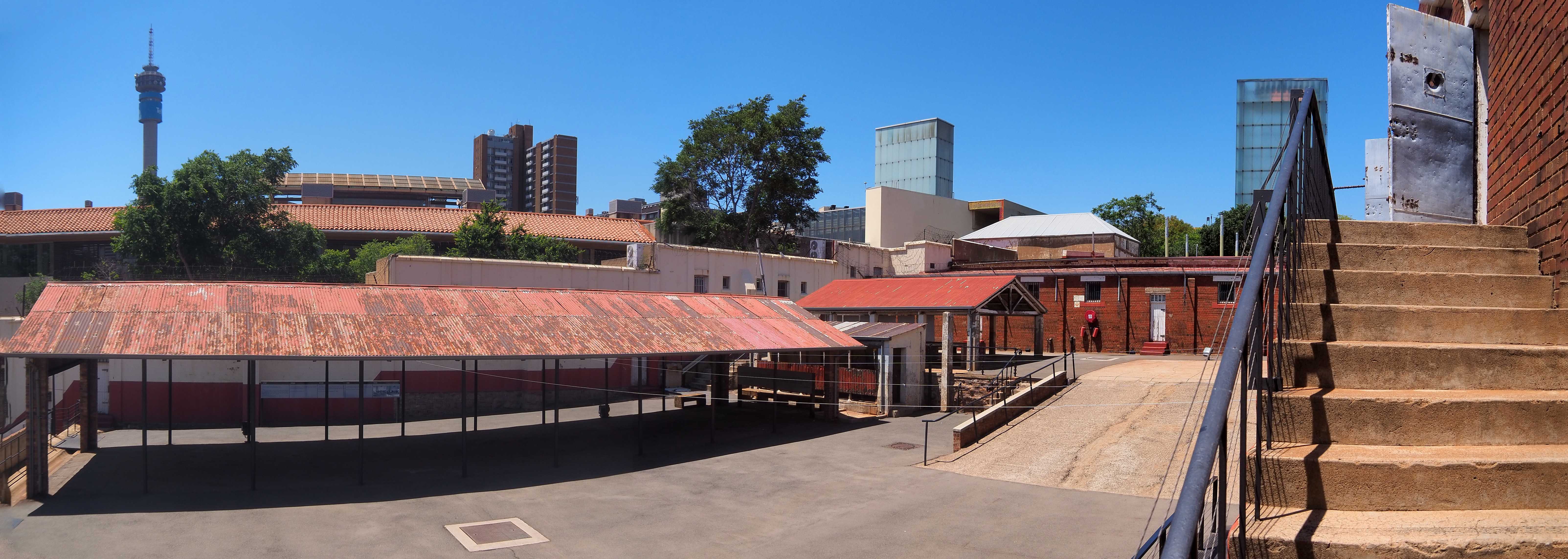
Here we are on the side of the "Old Fort", looking onto the buildings of the seat of the Constitutional Court of the country.
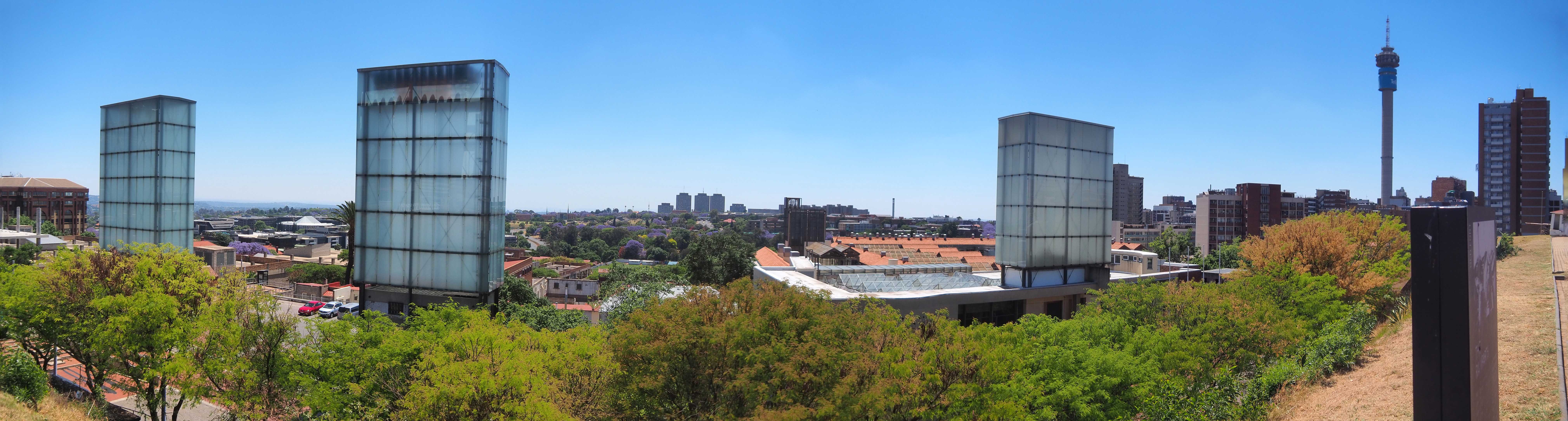
The old fort built in 1899 served as a prison until 1983. Under the apartheid regime, it housed only white male prisoners, much better off than the black prisoners of the neighboring prison Number Four.
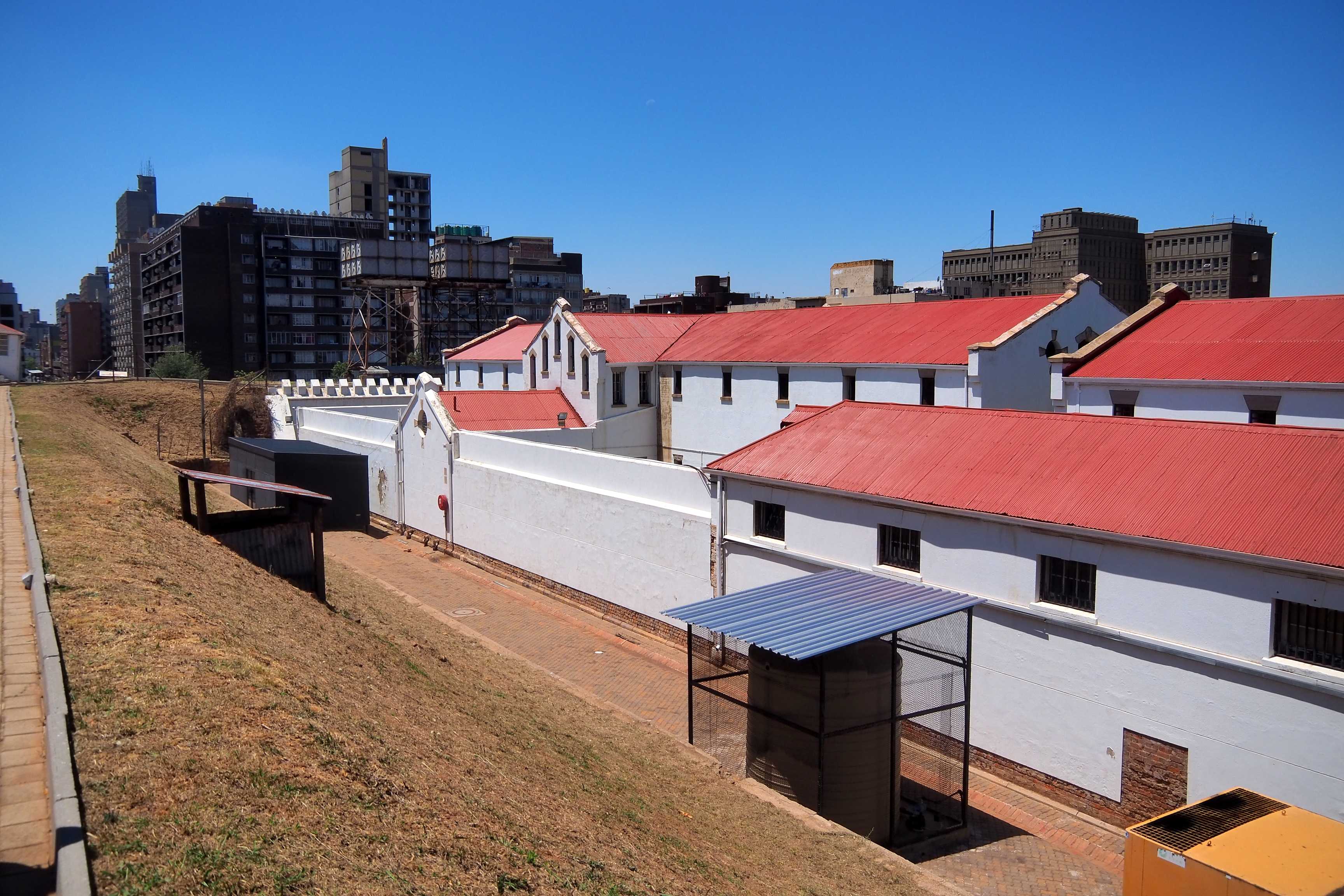
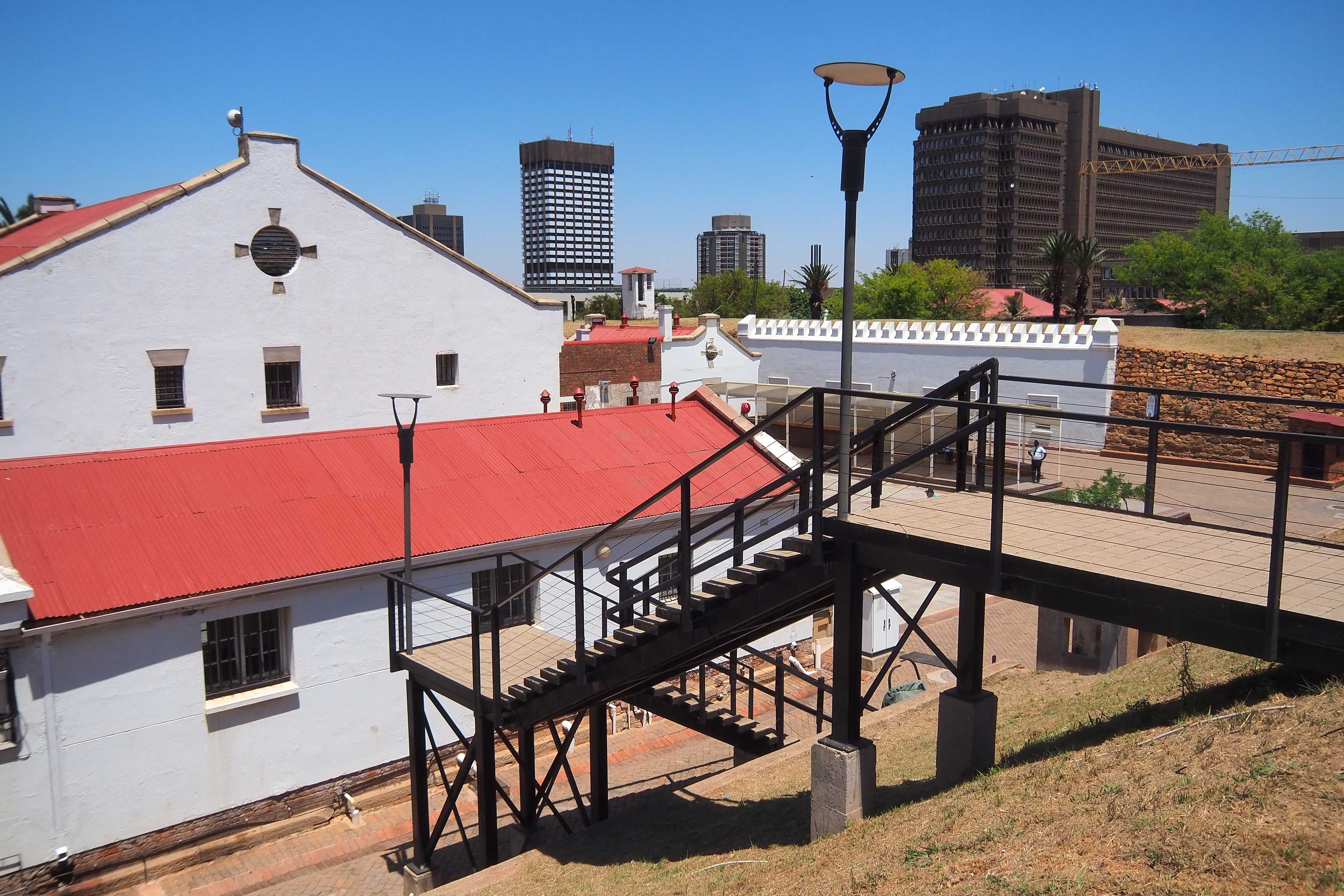
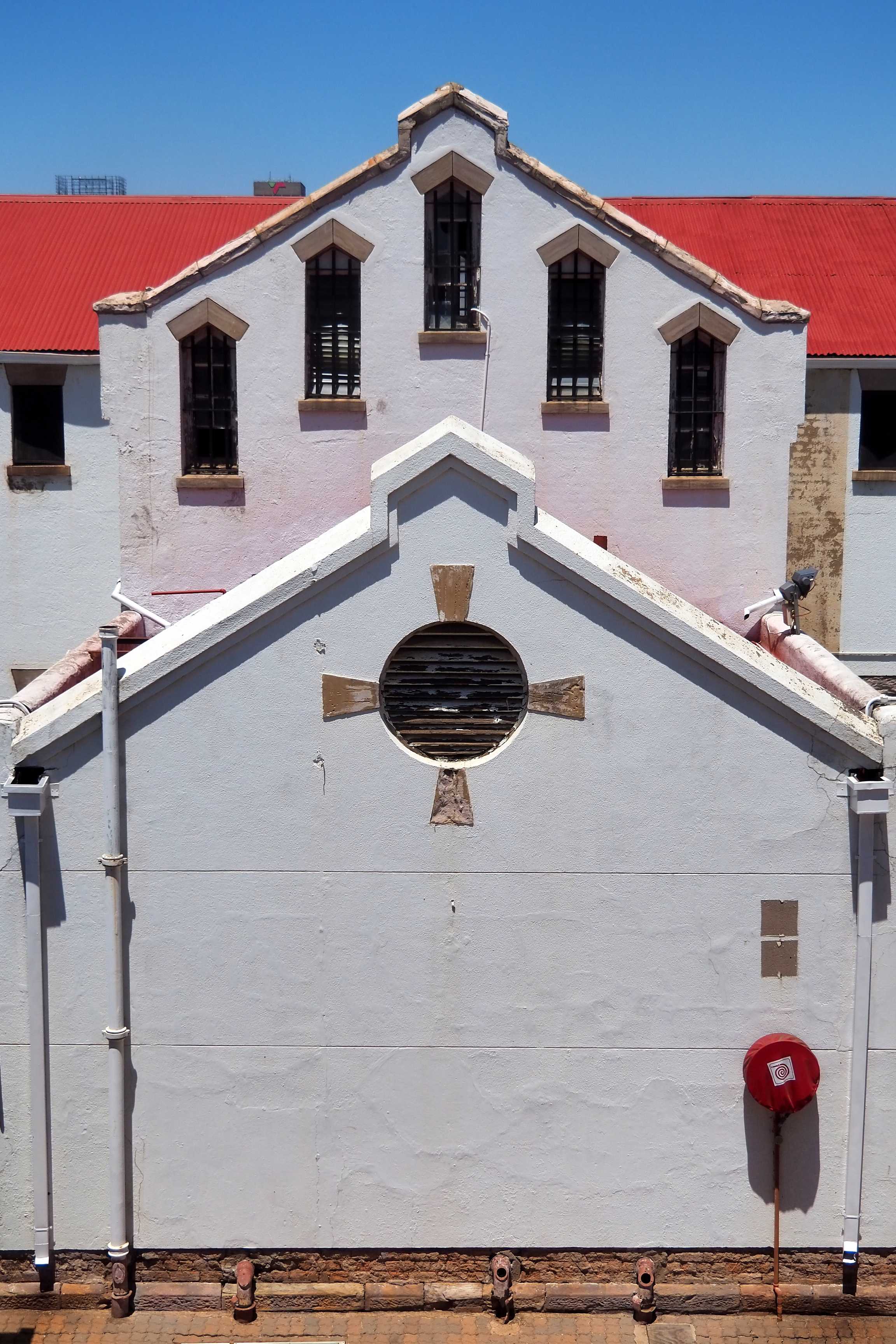
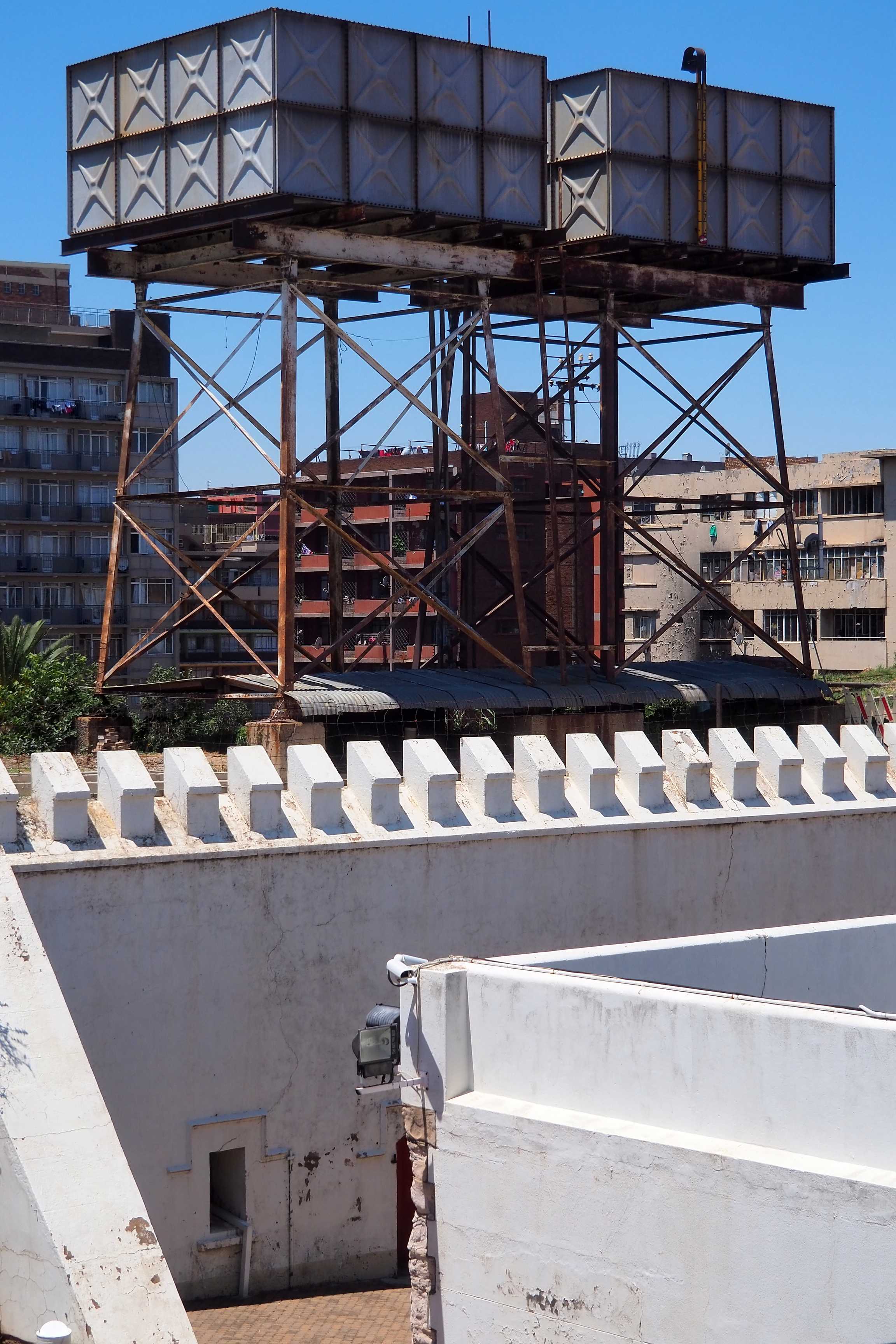
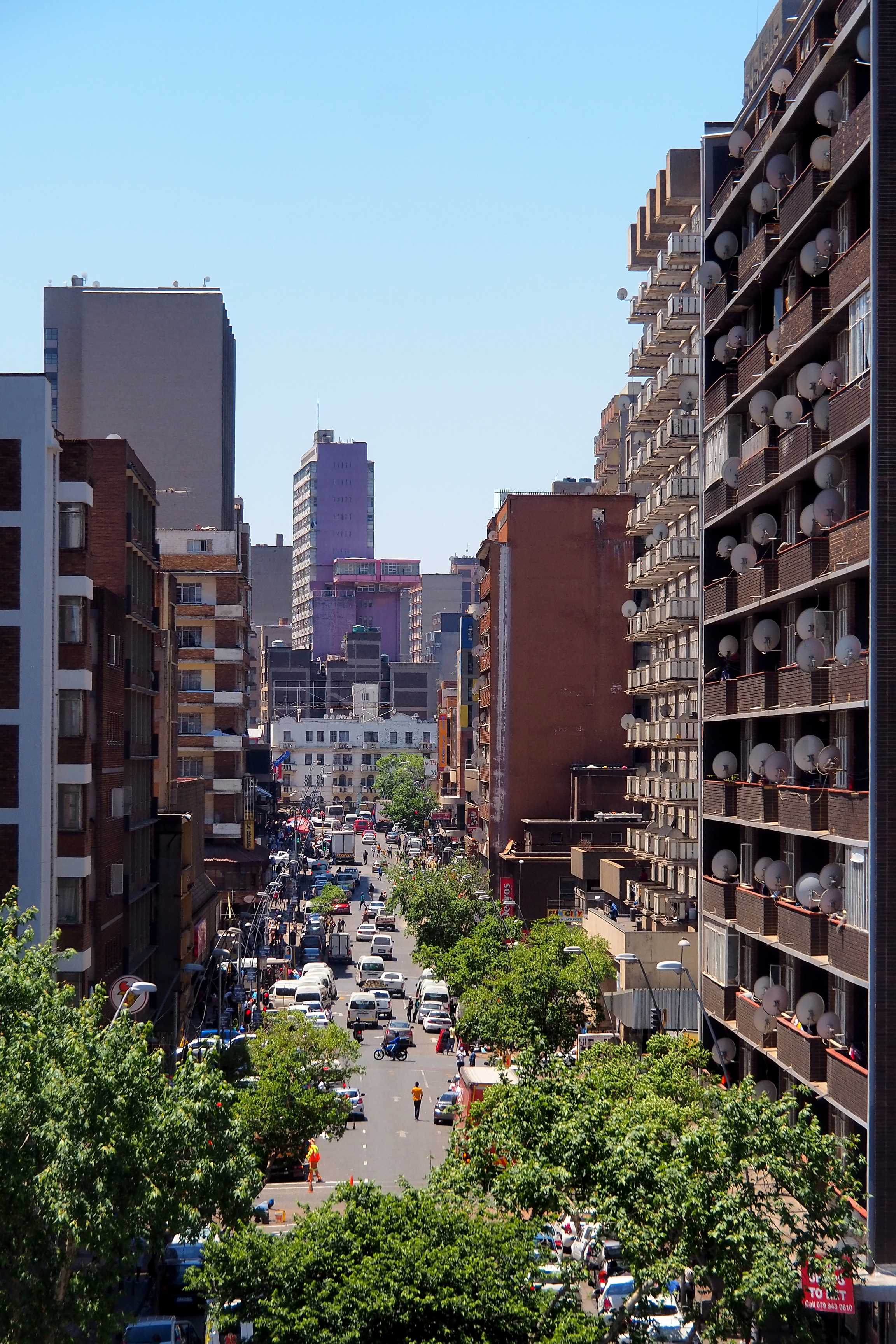
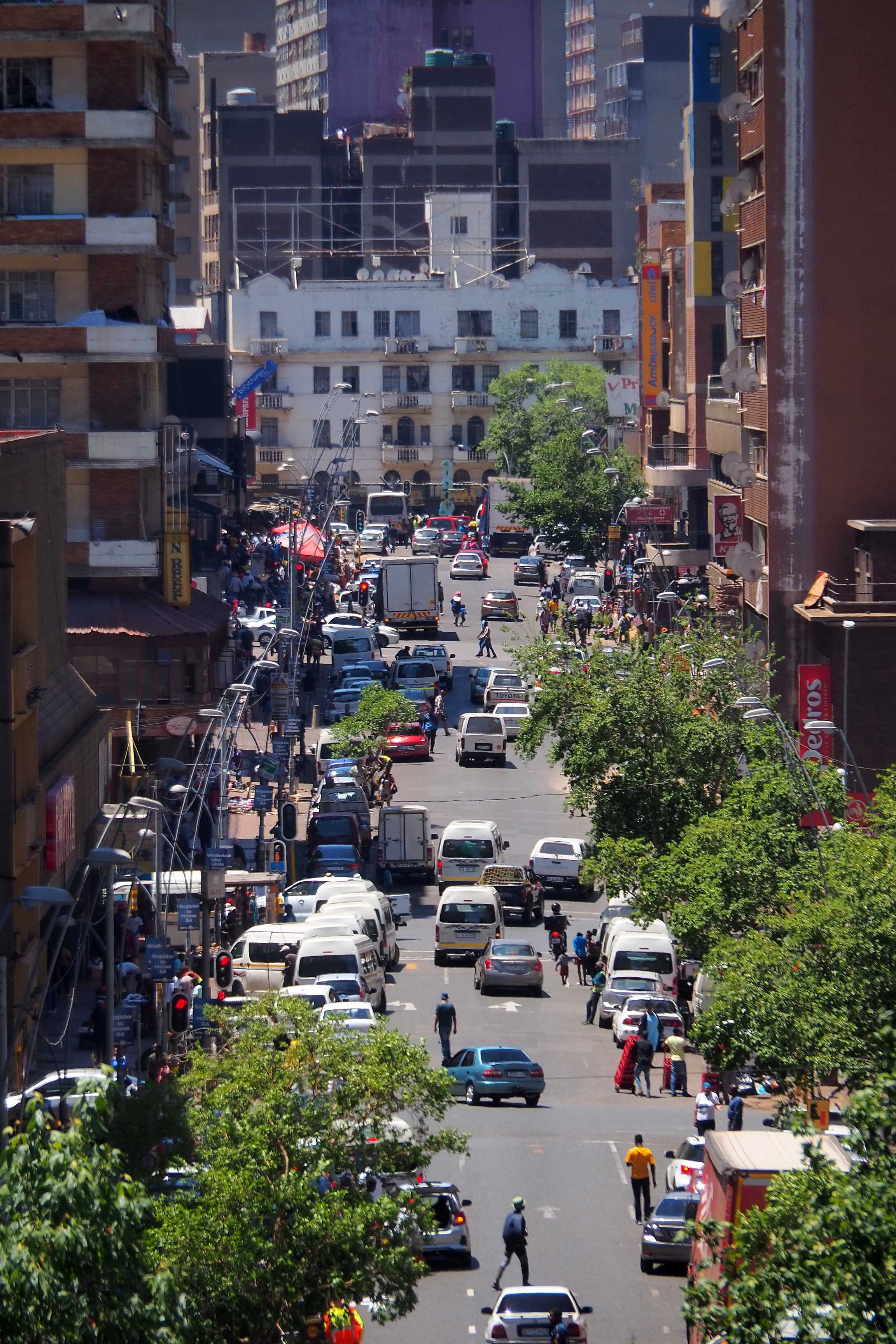
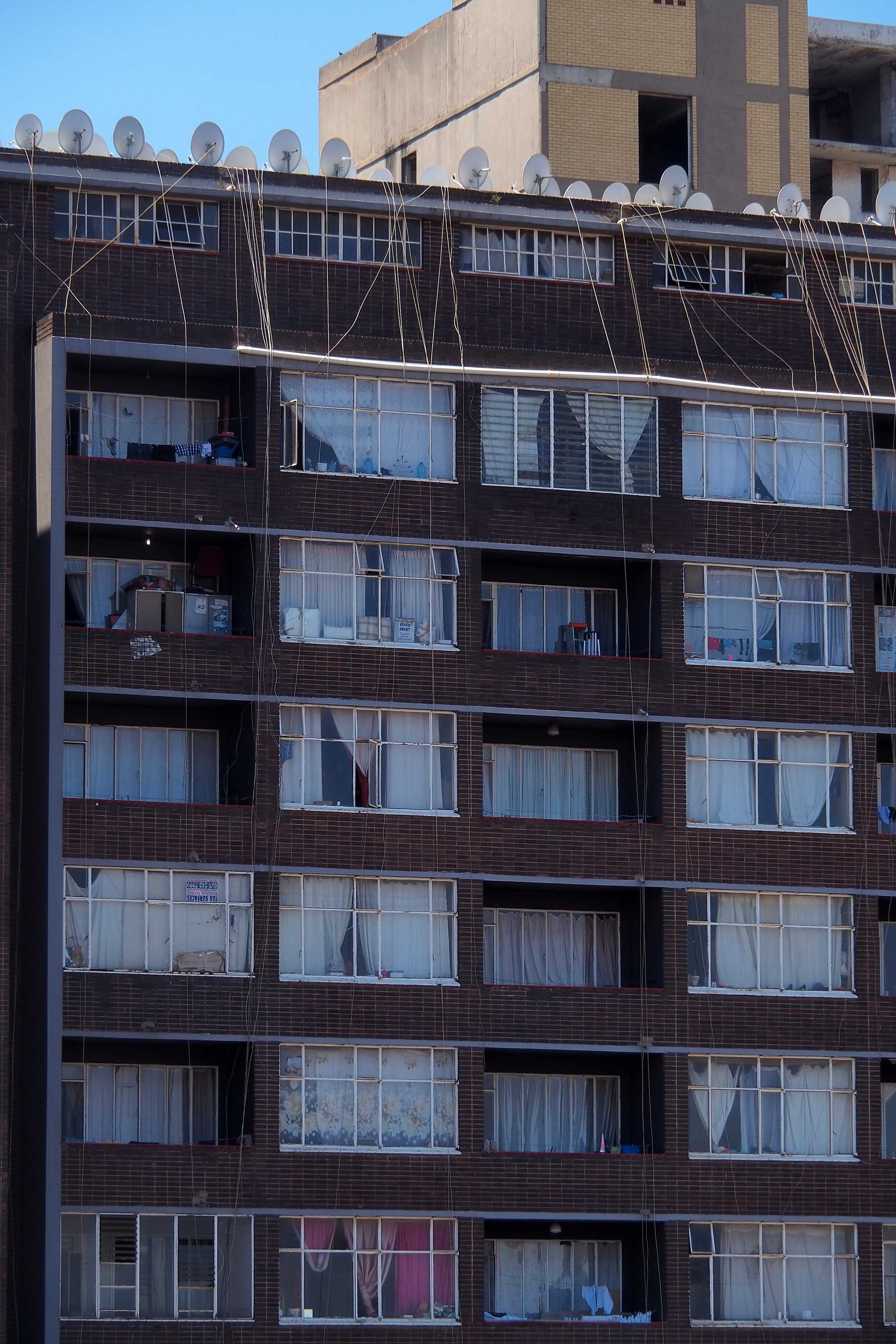
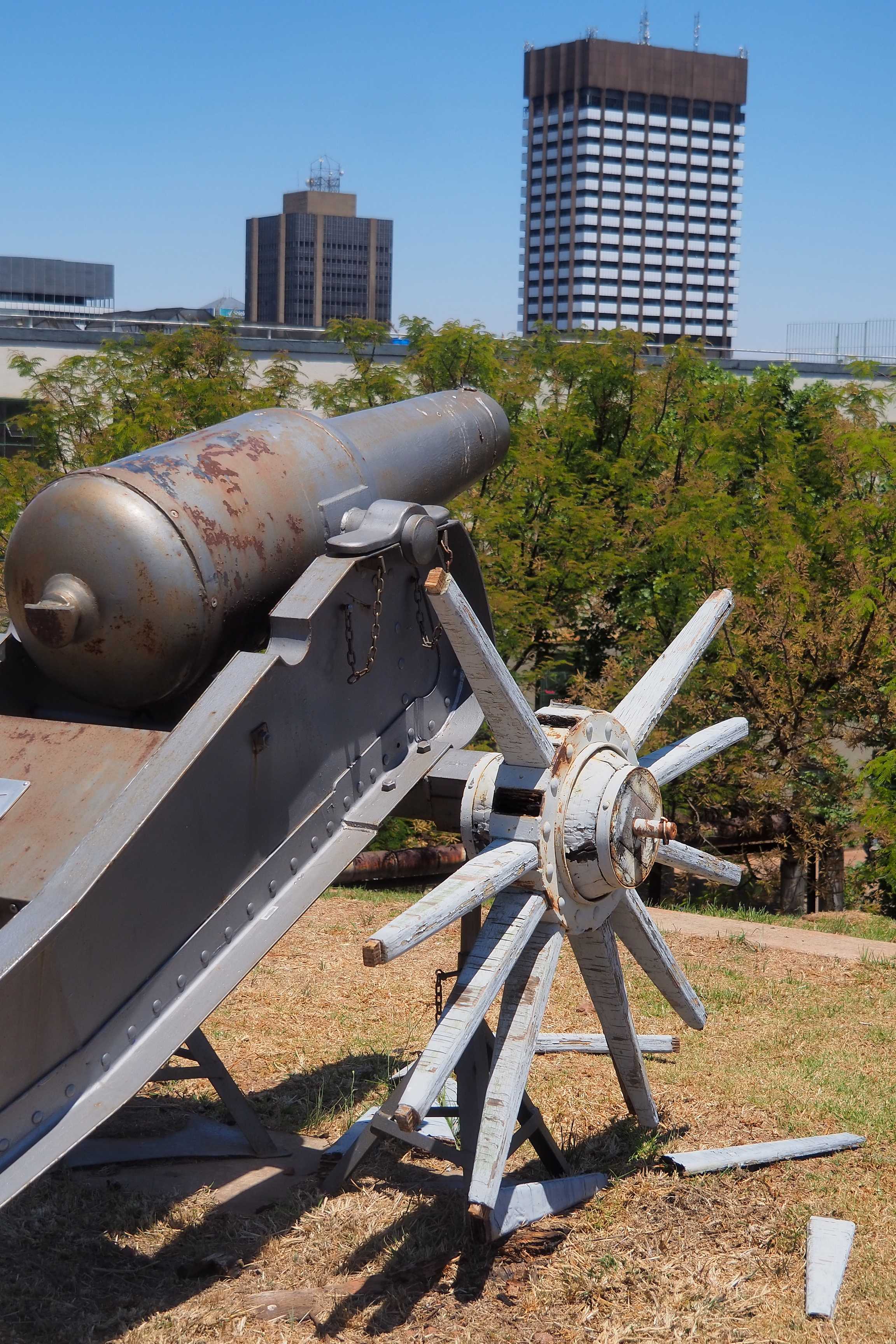
Facing the Fort protected by its old cannons, the great Pretoria street and its string of satellite dishes...

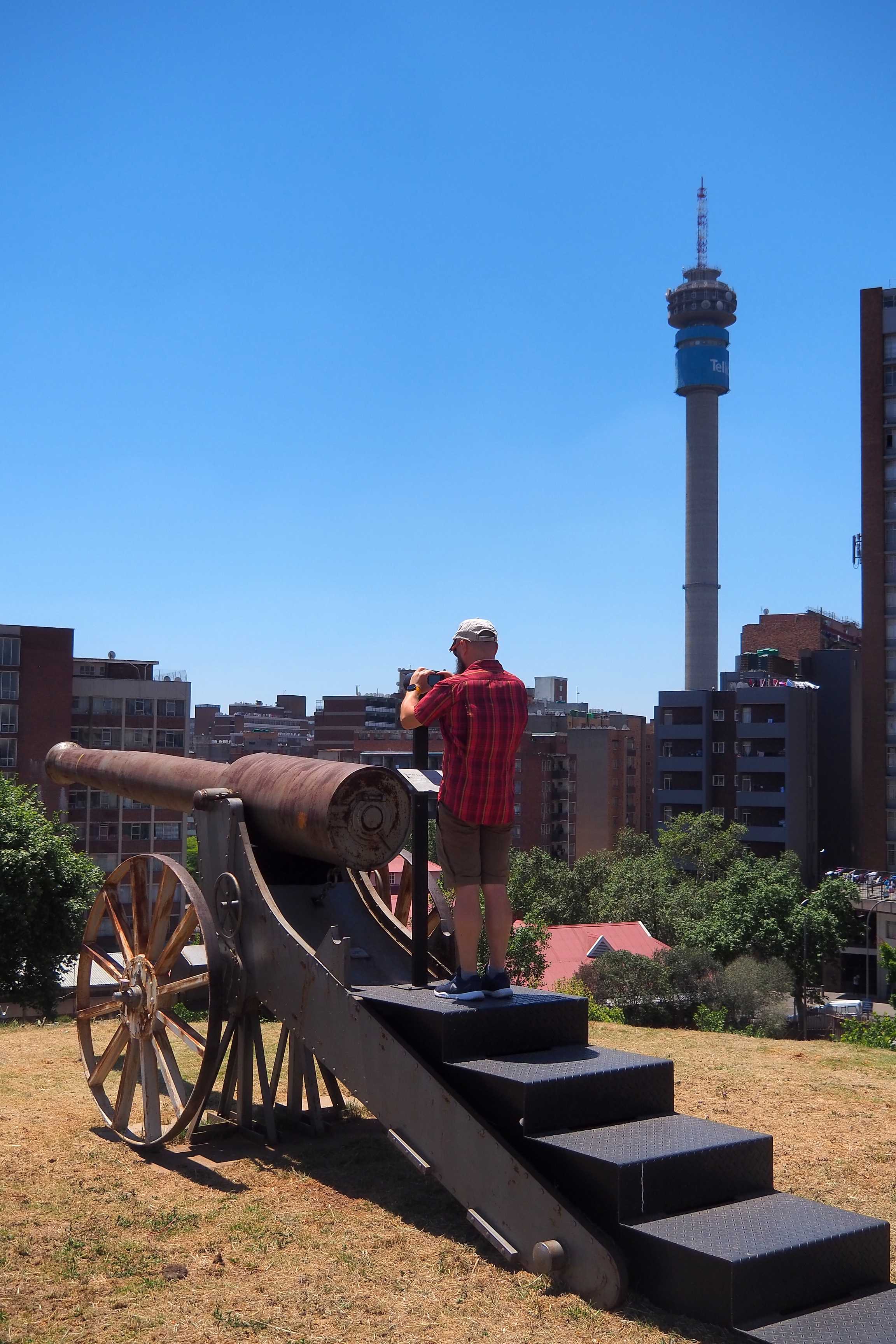
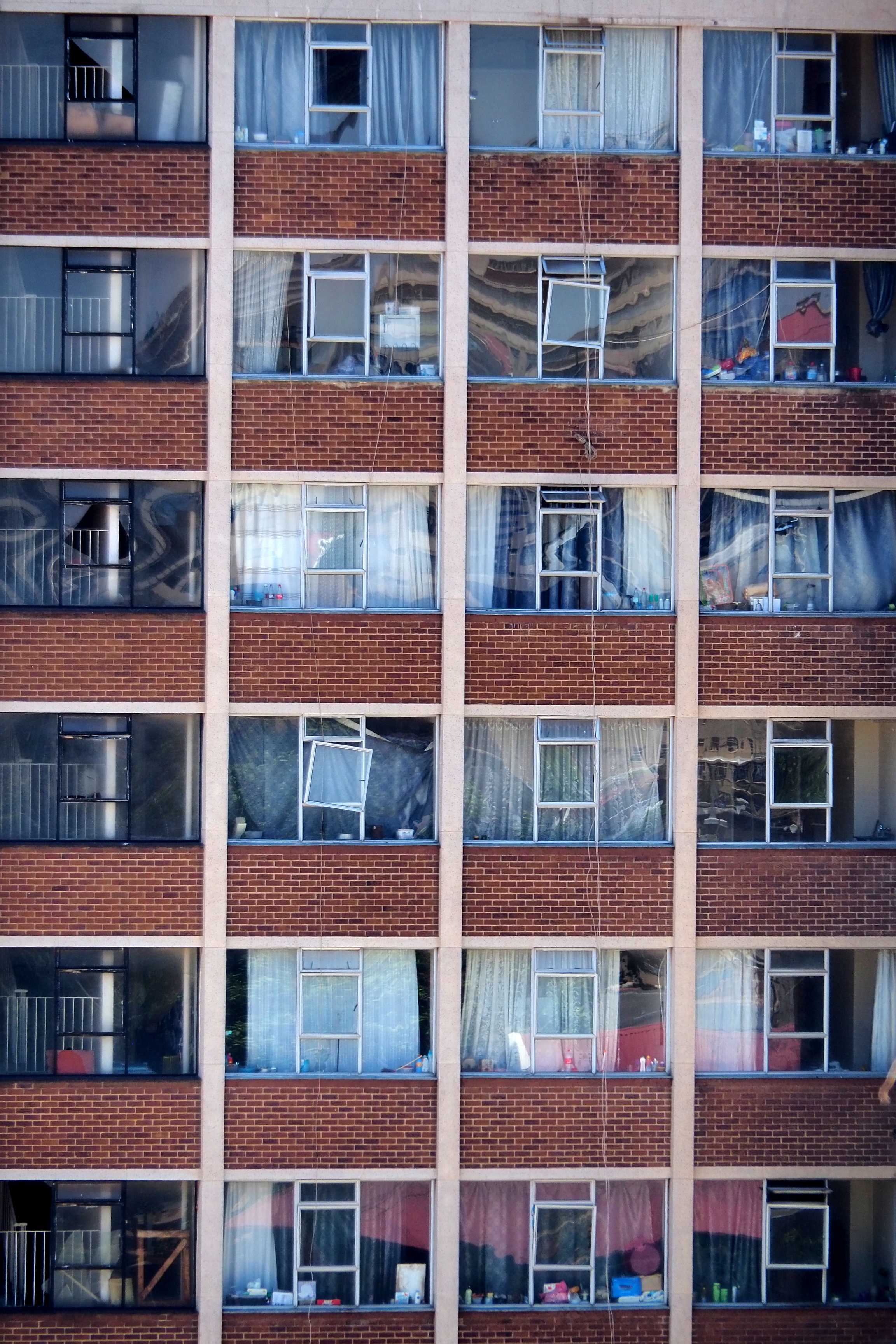

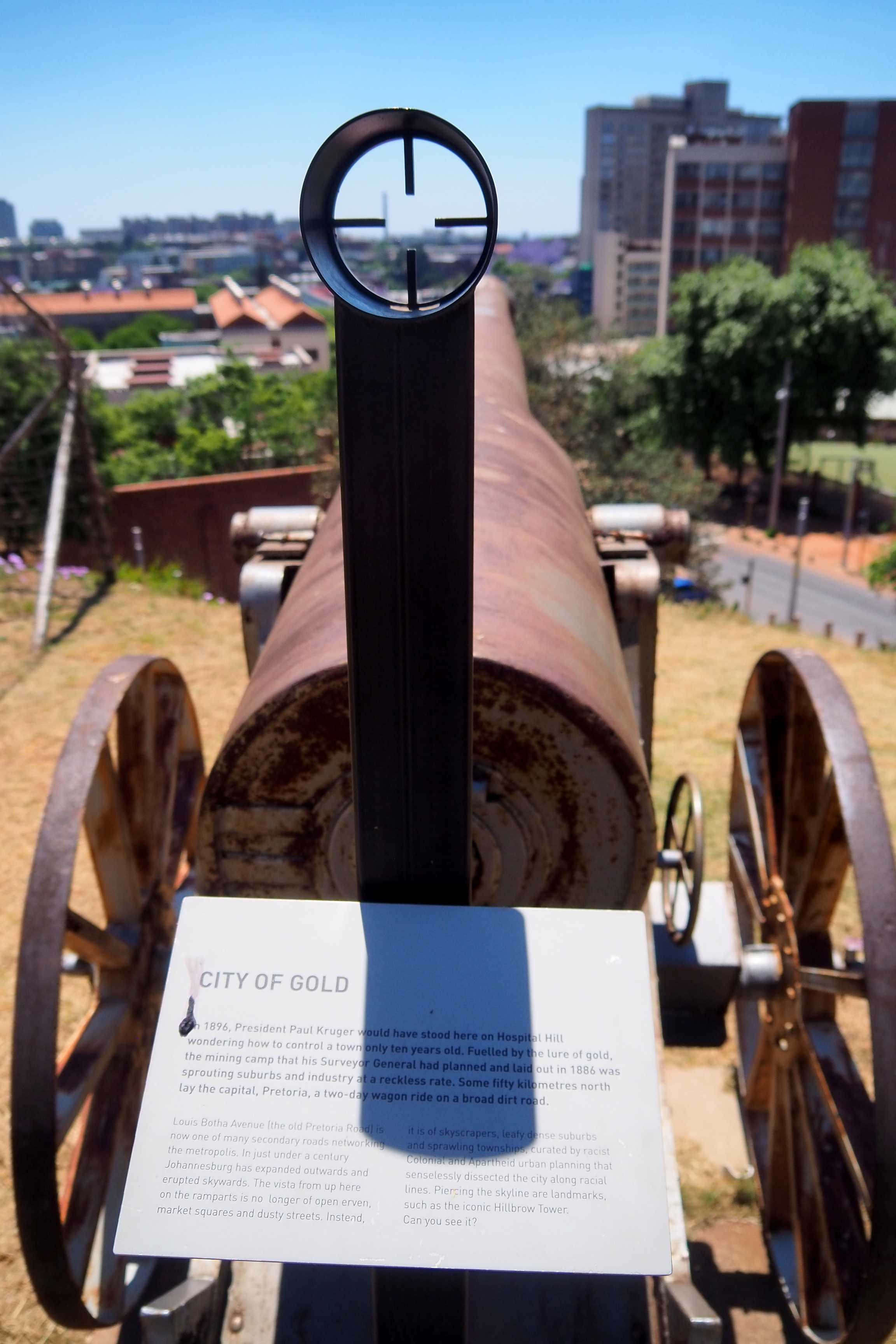



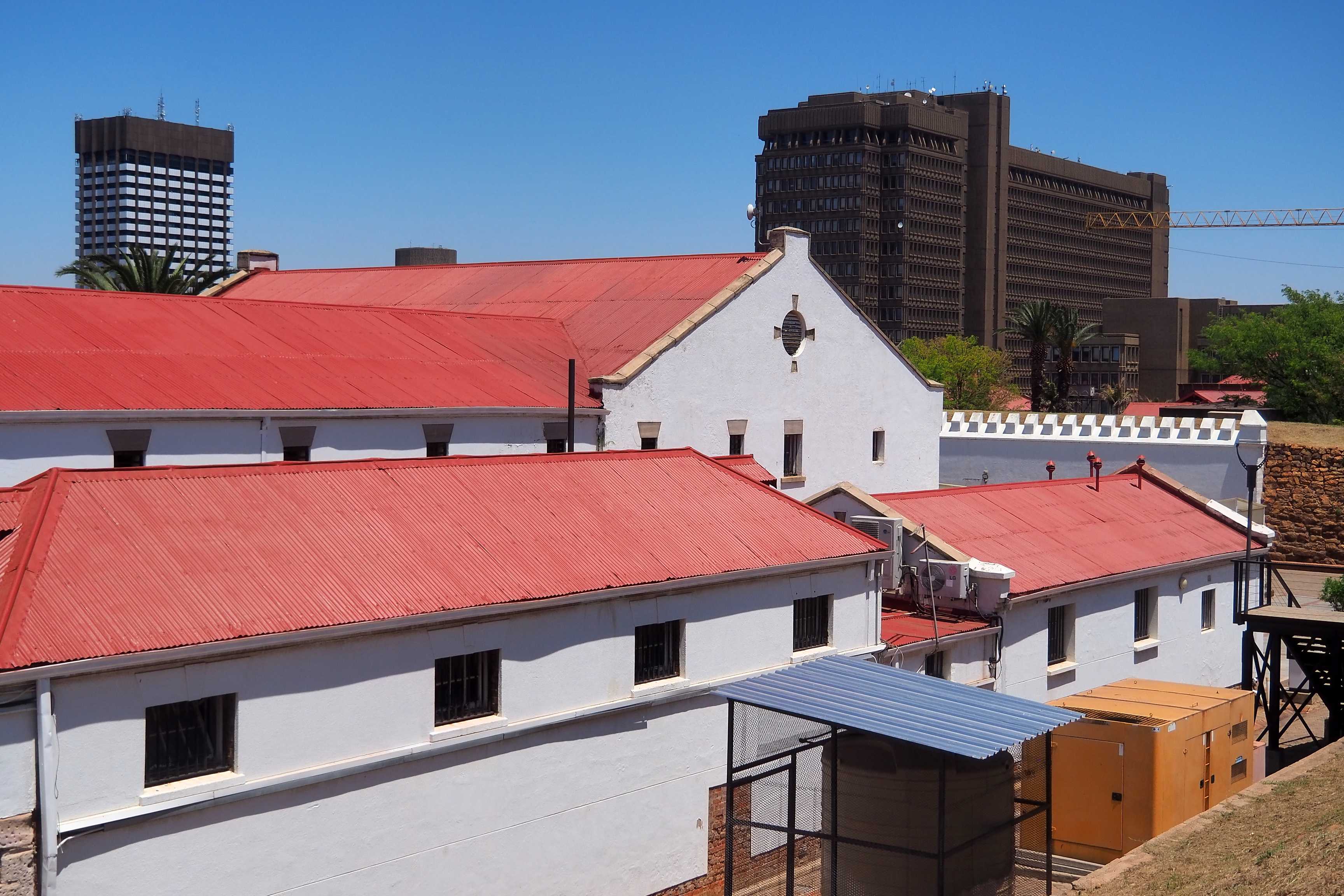
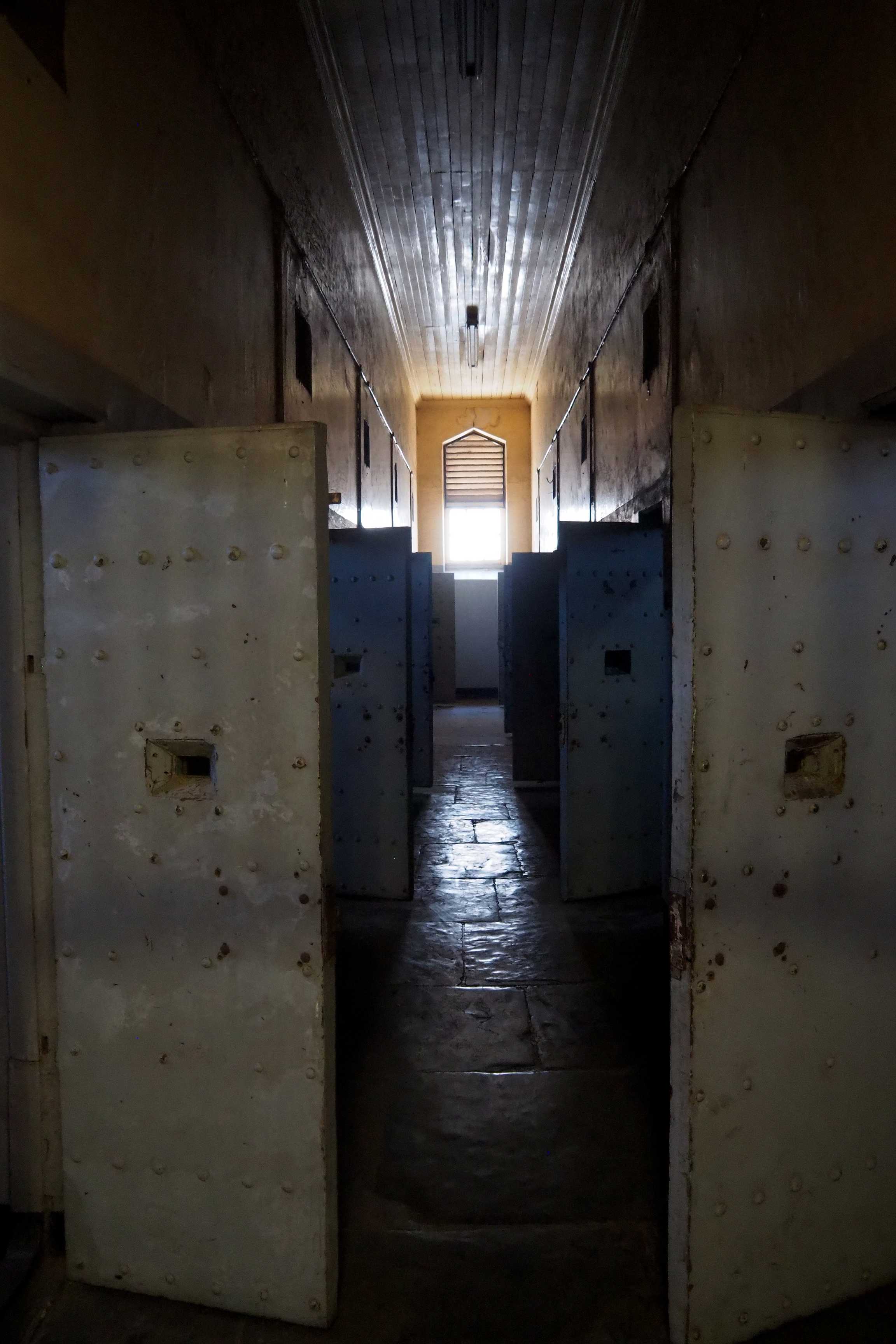
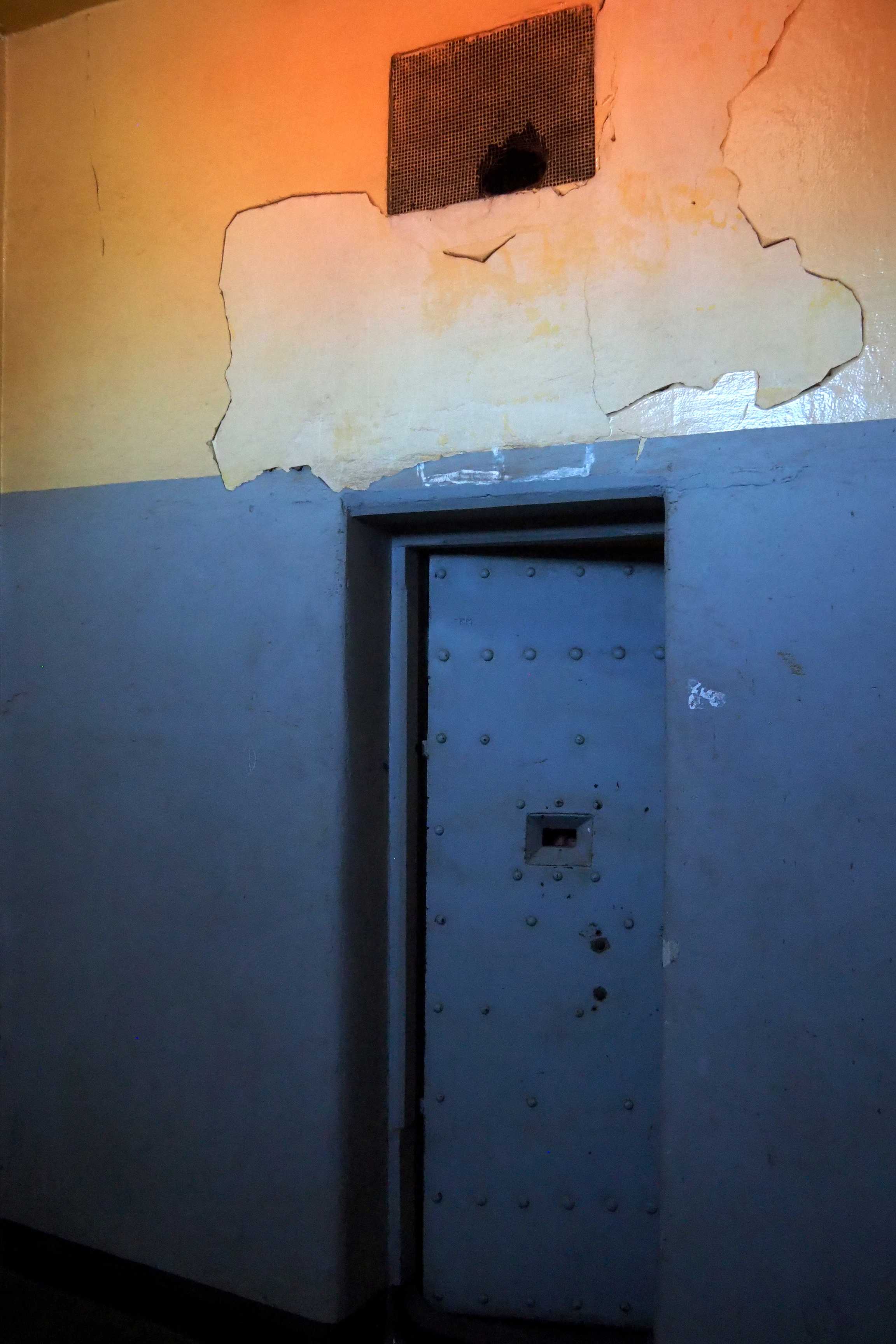
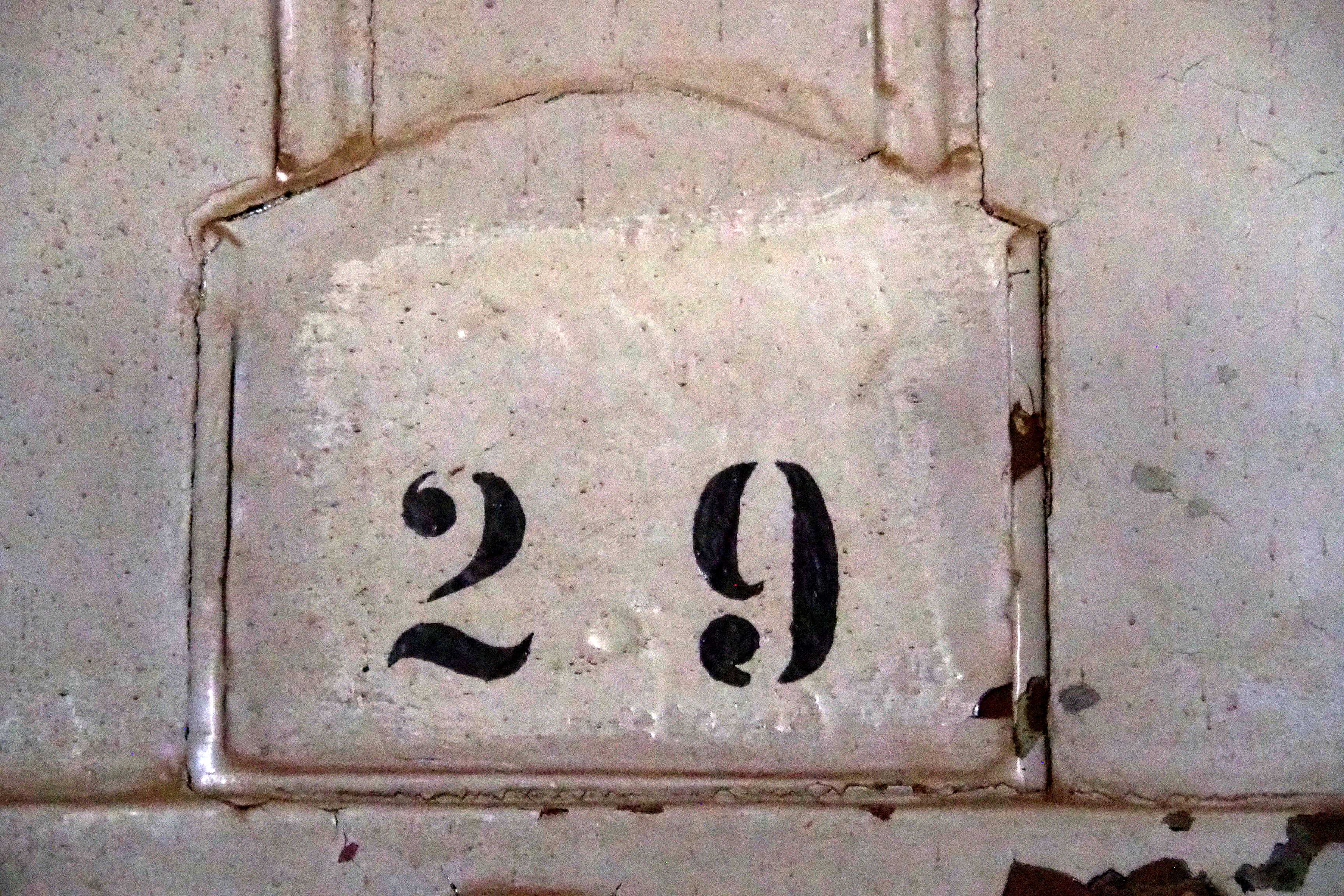
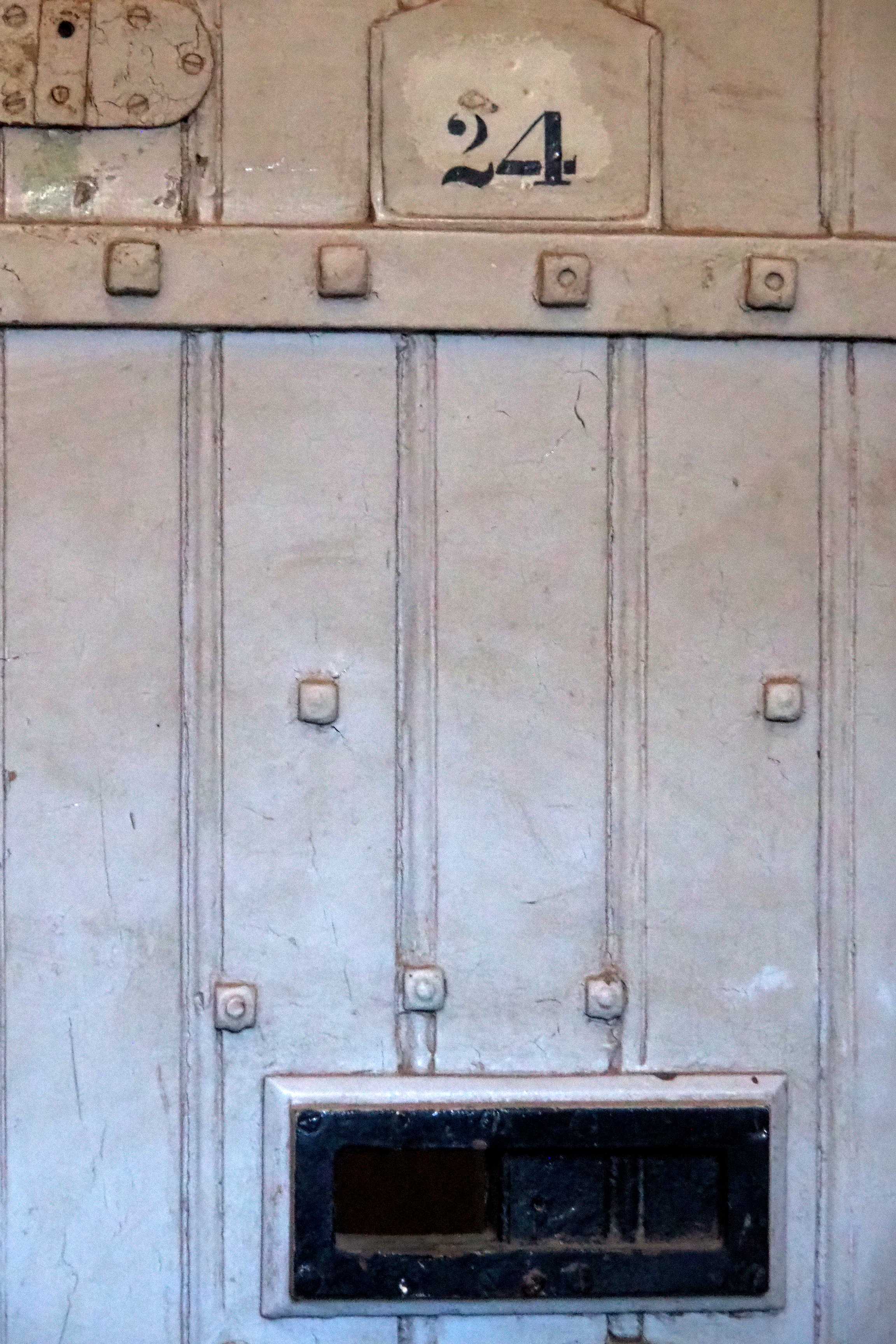
The numbered cells in the Old Fort.


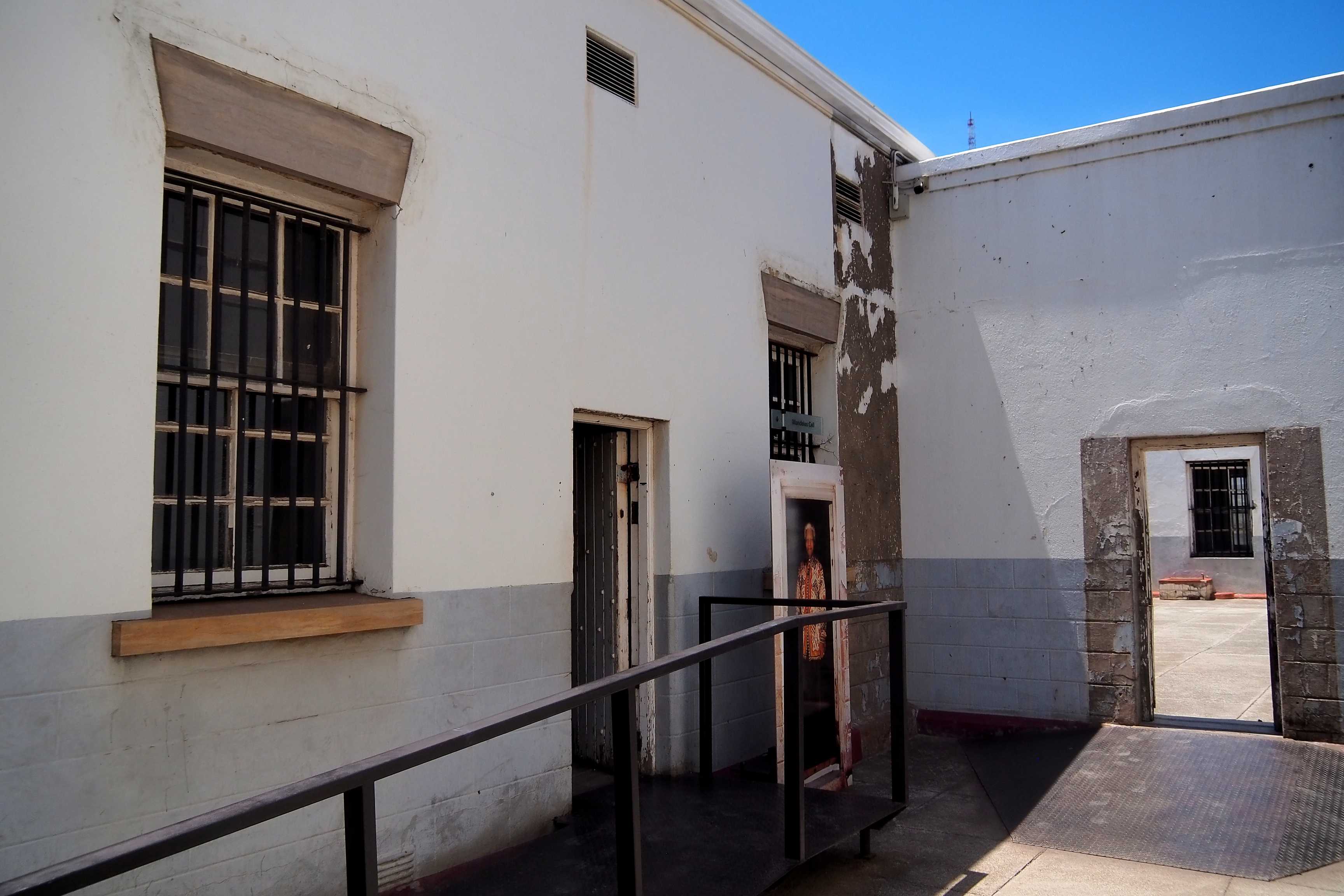
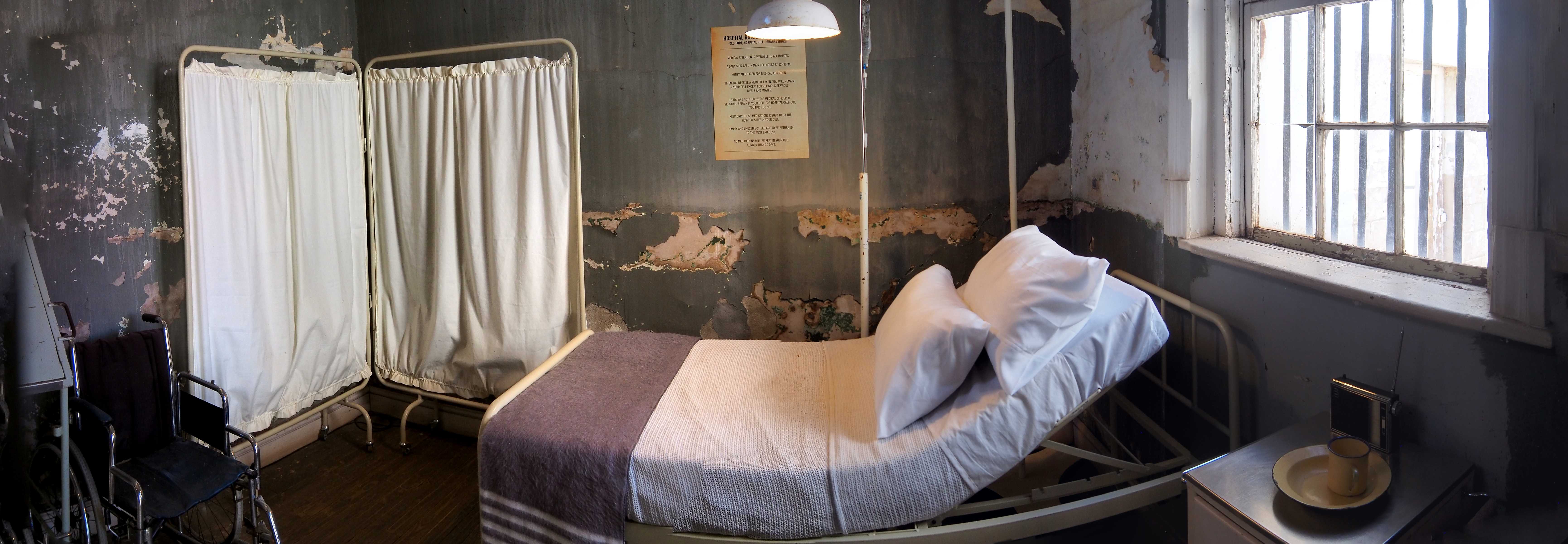
There were only white prisoners in the Fort, except one, Mandela, who because of his status and influence, had been kept apart from other black prisoners. This room of the medical section was transformed into a cell for him.
letter from Nelson Mandela of March 23, 1982:
Nelson Mandela protests against the withdrawal of his study privilege, citing unfounded accusations and unfair procedure. He requests the restoration of his privilege, essential to his personal development and his preparation for release.
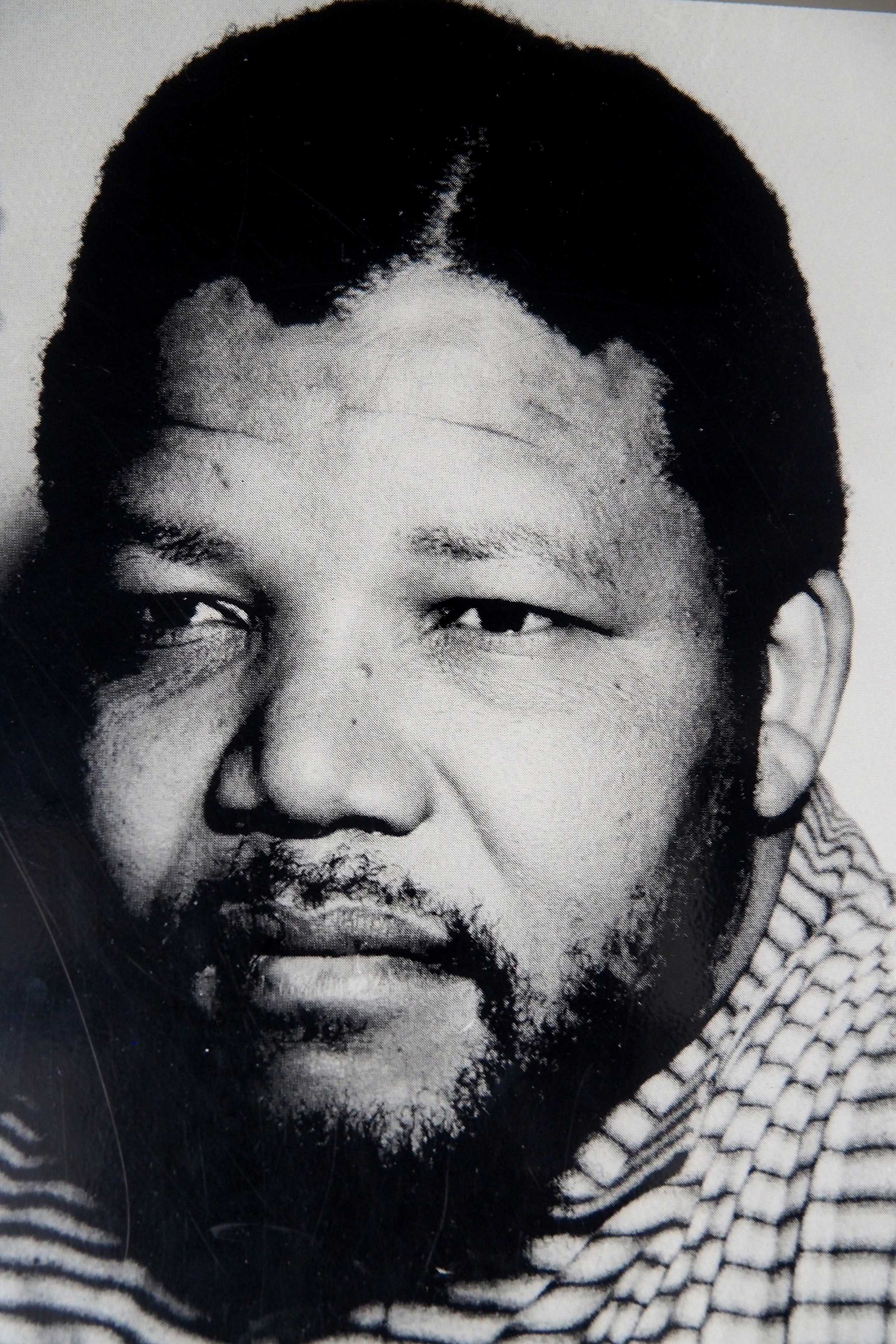
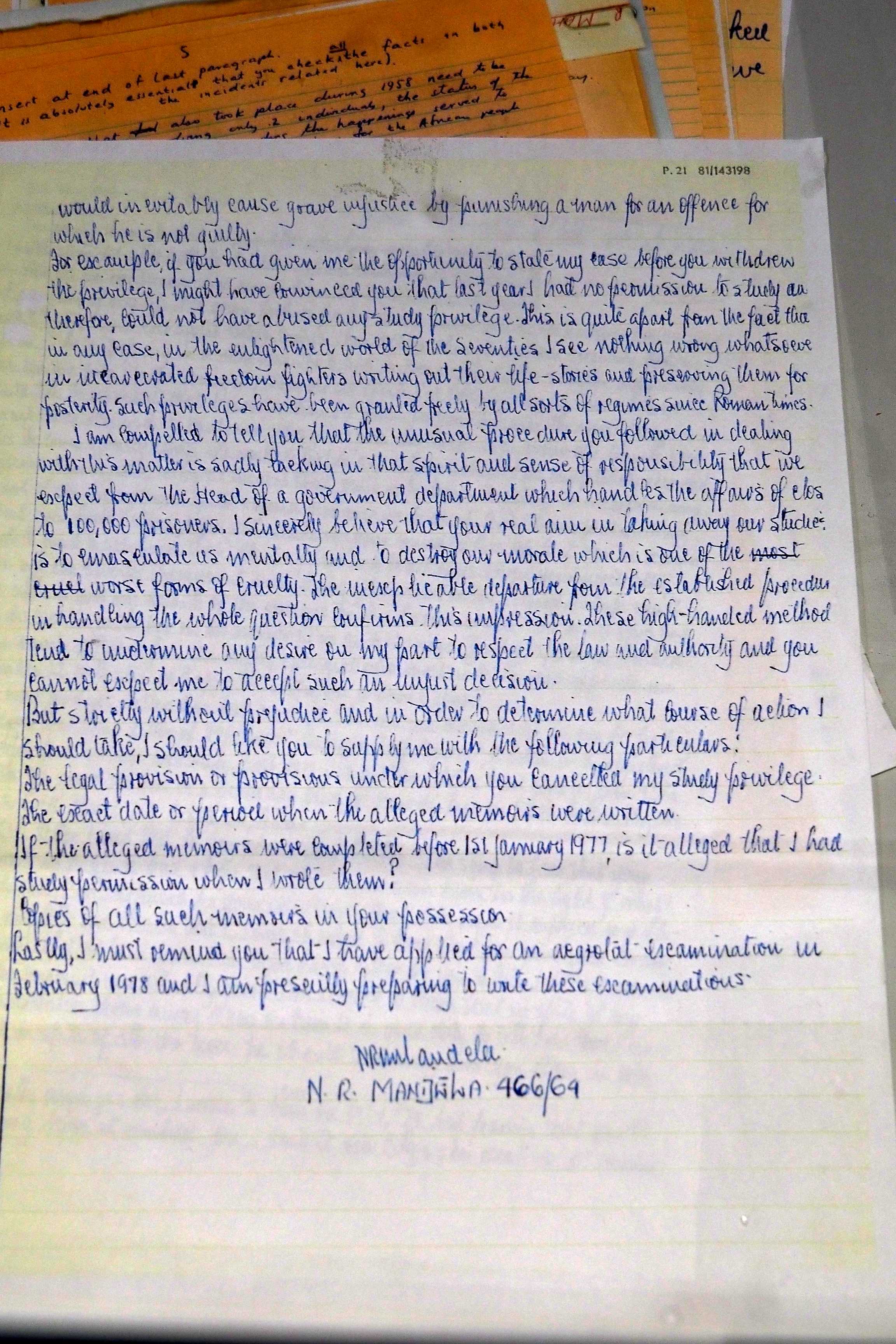
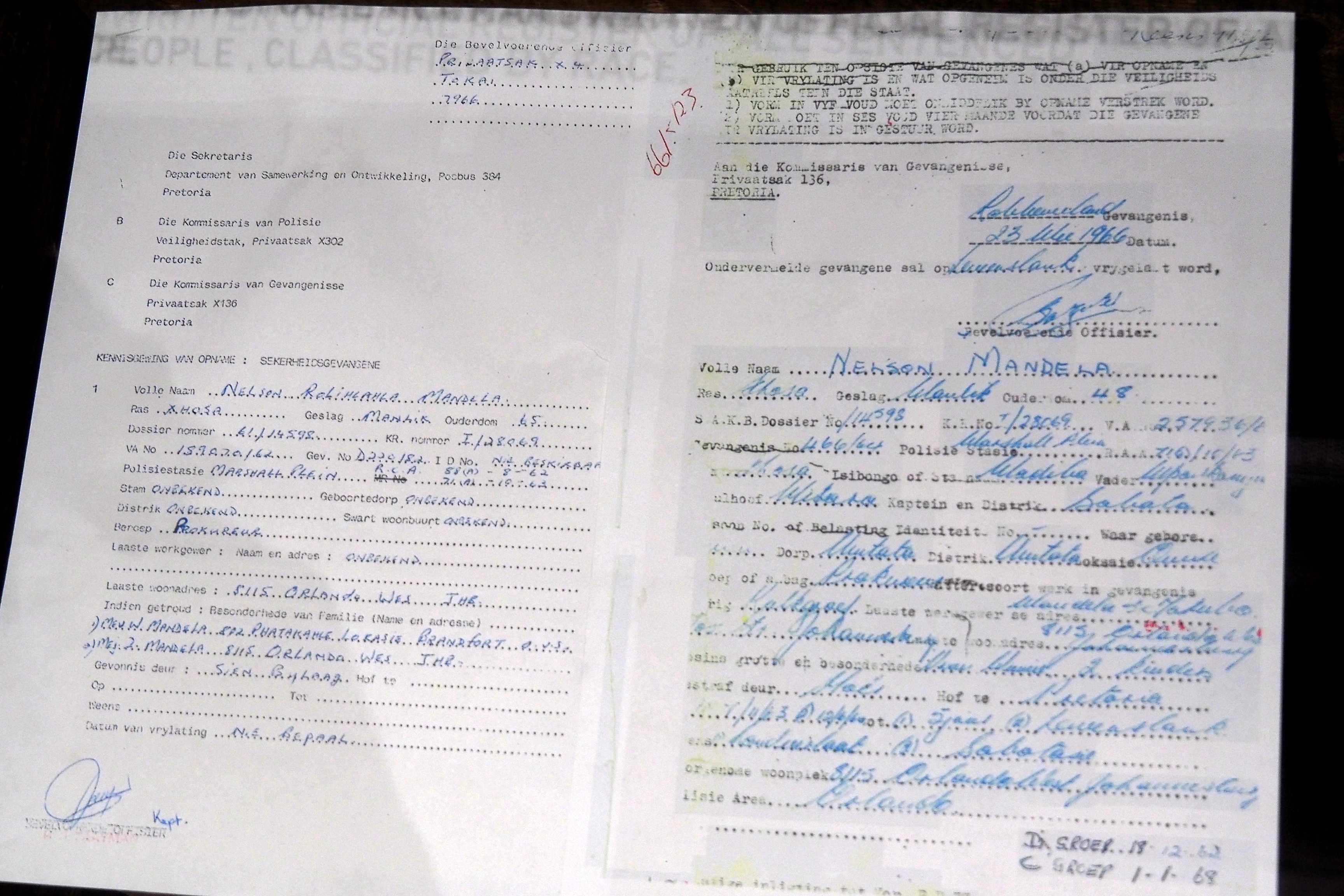
One of the 45,000 pieces of his prison file.
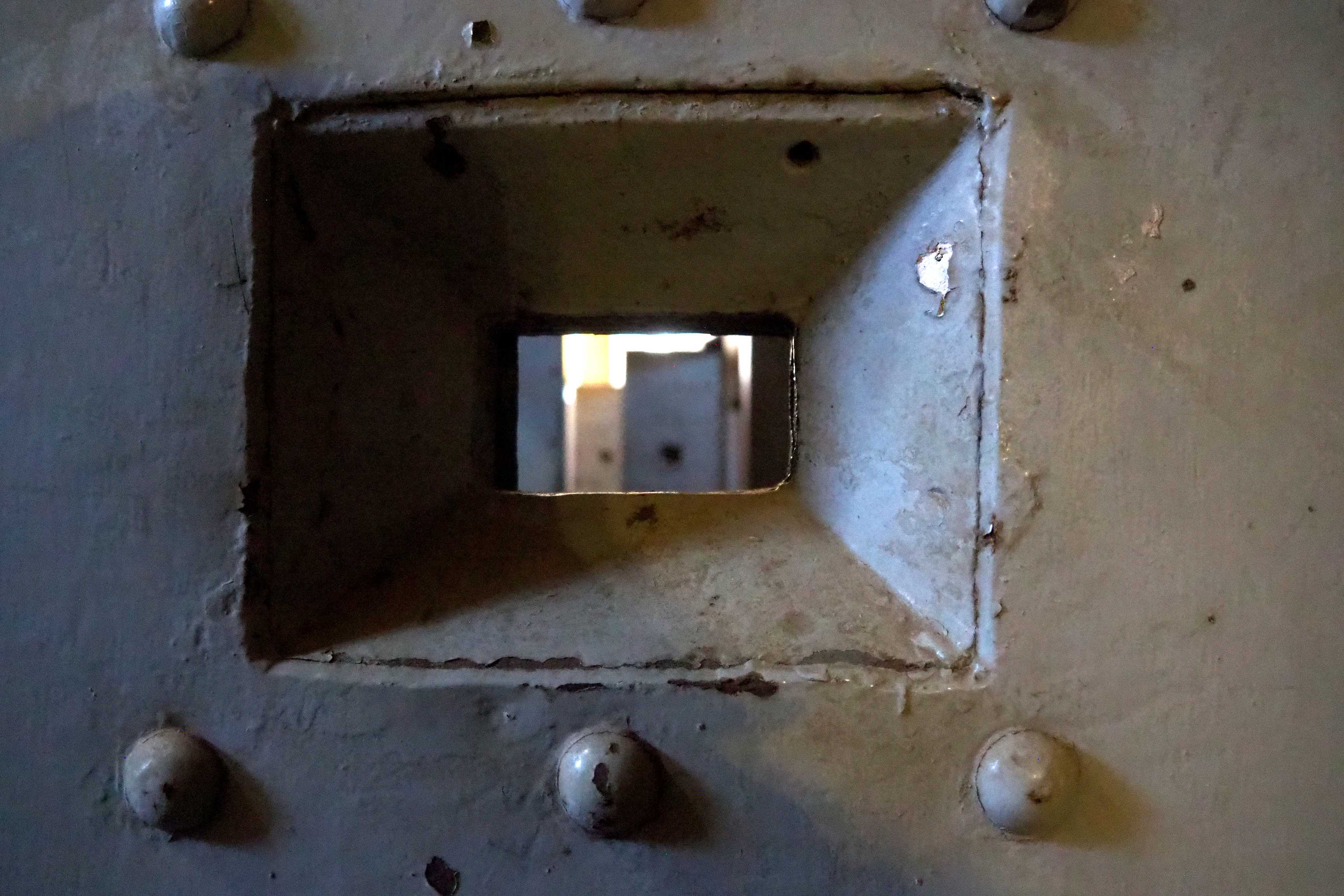
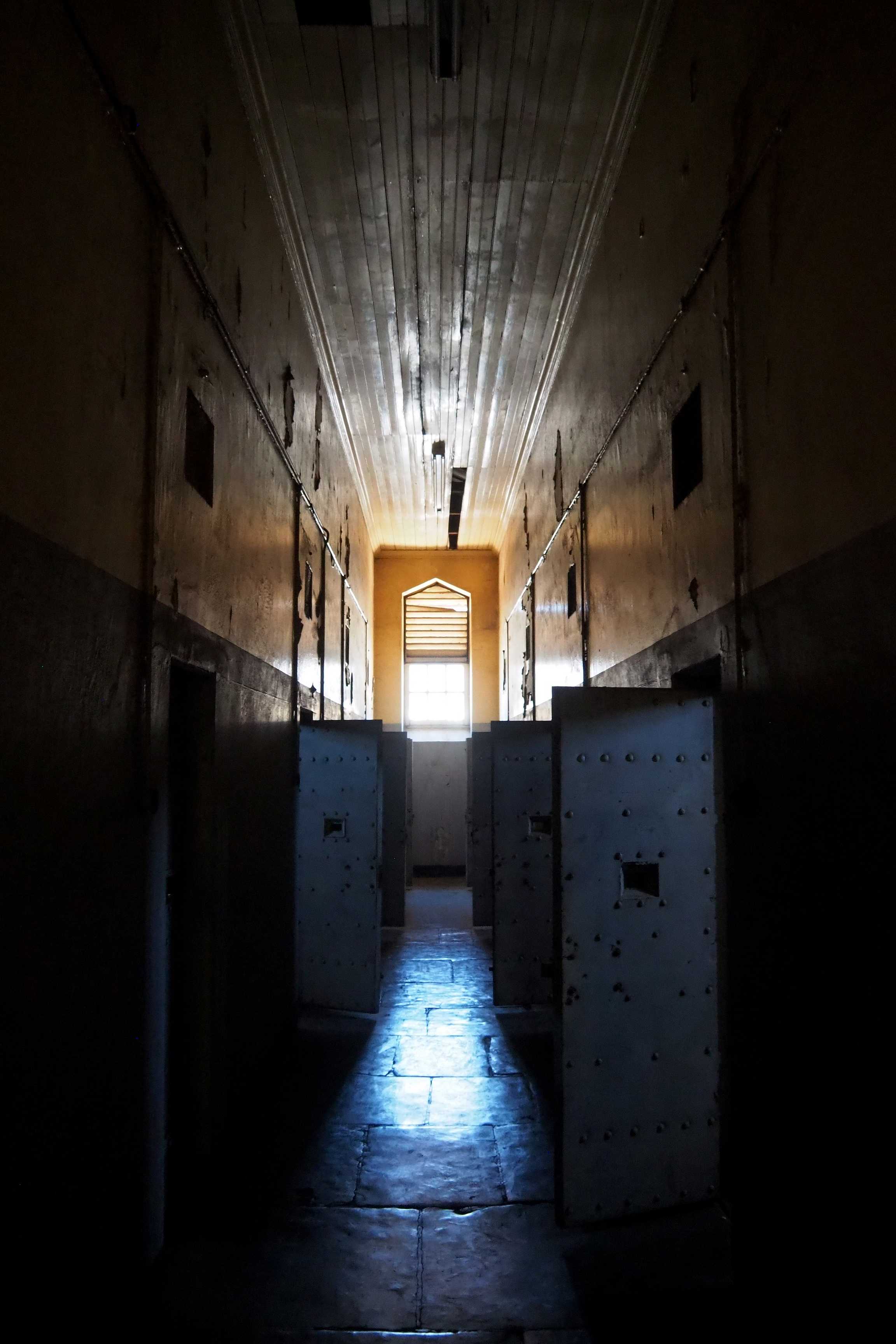
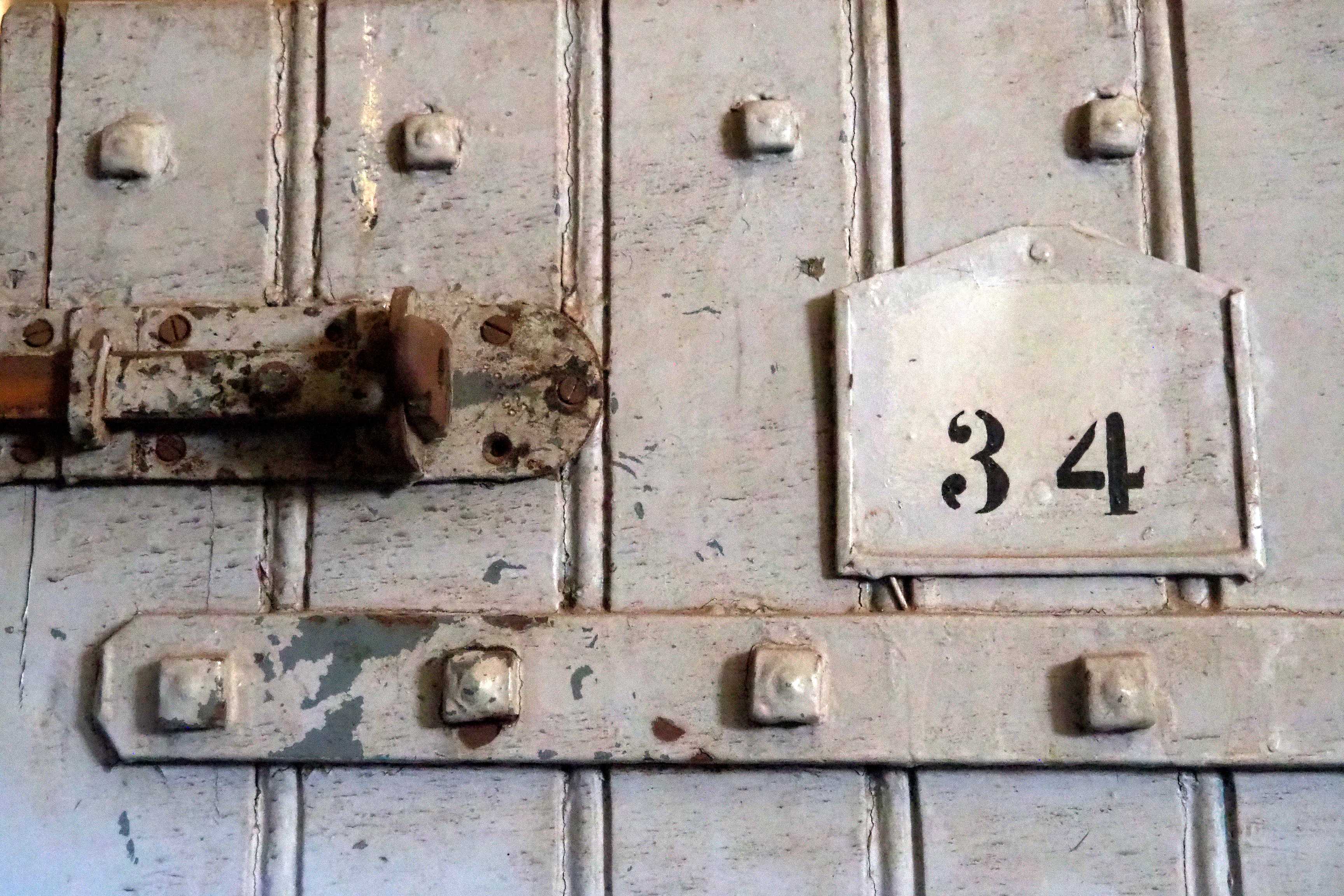
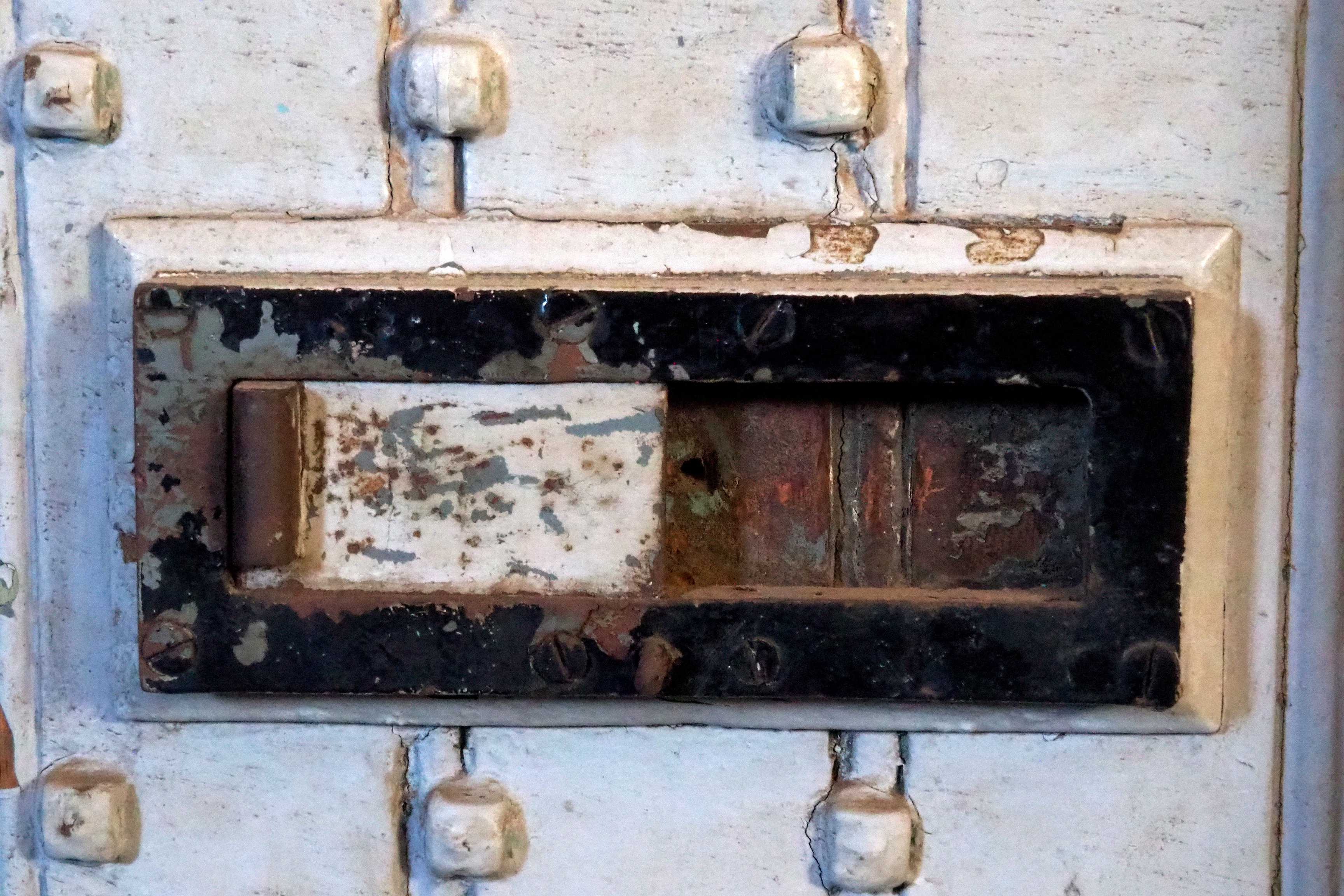

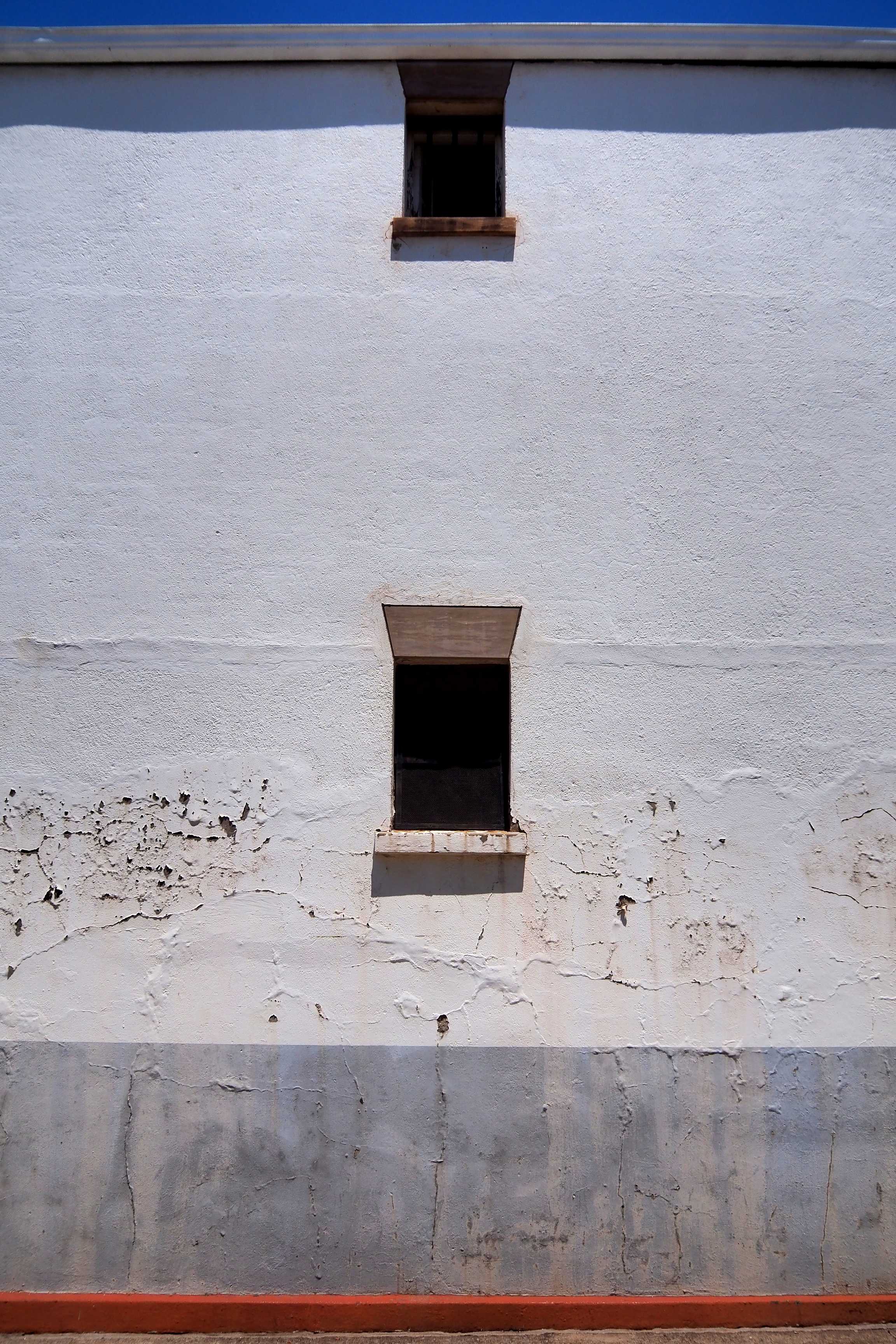
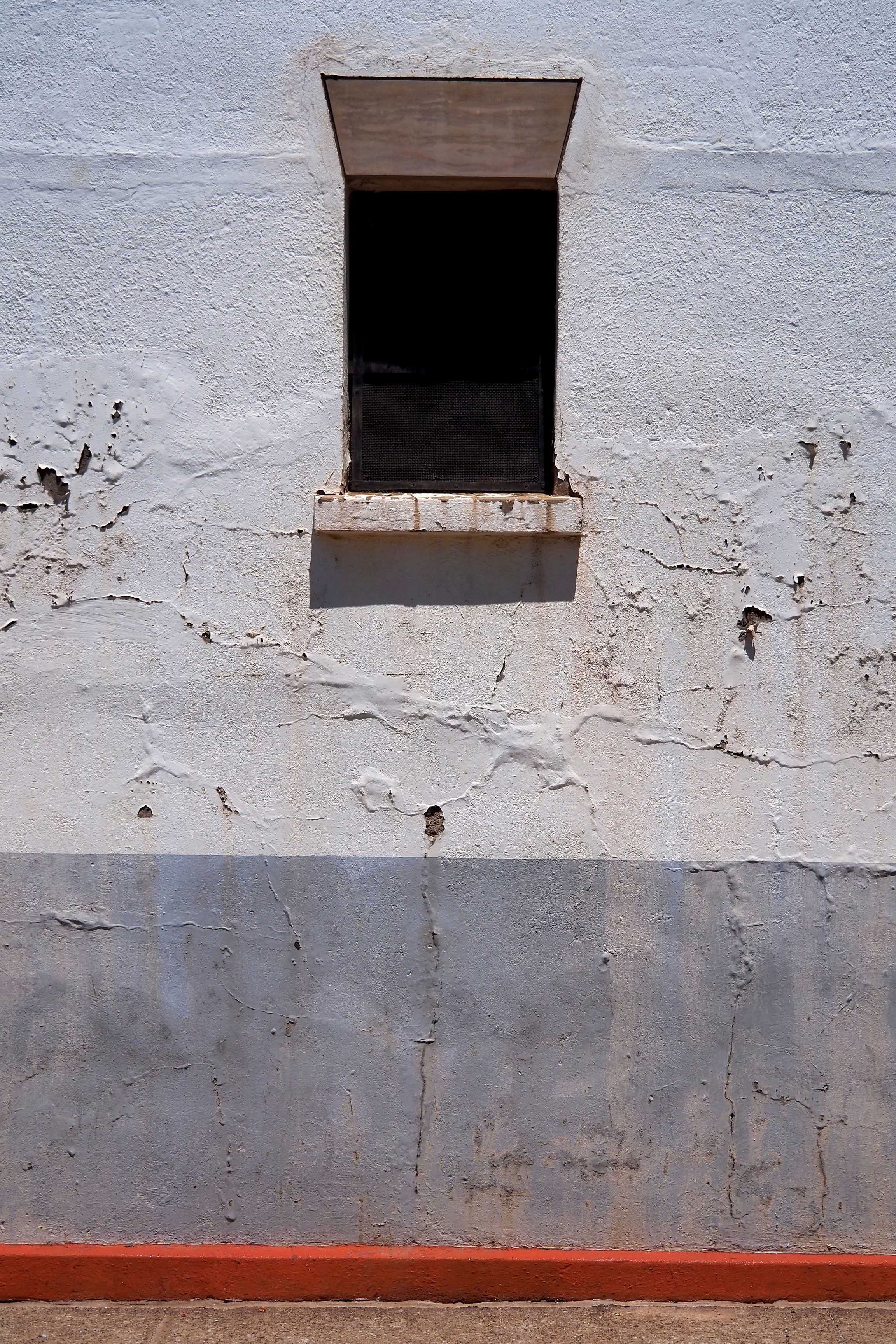
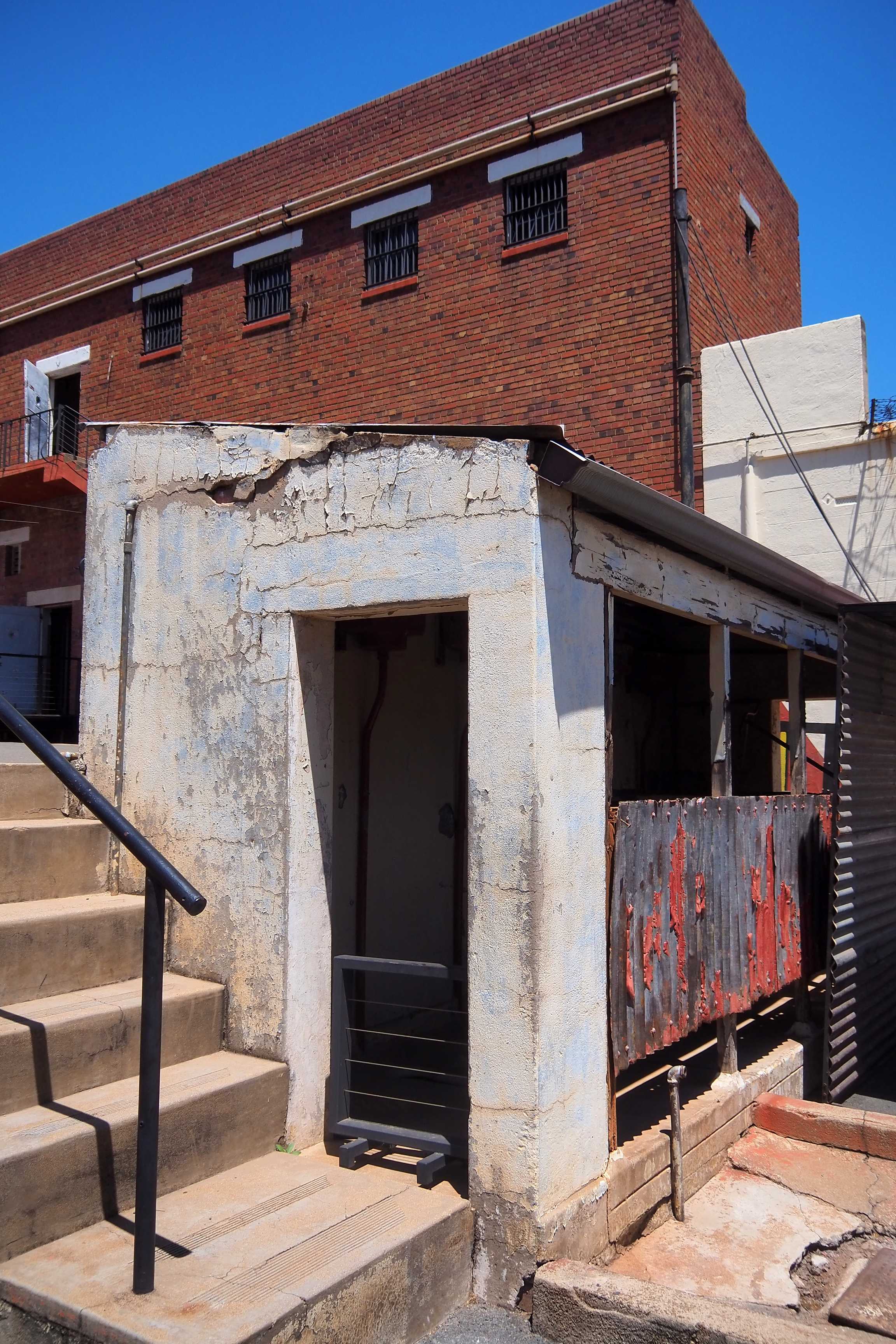
Women were imprisoned next door in this red brick building built in 1910.
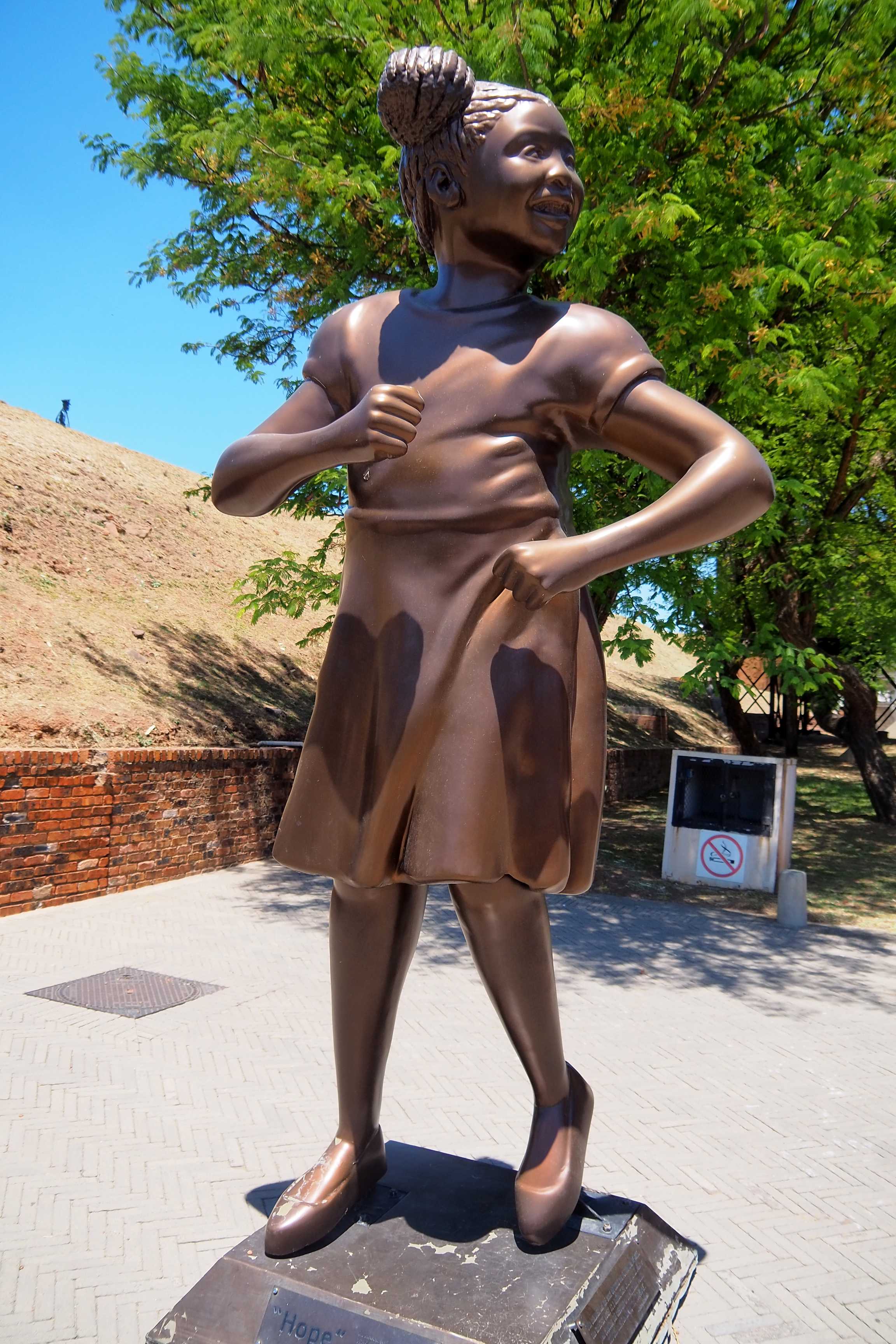
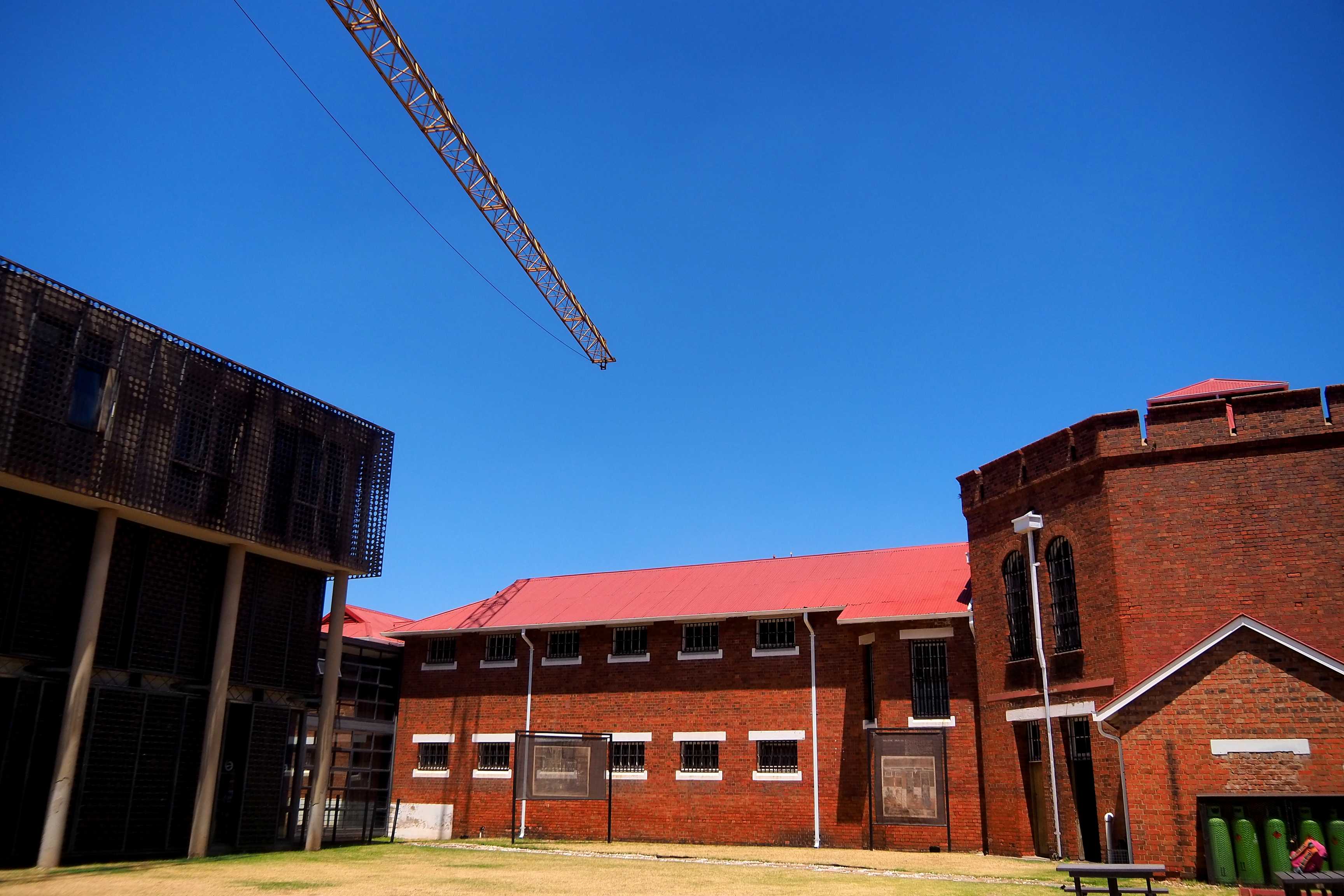
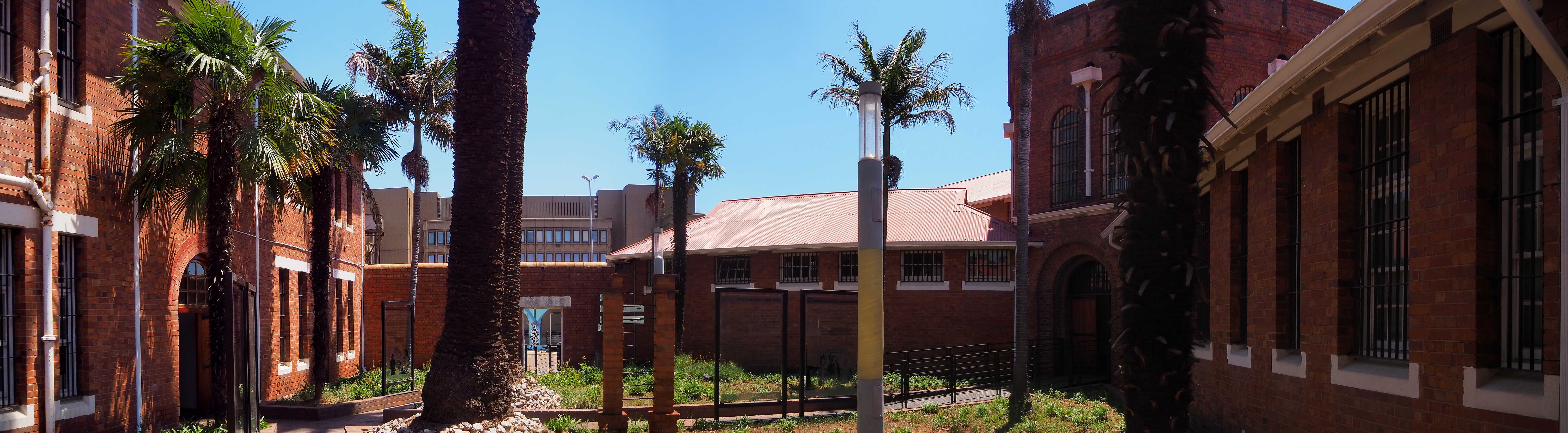
The painting exhibition inside the building.


The artist is Mandlenkosi Mavenger, born in Zimbabwe in 1992.


On the left, "Stock of the Future" from 2023. On the right, "Together as one" from 2023.
On the left, "Custodian of my ambition". On the right, "Send them my regards".


On the left, "Iskorobo". On the right, "Courageous from the Heart".


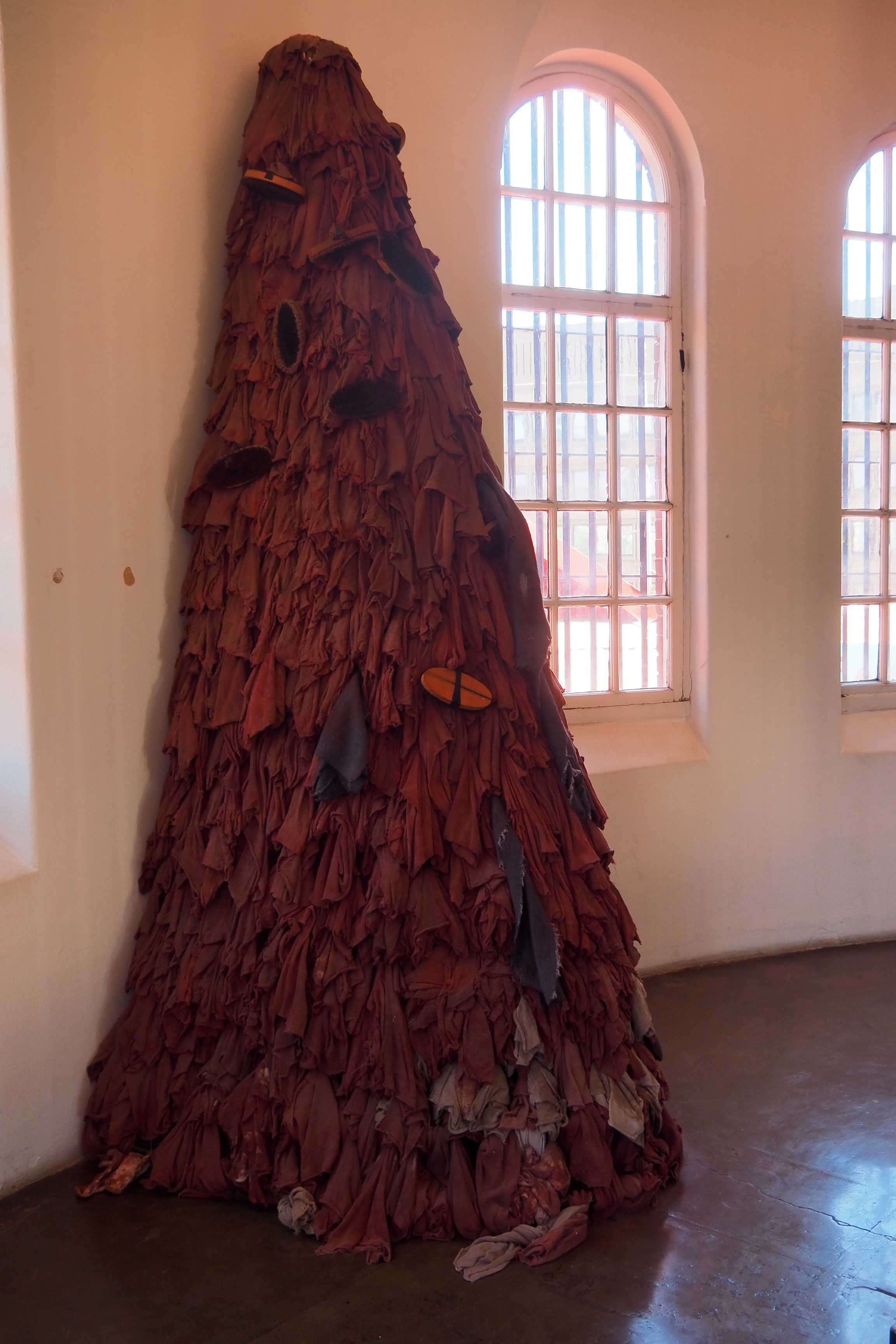
Mound of fabrics and brushes having belonged to former detainees? 


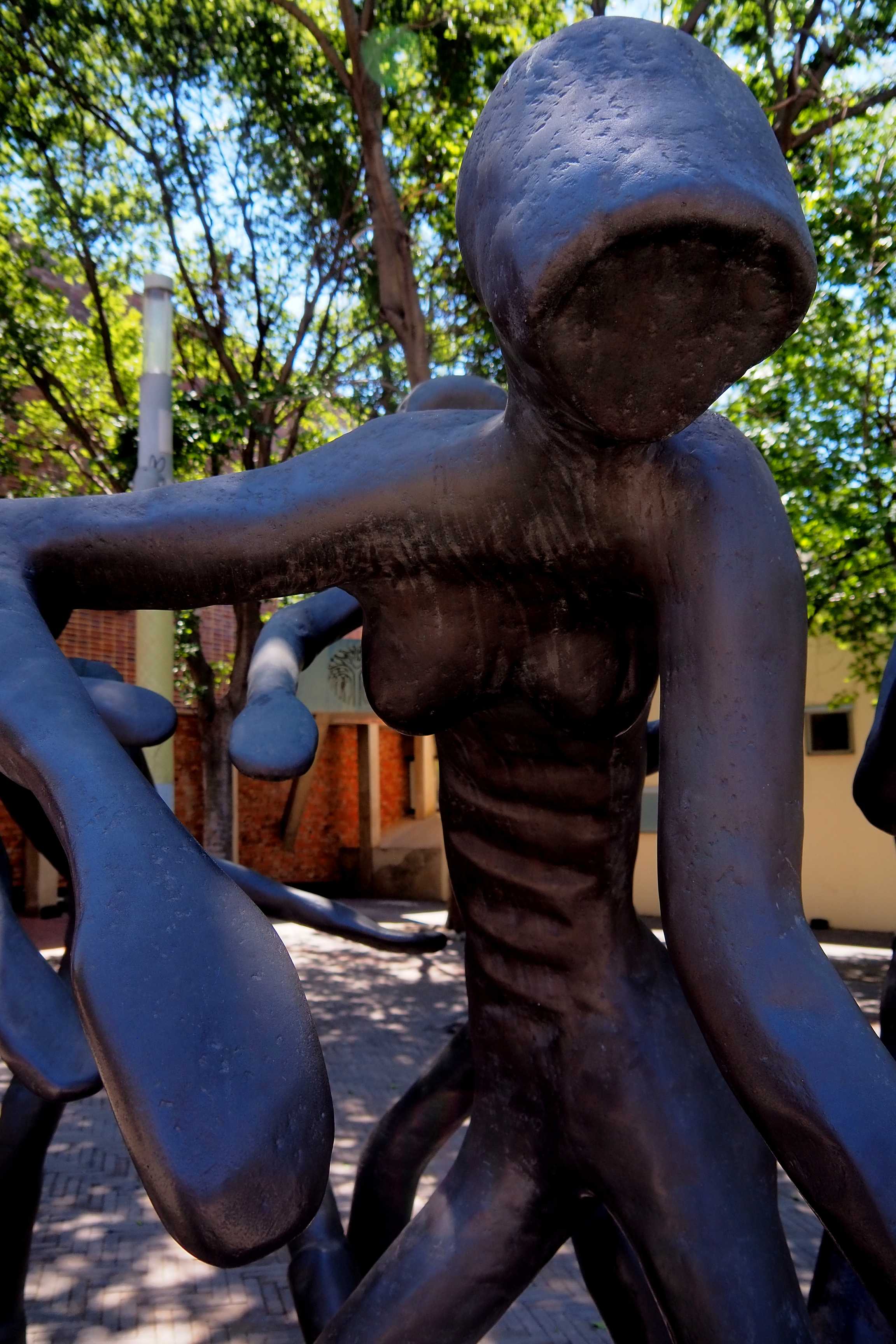
The sculptures "Moving into Dance" created by Orlando de Almeida and Charles van der Merwe.

The Constitutional Court (the courthouse), strong symbol of the country's transition to democracy after the end of apartheid.


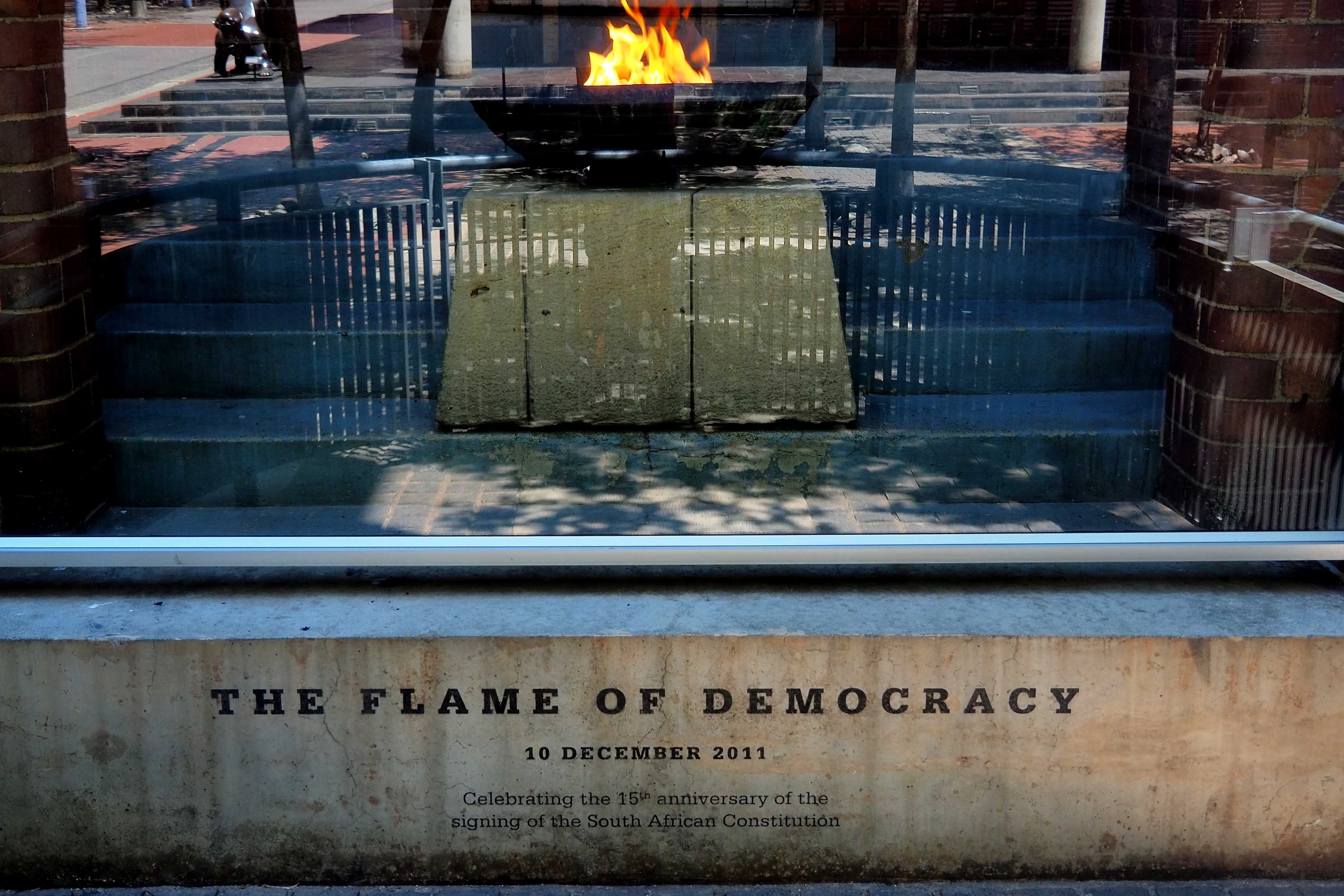
The Flame of Democracy, inaugurated on December 10, 2011. This is how we end our visit in Johannesburg. We will leave the city to reach our next stage: Blyde River Canyon! But before that, we will pass by Decathlon which has some stores in the country to complete our camping equipment. Because the next weeks will be in nature mode and often in a tent!
Blyde River Canyon Forever Resort
After 380 kilometers and more than 4 hours of driving, we arrive in the dark at the "Blyde River Canyon Forever Resort" campsite where we will stay for two nights. Tomorrow will be devoted to discovering the third largest canyon on the planet!

Latest comments
On Guatemala 2018
Le 25 Novembre 2024
Significado de este mural
On Chile 2016
Le 15 Septembre 2024
Rrrrrr
On Egypt 2003
Le 1er Avril 2023
Et oui c'est bien nous aux pieds de ce Colosse !
Le 1er Avril 2023
Bien petits aux pieds de ce Colosse !
On Namibia 2014
Le 3 Août 2021
very good indeed