









 My blog






Friday17October
Waking up in Namutoni campsite in Etosha. We are going to leave Etosha Park, but before that, there's still a bit of track left to enjoy the animals one last time...

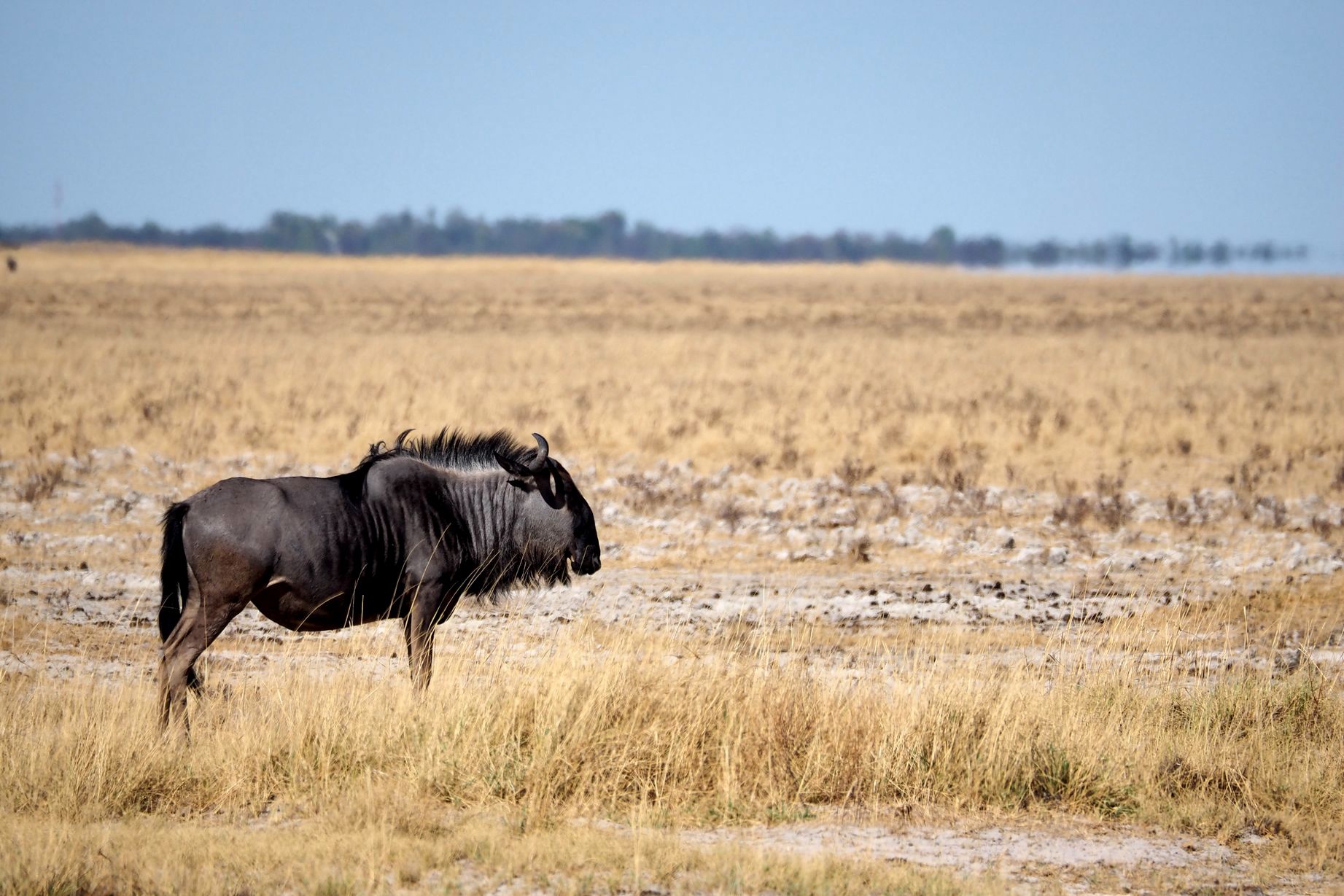
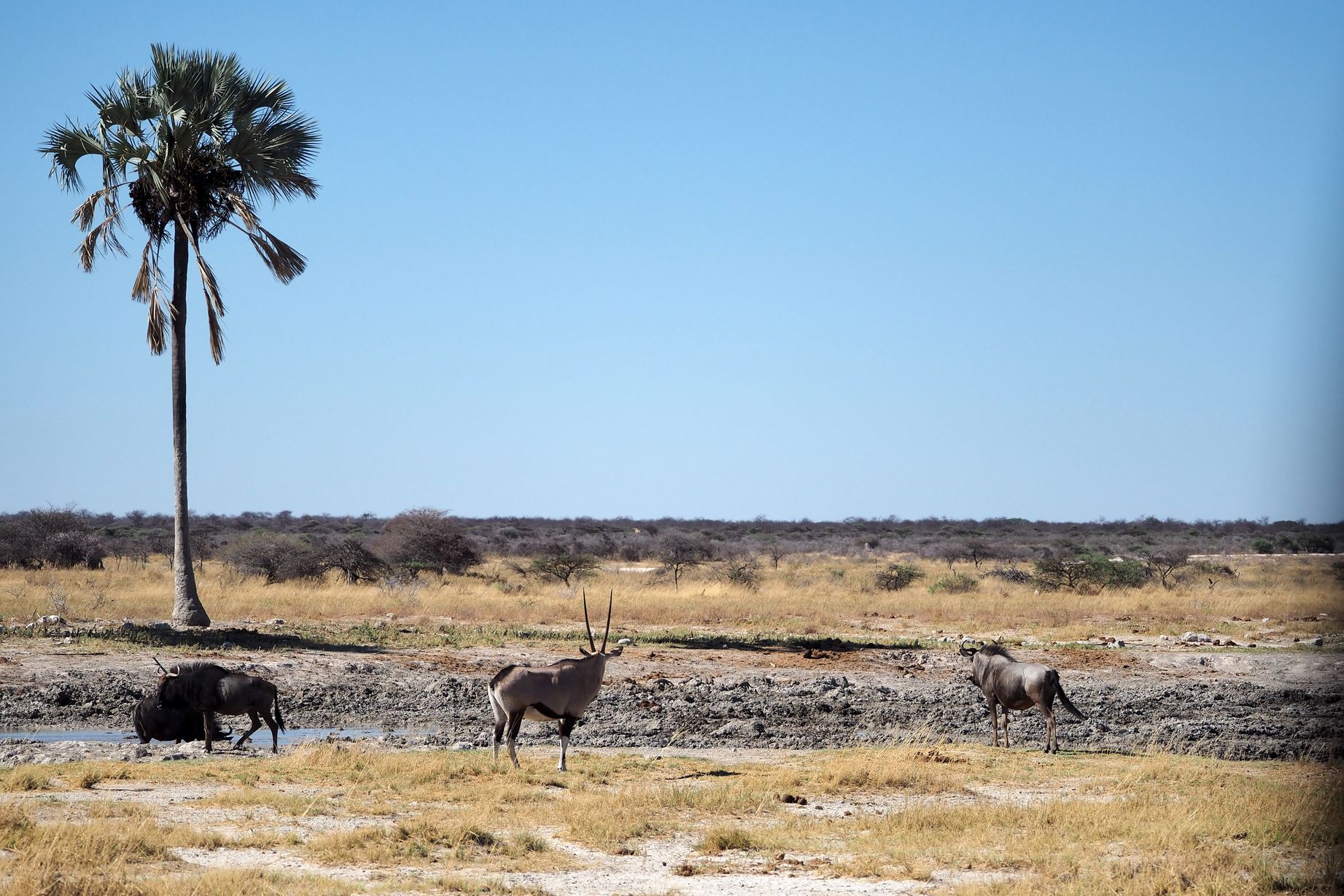
A black-tailed blue wildebeest (Connochaetes taurinus).
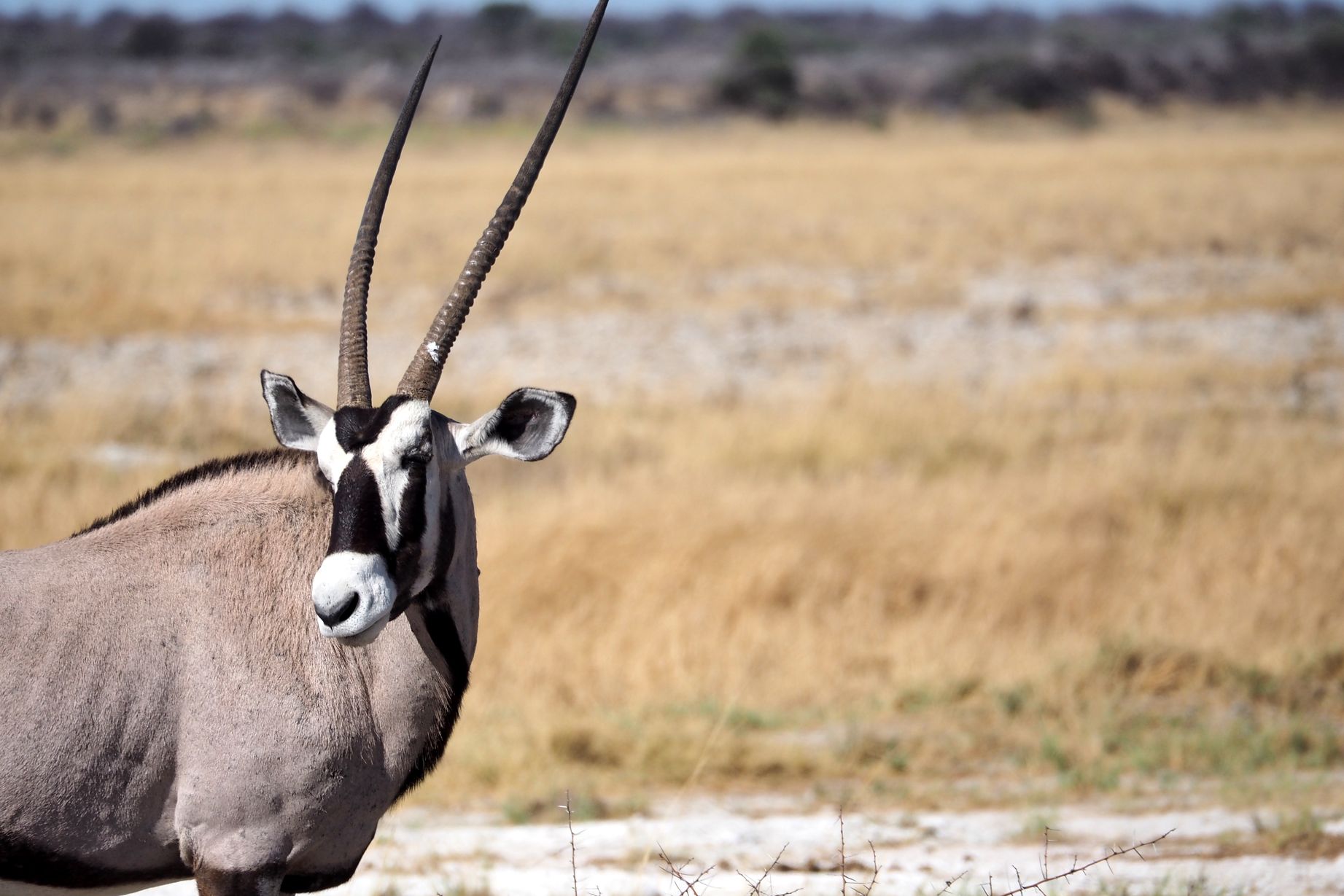
A gemsbok (Oryx gazella).

A palm tree.
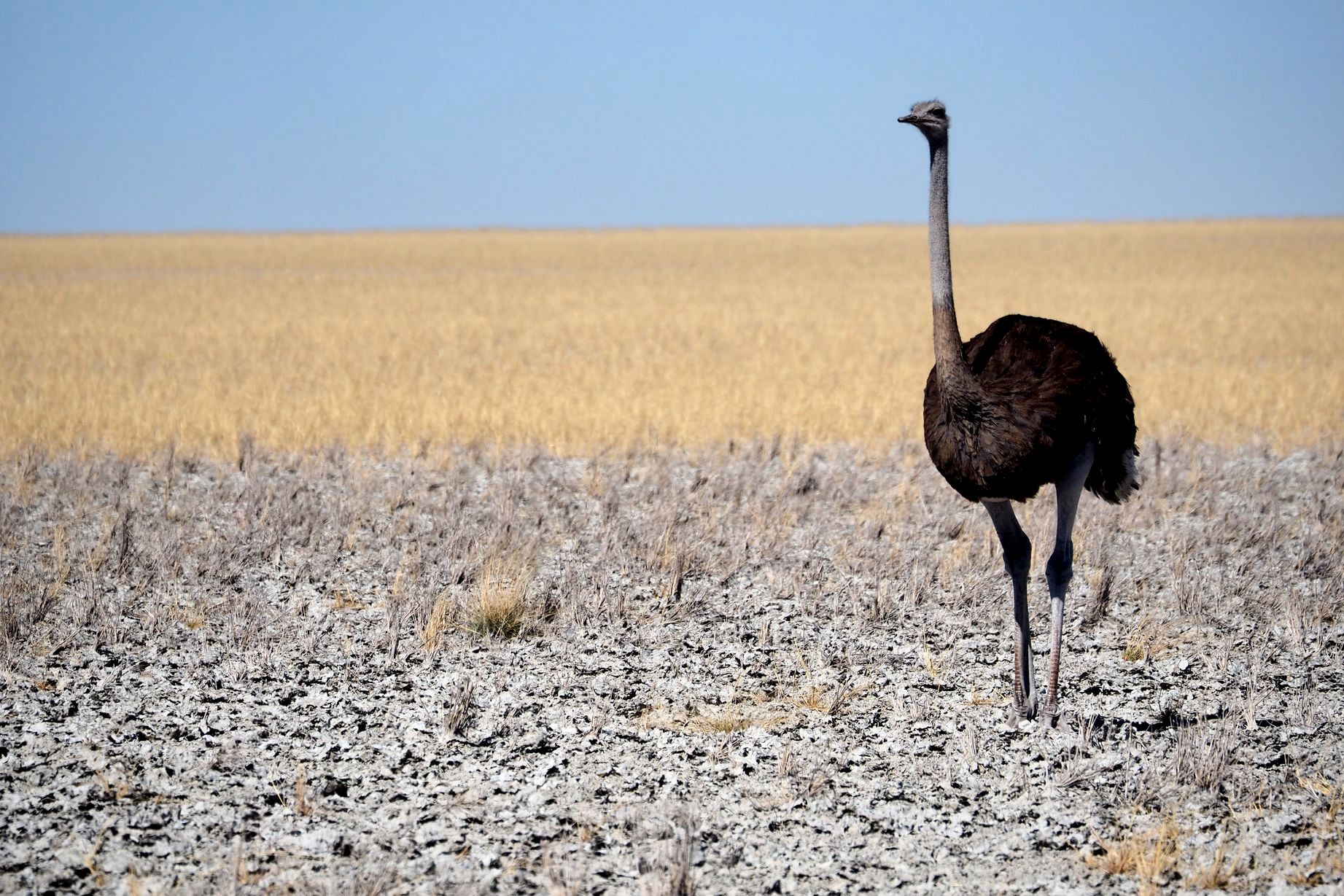
And an ostrich (Struthio camelus australis)...
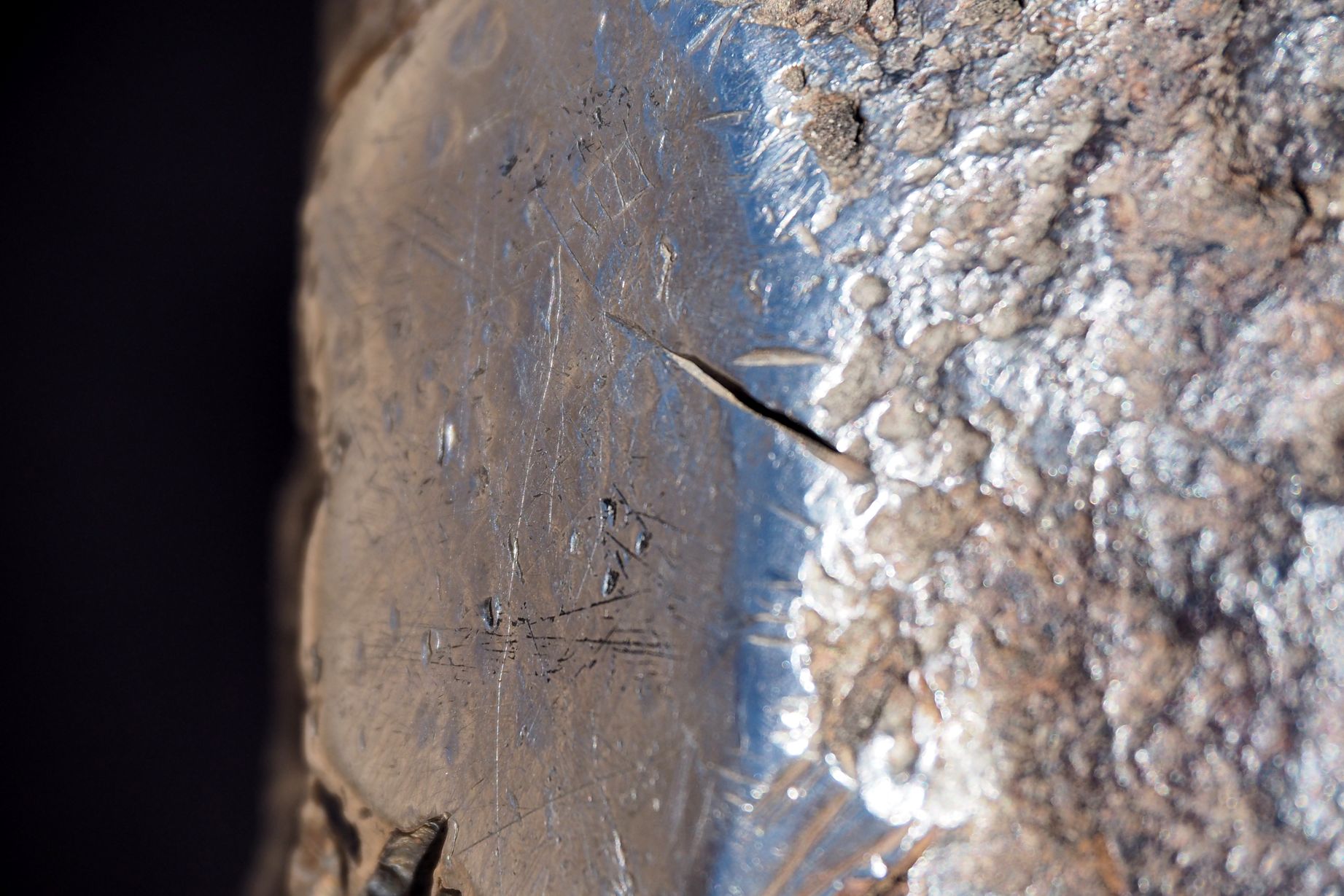
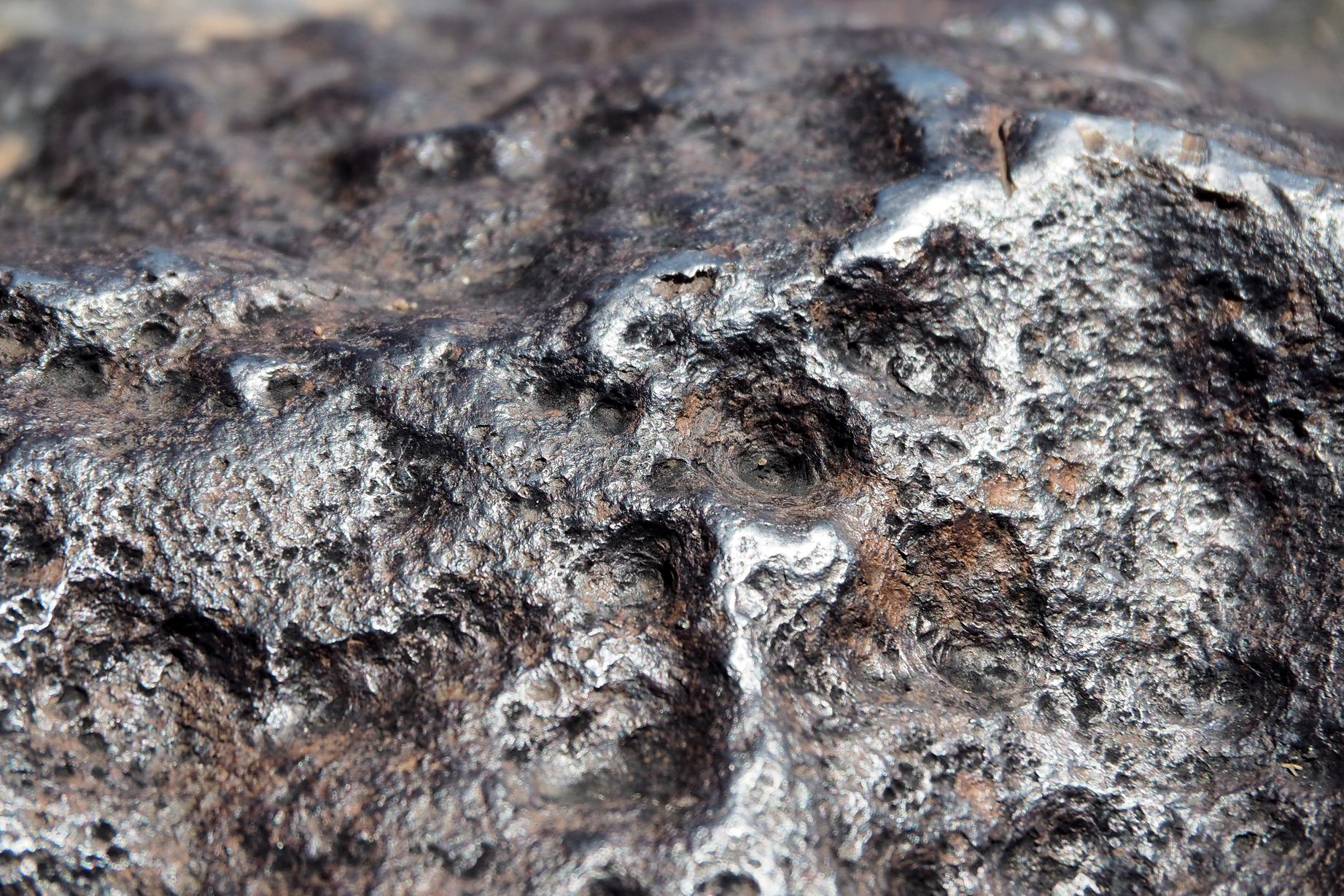
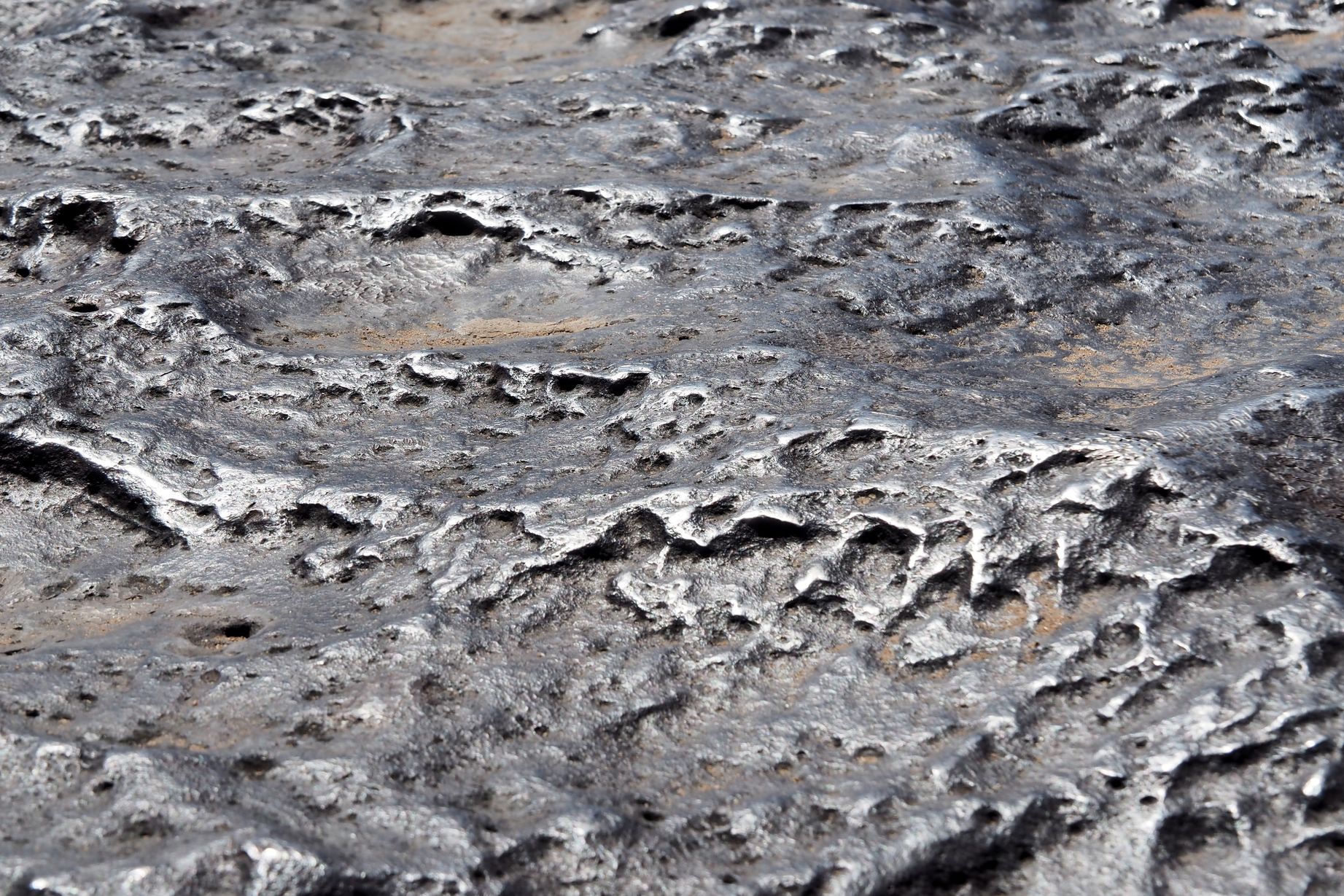
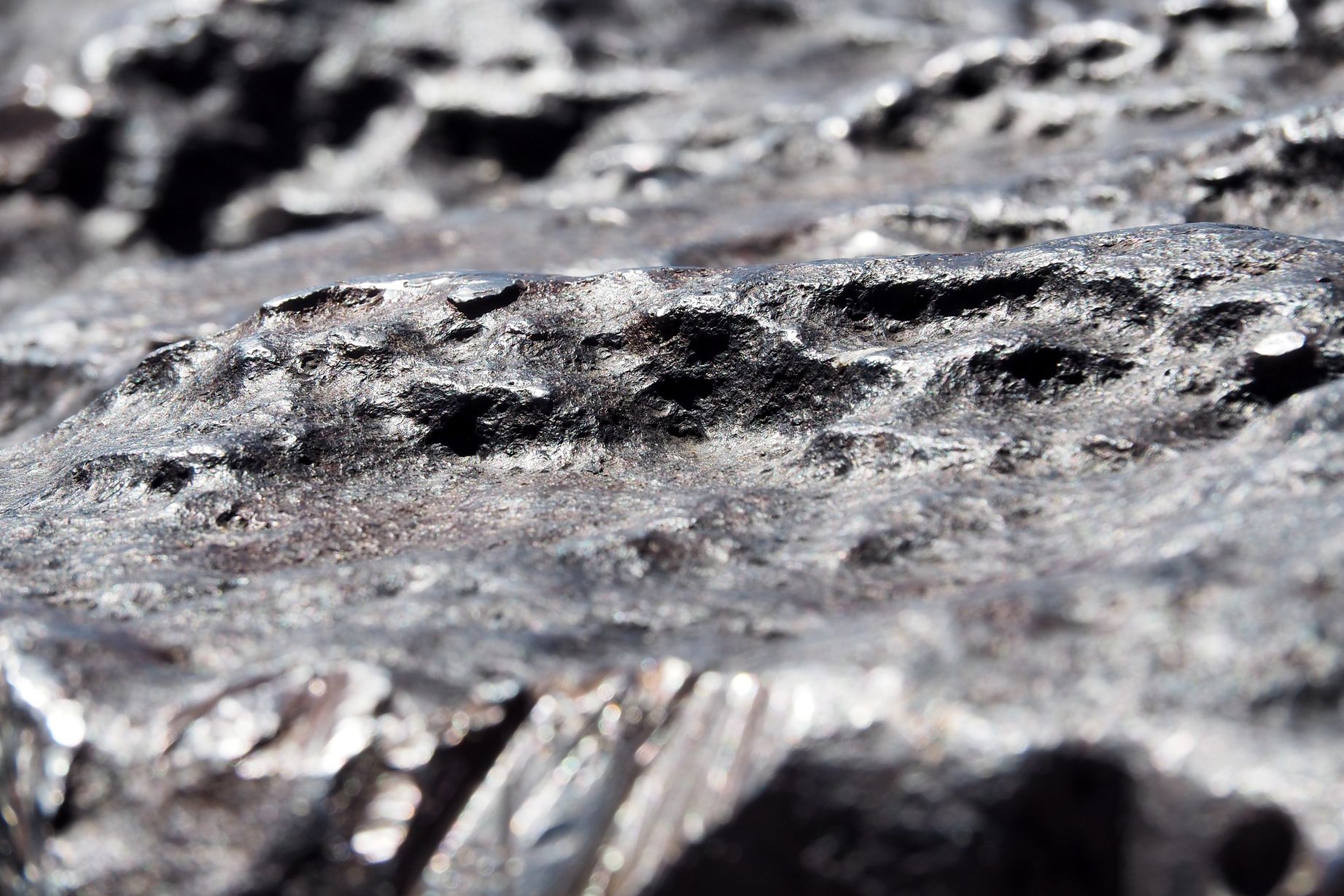
Hoba Meteorite
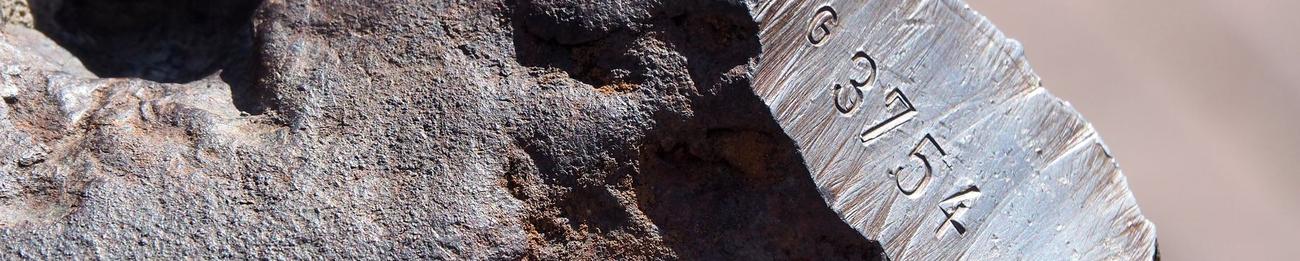
We are now heading to our next stop: Waterberg National Park. But first, we're making a detour to touch a small piece of our extraterrestrial galaxy... A fairly common thing when it's a simple meteorite, but a little less so when it's the largest in the world...!

The meteorite is believed to have hit our soil approximately 80,000 years ago. The object is composed mainly of iron and a little nickel. Entry into the atmosphere heated the metal surface to a high temperature. Don't be fooled by its size, it weighs 60 tons!


Waterberg
At the end of the road, the Waterberg plateau faces us.
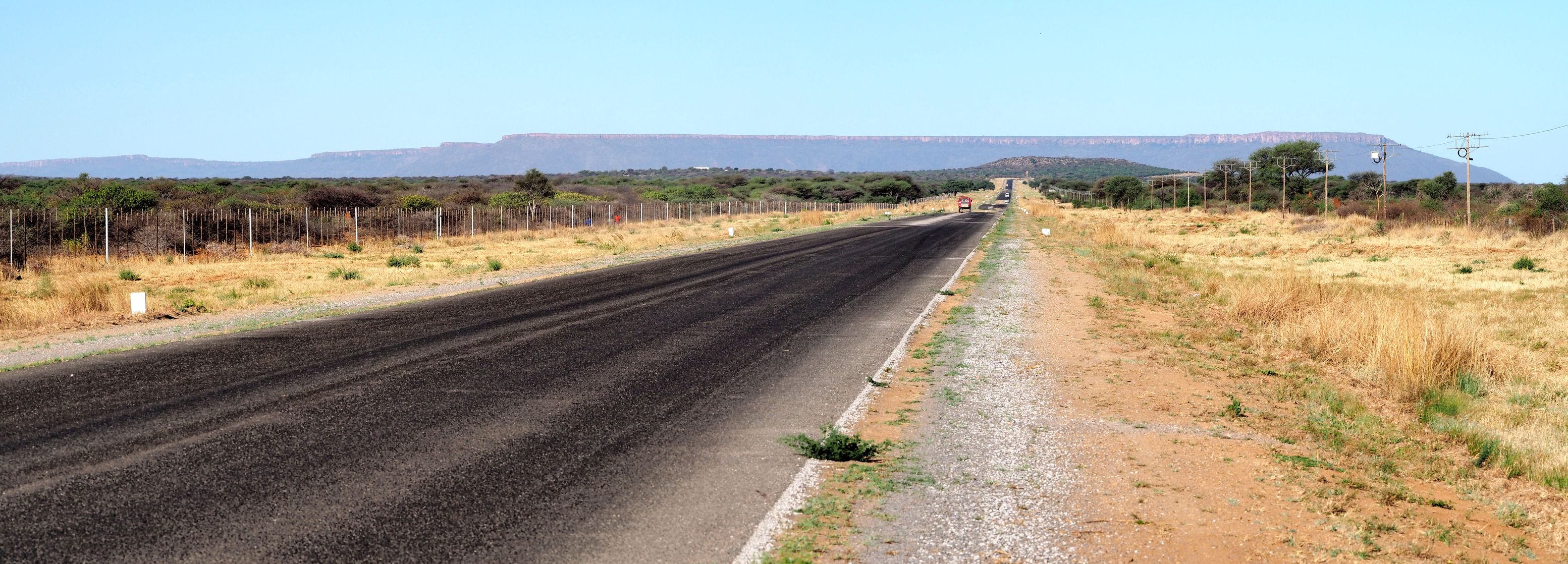
And during our photo break, a Tawny Eagle (Aquila rapax) is on the lookout for new prey from its telephone perch...


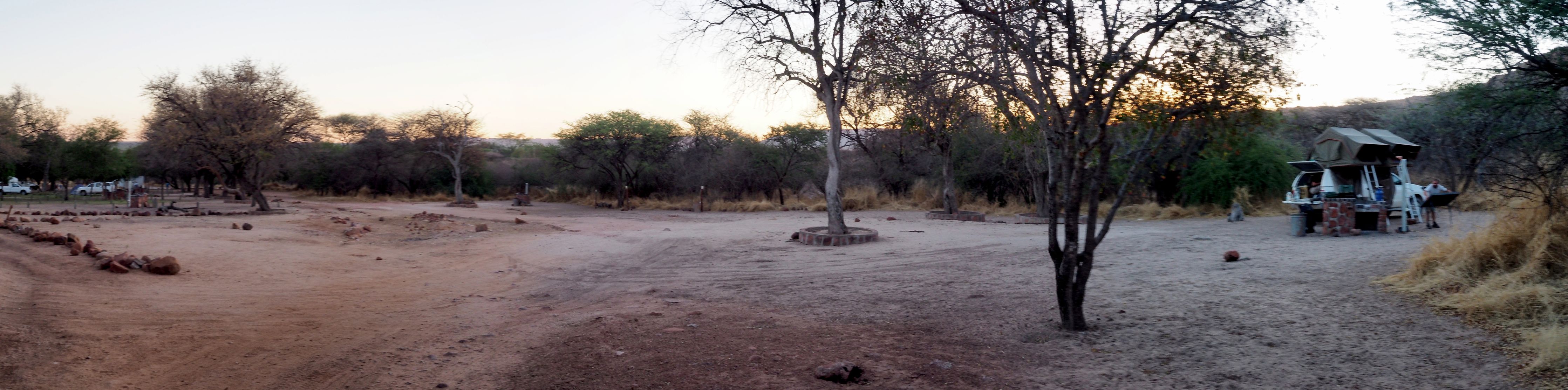
Here we are in our last camp at the Waterberg Plateau Campsite, at the foot of its cliffs...


And last starry sky... 
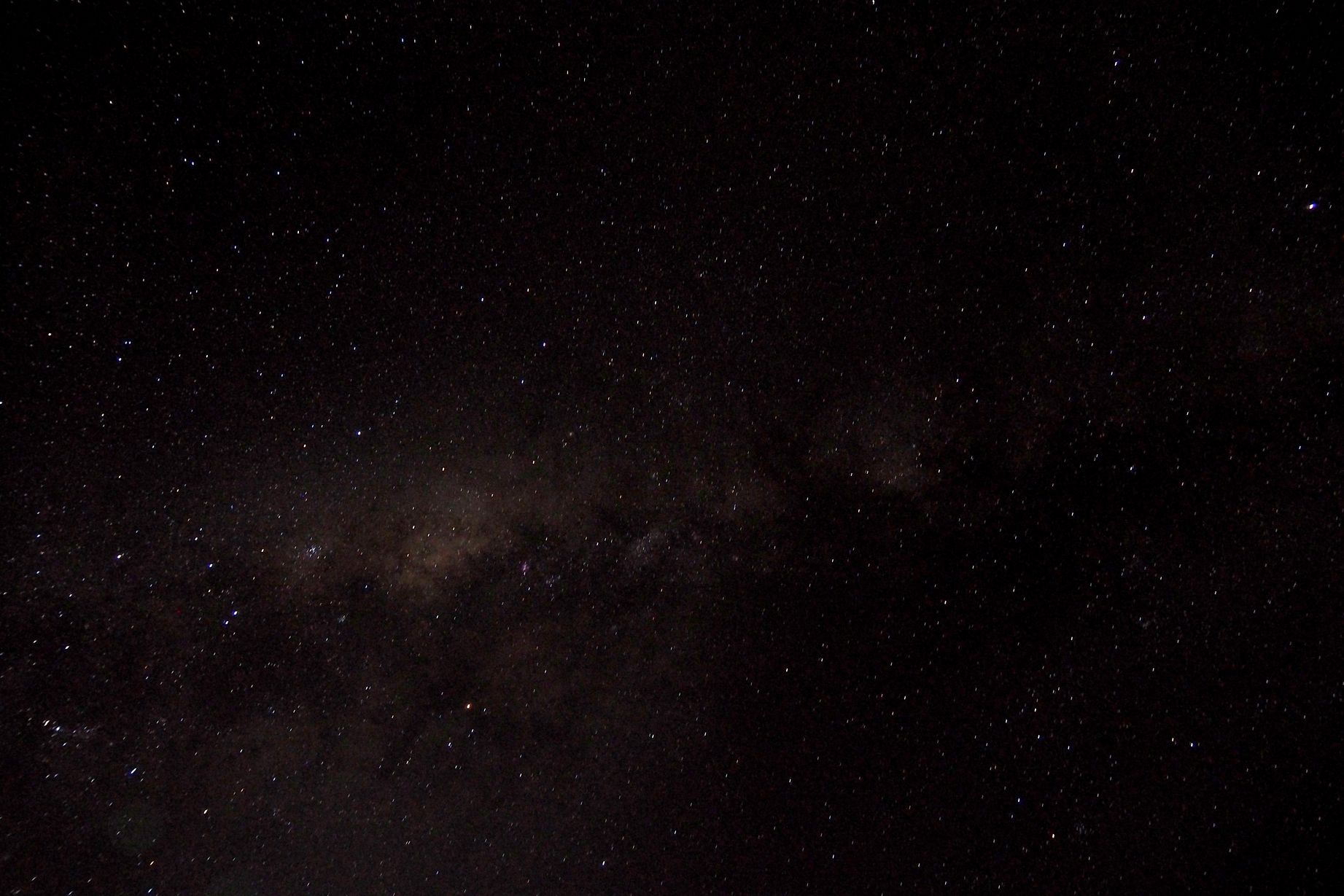

Left photo, the Milky Way in the constellation Scorpius. Right photo, detail of the sky above the scorpion's tail. Zooming in, you can see two small groups of stars, these are open clusters (the larger one is the open cluster M7, the second is the M6 Butterfly Cluster). To the right of the photo, two small slightly purplish spots: the open cluster NGC6530...
Saturday18October
We dedicate the morning to discovering the Waterberg Plateau. To do this, we choose the camping's "Game Drive" option. No games involved, we will simply go observe the animals up close with a guide, as much as possible...
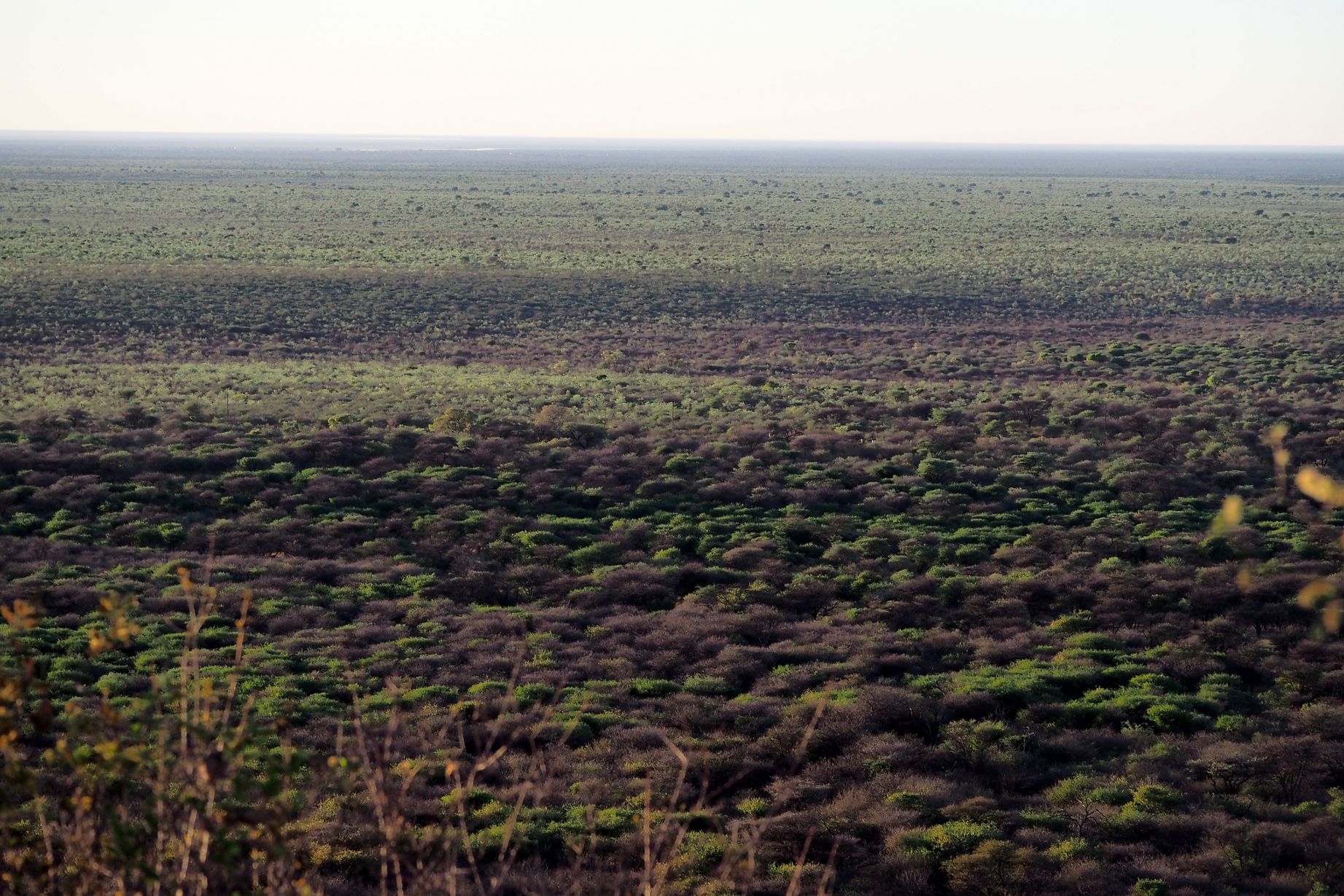
Once we arrived at the edge of the plateau, a superb green sea formed by the forest revealed itself to us.

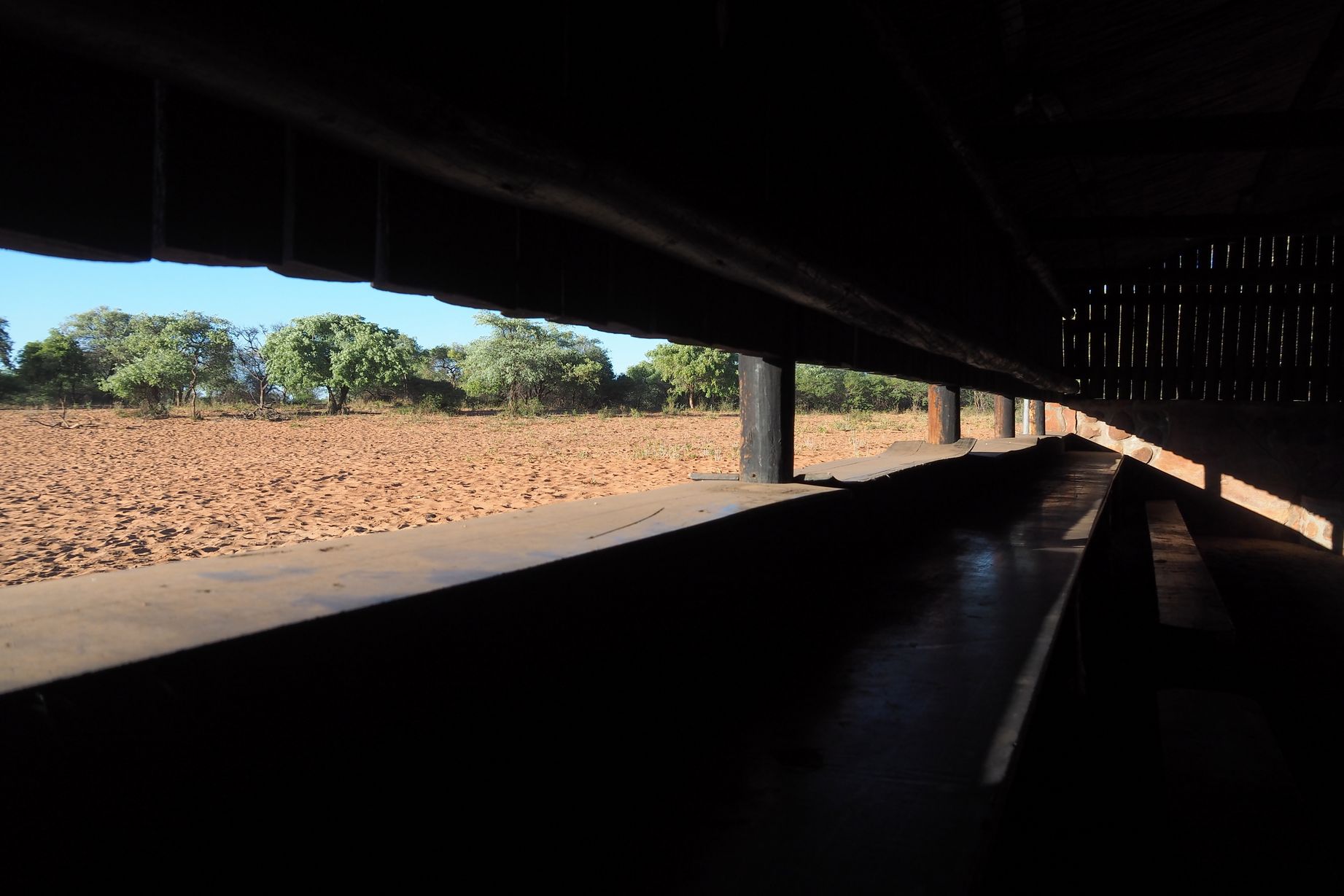
Then, the guide led us through a long wooden tunnel directly to an observation post hidden from indigenous eyes... In silence, we waited, waited, waited... and!!! ... We got up and got back in the car... 

Finally, a beautiful encounter. Fleeting but justifying our morning outing! It's the great African buffalo (Syncerus caffer)! And what's more, it completes our "Big Five"!
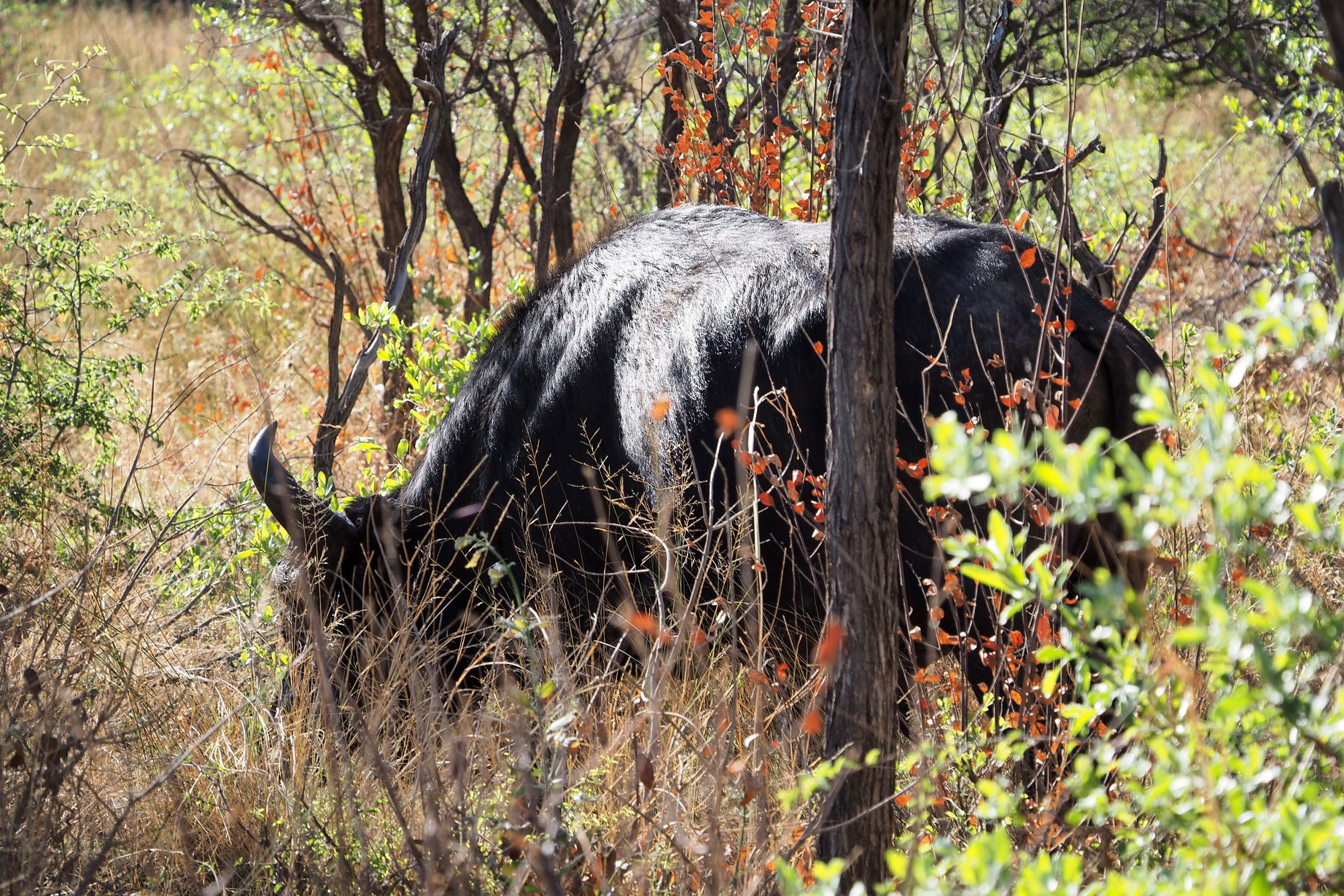
The Big Five are the 5 animals that wildlife photographers must have seen in Africa! Here they are: the lion, the African savanna elephant, the African buffalo, the black rhinoceros, and the leopard... And it is for this last one that we will have to return to this beautiful country, because we didn't cross paths with even its tail... 

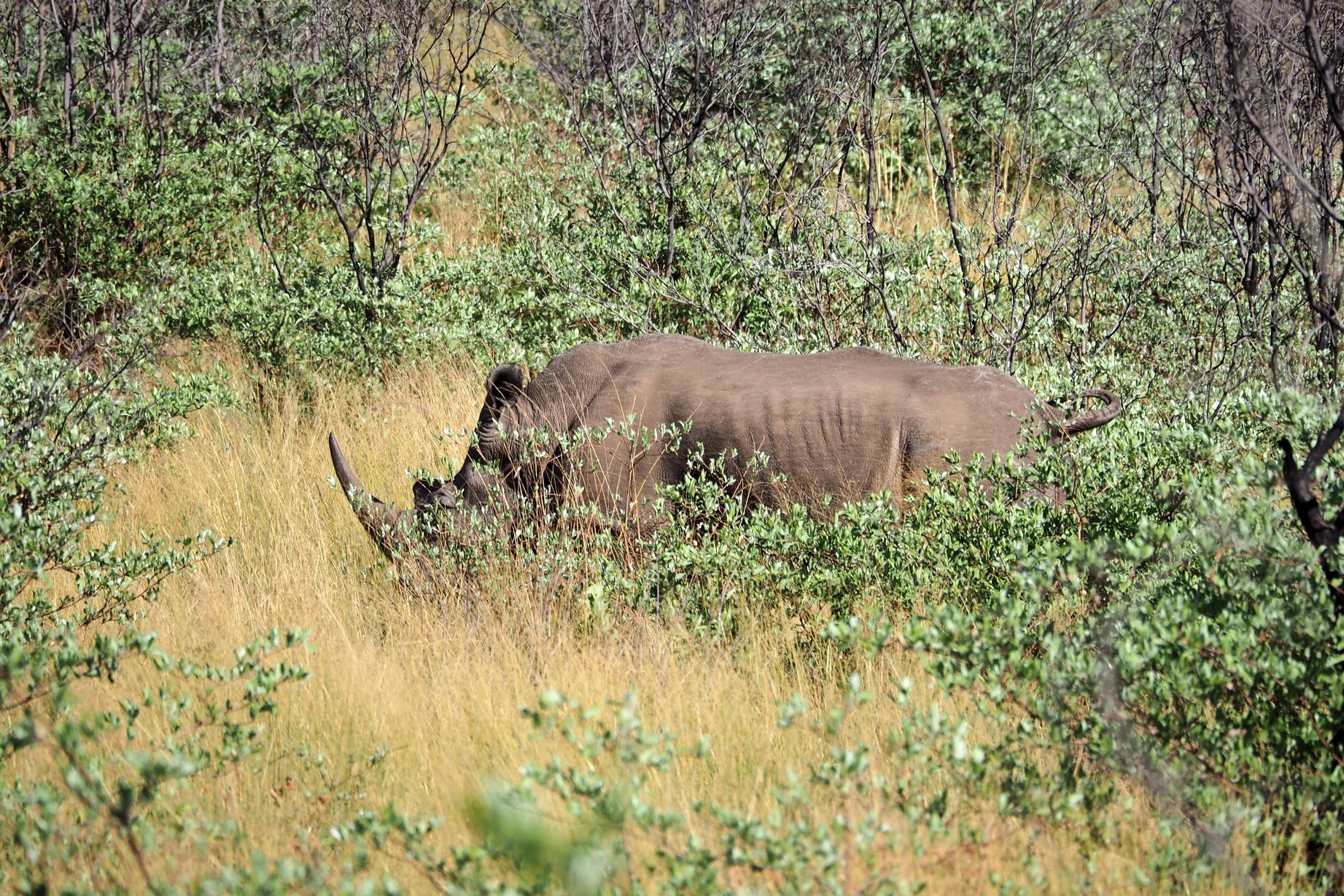
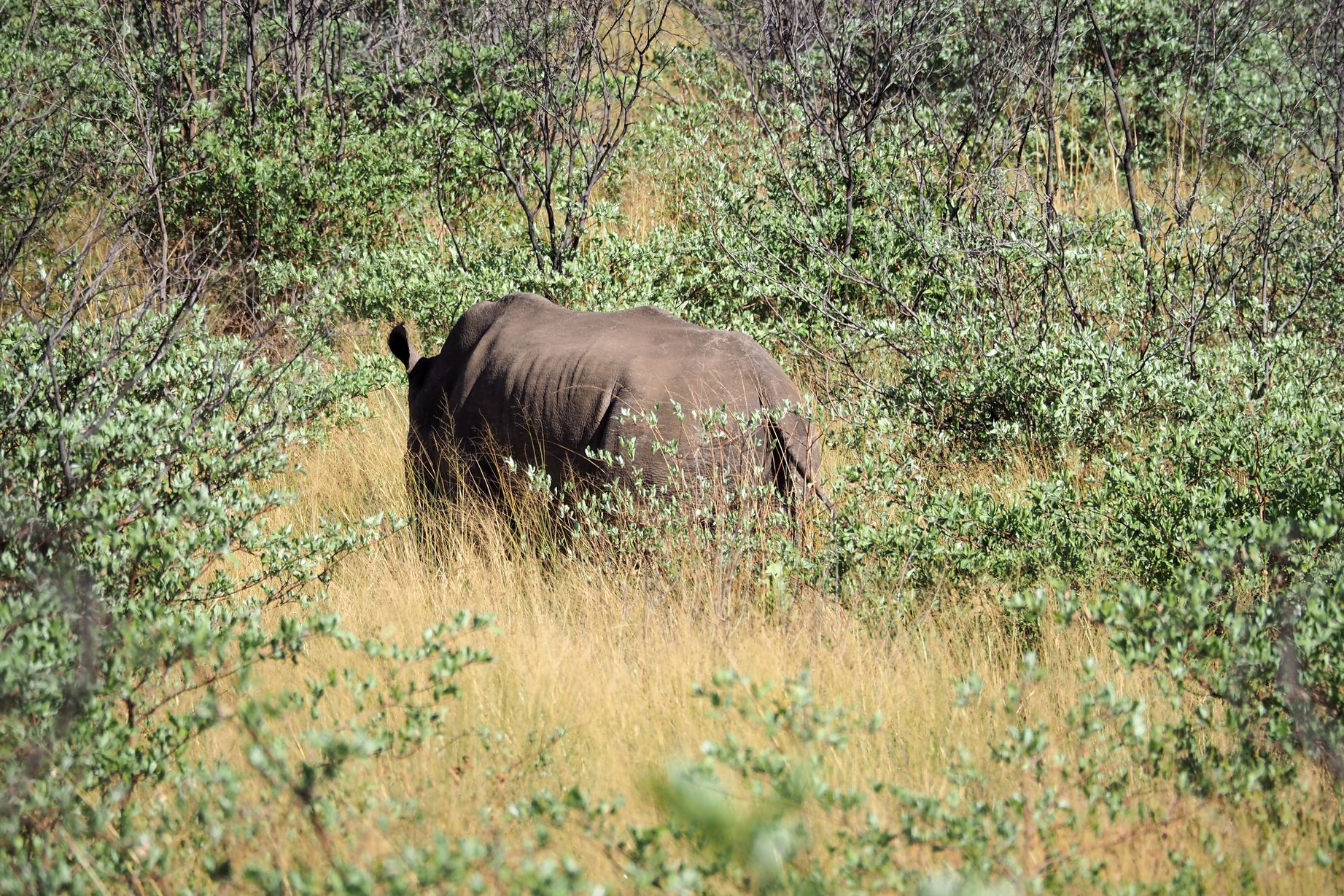
He is also part of the "Big Five". We have already seen it in Etosha, the black rhinoceros (Diceros bicornis). At least I suppose so because I can't see its upper lip which distinguishes it from the white rhinoceros...
Here we are again in an observation hide. This time we don't leave empty-handed. Female greater kudus (Tragelaphus strepsiceros) come to enjoy the clearing in front of us.

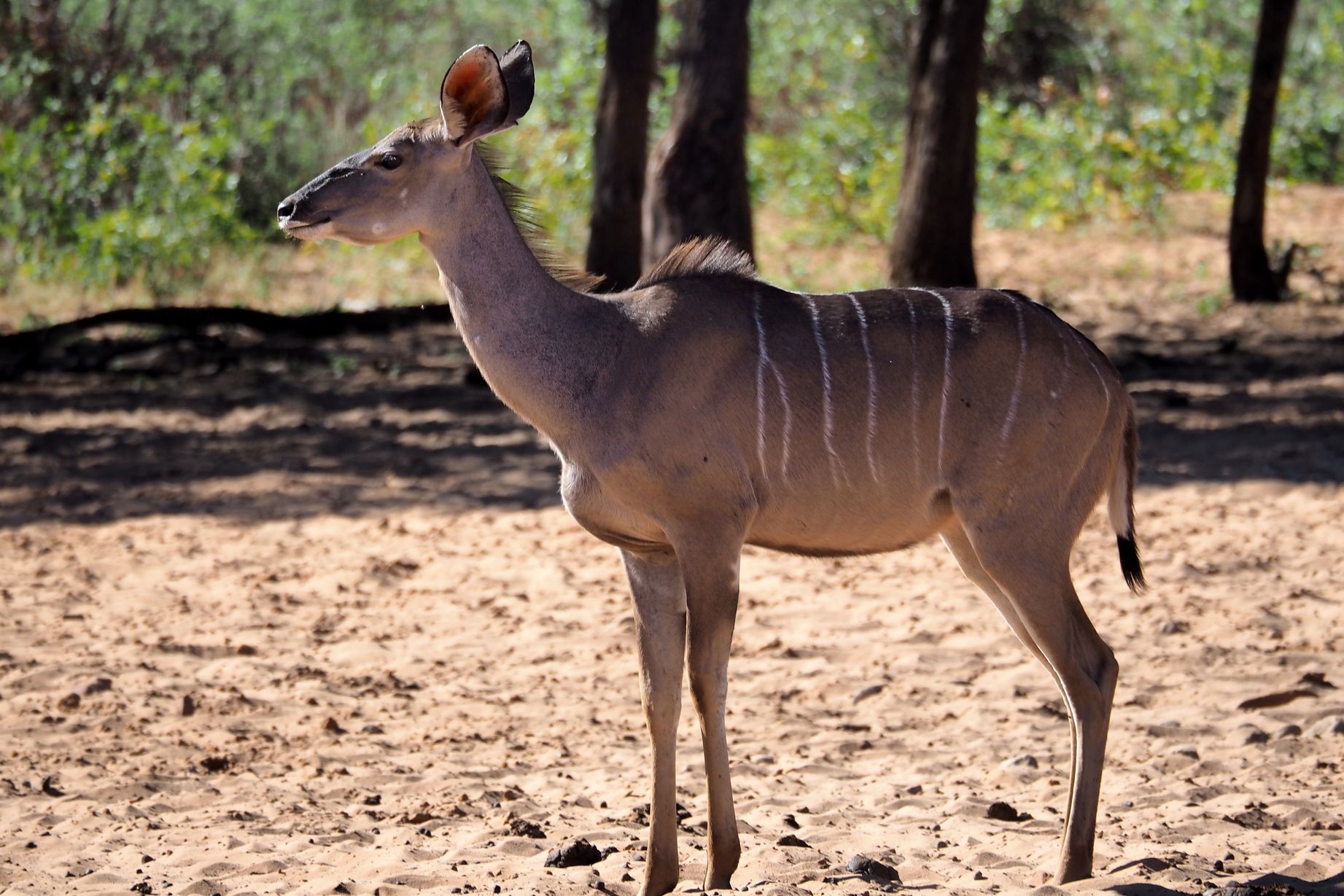
Only males have the large spiral horns.
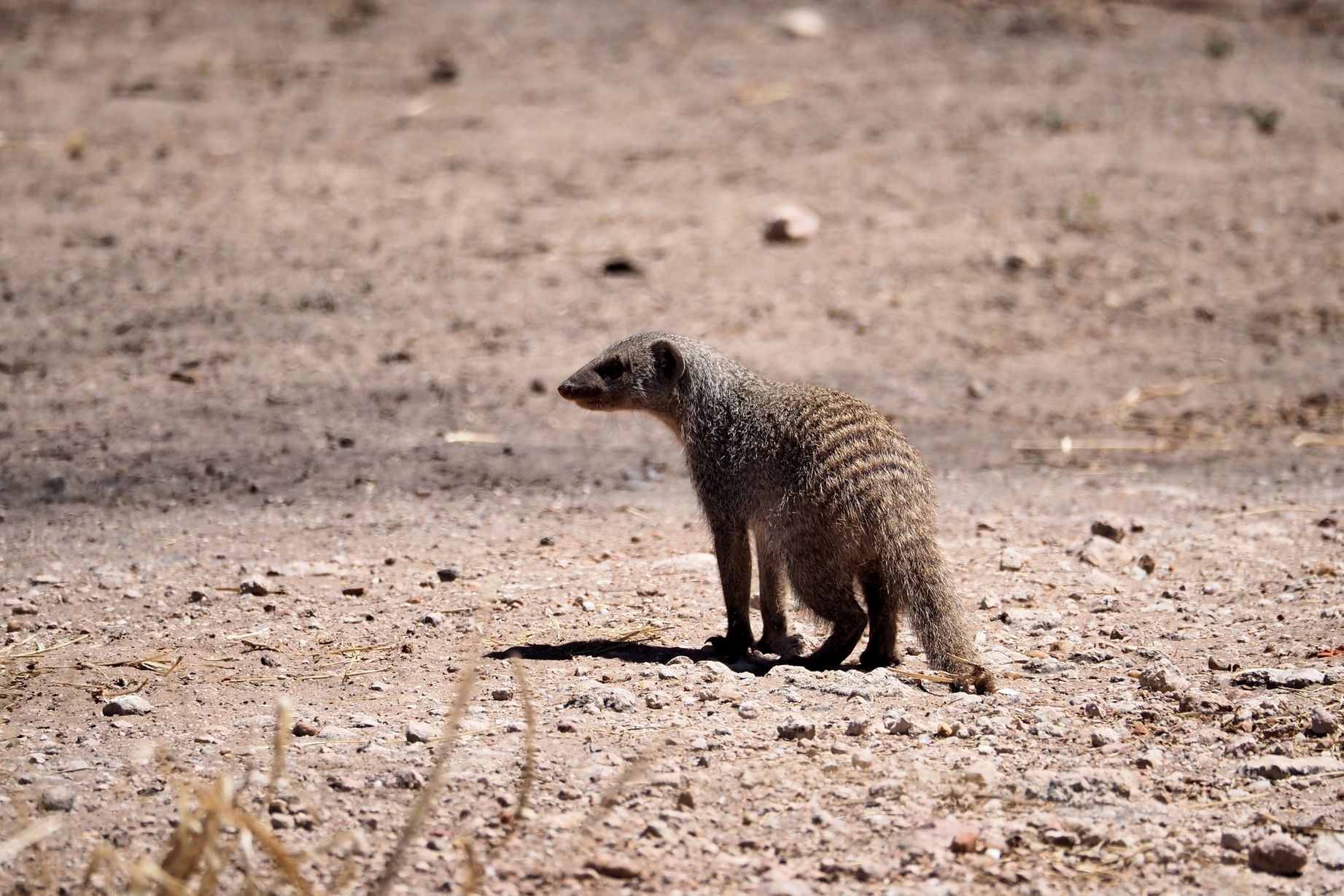
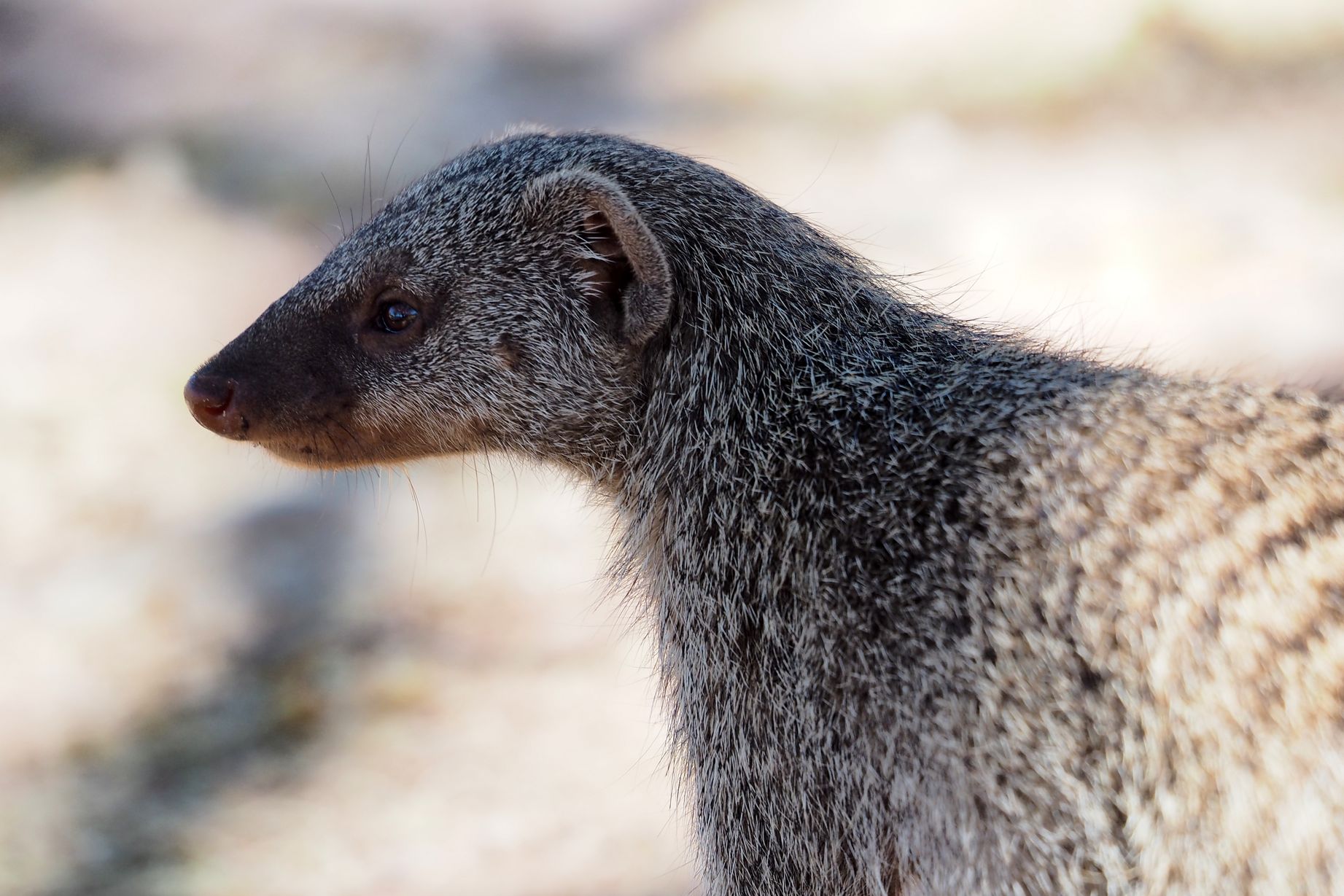
Back at the campsite where a whole tribe of banded mongooses (Mungos mungo) tries, under the watchful eye of the sentinel, to invade all places likely to contain any food...



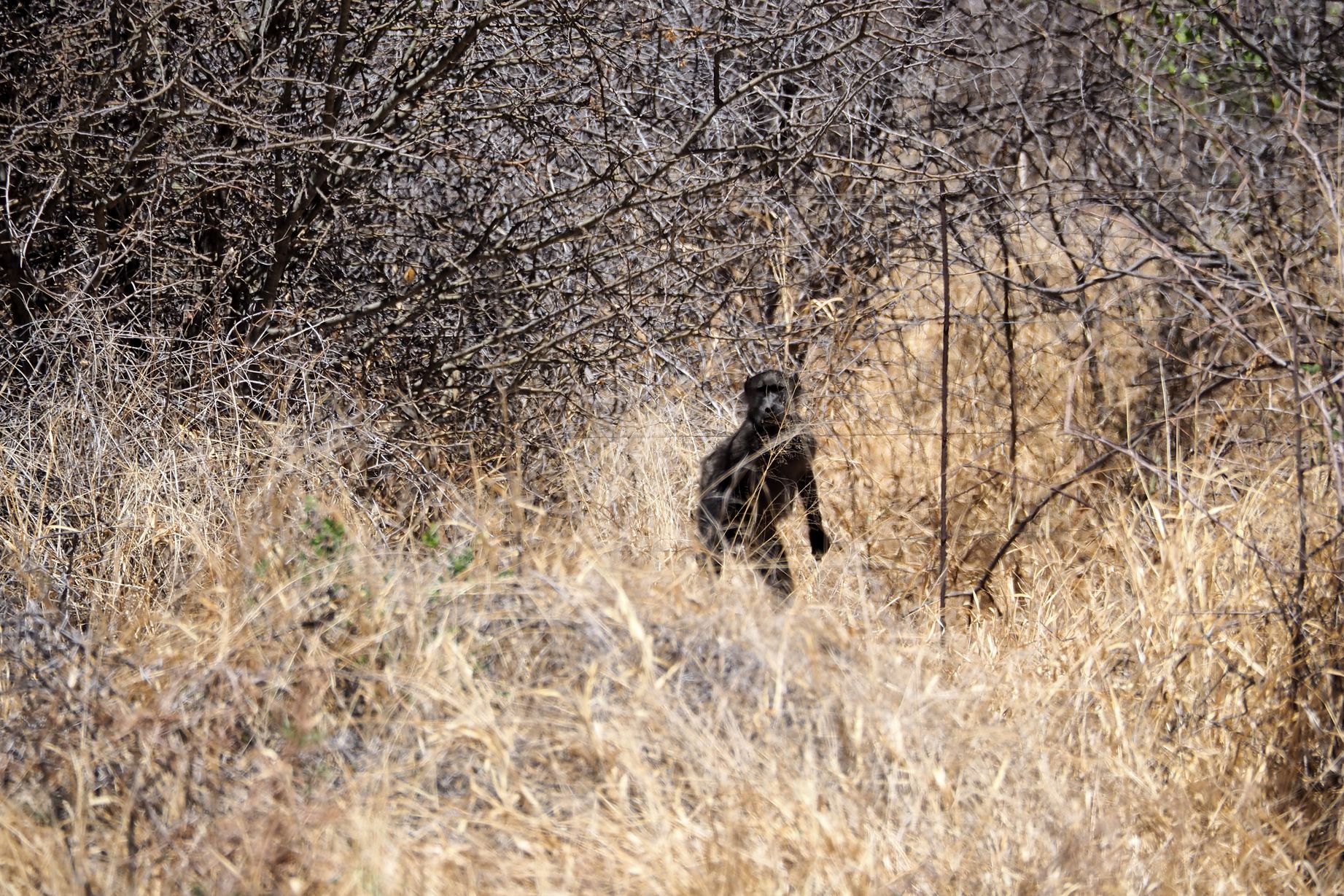
We leave Waterberg and on the road we cross paths with our very old ancestor Lucy!!! Oh no, it's a baboon who also finds this upright stance very interesting, which isn't so human, especially when it comes to seeing far above the tall grasses...
The loop is complete! We are back in the hotel where we started the trip: the Uhland guesthouse in Windhoek, capital of Namibia.

Latest comments
On Guatemala 2018
Le 25 Novembre 2024
Significado de este mural
On Chile 2016
Le 15 Septembre 2024
Rrrrrr
On Egypt 2003
Le 1er Avril 2023
Et oui c'est bien nous aux pieds de ce Colosse !
Le 1er Avril 2023
Bien petits aux pieds de ce Colosse !
On Namibia 2014
Le 3 Août 2021
very good indeed