











 My blog
  Support me on Tipeee!







Thursday4September
Grotto Canyon
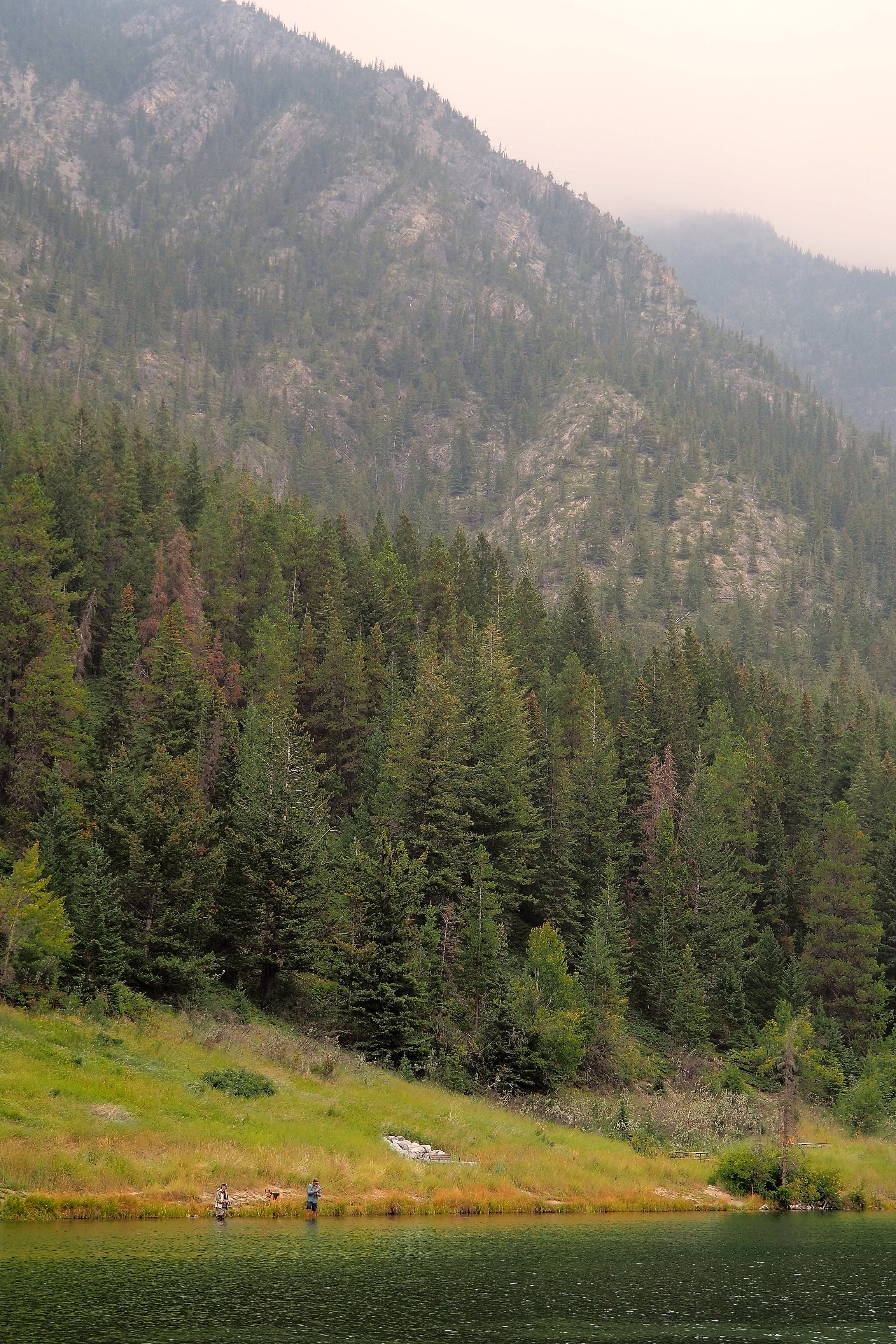
After leaving the big city of Calgary and doing our first shopping, here we are in the Canada we came for: wide open spaces, lakes, and mountains.  The day begins with Grotto Canyon, whose hike starts at the edge of this pond.

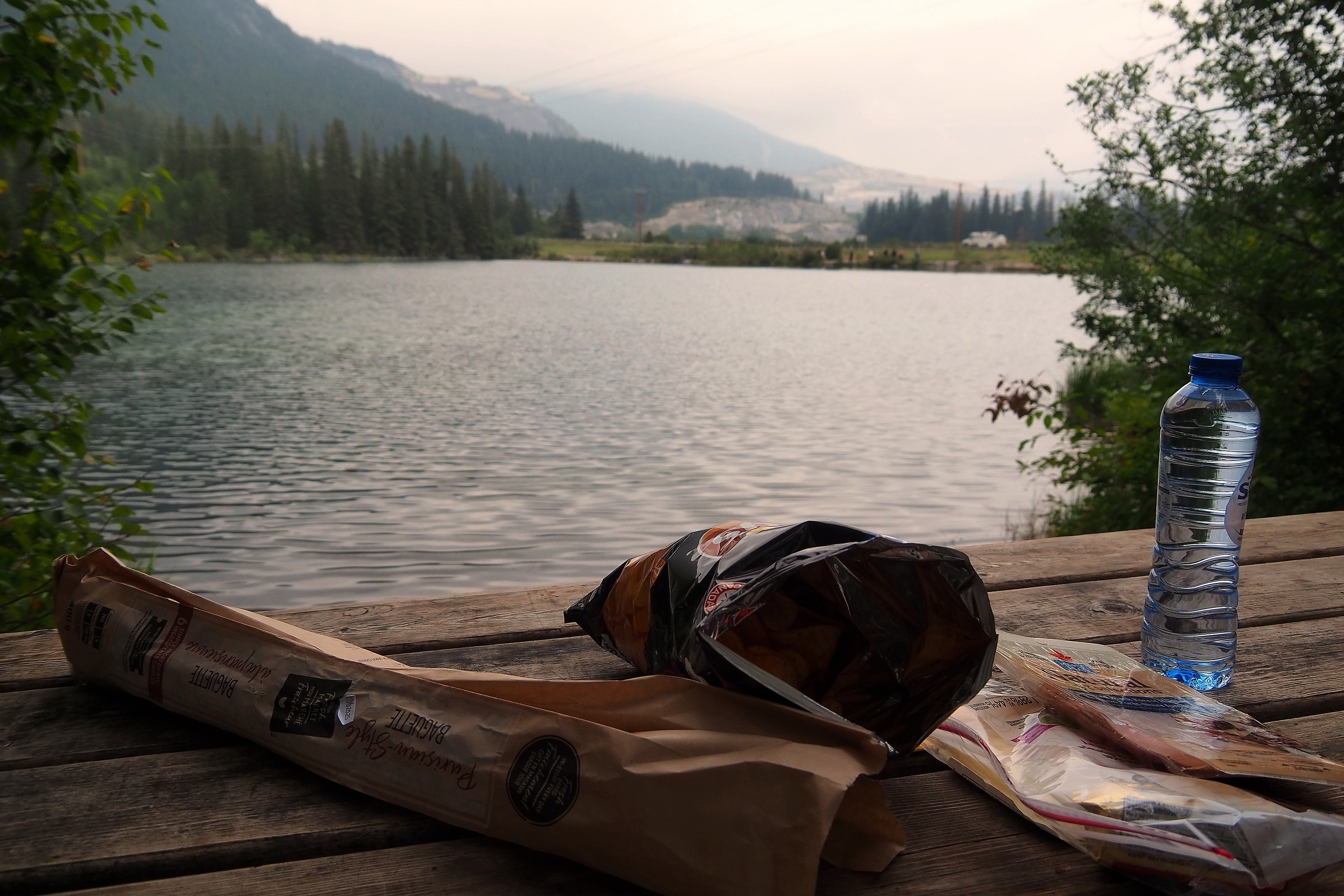
No pond without fly fishermen...
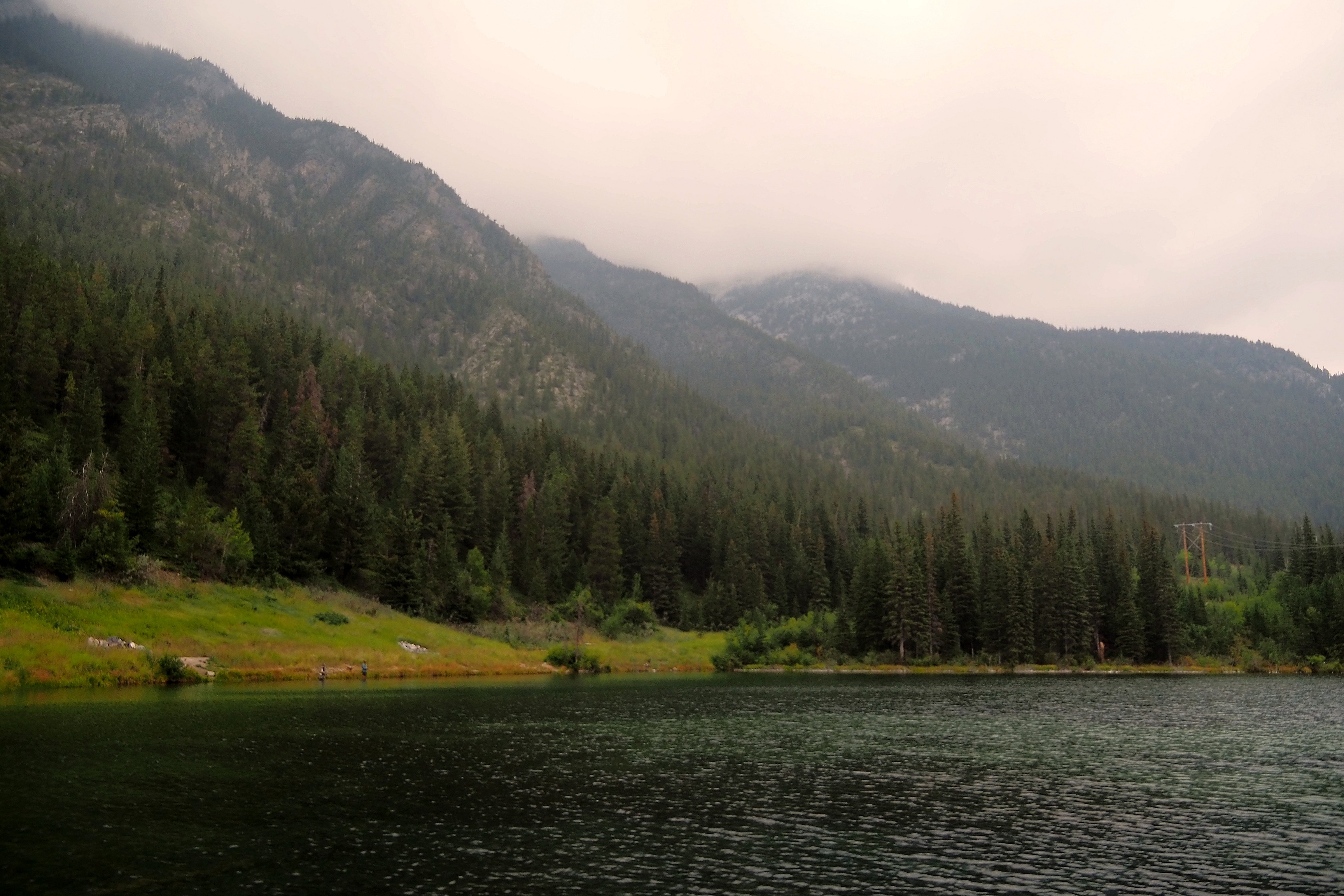

It's already picnic time, the view will be perfect for lunch. Temperatures are not very high... We were hoping for warmer weather in early September, but we are still almost 1300 meters above sea level!
And off we go for a short walk to reach Grotto Canyon.


The bed of stones deposited by the floods of Grotto Creek. In the distance, we find the Bow River, the very same one that flows through Calgary.

Here we are at the entrance of the canyon. All that's left is to follow the riverbed. Objective: find the rock paintings hidden in the canyon... 

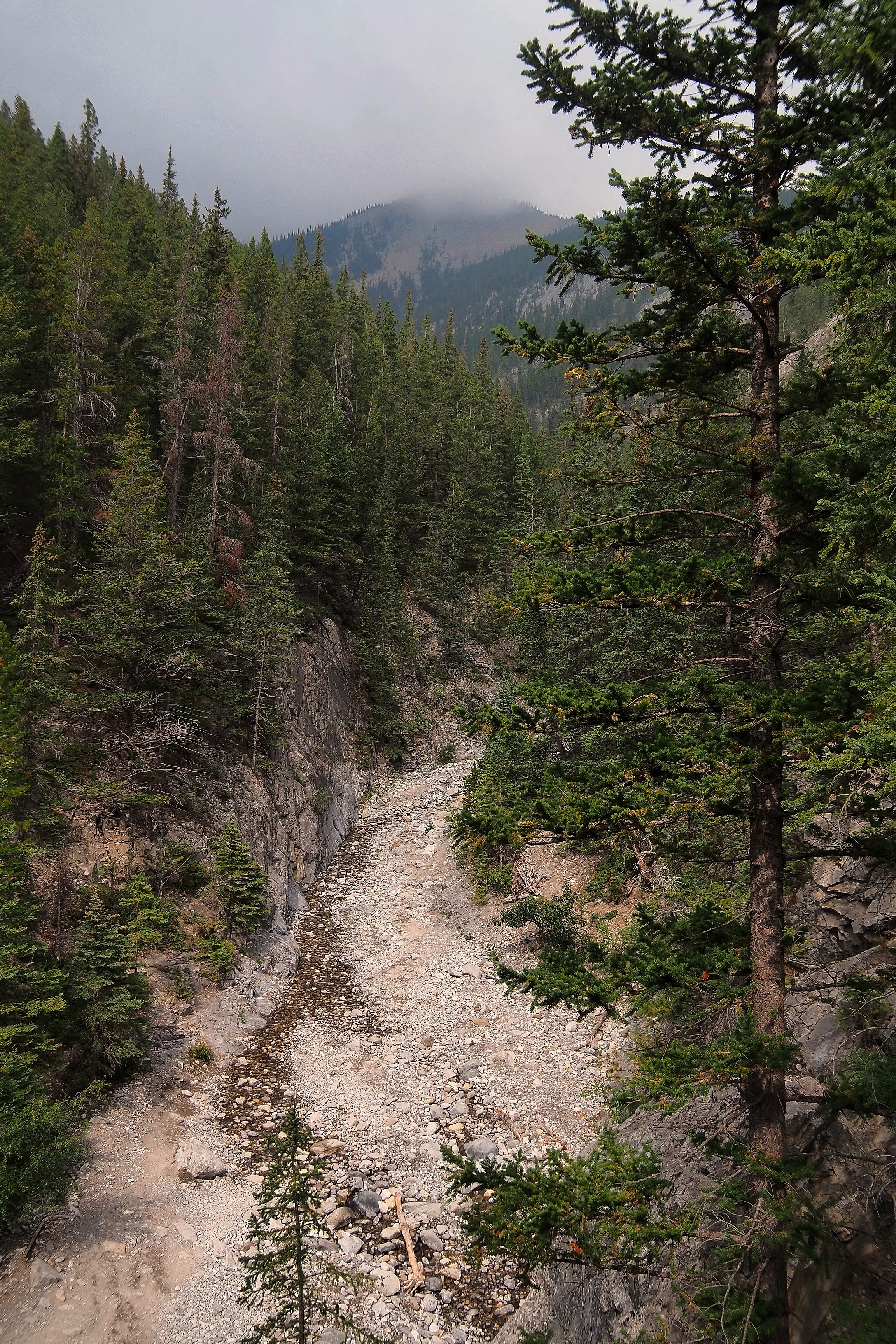
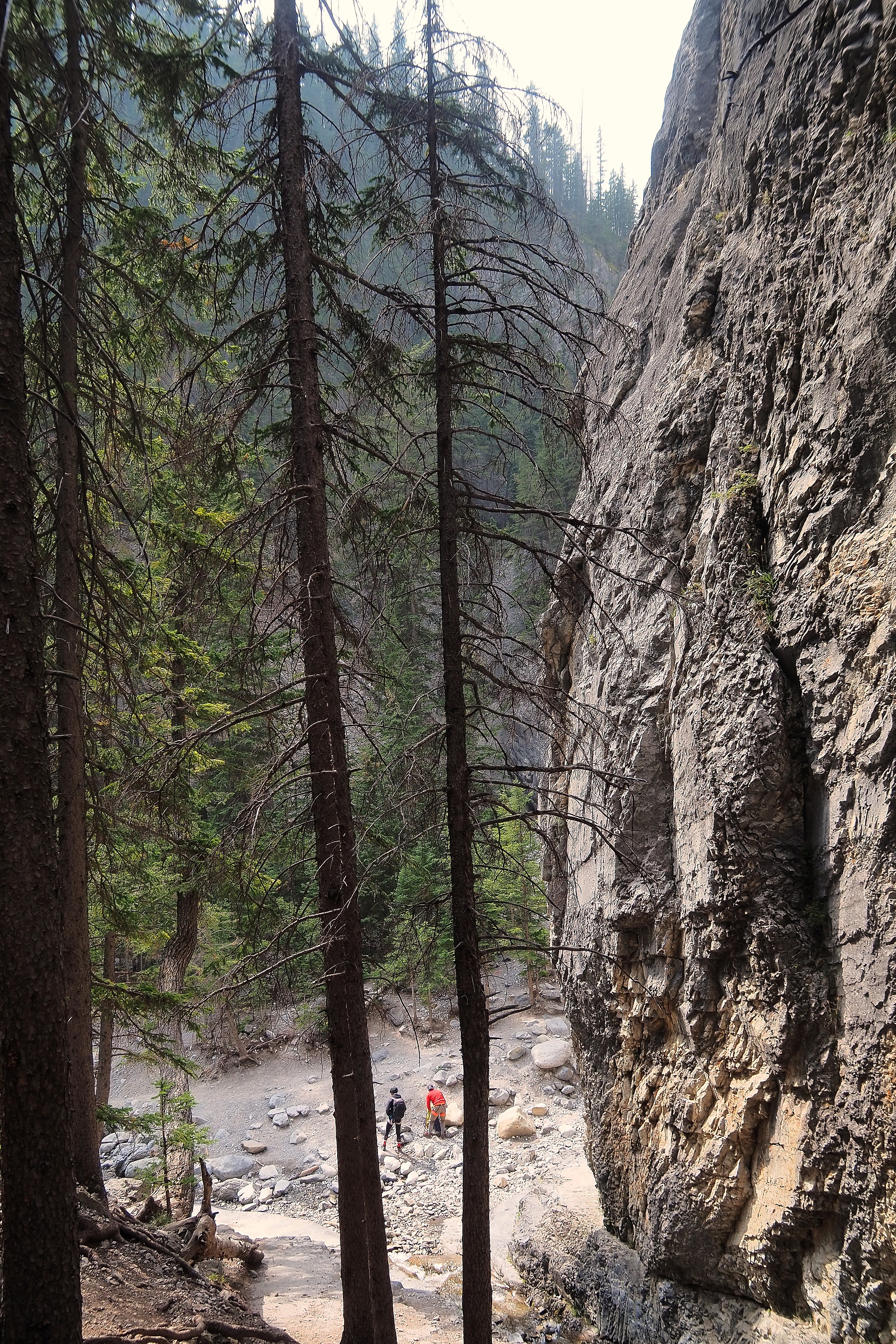
We won't be taking a climbing break... We'll leave that to the helmeted people. 
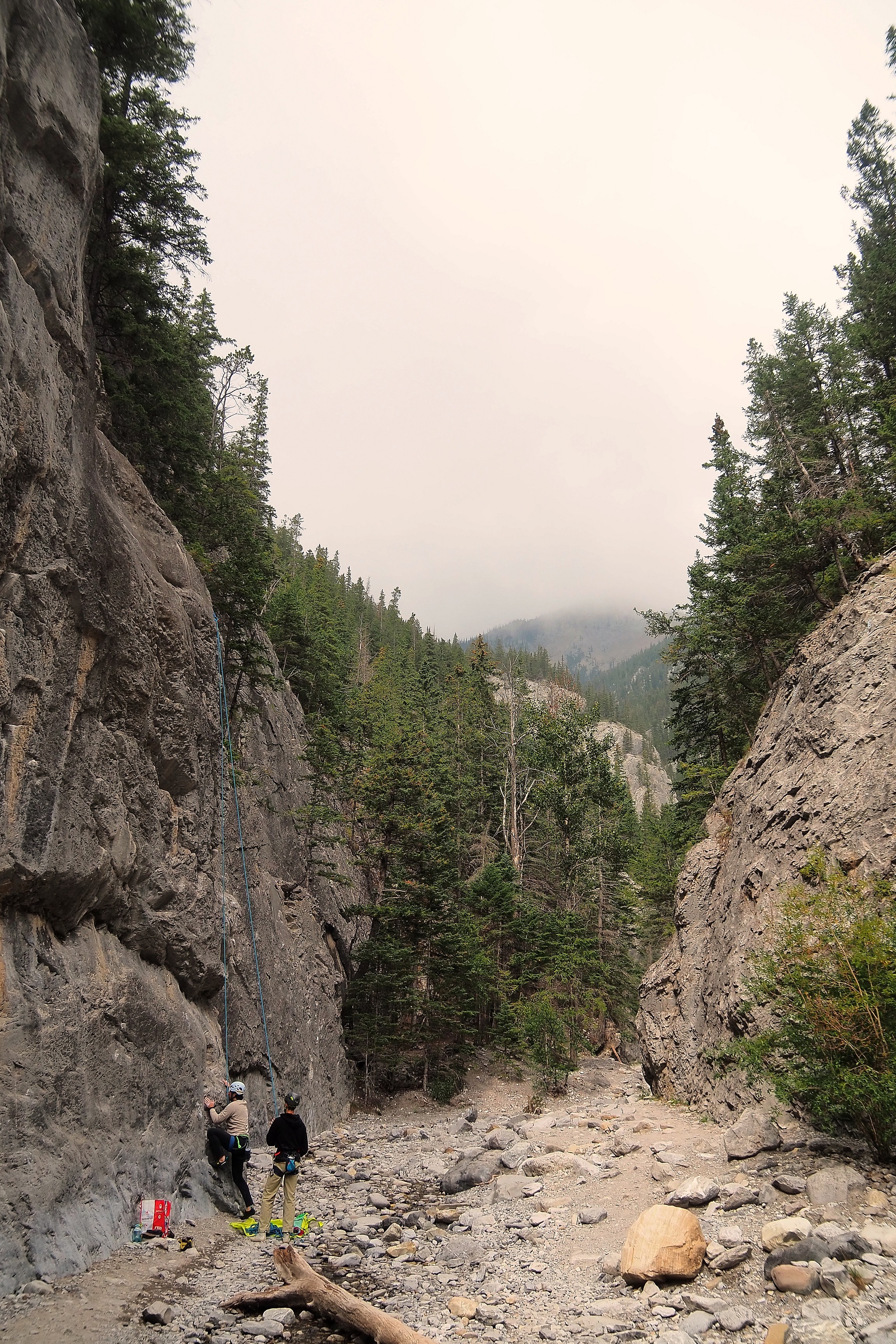

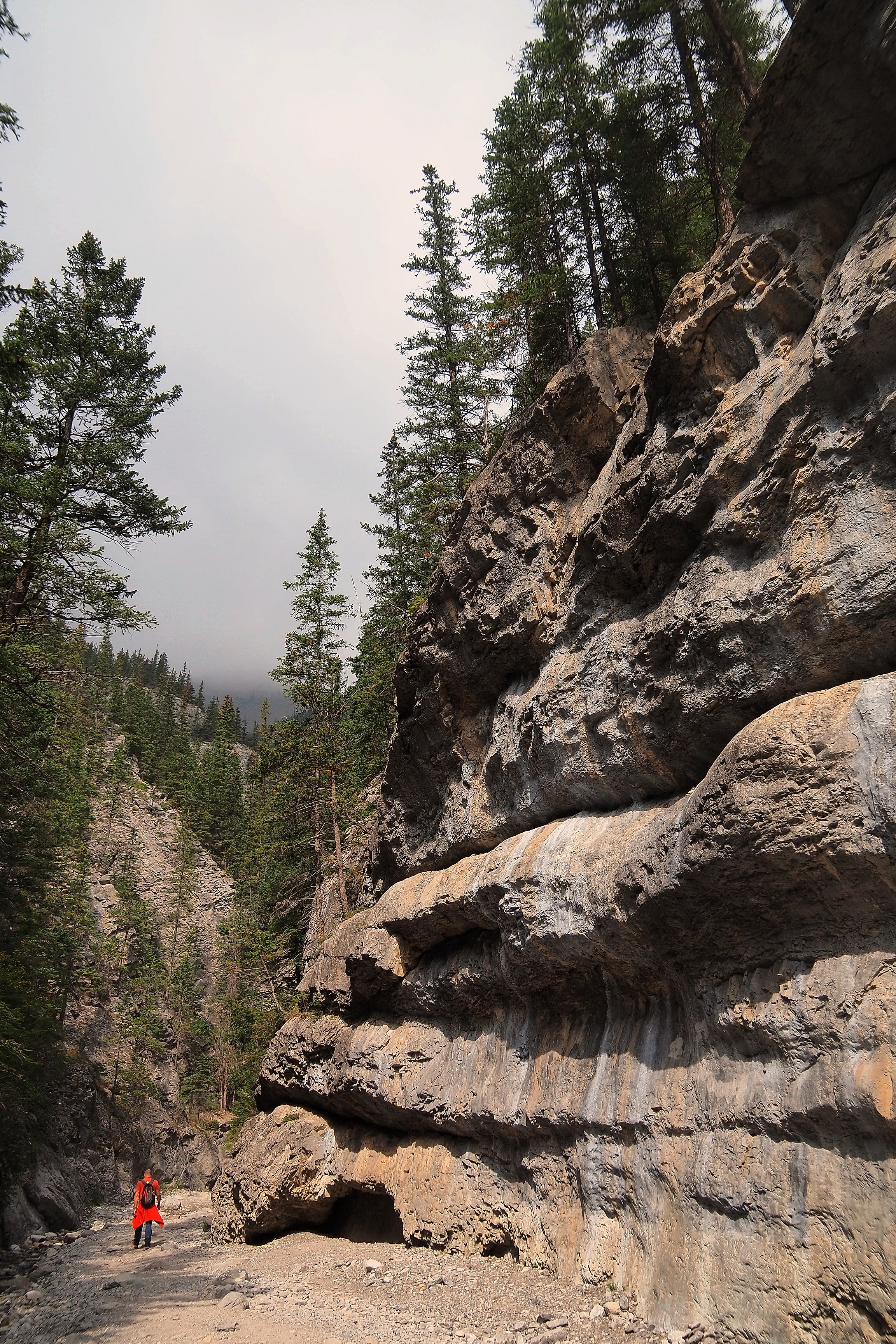
The limestone walls of Grotto Canyon rise up to sixty meters high in the narrowest sections. This gray limestone serves as a support for the white spruce (Picea glauca) that grows on the slopes.
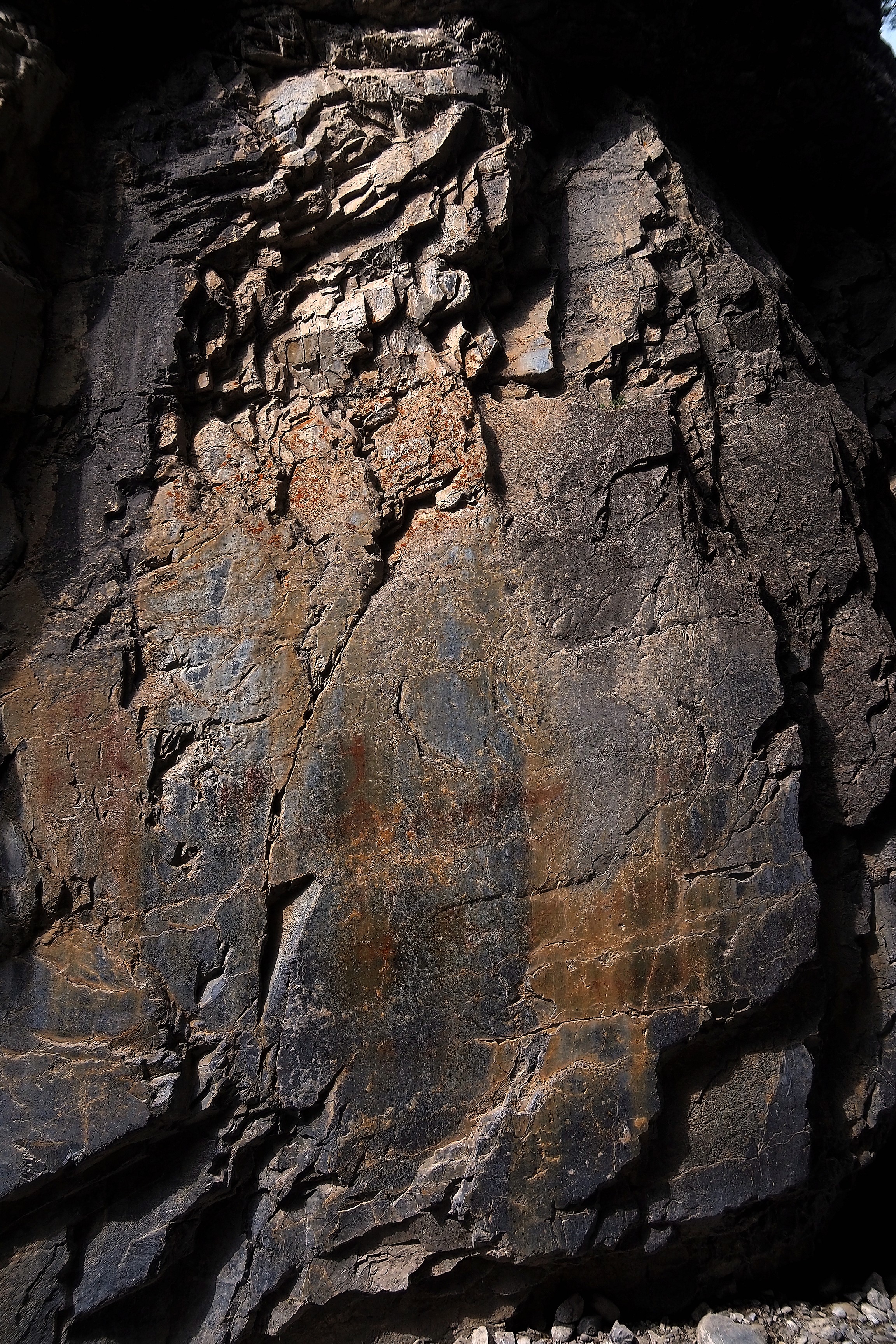
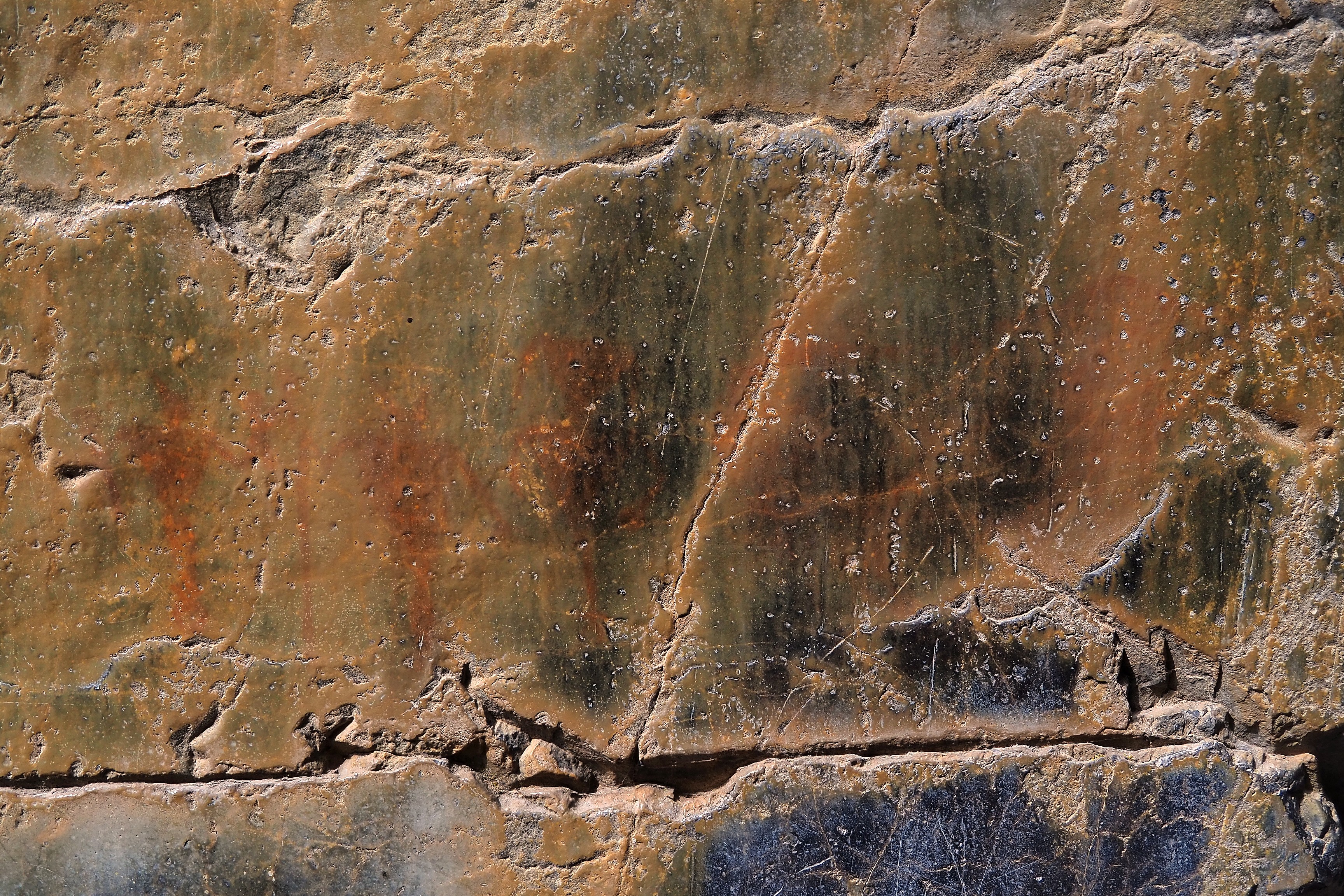
We finally find the little cultural marvel barely visible on the stone walls. The rock art, made from mineral pigments and animal fats, depicts human and animal forms. Researchers see in them the silhouette of a musician playing the flute, suggesting ancestral links with southern tribes. Alas, these treasures receive no protection from visitors' hands or the elements...


(New text)


(New text)

 And there, surprise! Our first encounter with the wild world of the Rockies!
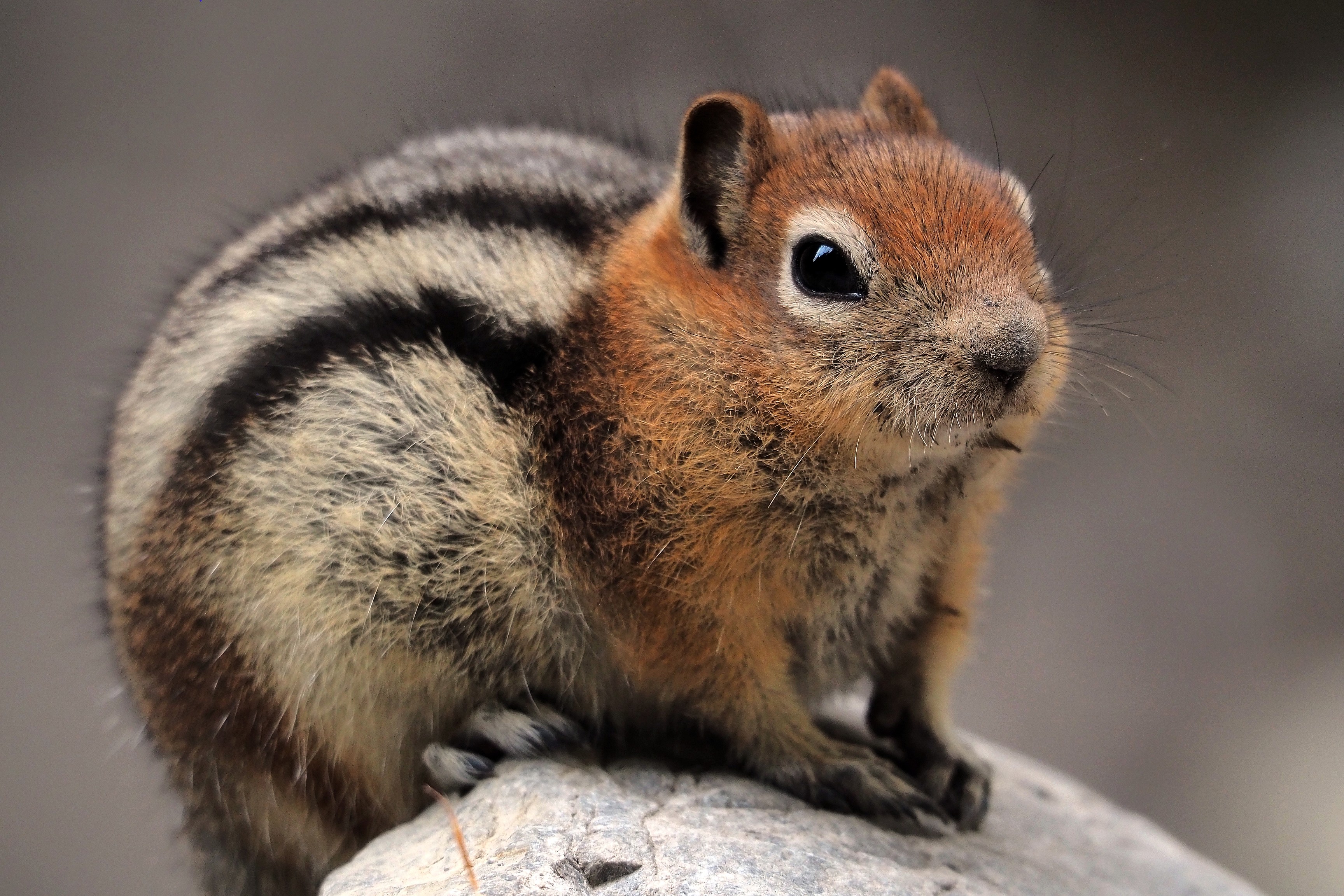
  It's a golden-mantled ground squirrel (Callospermophilus lateralis)! This rodent typical of the Rockies frequents the limestone scree of Grotto Canyon to forage for food.


Not at all startled, it lets itself be approached without seeming at all worried...
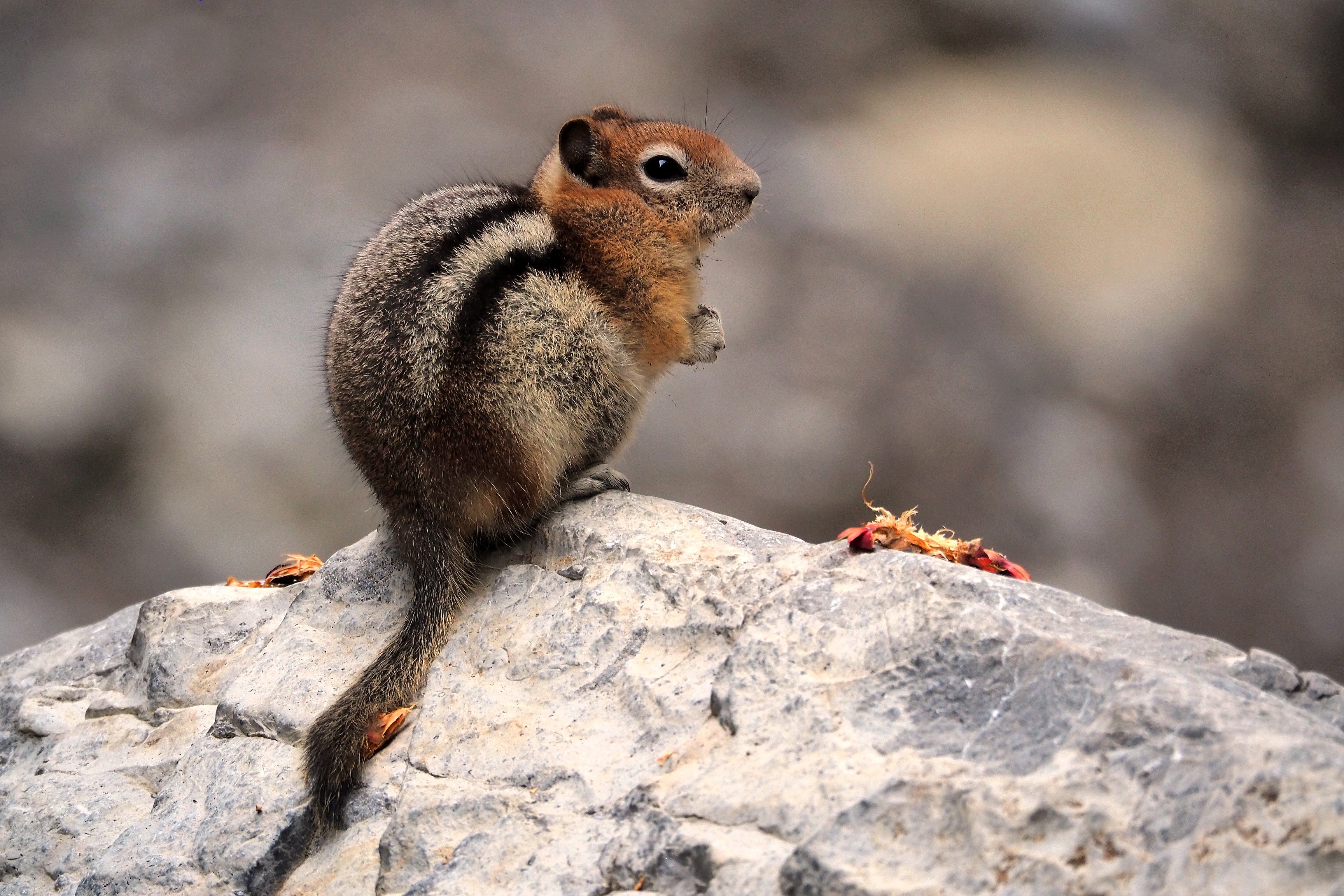
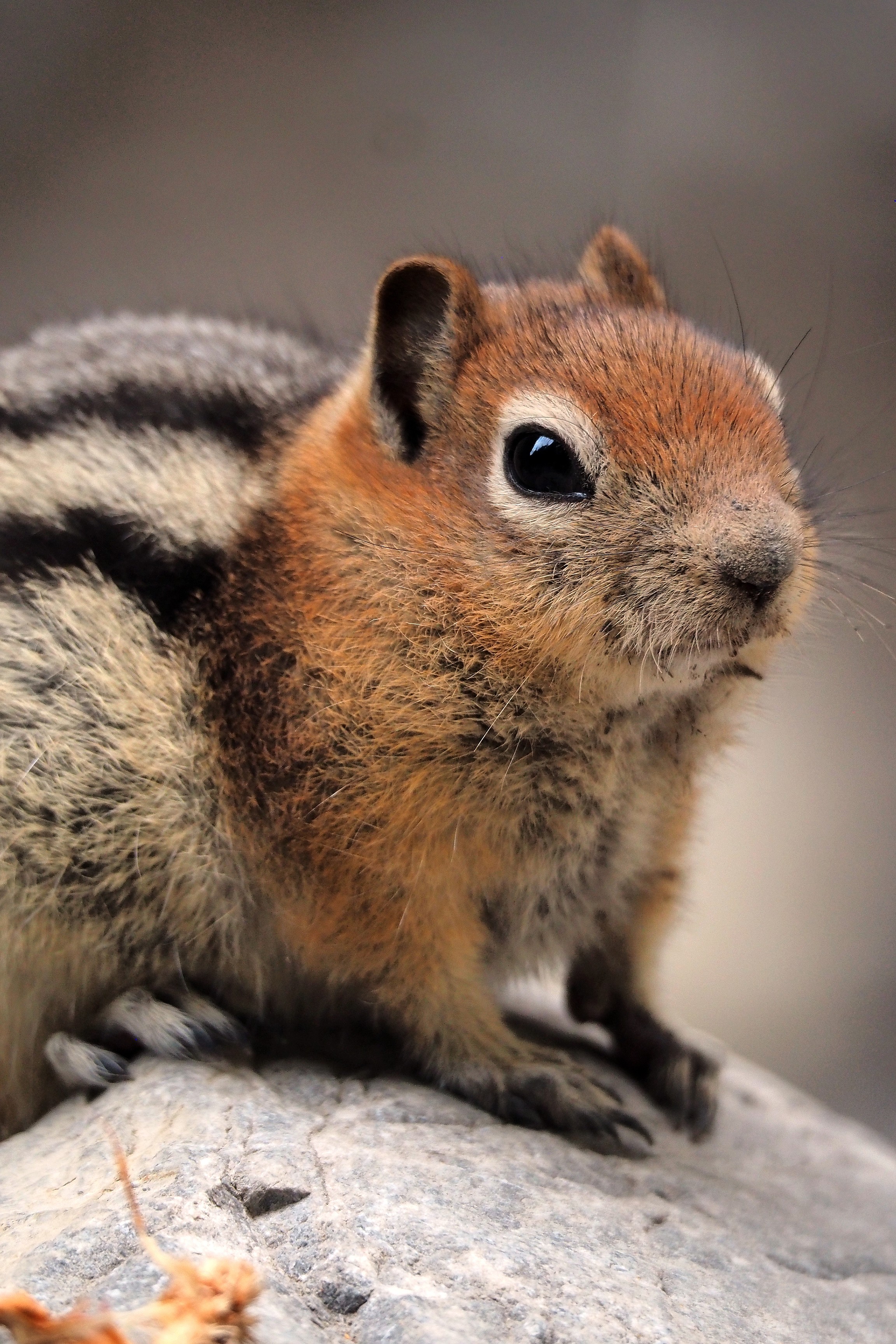
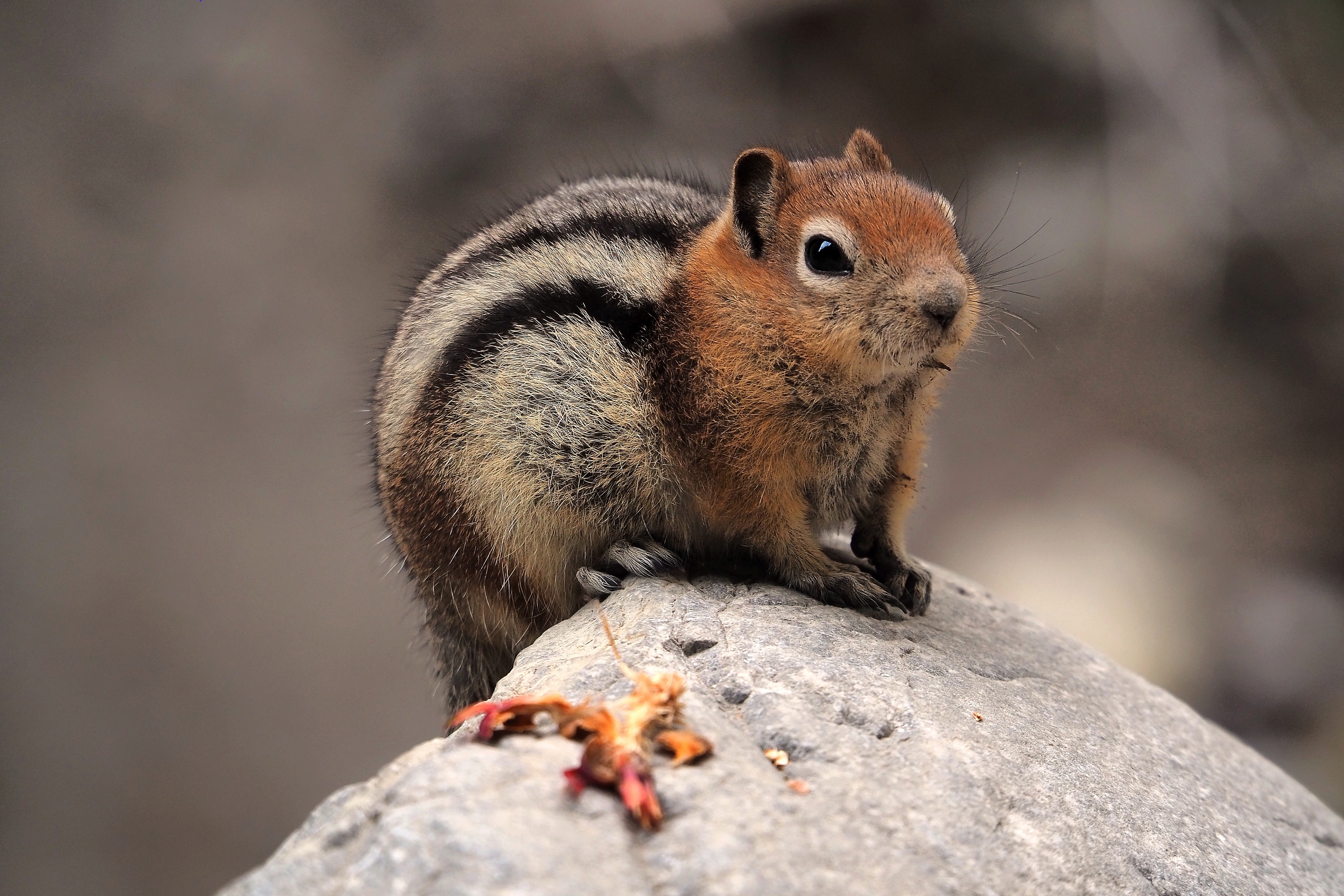
The golden-mantled ground squirrel looks very much like the striped chipmunk, which has stripes on its head. During this late summer, it accumulates fat reserves and stores seeds in its cheek pouches to survive the long winter hibernation. Its vigilance allows it to escape aerial predators while enjoying the sun's rays on warm stones. Evidently, by staying on its rock, it makes us understand that we are not among its predators...
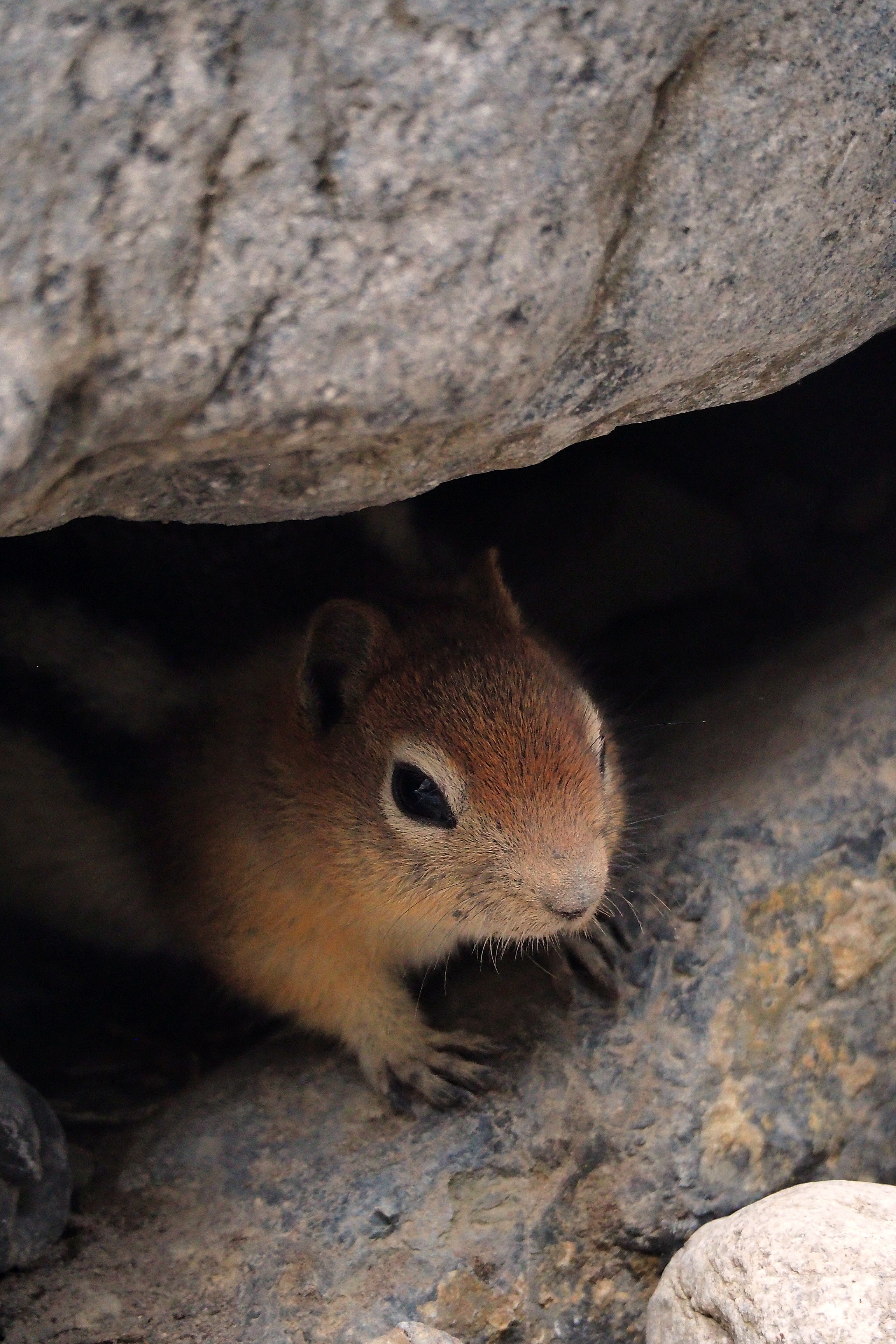
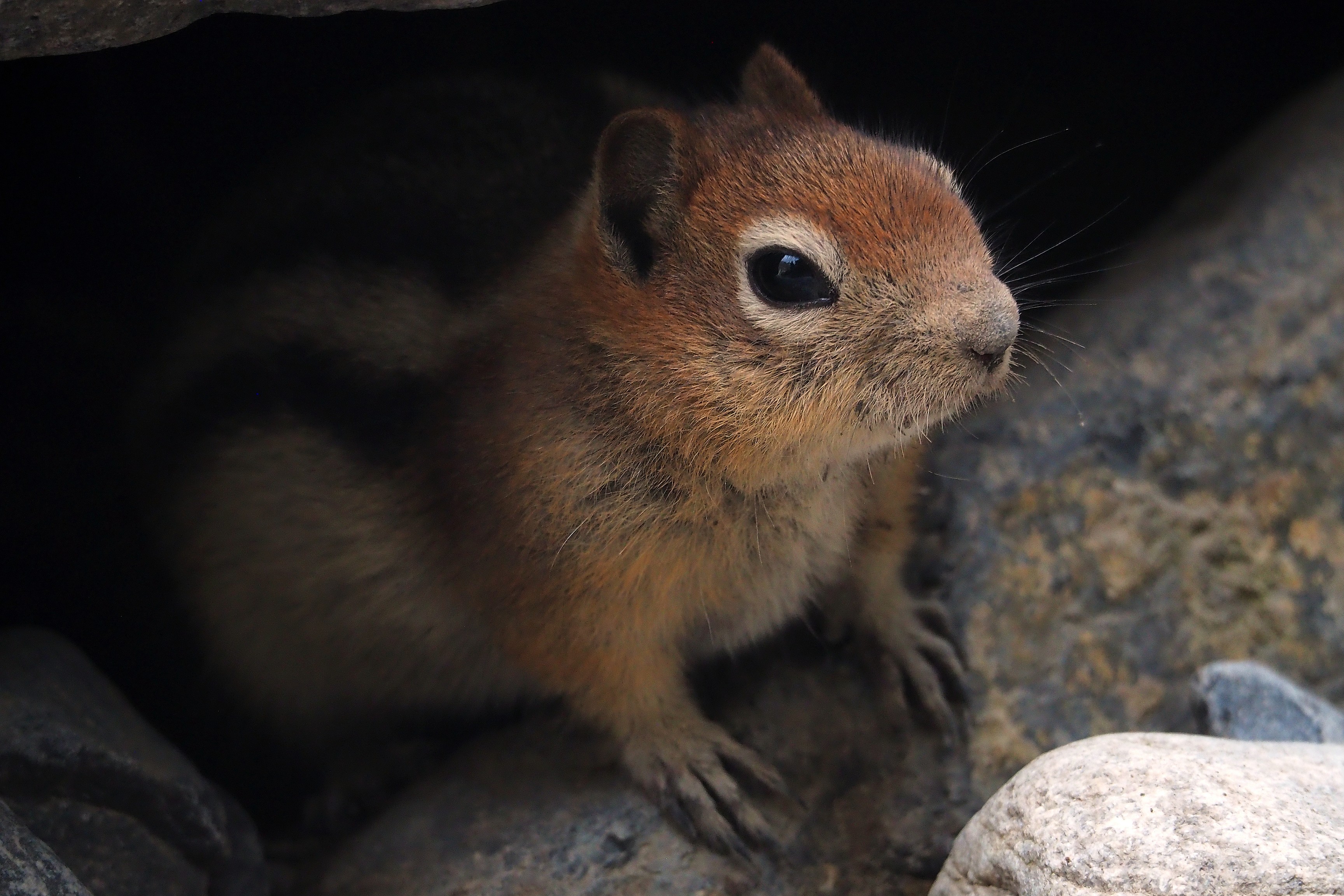
In doubt, it finally goes to take refuge under the stones...
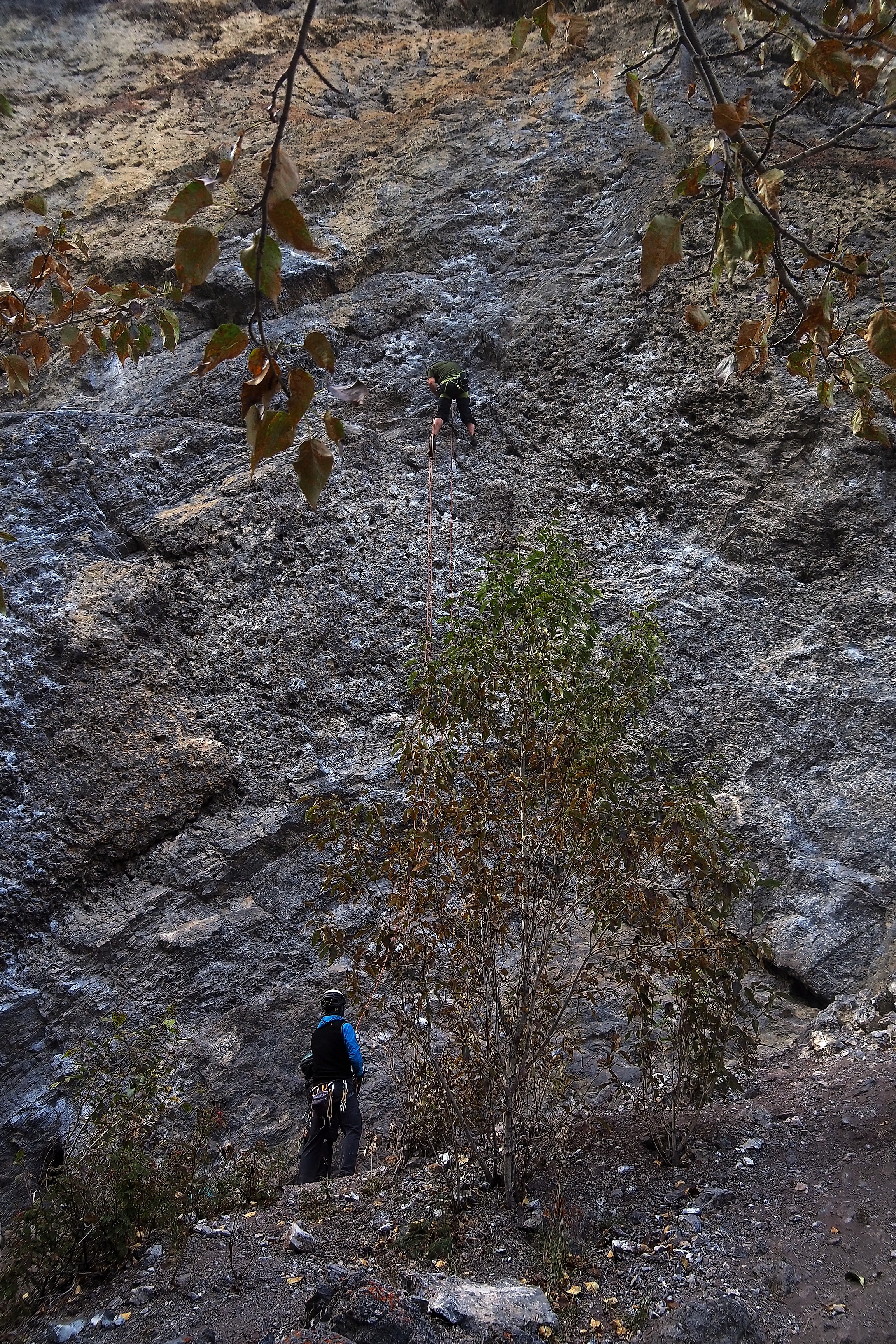
We arrive at a part where the canyon forks to the left and where other climbers confront the high rock walls.
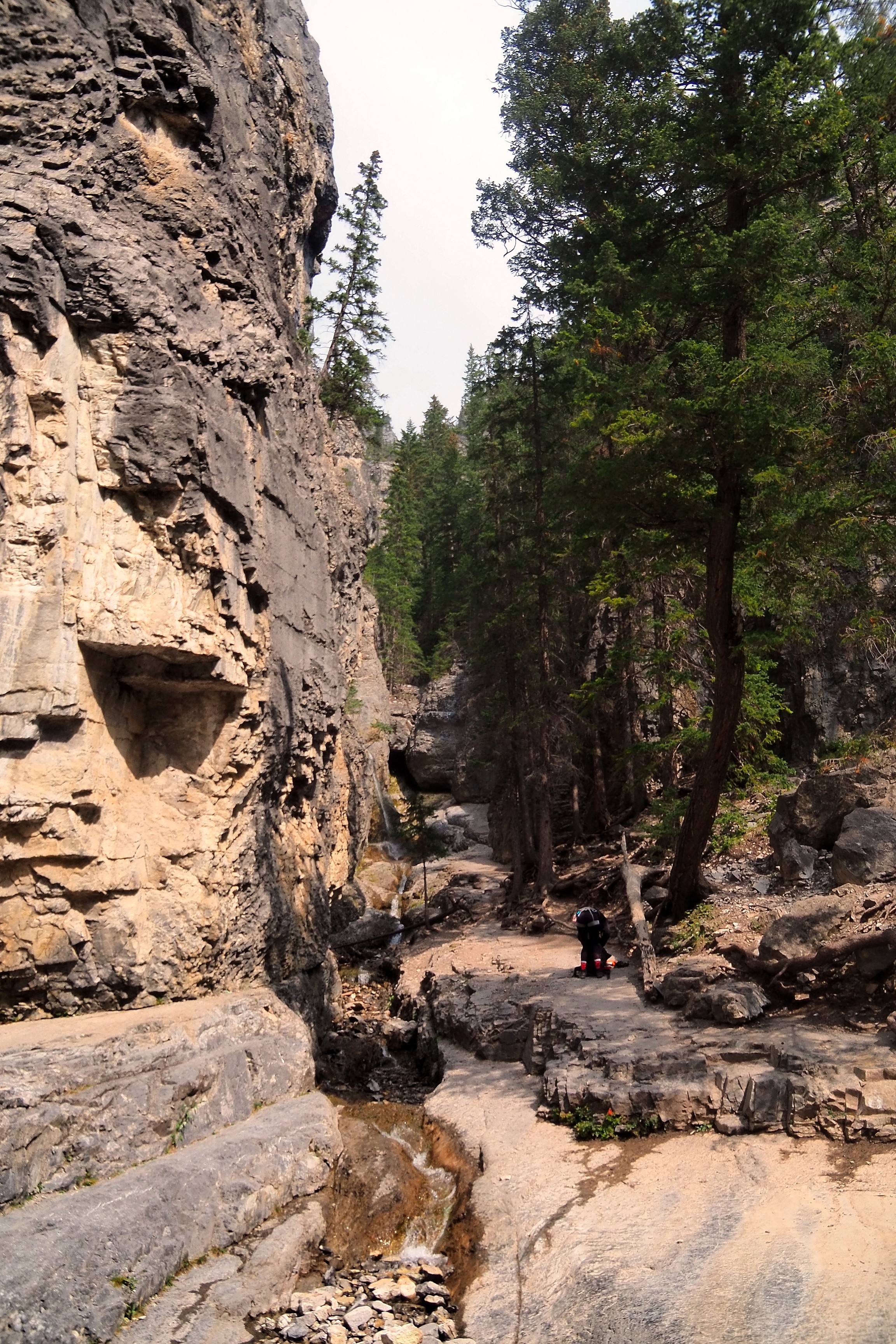
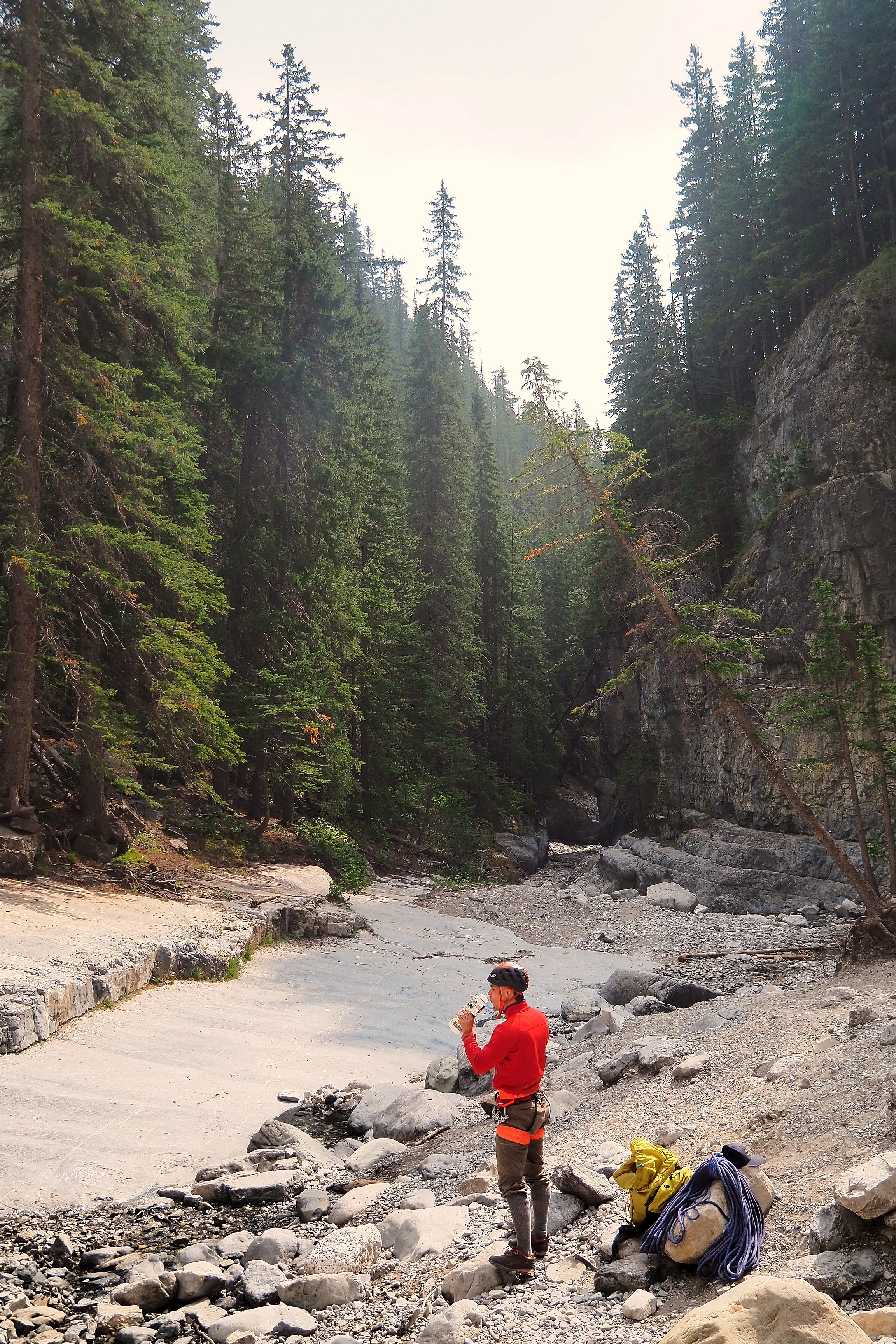
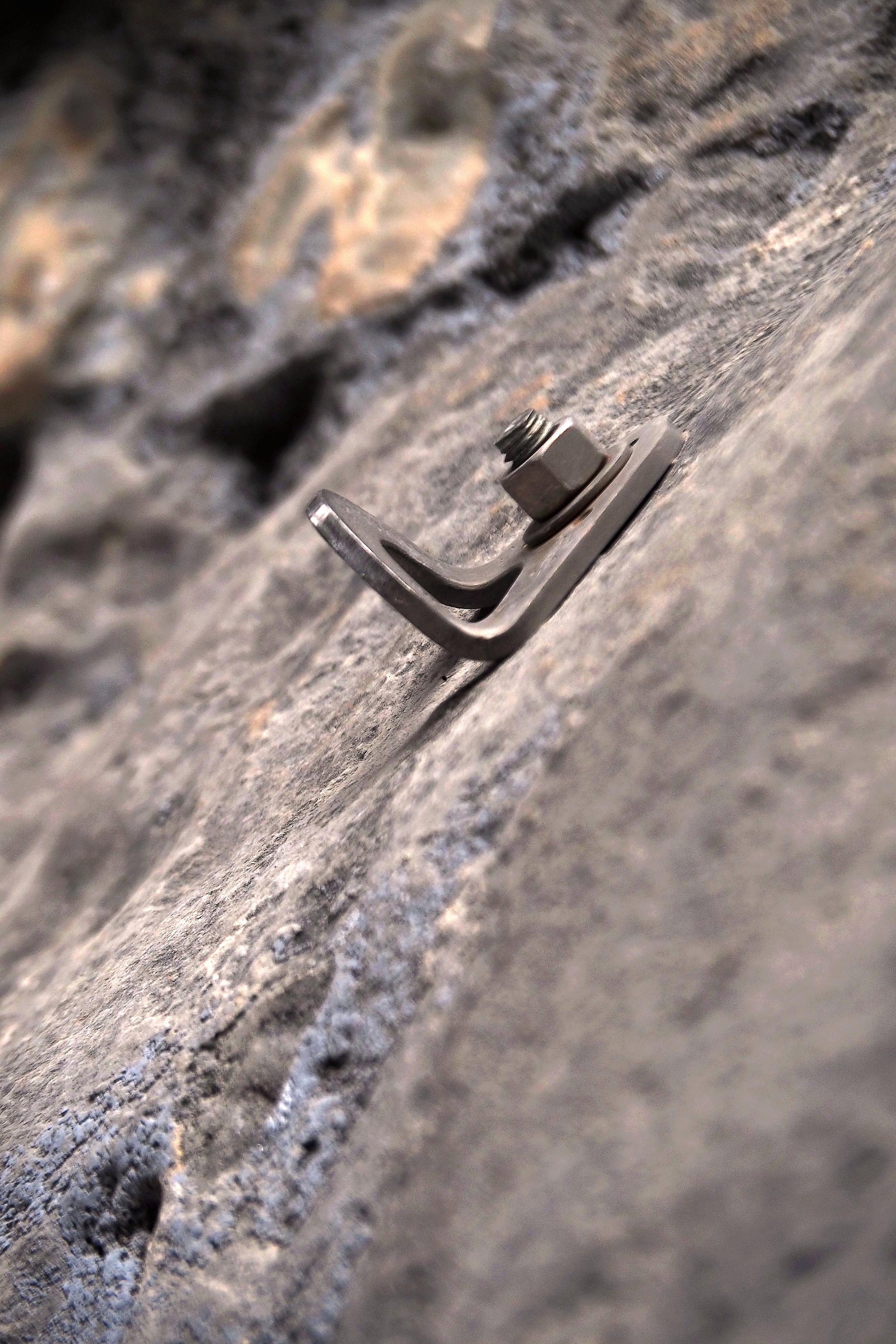
It is here that we turn back to reach the car and get back on the road to reach the next stop, Grassi Lakes.


Grassi Lakes
Here we are at the parking lot that marks the beginning of the ascent to Grassi Lakes. Ha Ling Peak, visible in the foreground, is in front of Mount Grassi.

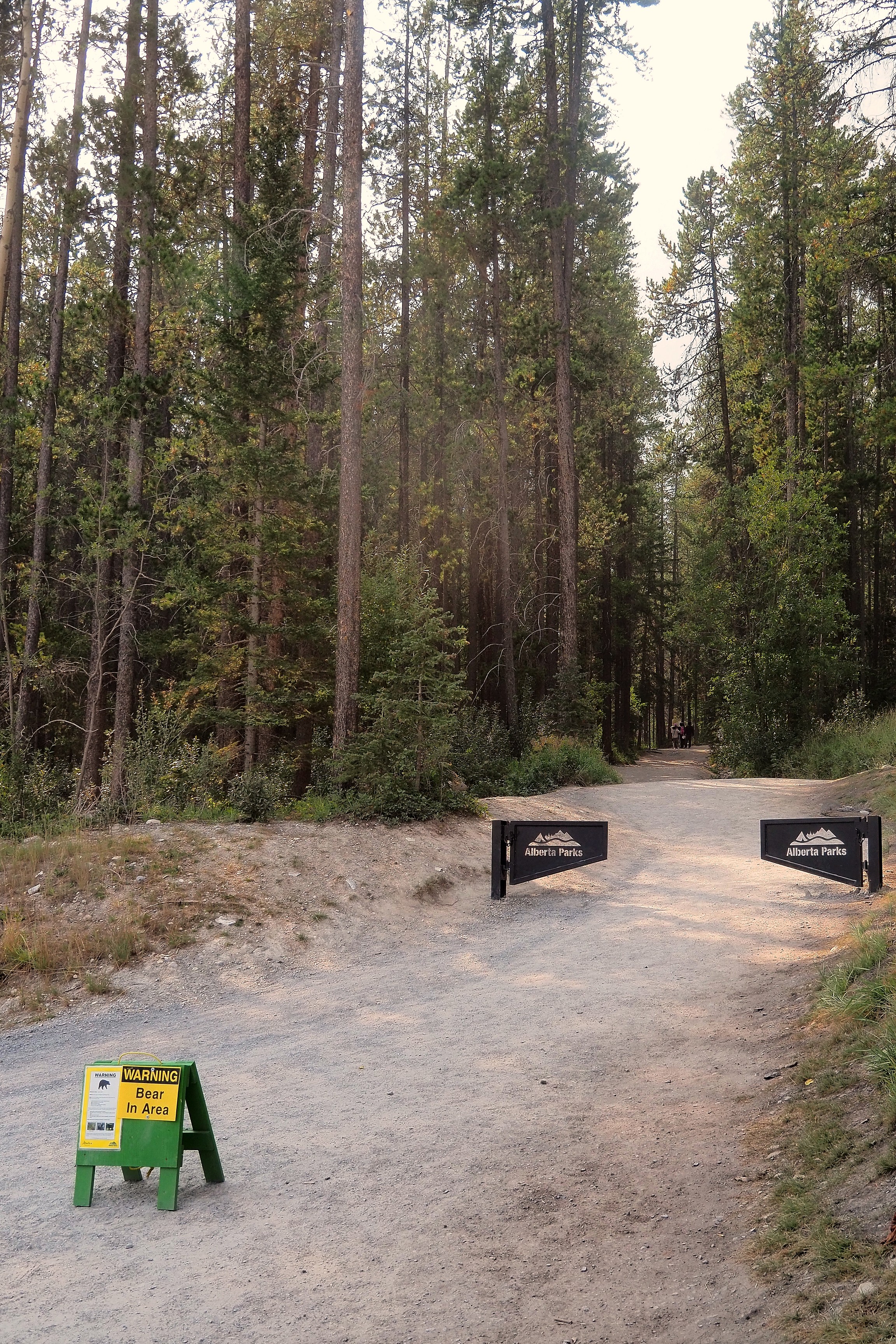
Signposts remind visitors of the presence of large mammals in the Bow Valley at the trail entrance. Grizzlies frequent these coniferous forests in search of berries and prey. Carrying bear spray is a recommended preventive measure for users of this natural environment... For now, we are not yet equipped with pepper spray, but we will be soon.


The trail leading to Grassi Lakes crosses a subalpine forest dominated by Lodgepole Pine (Pinus contorta) and White Spruce (Picea glauca). In the background stands the dizzying face of Ha Ling Peak. This limestone summit owes its name to a Chinese cook from Canadian Pacific who climbed it in 1896 to win a bet. We will climb its summit tomorrow!

Here is the first lake of the hike.

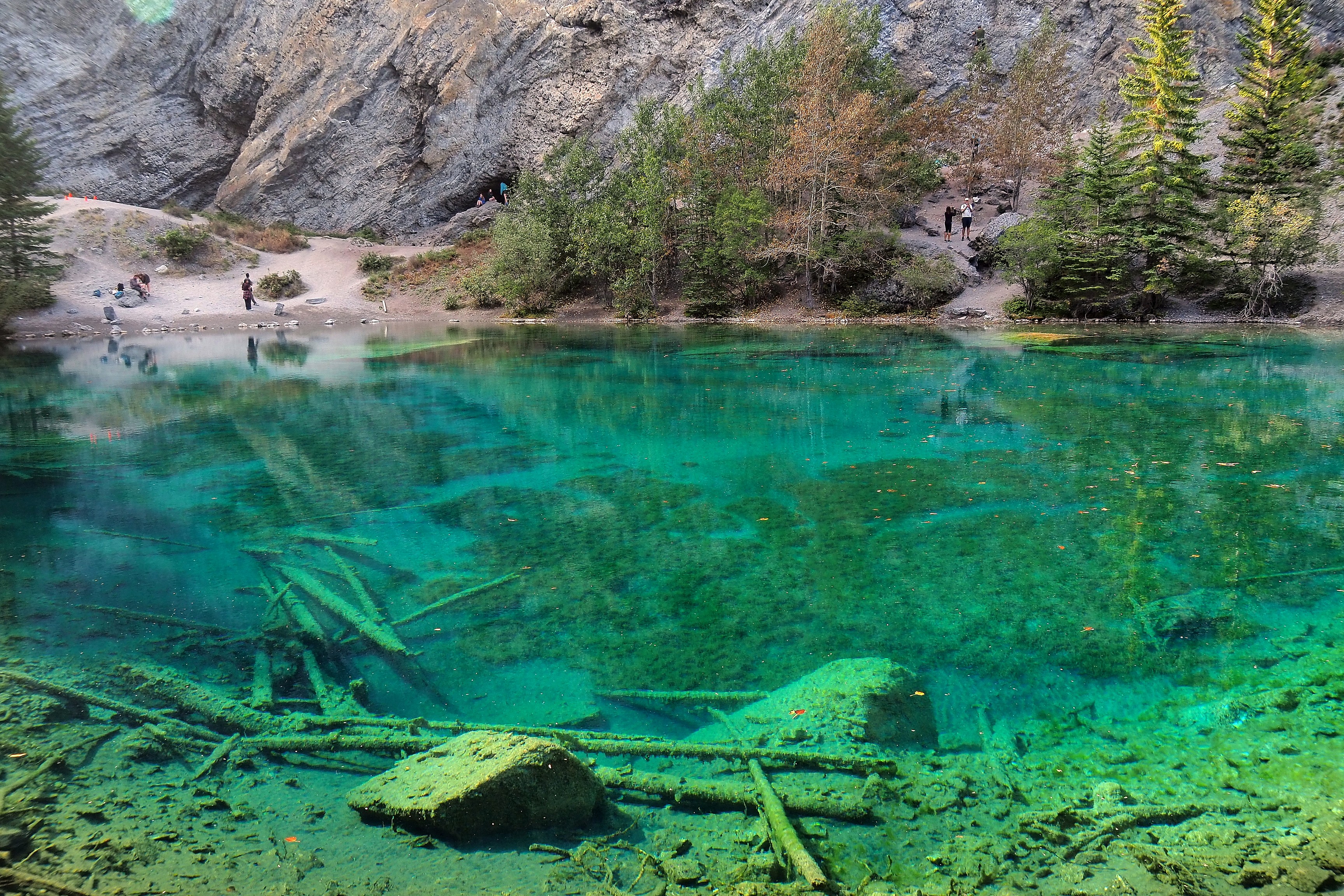
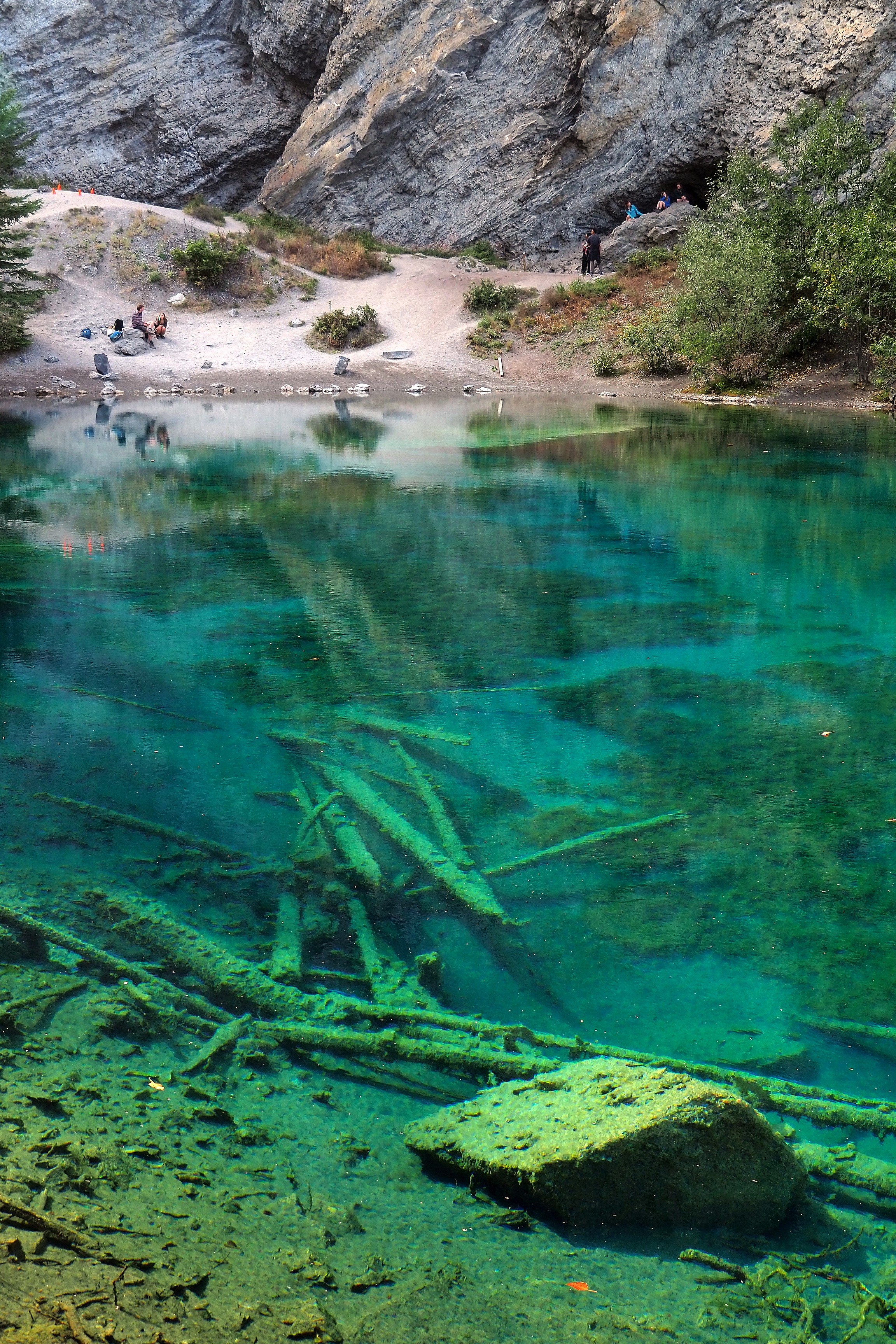
The transparency of Grassi Lakes reveals a bed of calcareous sediments at the foot of the mountains. This emerald coloration is explained by the purity of the water filtered through the Rocky Mountain rock before reaching the basin. In the background, Ha Ling Peak rises above a dense forest of lodgepole pines (Pinus contorta). A "chimney" is visible on the slope, evidence of the hydroelectric development that connects this site to the Whitemans Pond reservoir.

The "rock flour" from glacial erosion diffuses sunlight to generate the blue-green coloration of the waters.

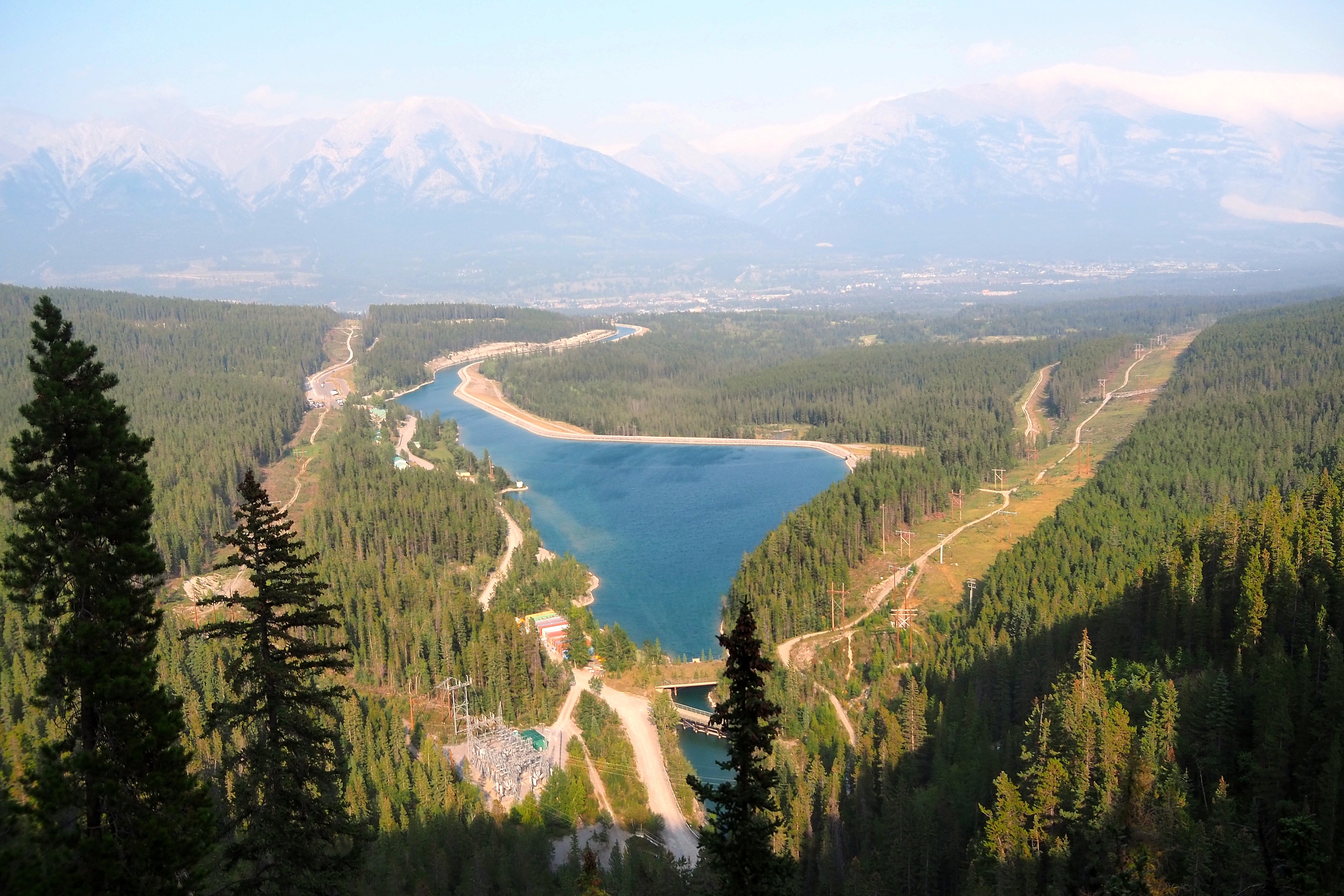
The panoramic view of the Rundle Forebay reservoir, a water retention for the hydroelectric system of the Canmore region.


Be sure to stay on the trail!


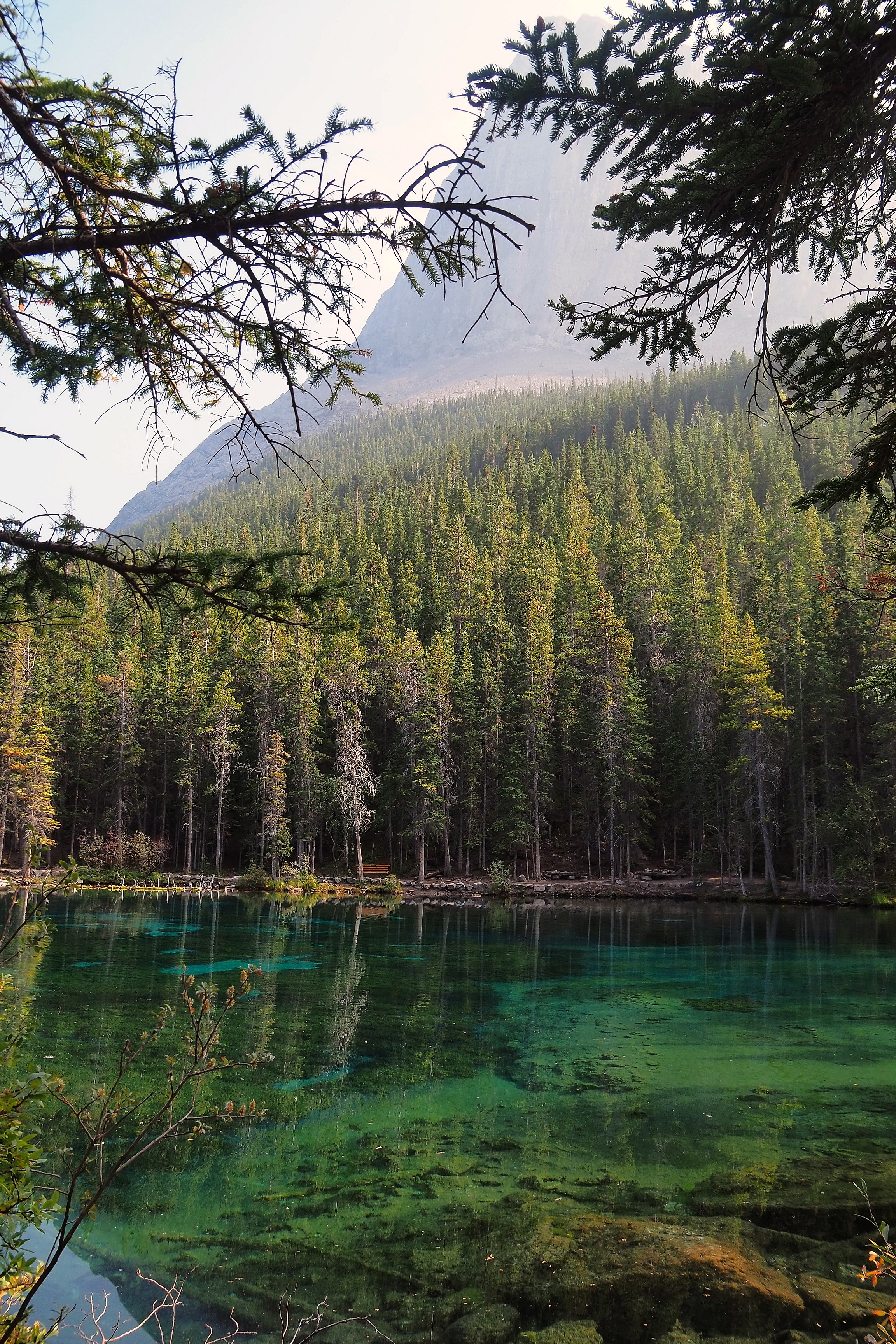


"Brilliant minerals give the water a luminous blue, while green algae nourish the food chain. Why is the water so blue? When glaciers melt and feed mountain lakes, silt, or 'rock flour,' comes from rocks broken by glacial erosion. Grassi Lakes owe their vibrant blue color to sunlight reflecting off these silt particles. Bright green algae produce oxygen for swimming insects. These valuable prey allow diving birds like the American Dipper to live here year-round. The American Dipper is Alberta's only aquatic songbird. It depends on fresh, clean running water, making it a key indicator of water quality."


The pond extends a little further.


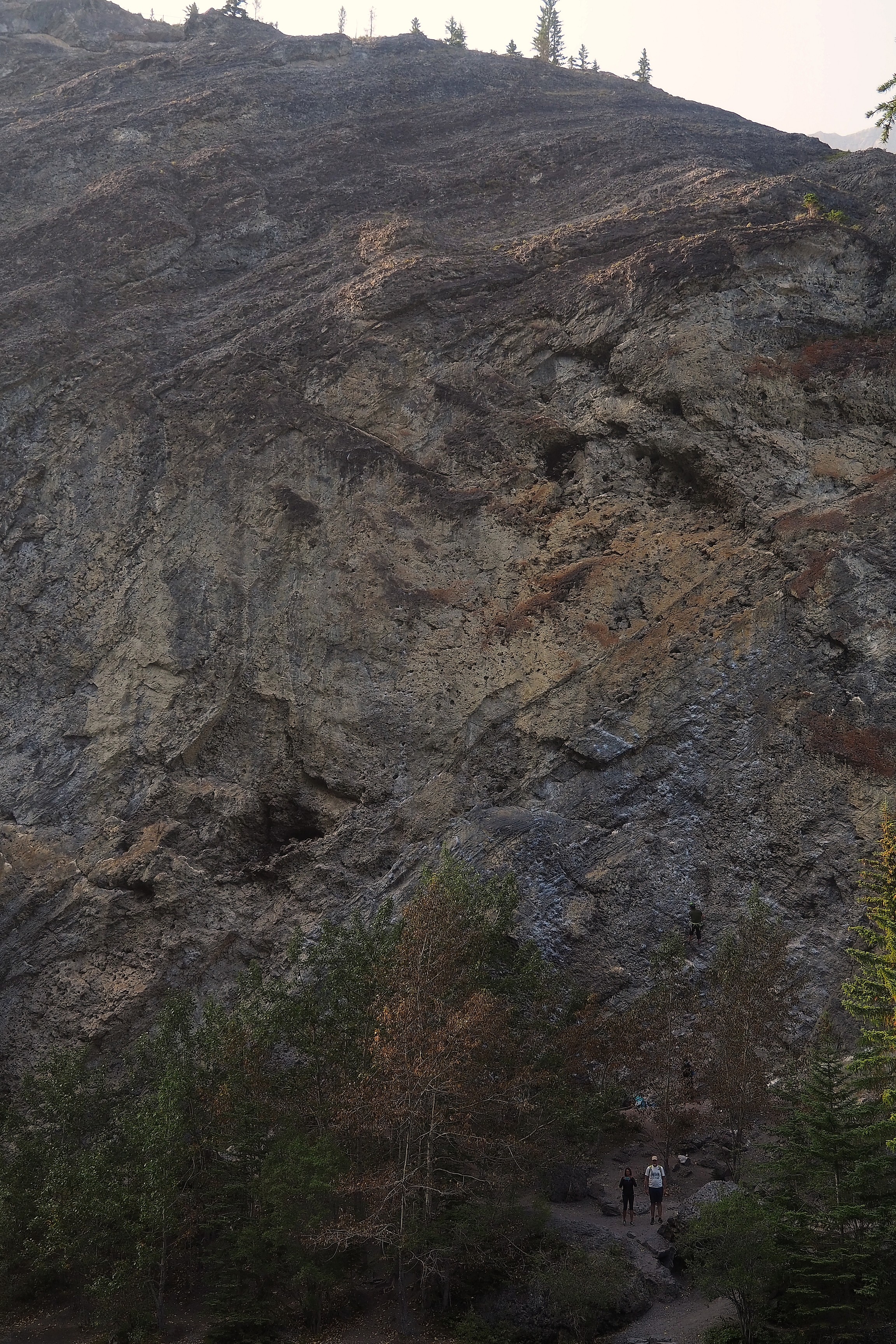
Who says cliff, says climbing...






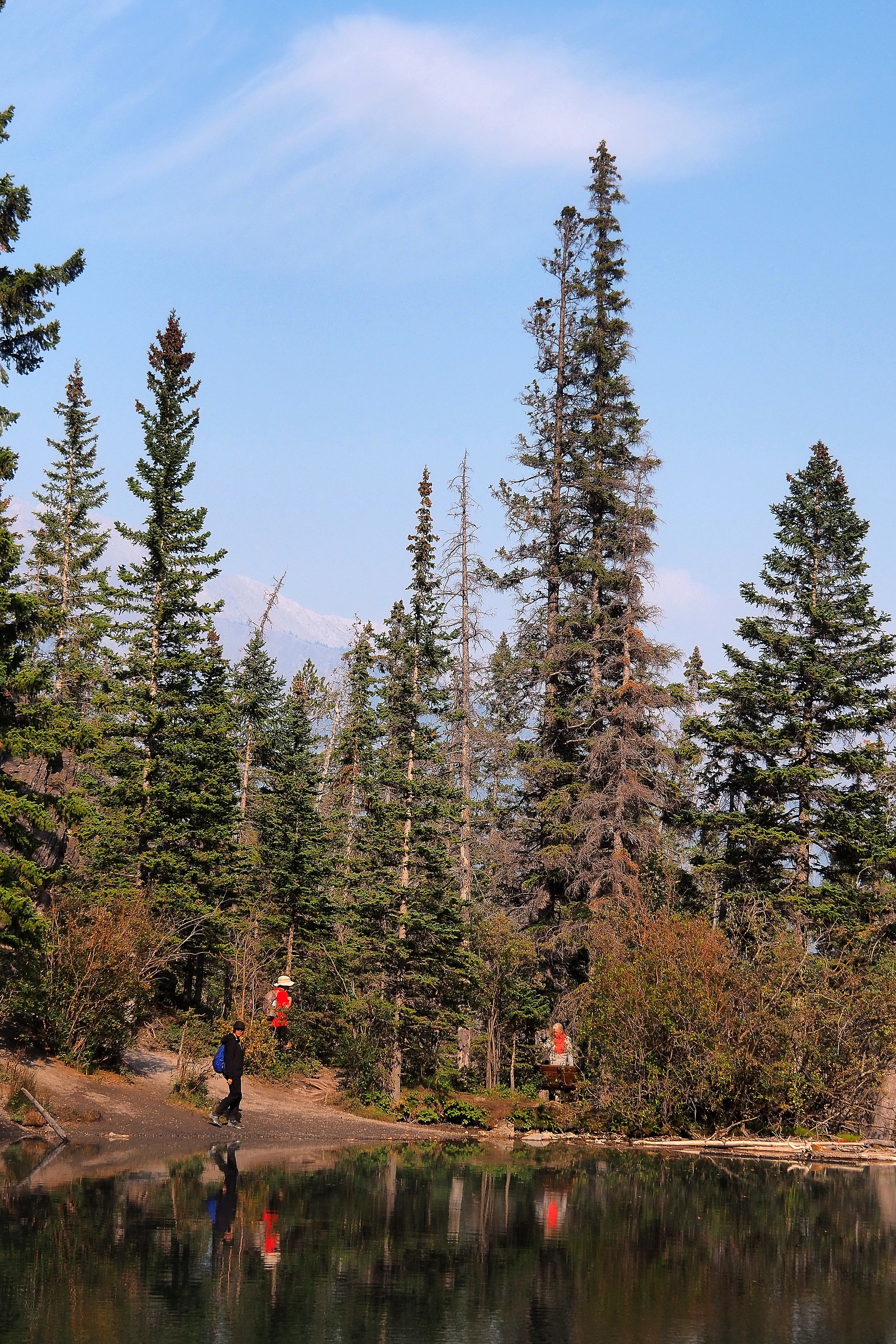

A commemorative plaque honors Lawrence Grassi, who gave his name to the lakes. He was an Italian-born miner and mountain guide, born in 1890. The inscription describes him as a "master trail builder" for his work in blazing trails in the Canadian Rockies.


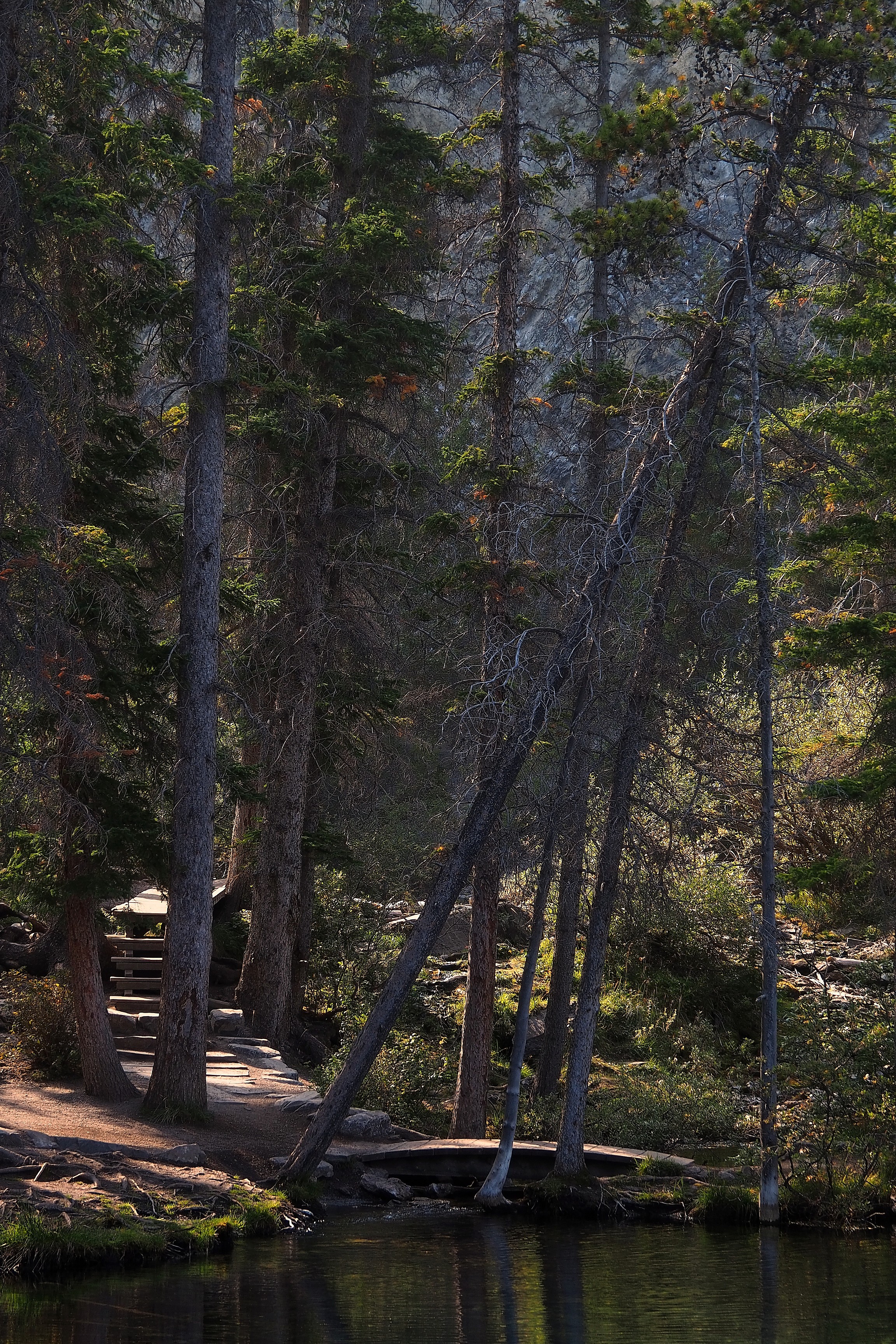
A brook trout (Salvelinus fontinalis)? 


In the distance, the town of Canmore in the Bow Valley.

Back down.
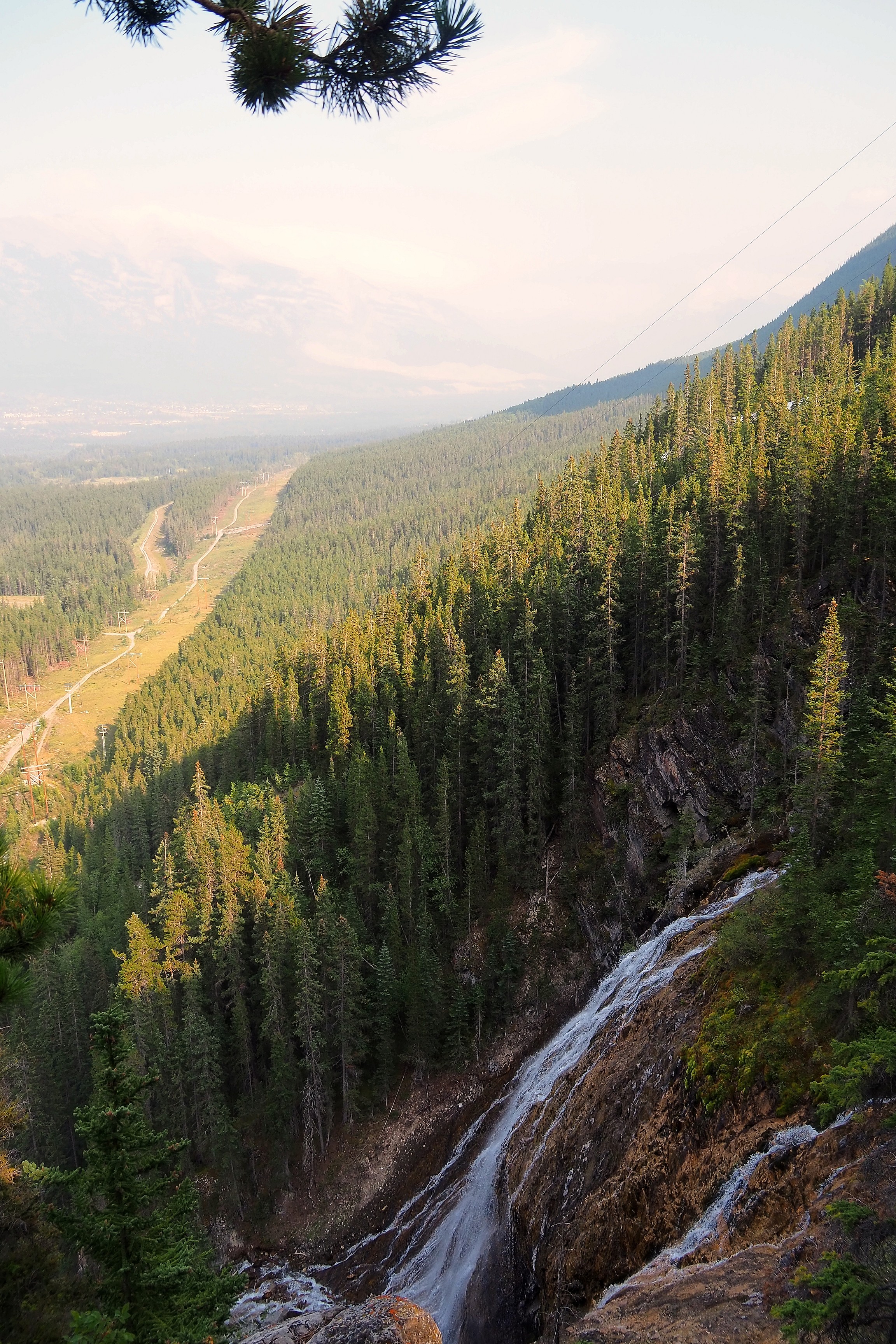


Kananaski Bow River
After some errands in Canmore, we settle into the Bow Valley Campground.

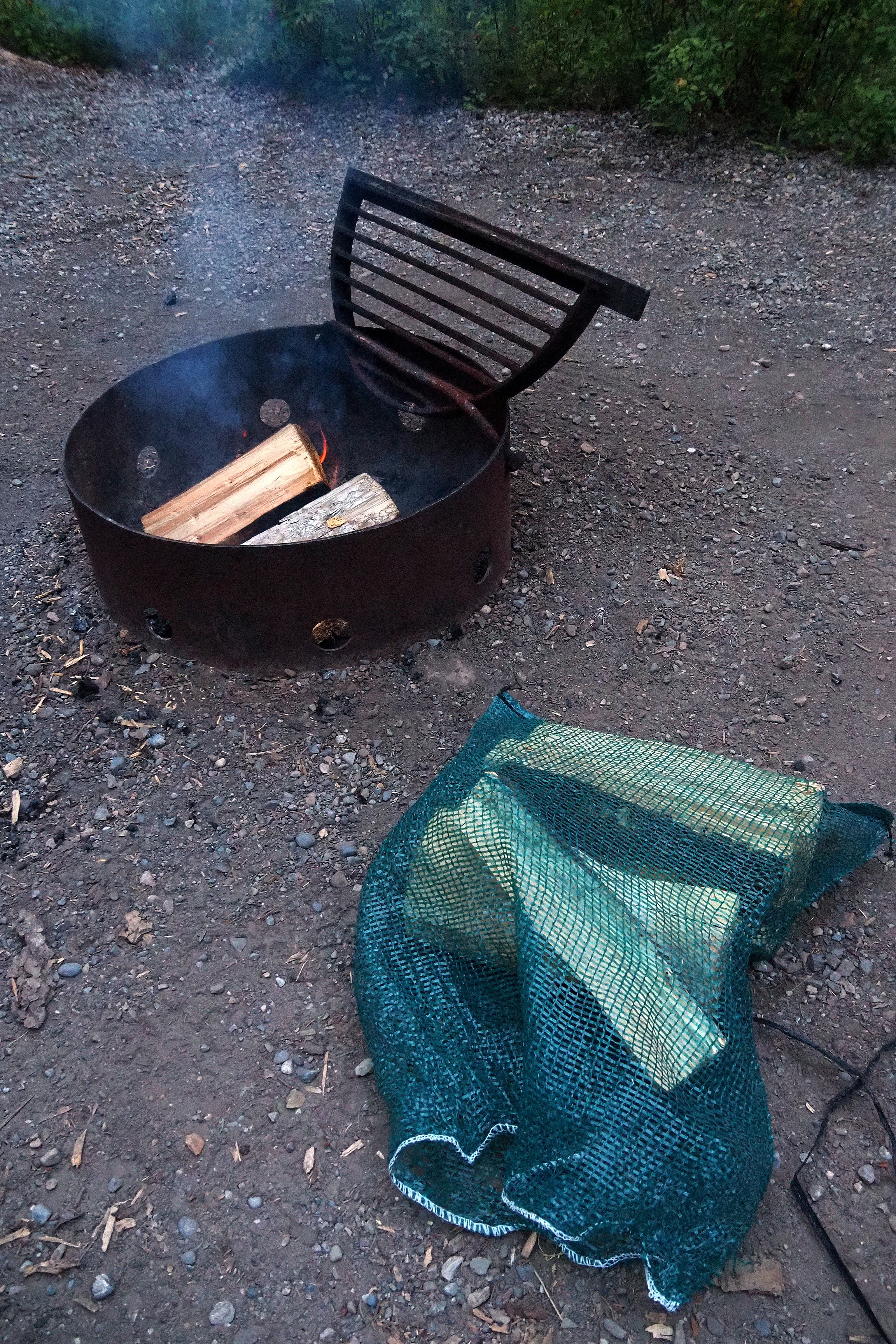
In addition to provisions, you have to buy your wood. This won't always be the case later in the trip, as campsites sometimes provide wood directly on site. You also have to buy a permit to light your fire: 11 Canadian dollars, or about 7 euros (per day!).

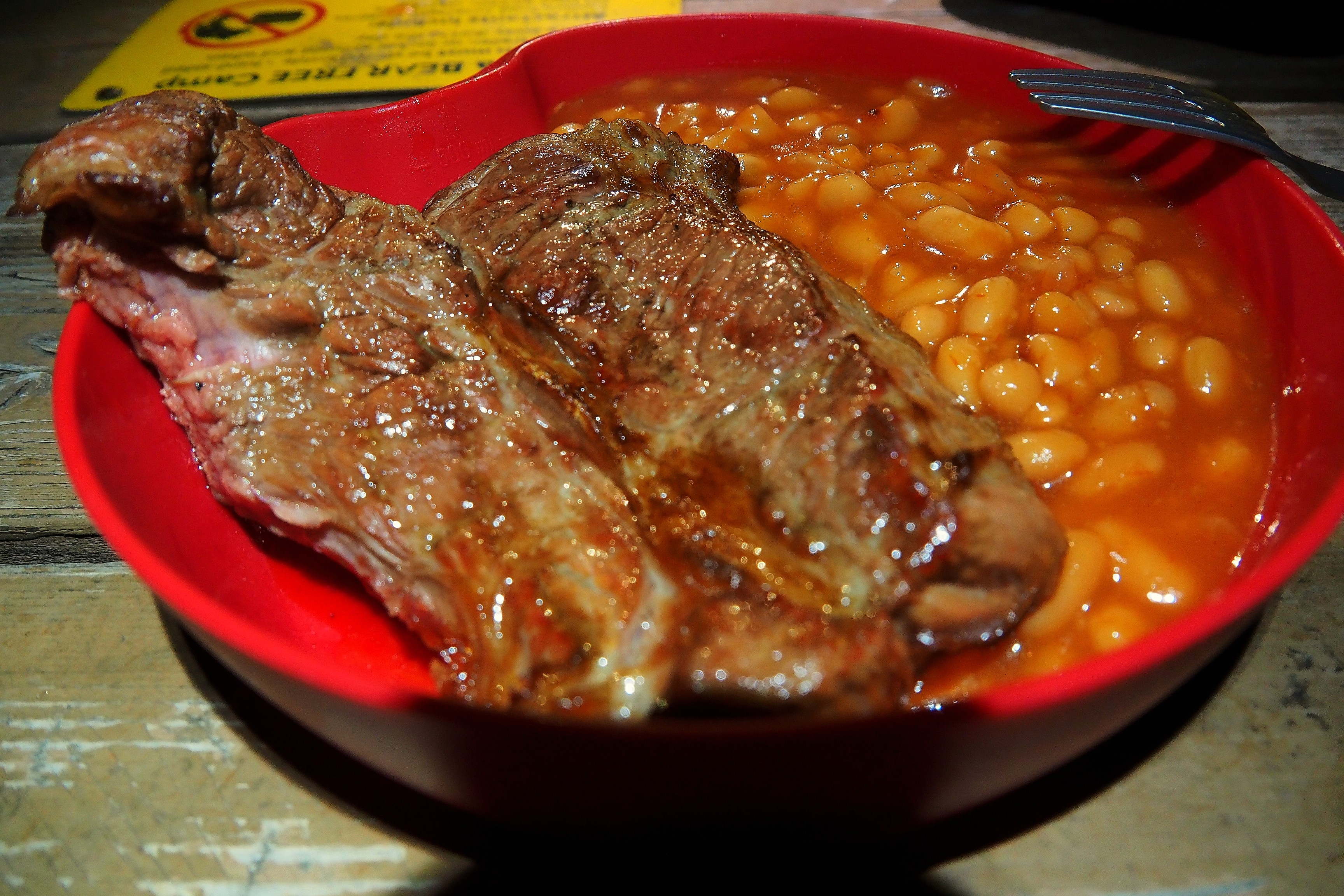
It'll be beef and beans for this first barbecue!

Friday5September
First cool morning wake-up, Bow Valley Campground is at 1270 m altitude... It doesn't show in the photos, but it's about 5 degrees Celsius when you wake up  ! Tough to have breakfast, but by bundling up in several layers, it's manageable!


The view from the campground's restrooms.


Canmore
Stop in Canmore to buy lunch for the picnic.


Kananaskis Ha Ling Trail
Here we are almost in the same spot as yesterday, just a little higher, above Grassi Lakes, at Whitemans Pond reservoir. The low water level reveals tree stumps, remnants of the forest that was cut down and submerged when the dam was filled.


This tree graveyard dates back to the early 1950s, when the hydroelectric complex on the Spray River was developed. Before the dam was filled, a mixed forest dominated by Engelmann Spruce (Picea engelmannii) and Lodgepole Pine (Pinus contorta) occupied the bottom of this glacial valley. The trees were cut down and the deliberate flooding stopped the decomposition of the wood, preserving these stumps which only reappear when the reservoir levels drop.
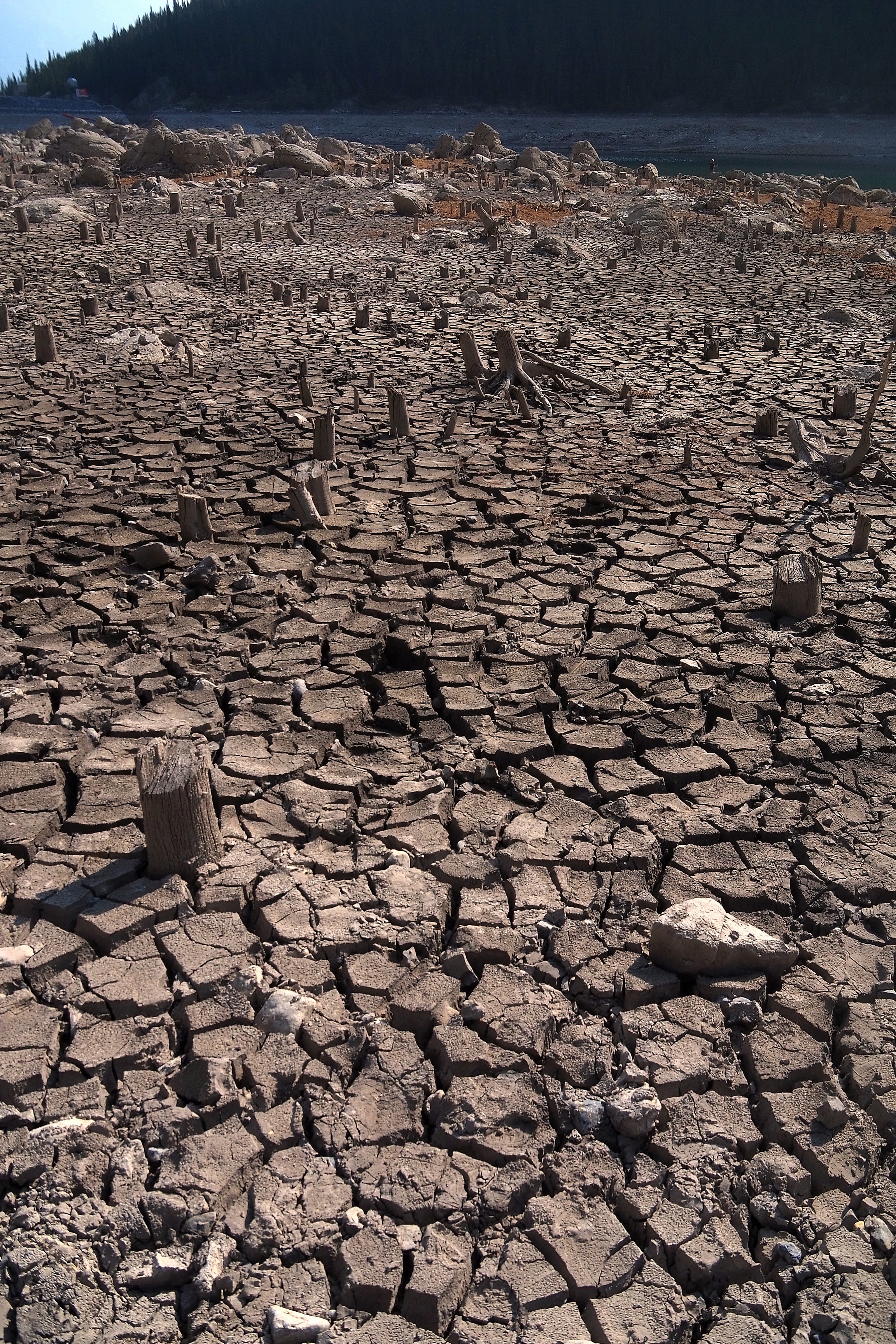
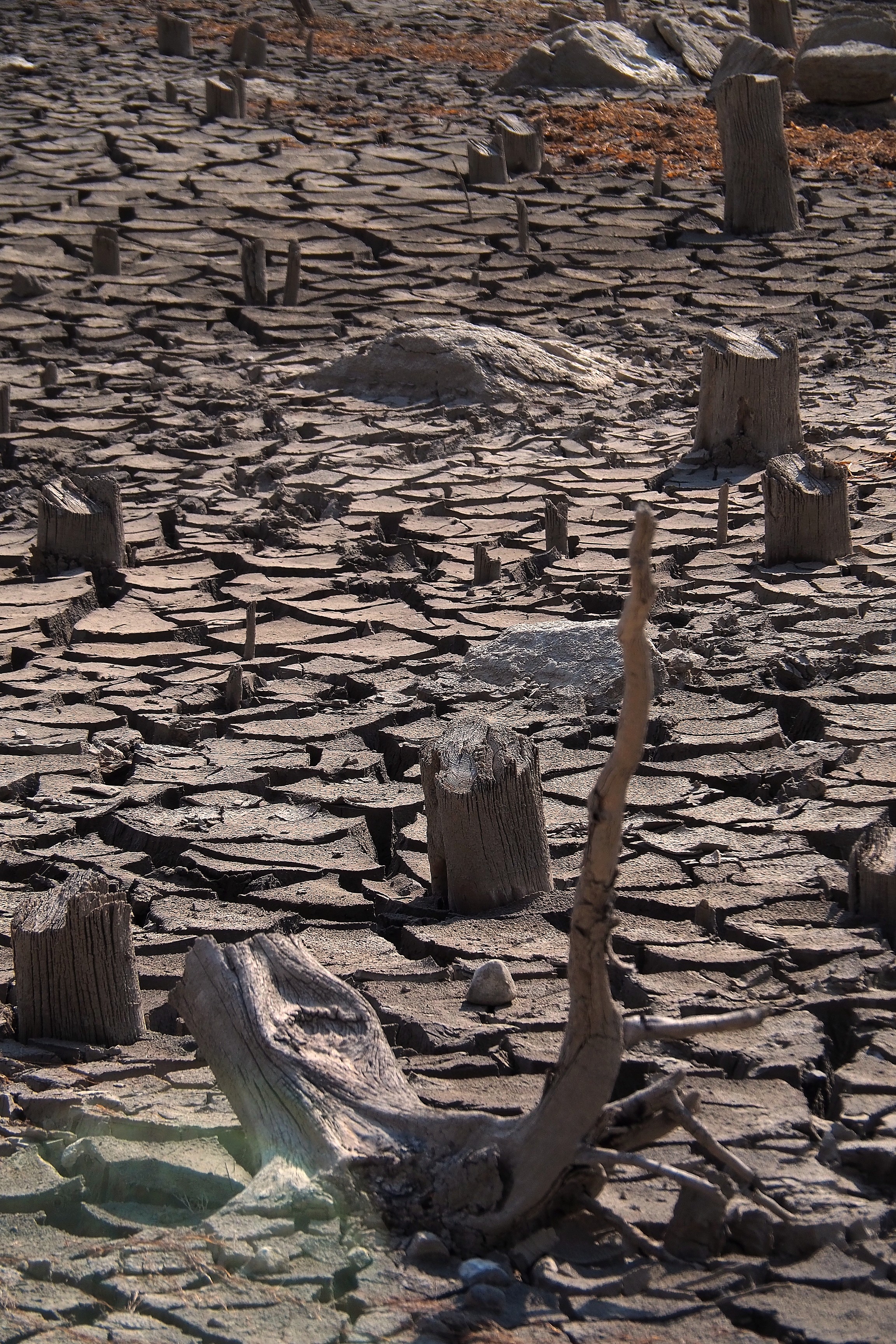


The drop in water level exposes clay sediments to the open air, causing a phenomenon of shrinkage by desiccation. This mud, rich in glacial rock flour, loses its volume as it dries, creating these networks of polygonal fractures characteristic of soils without vegetation.

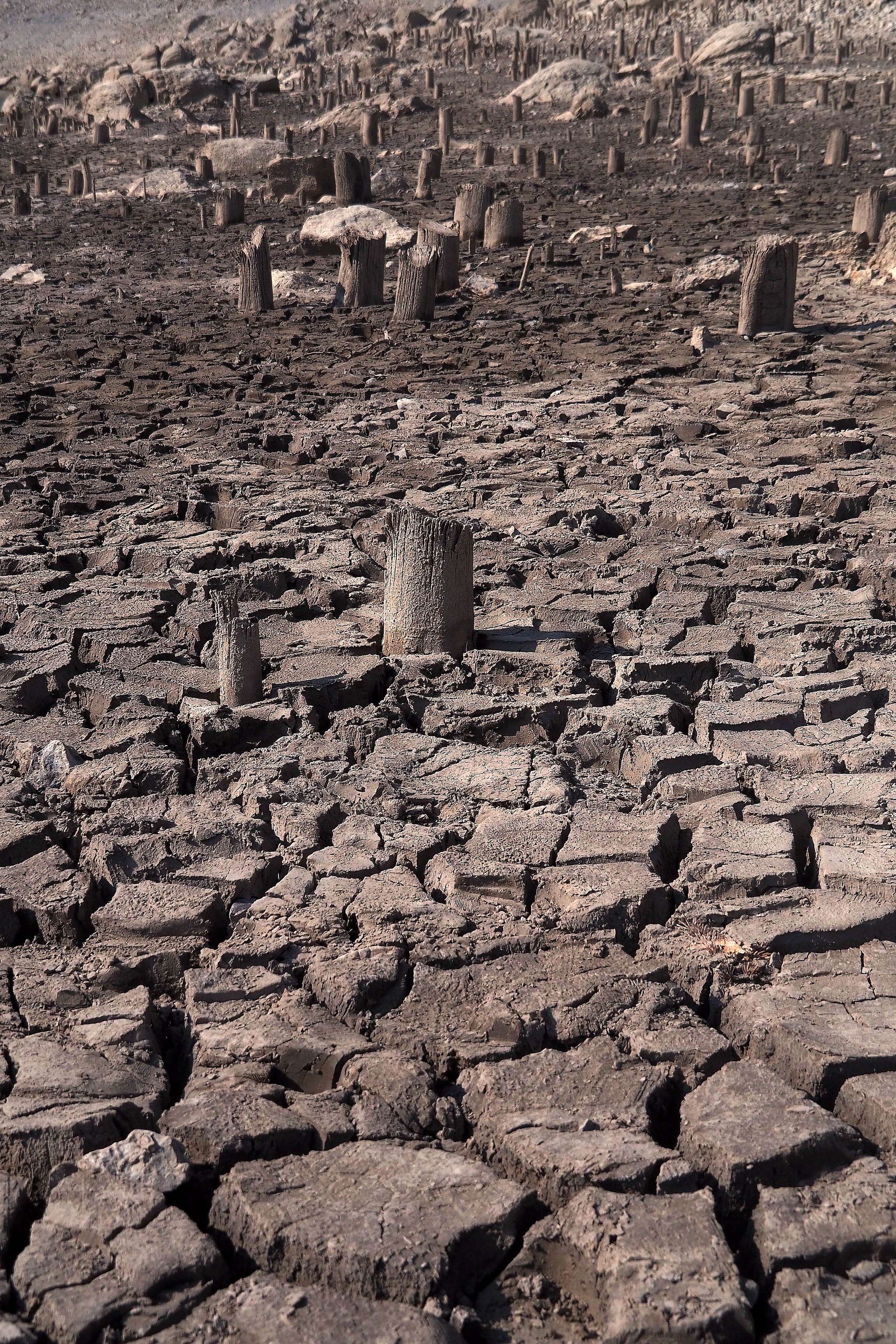


The almost permanent immersion in glacial, oxygen-poor waters inhibits the action of wood-destroying fungi responsible for rot. This anaerobic environment acts as a natural preservative, freezing the structure of these spruce stumps for over seven decades.


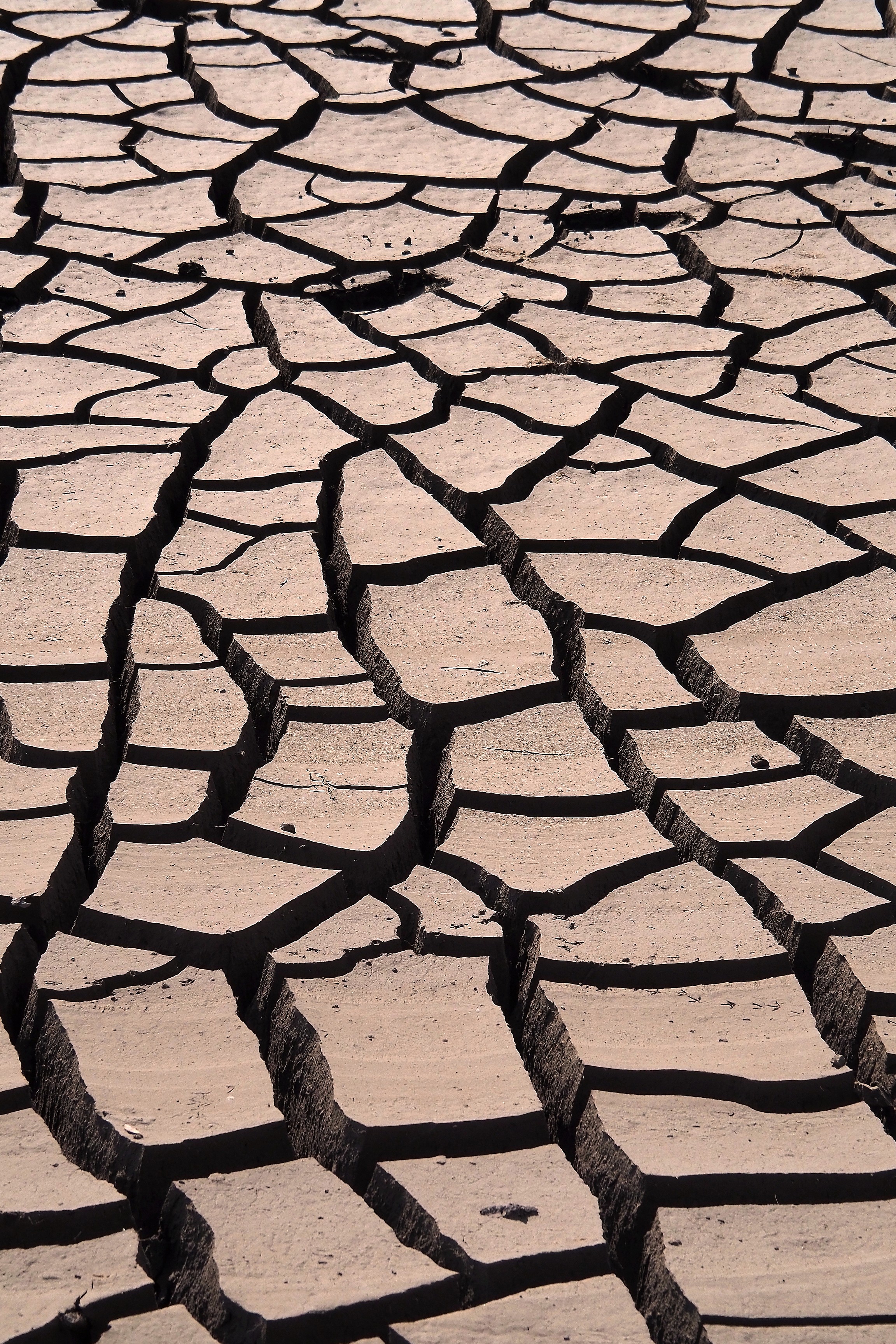
The edges curl upwards towards the sky, as the upper crust dries and shrinks in volume faster than the still-damp base.


The northern end of Whitemans reservoir.

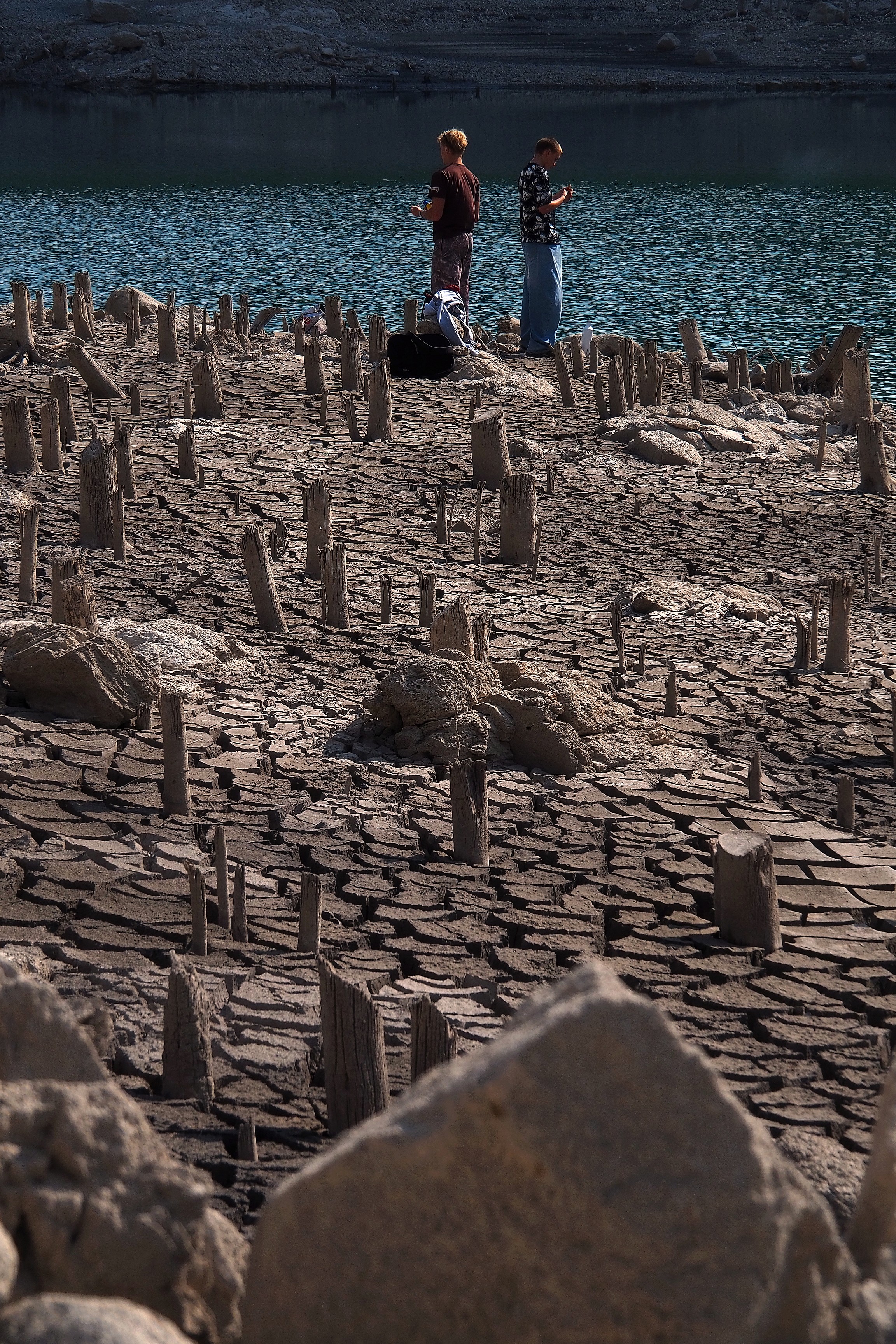


The East End of Rundle mountain.

Here we are on the edge of the water reservoir.


Ha Ling Trail
We get back in the car to reach, a few hundred meters away, the official parking lot of the Ha Ling Trail. And off we go for more than 5 hours of hiking!


This commemorative plaque marks the start of the trail. It pays tribute to the members of the mining community who worked in the underground galleries of this mountain. The installation is the work of the Trailminders of the Bow Valley, a group of volunteers ensuring the preservation of local hiking routes.
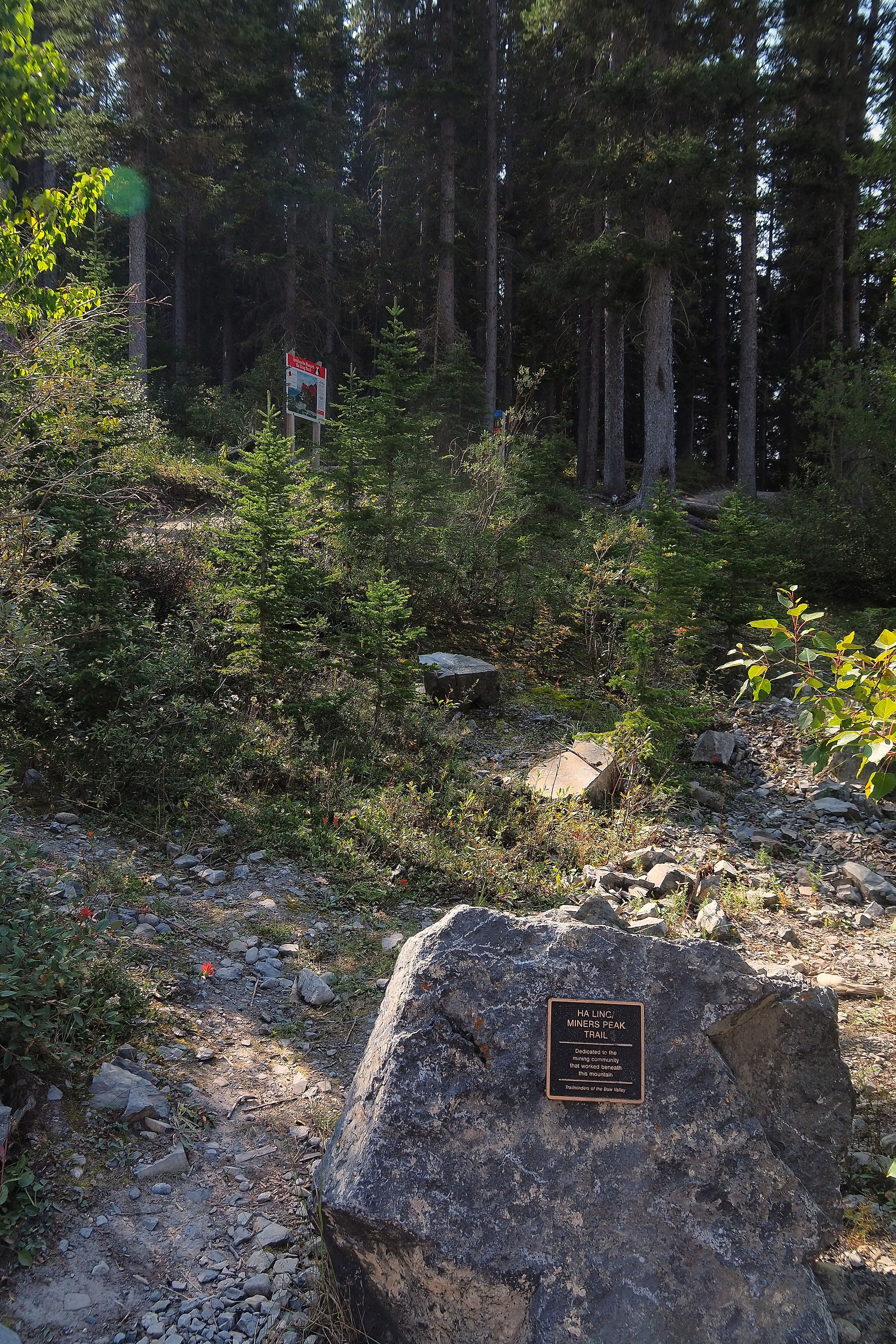

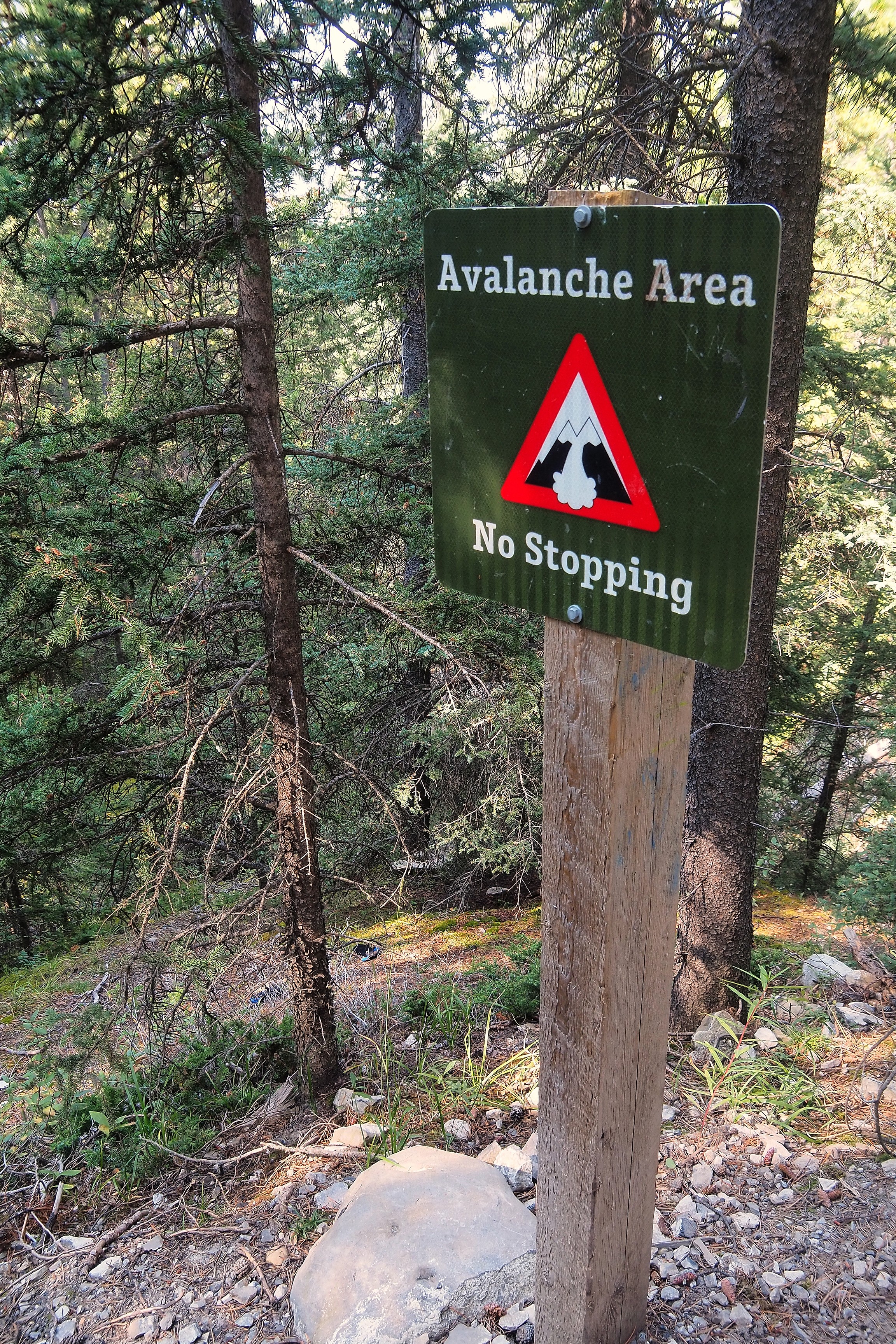
The signage details possible avalanche paths on the slopes we are about to climb (the route in orange).

The Ha Ling trail winds through a forest of Lodgepole Pines (Pinus contorta).


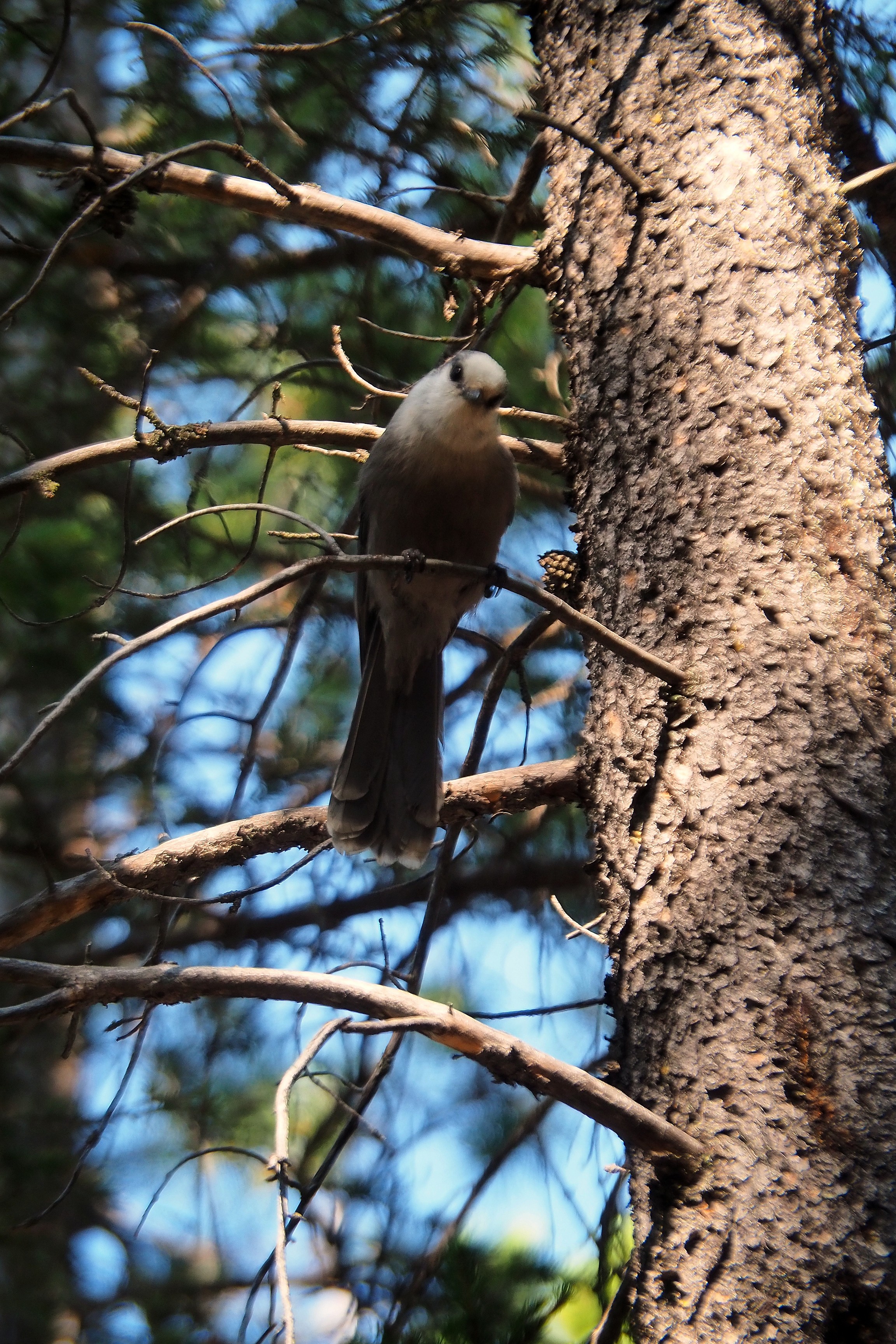
The Canada Jay (Perisoreus canadensis), nicknamed "Whiskey Jack", observes hikers from the branches of the lodgepole pines.
The East End of Rundle mountain, often abbreviated EEOR.

Pines become scarcer in favor of an increasingly mineral soil. Safety chains facilitate progress on steep rocky slabs. This transition marks the gradual entry into the alpine zone of the Rockies.


The Bow Valley.

Bark of Lodgepole Pine (Pinus contorta).


The East End of Rundle with the Smith Dorrien trail passing at its base and joining the town of Canmore.


The Bow Valley. It will be perfect for our lunch break viewpoint!

In the Rockies, the golden-mantled ground squirrel is never far... 

Some wooden stairs to facilitate steep passages.


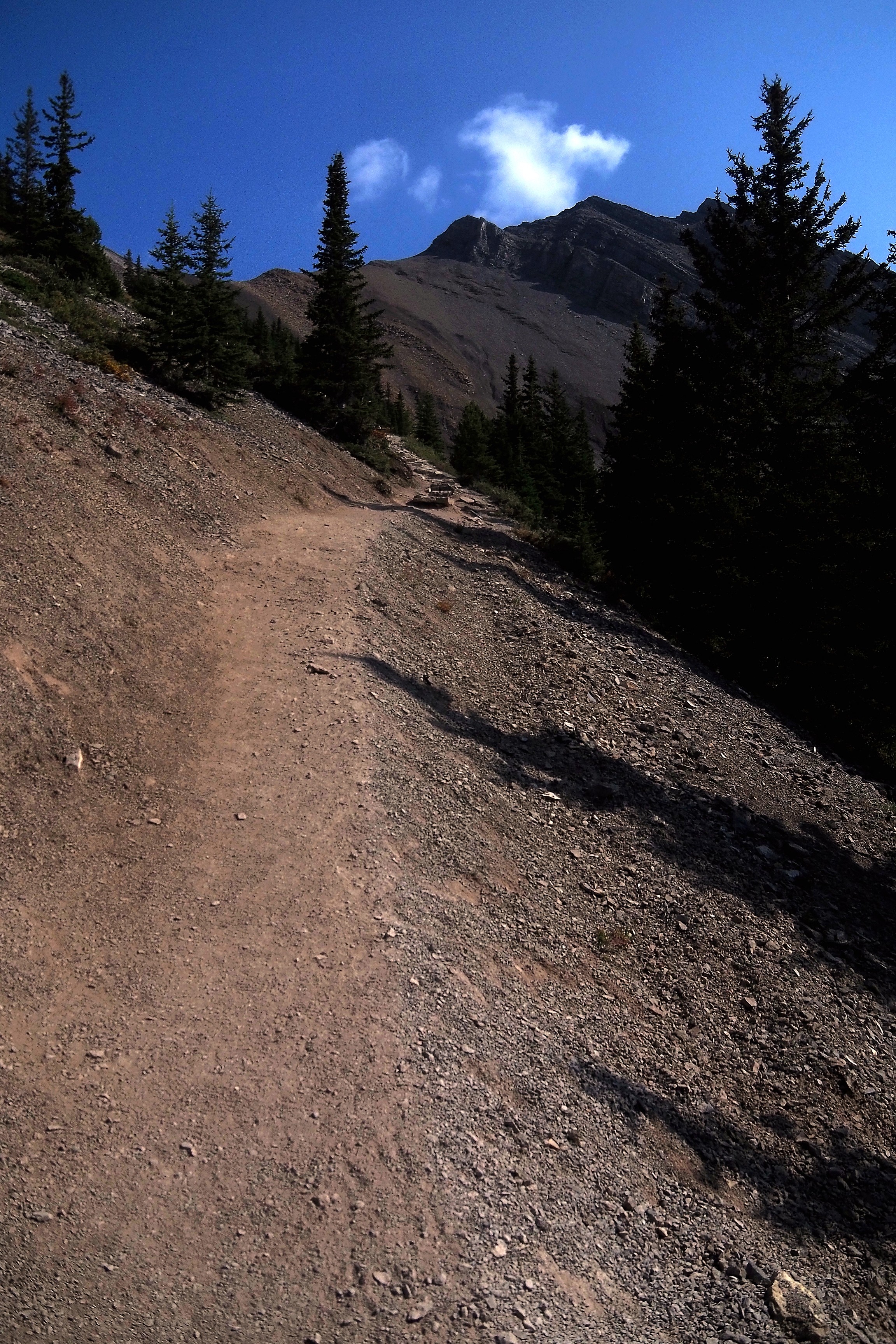


That's it, no more pine forests. Time for rocks and the associated risk of slipping...


Innovation this year, I brought a walking stick! And it won't be too much... We're reaching the summit of Ha Ling!


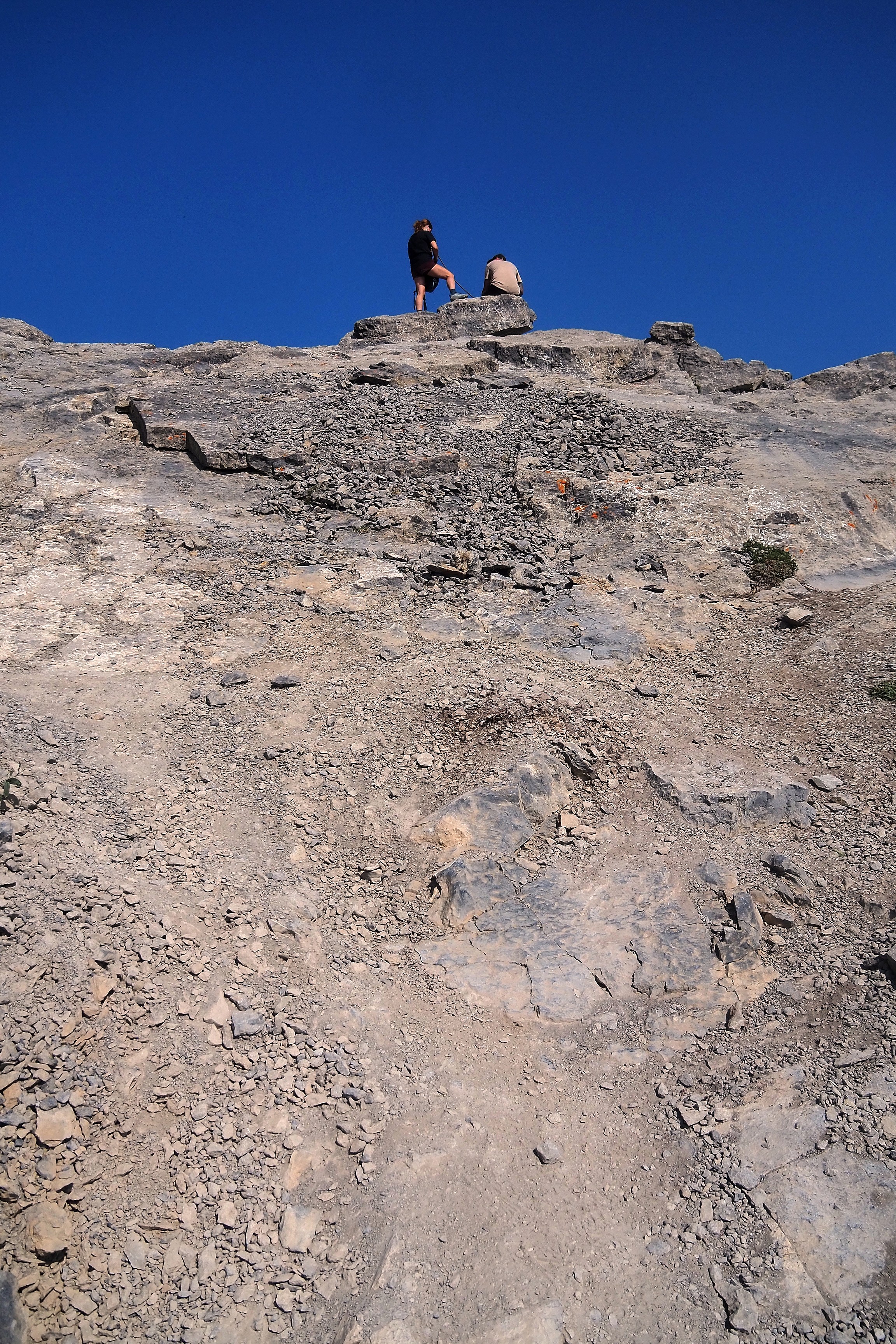

Here we are. On the other side, the Bow Valley unfolds.


Canmore at the foot of Grotto Mountain.

In the extension, Mount Lawrence Grassi.

We continue towards the summit of Ha Ling, leaving the pebbles where they are


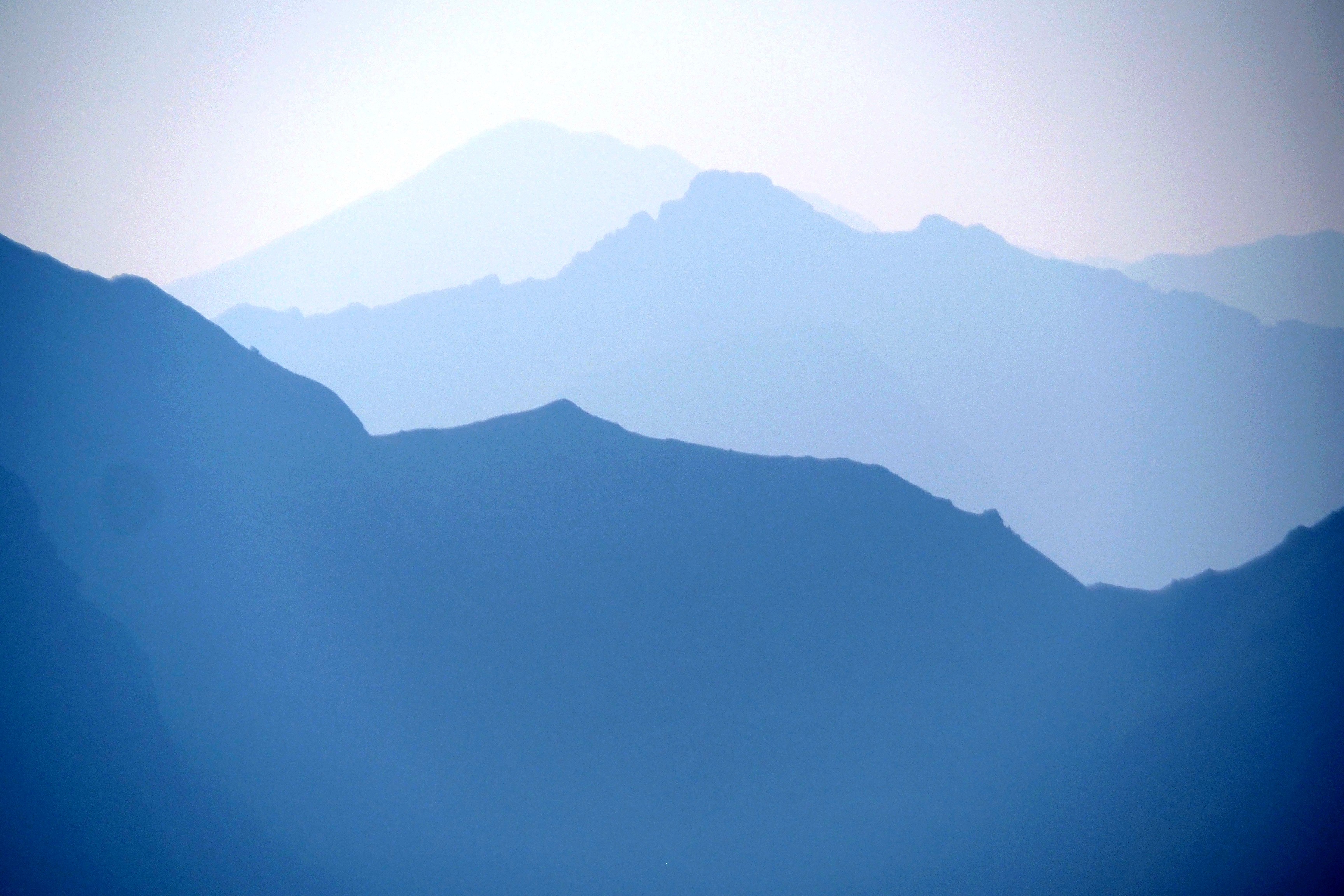
Peaks are everywhere.


In the distance, the Canmore Nordic Centre and its biathlon track.

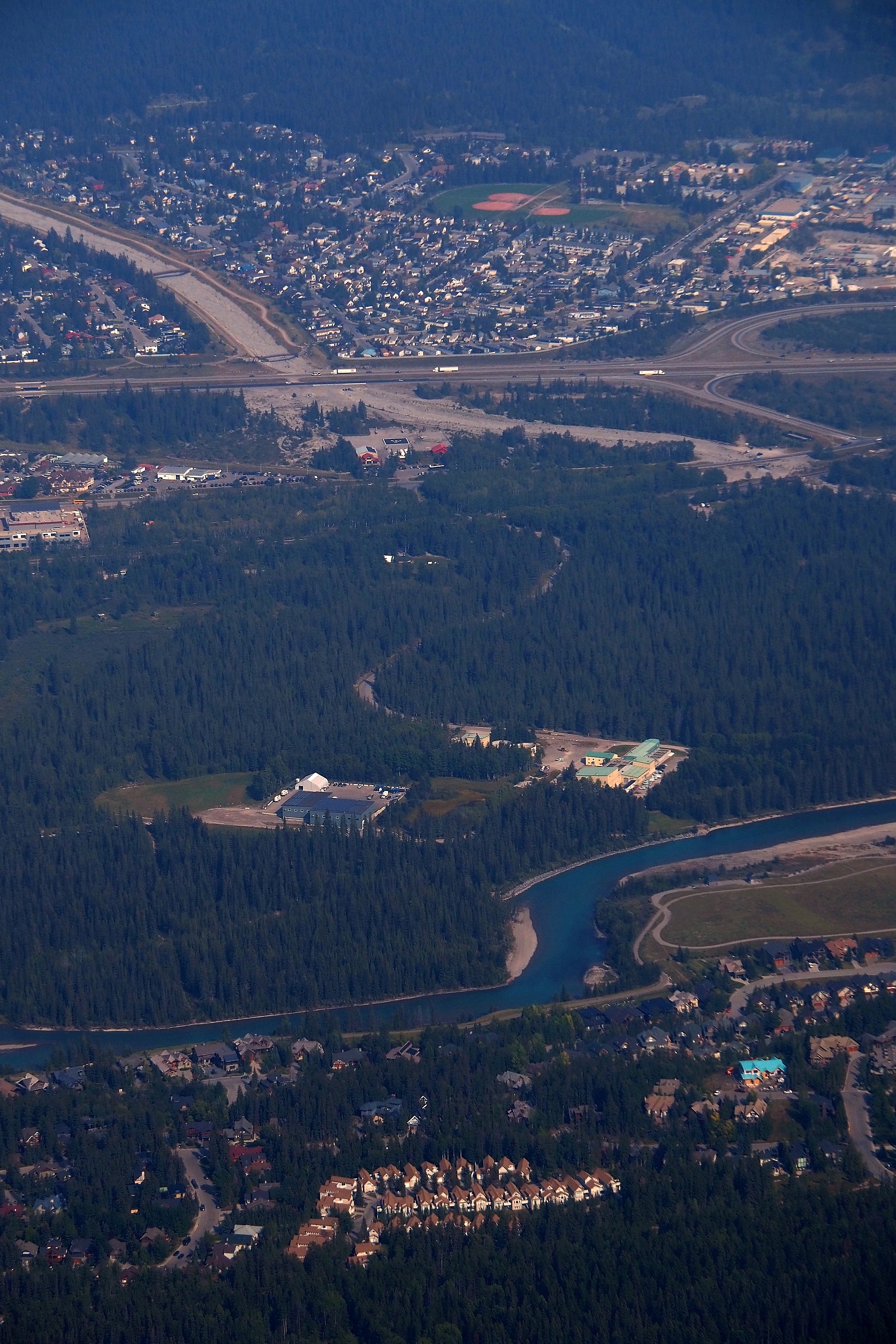

Facing Mount Grassi.


If you pass by here, you can look for my site's QR Code...

And so begins the descent.


Back to the parking lot.


On the road, the landscape takes on its most beautiful late-day appearance with the colors of the setting sun.

Almost 8 PM, it's high time to start the barbecue! In 30 minutes, night will have fallen.


Sausages and vegetables for this last evening at Bow Valley Campground. Tomorrow, we're moving and heading to Boulton Creek Campground, where we can continue exploring Kananaskis Country, especially its Upper and Lower Lakes.


Latest comments
On Guatemala 2018
Le 25 Novembre 2024
Significado de este mural
On Chile 2016
Le 15 Septembre 2024
Rrrrrr
On Egypt 2003
Le 1er Avril 2023
Et oui c'est bien nous aux pieds de ce Colosse !
Le 1er Avril 2023
Bien petits aux pieds de ce Colosse !
On Namibia 2014
Le 3 Août 2021
very good indeed